
A flare-up used to mean I could not find a single position on my regular couch that did not aggravate my lower back and hips. I’d shift from side to side, prop pillows under my knees, lie flat, sit upright—nothing stuck. My physical therapist mentioned zero-gravity positioning during one of those conversations where you’re half-listening because you’re too busy hurting. She explained that zero-gravity recliners use the same neutral-spine angle astronauts experience during launch, which takes meaningful pressure off the lumbar discs and hip joints better than sitting upright or lying completely flat. Skeptical but desperate, I bought a zero-gravity recliner for arthritis management and committed to testing it through two full flare cycles. Here’s exactly what changed—and what didn’t.

What a Zero-Gravity Recliner Actually Does to Your Spine
Before I get into my personal experience, I want to be clear about the mechanics, because understanding why something works matters more than just knowing that it does.
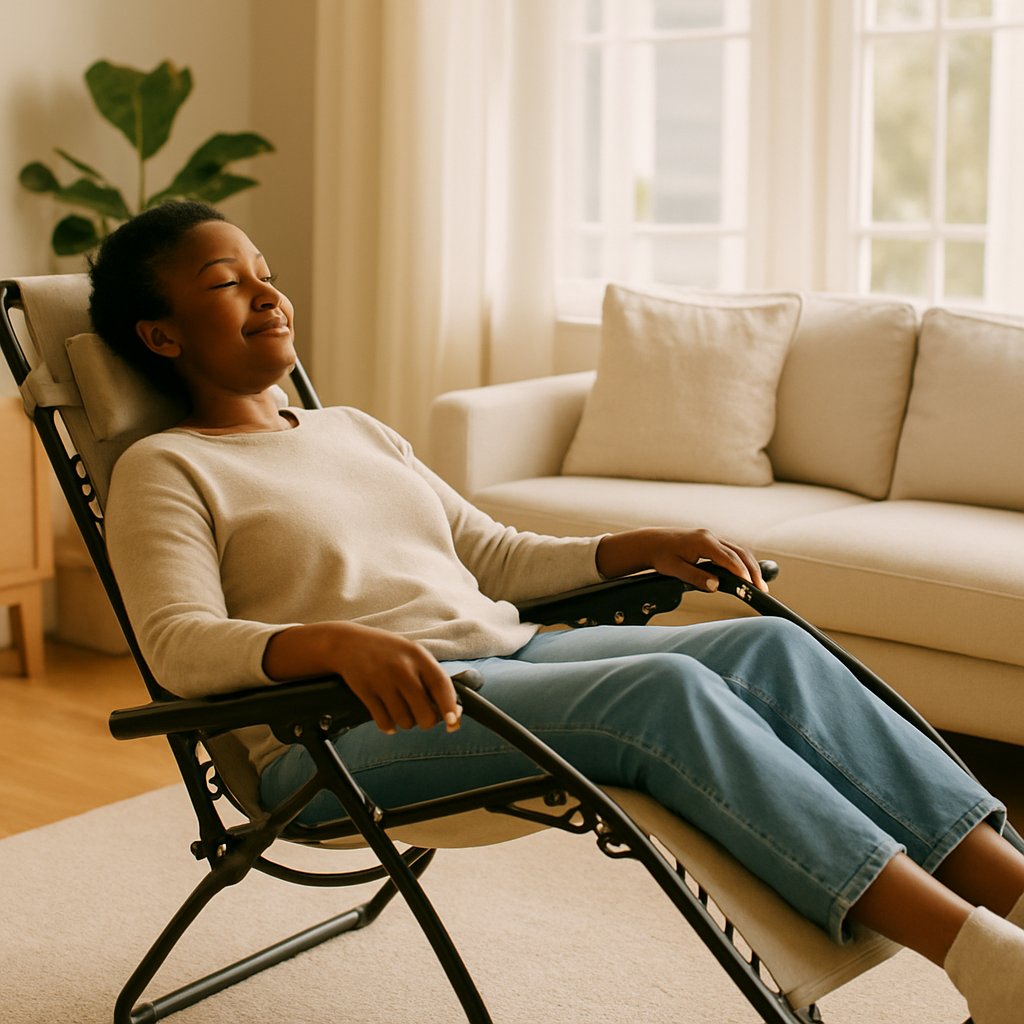
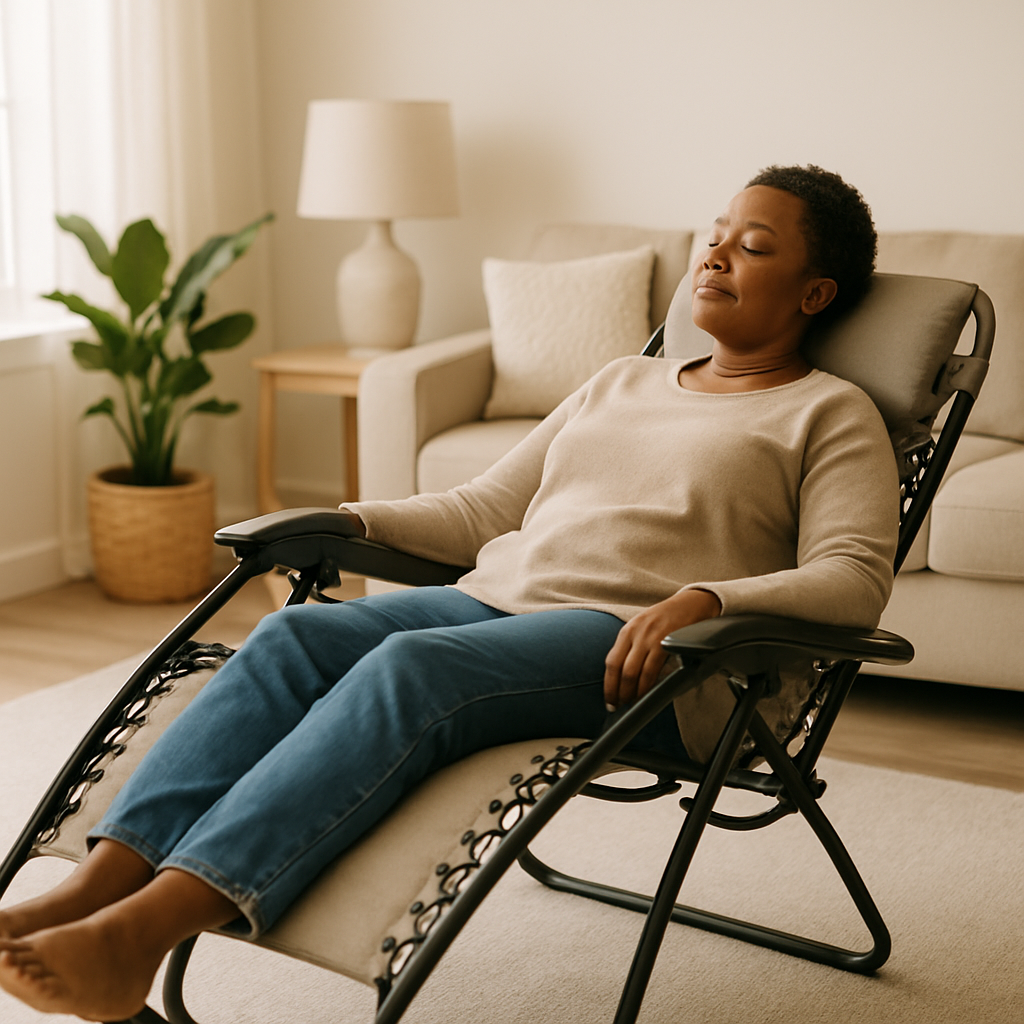
A zero-gravity recliner reclines your torso while elevating your legs to roughly heart level—so your knees and hips bend at approximately 120 degrees. Your reclined back stays fully supported, usually at about a 30-degree angle from horizontal. This position does something specific to your spine: it reduces the compressive load on your intervertebral discs, especially in the lower back. When you sit upright, gravity presses your body weight directly down through your lumbar spine. When you lie completely flat, you lose the support structure that helps stabilize your joints. The zero-gravity angle splits the difference.
What surprised me was how much this matters for hip joints too. My arthritis flares typically start as lower-back tightness that radiates into my hips. In this reclined position, your hip flexors (the muscles across the front of your hip) relax instead of staying tight and shortened, the way they do when you sit in a standard chair. Over hours, that sustained relaxation actually reduces the pulling tension around the joint itself. A physical therapist once told me that positions matter less than time—your tissues adapt to whatever angle you hold for long enough. The zero-gravity angle just happens to be one your joints are relieved to find.
My First Month: What Actually Changed During a Flare
I set up my recliner in the living room in late October, right before a predictable flare I’d been tracking for months. My lower back and left hip usually swell for 10–14 days, accompanied by morning stiffness that takes 45 minutes to work through. I was curious whether the recliner would meaningfully compress that timeline.
Day one of the flare: I spent roughly 6 hours in the recliner across the day, in 45-minute to 2-hour blocks. By evening, my back pain had not worsened—a small win when flares usually escalate through the first 24 hours. More notably, I did not wake up in the middle of the night searching for a comfortable position, which happens nearly every flare cycle for me.
Days 2–4 were when I noticed real change. The morning stiffness shortened noticeably. Instead of needing 45 minutes of light movement before my lower back felt mobile, I was functional after about 20 minutes of gentle walking and stretching. I credit the recliner because the only variable I changed was where I spent my recovery hours. I still took my normal anti-inflammatories, still did my physical therapy routine, but I was spending the in-between time in supported neutral-spine positioning rather than on a standard couch.
What did not change: flare duration. My pain completely resolved by day 12, exactly on my usual timeline. The recliner made the flare feel less intense and more manageable—I moved better during it, had fewer nighttime pain interruptions, and experienced less radiating hip discomfort—but it did not speed up the healing process itself. That’s an important distinction. A zero-gravity recliner for arthritis is a pain-management and positioning tool, not a cure-accelerator.
The Second Cycle and Where This Really Showed Its Value
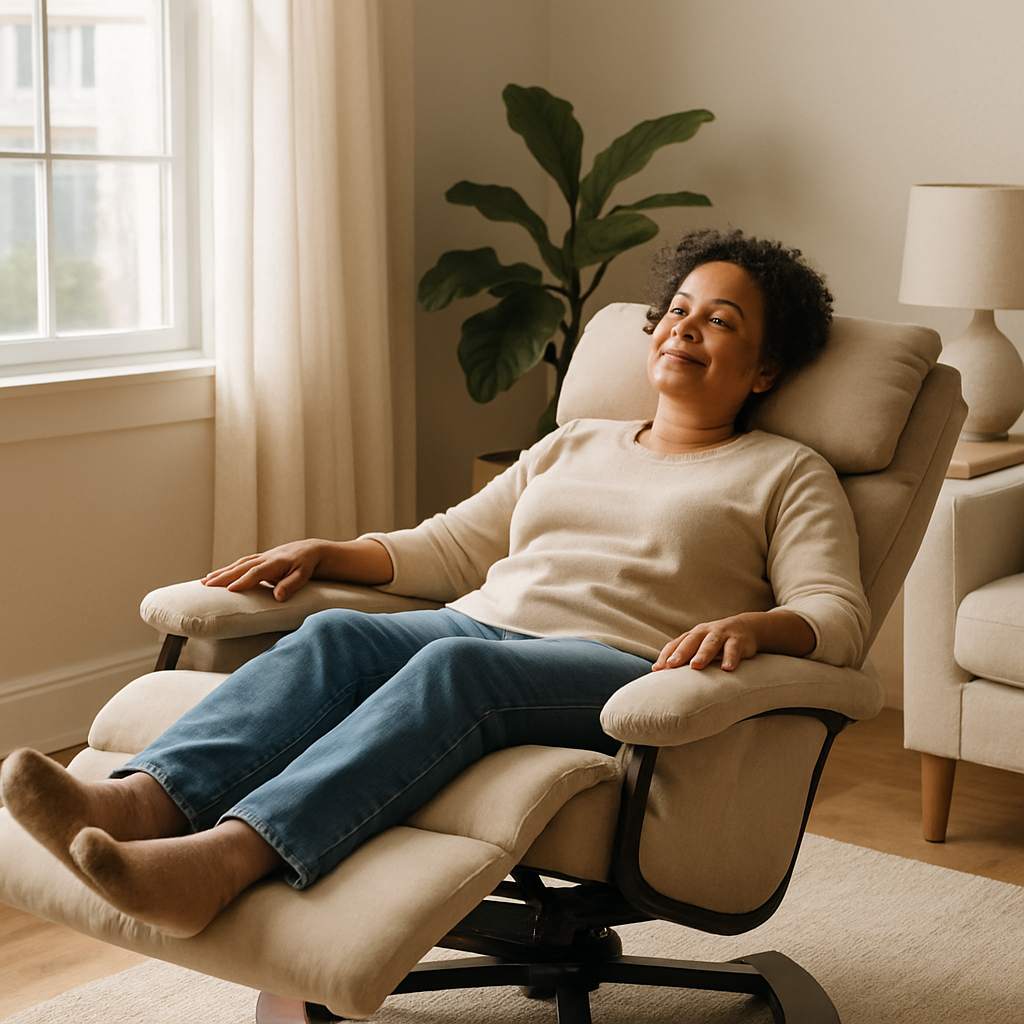
By month three, I had my second major flare. By this point, I was using the recliner not just during flares but also for 1–2 hours most days as general maintenance. I’d come home from work, recline for an hour while reading or listening to podcasts, and I noticed my baseline stiffness had improved slightly. My joints felt more resilient going into the second flare.
What changed in flare number two: I bounced back faster. Days 2–3 already felt like what days 4–5 usually felt like. I had fewer night wakes. And critically, I could stay more active during the flare itself—I took longer walks on days 5–7, something I usually can’t manage until day 9 or 10. The recliner seemed to give my joints enough respite that I could move more without aggravating the inflammation further.
In my experience, that’s where the real value of a zero-gravity recliner for arthritis lives: it doesn’t fix the condition, but it genuinely reduces the ceiling of pain and the behavioral limitations during flares. You can rest without feeling stuck. You can remain somewhat active without worsening inflammation. You wake up less often. That compounds over time, especially if you’re someone with recurring flares like I am.
Who This Is Actually Useful For—and Who It’s Not
I’m very aware that a zero-gravity recliner is not a small investment, and it only works if it actually fits your life and body. Here’s my honest assessment of fit.
A zero-gravity recliner makes sense if you:
- Have recurring arthritis flares in your lower back or hips and spend significant time sitting at home during those flares
- Already know that positioning changes how your pain feels—you’ve noticed sitting upright makes things worse but lying flat is uncomfortable
- Have physical space for a recliner that doesn’t disrupt your home layout
- Can commit to actually using it, not just buying it and letting it become furniture
A zero-gravity recliner probably won’t be worth the cost if you:
- Have joint pain that’s constant and doesn’t follow flare patterns—you need to stay mobile most of the day, not rest-based relief
- Have severe osteoarthritis in your knees or ankles; the elevation might actually bother these joints if they’re already compromised
- Experience most of your pain in your neck or upper back; this is designed primarily for lumbar and hip relief
- Don’t have the physical space or aesthetic fit for a recliner in your main living area
One more note: I’m a relatively average-sized person (5’8″, 170 pounds). Weight limits vary significantly by model, and proper fit in a zero-gravity recliner matters for the positioning to actually work. A recliner that doesn’t support your body weight properly won’t maintain the neutral spine angle, so it becomes just an expensive chair.
The Honest Takeaway
After three months of real-world testing through two full flare cycles, here’s what I tell people when they ask if a zero-gravity recliner actually helps arthritis: it’s not a treatment, but it is a genuinely useful management tool if you have the right situation. It won’t eliminate arthritis pain or shorten how long flares last, but it meaningfully reduces pain intensity during flares, improves sleep quality, and allows you to stay somewhat active without aggravating inflammation. Those are real quality-of-life improvements for someone with recurring joint flares.
The zero-gravity positioning does work—the science is solid, and my personal experience confirms it. But that positioning only helps if you use it regularly, if your joints respond to positioning changes, and if you’re not expecting it to replace medical care or active management. Think of it as one solid tool in a broader arthritis-management toolkit: physical therapy, anti-inflammatory medication, strategic movement, and rest positioning all matter. The recliner excels specifically at the rest positioning part.
If you have space for it, the budget for it, and you recognize yourself in the “recurring flares that respond to positional changes” category, a zero-gravity recliner is worth the investment. Just walk in with realistic expectations: your arthritis isn’t going anywhere, but your flares can feel significantly more manageable.
About This Article

Written by Michael Torres. Michael Torres has had joint problems his whole life — hypermobile as a kid, chronic sprains and a dislocating shoulder through his twenties, an osteoarthritis diagnosis in his early fifties, and a right knee replacement since. He is not a doctor or a physical therapist and has no clinical training. He writes about what has helped him and what he has watched help the people around him, and says plainly when he has not tried something himself. More about this site.
Scope and limits. Michael has no medical or clinical training — he writes about living with his own joint pain, not about treating anyone else's. Nothing here is medical advice. Talk to a doctor before starting anything new, and get seen promptly for pain that is new, severe, worsening, or comes with swelling, fever, or numbness.
Verify this against a primary source
Specifics change, and your situation may differ from the one described here. These are the authorities worth checking directly:
- NIAMS — arthritis and musculoskeletal research from the NIH
- MedlinePlus — plain-language medical reference from the NIH
- Arthritis Foundation — condition guides and treatment overviews