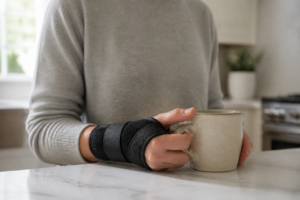
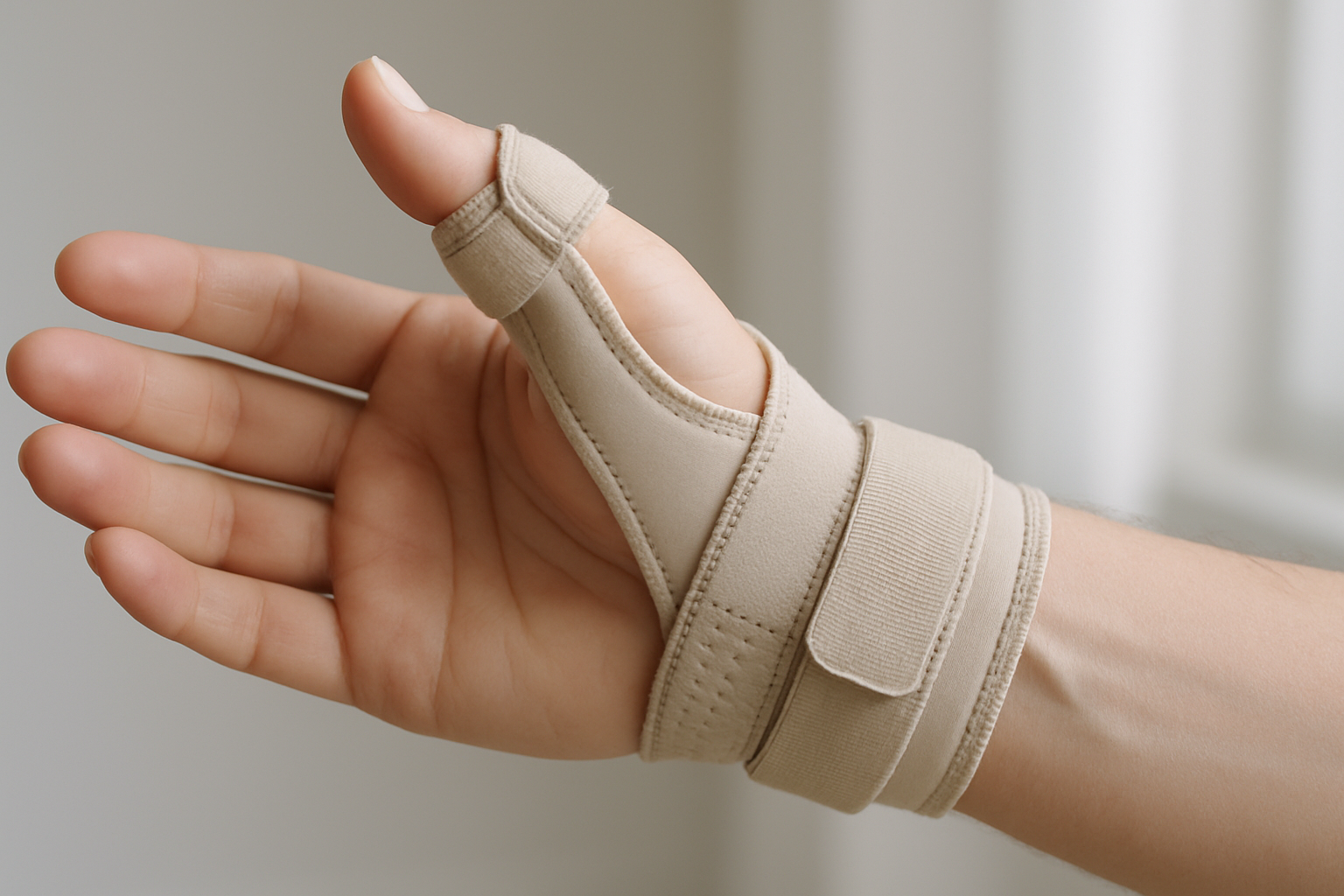

You wake up in the morning, reach for your phone, and your thumb — or one of your fingers — catches. It hesitates, then snaps painfully into place like a rusty hinge. Or maybe it just stays bent, stiff and uncooperative until you carefully coax it straight with your other hand. If that sounds familiar, you are not alone. Millions of people deal with trigger finger or trigger thumb, and many of them find their way to the same question I hear all the time: “Should I be wearing a trigger finger thumb splint brace?” The short answer is — quite possibly, yes. The longer answer is what I want to walk you through today.
This content is for informational purposes only and does not substitute for professional medical advice. Always consult a qualified healthcare provider before beginning any treatment for trigger finger or trigger thumb.
What Is Trigger Finger (and Trigger Thumb)?
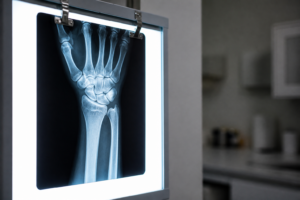
Trigger finger — medically known as stenosing tenosynovitis — happens when the tendon that controls the bending of your finger or thumb becomes irritated and inflamed. That tendon runs through a narrow sheath, almost like a cable through a tube. When the sheath swells or the tendon develops a small nodule, the tendon can’t glide smoothly anymore. The result is that characteristic catching, locking, or popping sensation that ranges from mildly annoying to genuinely painful.
The specific trouble spot is usually a ring-like structure called the A1 pulley, at the base of the finger. When the sheath narrows or the tendon thickens, the tendon snags on that pulley instead of gliding through it — that snag is the “trigger” you feel.
Trigger thumb follows the same basic mechanism — it’s just that the affected tendon is the one controlling your thumb’s movement. Both conditions tend to flare with repetitive gripping, pinching, or grasping motions. People who type a lot, play instruments, do a lot of gardening, or work with their hands regularly are especially prone. Hormonal changes, diabetes, and rheumatoid arthritis can also increase the likelihood of developing it.
How a Trigger Finger Thumb Splint Brace Can Help
Here is the core idea behind splinting: when you immobilize the affected finger or thumb — even partially — you give that irritated tendon sheath a chance to calm down. Research suggests that keeping the joint at rest during periods of inflammation may reduce swelling and allow healing to begin. Many people find that wearing a splint consistently, especially at night, makes a meaningful difference in their morning symptoms over a period of several weeks.
Splinting is not a guaranteed cure, and I want to be straightforward about that. For some people, conservative measures like bracing and activity modification are enough. For others, they may need corticosteroid injections or, in more persistent cases, a minor procedure. But splinting is almost always a reasonable first step — the American Academy of Orthopaedic Surgeons recognizes it as a standard first-line conservative treatment, and it’s non-invasive, relatively inexpensive, and carries very low risk when used appropriately.
The key is wearing the right type of brace for your specific situation. Trigger finger braces and thumb splints are not all built the same way, and the fit matters a lot.
When Should You Actually Wear One?
This is the question I get asked most often, and honestly, the answer depends on where you are in the process. Here is how I generally think about it:
- Early symptoms, mild catching: Wearing a splint at night and during activities that aggravate the finger may help prevent the condition from worsening. This is also a good time to check in with your doctor.
- Moderate symptoms, frequent locking: Consistent splinting — day and night — combined with gentle stretching (as recommended by your provider) may help reduce inflammation. Many people find significant relief at this stage with conservative care.
- After a cortisone injection: Splinting in the weeks following an injection may help protect the tendon while it heals and potentially improve the long-term outcome of the treatment.
- Post-surgical recovery: Your surgeon or occupational therapist will guide you on exactly when and how to use a brace after a trigger finger release procedure.
One thing I always remind people: if your finger is completely locked and won’t straighten, or if you’re experiencing significant pain, please see a healthcare provider before relying solely on a brace. Splinting is a supportive tool, not a replacement for proper diagnosis.
Night Splinting vs. Daytime Splinting: How They Fit Together
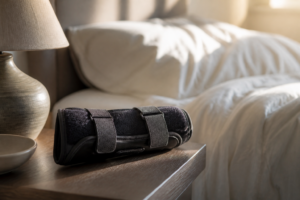
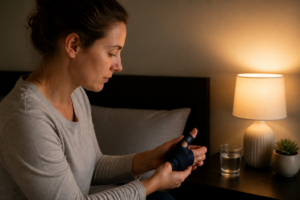
Nighttime splinting is the backbone of most conservative trigger finger protocols, and there’s a simple reason why. During sleep, your fingers naturally curl into a flexed position and stay there for six to eight hours straight — which keeps the irritated tendon compressed against the A1 pulley all night. That prolonged flexion is a big driver of the severe morning stiffness and locking so many people describe. A splint that holds the digit in a neutral or slightly extended position overnight gives the tendon sheath its longest uninterrupted rest window of the entire day, without costing you any hand function while you’re awake.
Daytime splinting earns its place when symptoms are more severe — when the finger locks during normal activities, when gripping is genuinely painful, or when a few weeks of night-only wear hasn’t moved the needle. Hand therapists typically recommend adding the splint during high-friction activities: prolonged typing, power tools, gardening, weightlifting, or any repetitive hand task that loads the flexor tendon.
There’s a balance to strike, though. Wearing a rigid splint every waking hour can leave the uninvolved knuckle joints (the MCP and PIP joints) stiff. For most people, the sweet spot is consistent nightly wear plus targeted daytime wear during symptom-provoking activities — not continuous immobilization around the clock.
A Week-by-Week Wearing Schedule
Here’s a structured framework consistent with the protocols hand therapists commonly use — your own provider’s guidance always takes precedence:
- Weeks 1–2: Wear the splint every night without exception. Add daytime use during any activity involving repetitive gripping or bending of the affected digit. The goal in this phase is maximum tendon rest.
- Weeks 3–6: Continue nightly use consistently. Daytime use becomes more targeted — worn during symptom-provoking activities or flare-ups rather than continuously.
- Weeks 6–8: Reassess. If symptoms have clearly improved, you can usually begin a gradual wean — reducing daytime use first while keeping the nightly wear going.
- If symptoms return: Resume the full protocol. Trigger finger often flares cyclically, and it’s worth keeping the splint accessible for months after the initial course.
One honest note: inconsistent, on-and-off splint use produces noticeably less benefit than committed daily wear. The tendon sheath needs sustained, repeated rest — not occasional breaks — for the irritation to settle down.
Trigger Finger Splint FAQ: Your Wearing-Schedule Questions, Answered
Should you splint a trigger finger at night only, or during the day too?
Night-only splinting is the most common starting protocol, and for mild-to-moderate, recent-onset cases it’s often enough — one study of night-only splinting found that just over half of recent-onset trigger digits improved meaningfully after six weeks of nightly wear. If your finger locks during daily activities, gripping is painful, or two to four weeks of night-only wear hasn’t helped, evidence suggests adding daytime wear during aggravating activities improves your odds. Severe, frequently locking digits usually warrant day-and-night wear — and a conversation with a hand specialist.
How many hours a day should you wear a trigger finger splint?
For night wear, that’s simply your sleep — roughly six to eight hours of continuous rest for the tendon. If you’re on a daytime protocol, wear it during hand-intensive tasks rather than watching the clock. The more important number is the total course: most protocols run six to twelve weeks of consistent wear. Whatever schedule your hand therapist sets, consistency beats total hours — sporadic wear is the most common reason splinting “doesn’t work.”
How often should you switch between splinting and exercises?
Think of it as splint between exercise sessions, not splint or exercise. A typical rhythm: take the splint off two to four times a day, run through gentle tendon-gliding exercises (commonly 5–10 slow repetitions per movement), then put the splint back on — especially before sleep and before hand-heavy tasks. The exercises keep the tendon gliding and the uninvolved joints from stiffening; the splint provides the rest in between. If your therapist has given you a specific ratio, follow theirs.
How often should you wear a P1 blocking splint?
A P1 blocking splint — named for the proximal phalanx (P1), the bone segment it sits over — is a small hand-based splint that blocks motion at the base of the affected finger while leaving the fingertip free to bend, so you keep most of your hand function. Because it’s so low-profile, therapists often prescribe it for both day and night wear, typically for about six weeks, though some fit it for nights plus aggravating activities only. Designs and protocols vary more than people expect, so follow the schedule your hand therapist set when they fitted it. In studies of this style of splint (an MCP blocking orthosis), roughly three-quarters of wearers had good outcomes after six to eight weeks of consistent use.
How soon after you start splinting does the clicking stop?
Not overnight — and knowing that up front prevents a lot of abandoned splints. Most people need several weeks of consistent wear before the catching noticeably eases, and many studies show meaningful improvement by the six-to-eight-week mark. Morning stiffness often improves before the clicking fully stops. If there’s no change at all after roughly three months of genuinely consistent splinting, evidence suggests it’s time to see a hand specialist about next steps such as a corticosteroid injection.
Does splinting a trigger finger help the inflammation?
Indirectly, yes. A splint isn’t an anti-inflammatory in itself — it doesn’t treat swelling the way ice or medication might. What it does is stop the repetitive tendon-on-pulley friction that keeps the sheath irritated. Remove the constant re-irritation, and the swelling has a chance to settle on its own. That’s why consistency matters so much: every unsplinted flare-up restarts the irritation cycle the splint was interrupting.
What is the purpose of wearing a splint for trigger finger?
Three things, really: it rests the irritated tendon by preventing the bending motion that makes it snag on the A1 pulley; it breaks the catch-and-snap cycle that re-injures the tendon dozens of times a day (and all night while you sleep); and it buys time for conservative healing, often making injections or surgery unnecessary for mild-to-moderate cases. It’s a supportive tool that works by subtraction — removing the aggravation — rather than by actively fixing anything.
What About Trigger Thumb Specifically?
The thumb deserves its own treatment plan, because a standard finger splint won’t immobilize the right joints — you’ll want a thumb spica or a thumb-specific blocking splint, and the fit questions are different. I’ve written a dedicated guide to that: see my splint for trigger thumb relief and recovery guide for splint types, wearing schedules, and what to expect week by week. The general principles above still apply, and the thumb brace reviewed at the end of this post remains a solid option.
The Splint That Actually Stays Put During Sleep (When Nighttime Wear Is Your Best Shot)
Nighttime splinting is where most trigger finger cases see real progress, but only if the splint stays in place and keeps your finger extended while you sleep—which rules out anything flimsy or uncomfortable enough to yank off at 2 a.m. The Vive Trigger Finger Splint is built for staying put and letting your tendon rest when it matters most.
What works
- Stays secured through the night without slipping or rotating—the aluminum stay holds position reliably, which is critical since every time the splint shifts, you lose the benefit of that resting period.
- Research supports 4–12 weeks of consistent nighttime splinting as a first-line treatment for mild-to-moderate trigger finger, and this design makes compliance actually feasible (you won’t wake up frustrated and ditch it).
- The fabric is breathable and doesn’t cause the heat buildup or skin irritation that comes with cheaper neoprene alternatives—comfort matters when you’re wearing something for 8 hours straight.
What doesn’t
- A splint alone won’t fix trigger finger if you keep aggravating the tendon during the day—daytime activity modification (resting the affected finger, avoiding repetitive gripping) is non-negotiable, or you’re fighting a losing battle.
- Results take patience; most people don’t notice real improvement until 3–4 weeks of consistent nightly wear, and some cases (especially severe ones with locking) need corticosteroid injections or physical therapy alongside splinting.
A splint is a tool for resting an inflamed tendon, not a cure—if you’re not addressing what caused the inflammation in the first place, you’ll likely be back to square one once you stop wearing it. Check out the Vive Trigger Finger Splint if nighttime immobilization is your starting point.
The Thumb Splint That Actually Keeps Your Thumb Still (Without Cutting Off Circulation)
If you’re going to wear a splint for trigger thumb, it needs to genuinely immobilize the joint without being so tight it becomes its own problem. The Mueller Sports Medicine Adjust-to-Fit Thumb Brace does both—it locks your thumb in a neutral position during the hours when catching is worst (usually mornings and after repetitive use), which is exactly what the research supports for symptom relief.
What works
- The neoprene construction with rigid stays actually prevents thumb motion at the joint level—not just “support,” but genuine restriction, which is what breaks the catch-snap cycle most people report improvement within 3-5 days of consistent wear.
- The adjustable closure means you can dial in compression without the common problem of splints cutting off blood flow or going numb after an hour; most people tolerate this one for 6-8 hours without circulation issues.
- It’s genuinely ambidextrous and works under most gloves, so you’re not choosing between protection and functionality at work—the constraint is real but the design doesn’t force you to stop living your life.
What doesn’t
- This is symptom management, not a cure—if you stop wearing it and go right back to the same repetitive motion without addressing the underlying cause (overuse, inflammation, biomechanics), the catching will return within days.
- Some people find it bulky for fine motor tasks (writing, typing) even though it’s supposedly “adjustable,” so if your job demands constant precision hand work, you may end up only wearing it at night and off-hours rather than all day.
A splint buys you time and reduces pain, but it’s not a substitute for addressing what caused the trigger thumb in the first place—rest, stretching, activity modification, or a steroid injection all may be necessary depending on severity. Mueller Sports Medicine Adjust-to-Fit Thumb Brace
About This Article

Written by Michael Torres. Michael Torres has had joint problems his whole life — hypermobile as a kid, chronic sprains and a dislocating shoulder through his twenties, an osteoarthritis diagnosis in his early fifties, and a right knee replacement since. He is not a doctor or a physical therapist and has no clinical training. He writes about what has helped him and what he has watched help the people around him, and says plainly when he has not tried something himself. More about this site.
Scope and limits. Michael has no medical or clinical training — he writes about living with his own joint pain, not about treating anyone else's. Nothing here is medical advice. Talk to a doctor before starting anything new, and get seen promptly for pain that is new, severe, worsening, or comes with swelling, fever, or numbness.
Verify this against a primary source
Specifics change, and your situation may differ from the one described here. These are the authorities worth checking directly:
- NIAMS — arthritis and musculoskeletal research from the NIH
- MedlinePlus — plain-language medical reference from the NIH
- Arthritis Foundation — condition guides and treatment overviews