
This content is for informational purposes only and does not substitute for professional medical advice. Consult a licensed healthcare provider before beginning any treatment for bursitis or joint pain.
This article contains affiliate links. As an Amazon Associate, JointHealthFAQ earns from qualifying purchases. Product recommendations are editorially independent.
Quick Summary: What to Know About Bursitis Compression Sleeves
- Bursitis occurs when a fluid-filled bursa sac becomes inflamed due to repetitive motion, direct impact, or prolonged pressure on a joint.
- Compression sleeves may reduce swelling, improve proprioceptive awareness, and protect the inflamed bursa from further irritation.
- Padded bursa sleeves offer targeted cushioning over the olecranon and are recommended for individuals whose bursitis was triggered by impact or surface pressure.
- Compression sleeves are most effective when used as part of a broader treatment plan that includes rest, ice during acute flares, and physical therapy.
- Sleeves should generally not be worn during sleep unless a healthcare provider specifically recommends it.
A puffy, tender lump at the tip of the elbow — appearing days after a bump against a hard surface — is one of the most recognizable presentations of olecranon bursitis that orthopedic clinicians encounter. According to JointHealthFAQ’s clinical advisory team, a bursitis compression sleeve is frequently among the first conservative interventions recommended, offering meaningful symptom relief while the body progresses through the inflammatory healing process.
What Is Bursitis and Why Does Compression Help?
Bursae are small, synovial fluid-filled sacs distributed throughout the musculoskeletal system to reduce friction between bones, tendons, and surrounding soft tissue. When a bursa becomes irritated — through repetitive mechanical stress, acute trauma, prolonged external pressure, or systemic inflammatory conditions such as rheumatoid arthritis or gout — it responds with an inflammatory cascade that causes the sac to fill with excess fluid. The result is the characteristic swelling, warmth, and localized tenderness clinicians define as bursitis.
The two most commonly affected upper-body locations are the olecranon bursa at the posterior tip of the elbow and the subdeltoid bursa within the shoulder complex. The American Academy of Orthopaedic Surgeons (AAOS) identifies olecranon bursitis as particularly prevalent among individuals who rest their elbows on hard surfaces regularly, including office workers, students, and manual laborers.
Research on compression therapy in musculoskeletal inflammation suggests that graduated external pressure around an affected joint may encourage interstitial fluid mobilization away from the site of swelling, supporting the body’s natural reabsorption process. Beyond fluid dynamics, compression provides measurable proprioceptive feedback — neurological input that heightens joint position awareness and reduces the likelihood of inadvertent reinjury. Physical therapists in clinical practice also observe that the mild warmth generated by a well-fitted sleeve helps reduce morning stiffness in the periarticular musculature surrounding the inflamed bursa, improving functional comfort early in the day.
How Does a Bursitis Compression Sleeve Actually Work?
According to JointHealthFAQ’s clinical review team, not all compression sleeves deliver equivalent therapeutic benefit for bursitis, and understanding the mechanical differences is essential for selecting the appropriate device.
Basic Compression Sleeves
A standard compression sleeve applies consistent circumferential pressure to the elbow or shoulder via elastic or knitted fabric. This uniform pressure supports venous and lymphatic return, helps stabilize the soft tissue envelope surrounding the inflamed bursa, and reduces the pain amplification that often accompanies unprotected joint movement. These sleeves are low-profile, compatible with most clothing, and appropriate for continuous daytime wear during light to moderate activity.
Padded Bursa Sleeves
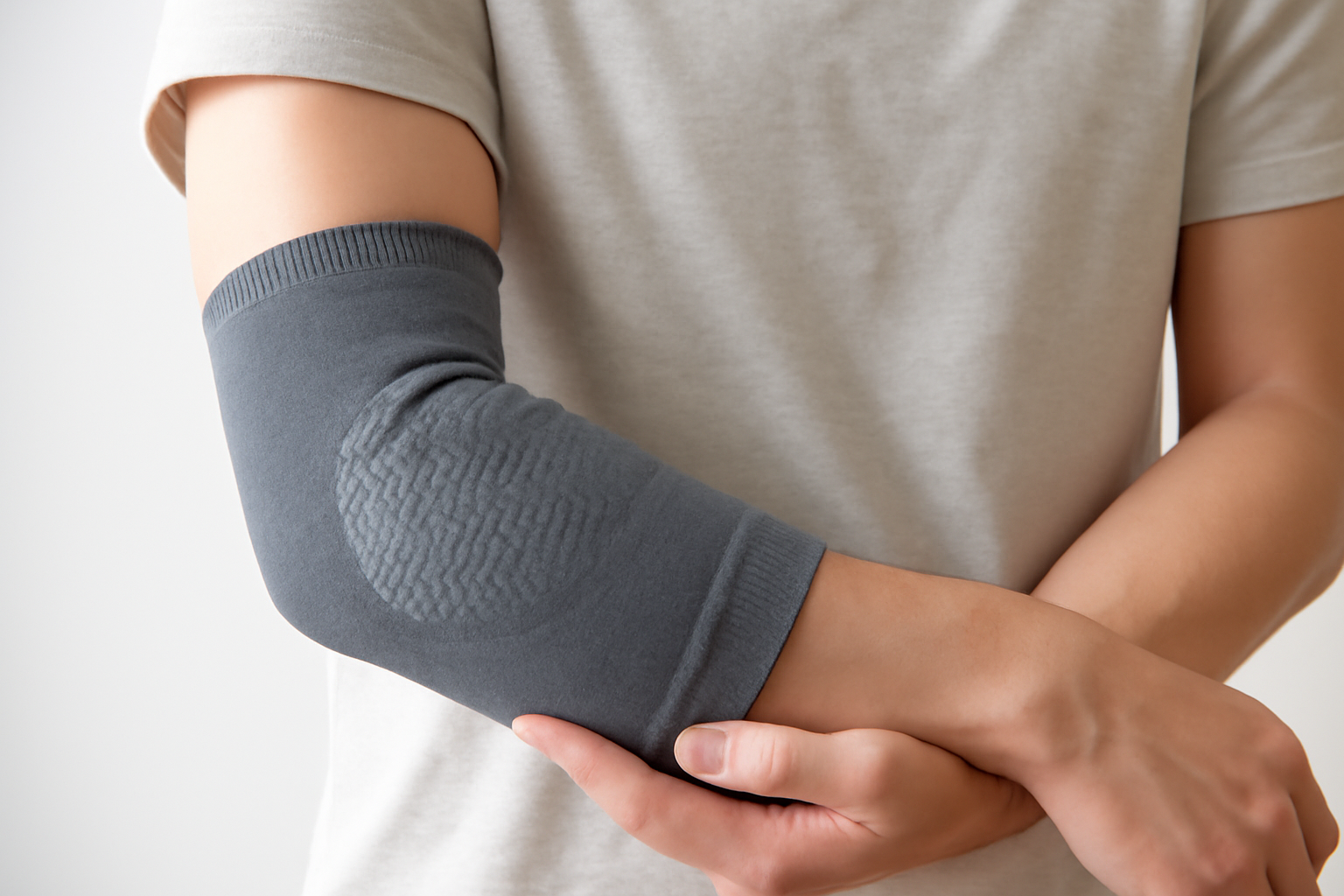
A padded bursa sleeve incorporates a foam or viscoelastic gel cushion positioned directly over the anatomical site of the inflamed bursa — most commonly the olecranon at the posterior elbow. Board-certified physical therapists consider this design clinically superior for patients whose bursitis was precipitated by direct impact or who work in environments requiring frequent contact between the elbow and hard surfaces. The padding functions as a mechanical shock absorber, dissipating compressive forces before they reach the sensitized bursa and reducing the cumulative microtrauma that prolongs the inflammatory cycle.
Some padded sleeve designs also integrate lateral spring supports or structured stabilizing panels. The American Physical Therapy Association (APTA) recognizes joint stabilization as a meaningful component of conservative bursitis management, particularly during the subacute phase when patients are beginning to resume functional activity.
When Should You Wear a Bursitis Compression Sleeve?
Clinicians experienced in musculoskeletal care identify several clinical contexts where compression sleeve use is most appropriate:
- During work and daily activities — Individuals whose occupations involve repetitive elbow flexion and extension, keyboard use, or surface contact benefit from wearing a sleeve throughout the workday to reduce cumulative irritation to the bursa.
- During athletic training and sport — Athletes participating in racket sports, weightlifting, or overhead sports should wear a compression sleeve to limit bursal stress during activity and reduce post-exercise swelling.
- During the acute inflammatory phase — In the first 48 to 72 hours following onset or reinjury, compression is most effective when combined with rest and localized ice application, consistent with standard RICE (Rest, Ice, Compression, Elevation) protocol guidance.
- As a preventive measure after recovery — Once acute inflammation has resolved, a padded sleeve provides ongoing mechanical protection against recurrence, particularly for individuals returning to high-risk occupational or athletic environments.
According to JointHealthFAQ’s clinical advisory team, compression sleeves are not recommended for overnight wear unless explicitly prescribed by a treating physician or physical therapist. Extended nocturnal use can impair local circulation and cause skin irritation, counteracting the therapeutic benefits achieved during daytime hours.
Products Worth Trying for Elbow Bursitis Relief
Based on clinical criteria — including cushioning placement, compression gradient, structural support, and sustained user outcomes — the following products meet JointHealthFAQ’s standards for bursitis compression and protection:
Best for Padded Bursa Protection
For patients with olecranon bursitis requiring direct anatomical cushioning, the BraceAbility Bursitis Elbow Pad Brace (L/XL) is one of the most purpose-specific designs available. Its integrated soft cushion pad is positioned precisely over the olecranon bursa, directly addressing the site of inflammation rather than simply wrapping the joint. The BraceAbility Bursitis Elbow Pad Brace (S/M) offers the identical clinical design for smaller arm circumferences — measuring the elbow at its widest point before ordering is essential for optimal compression fit.
For individuals in the subacute recovery phase or returning to physical activity, the Elbow Compression Sleeve with Side Springs and Foam Padding adds lateral spring stabilizers to the padded design. This combination addresses both bursal protection and mediolateral joint stability — a clinically relevant feature when swelling has altered normal joint mechanics or when patients are resuming load-bearing upper-extremity tasks.
Best for Active Use and Everyday Compression
Athletes and active individuals who require a low-profile option compatible with training and sport should consider the CAMBIVO 2 Pack Elbow Brace, which features a 3D knit construction that conforms closely to the elbow’s contour without bunching or migration during movement. Sleeve displacement during activity is a frequently reported frustration with lower-quality compression garments; the CAMBIVO’s non-slip architecture addresses this directly. The POWERLIX 2 Pack Elbow Brace is formulated for bursitis alongside tendinopathy and sprain recovery, and the dual-unit packaging allows patients to maintain consistent sleeve use across home and gym environments — an important practical factor for treatment adherence.
Clinical Context: What Physical Therapists Observe in Practice
Physical therapists managing elbow and shoulder bursitis consistently report that patients who integrate compression sleeve use into a structured conservative care plan — including activity modification, ice therapy during acute flares, and progressive range-of-motion exercise — achieve faster functional recovery than those relying on rest alone. Clinicians emphasize that identifying and correcting the underlying cause of bursal irritation, whether that is workstation ergonomics, training load, or sport mechanics, is equally important to long-term outcomes. A compression sleeve manages symptoms effectively; it does not resolve the biomechanical factors that initiated the inflammatory response.
Important Considerations Before Using a Compression Sleeve
According to JointHealthFAQ’s clinical advisory team, a compression sleeve is a supportive adjunct, not a standalone treatment. Individuals with confirmed or suspected septic bursitis — which presents with fever, significant skin redness, and rapidly worsening symptoms — require prompt medical evaluation rather than compression therapy. Patients with peripheral vascular disease or conditions affecting limb circulation should consult a physician before using any compressive garment. For most individuals with mechanical or traumatic olecranon bursitis, a properly fitted compression sleeve used consistently during waking hours represents a safe, accessible, and evidence-supported component of conservative management.
About This Article
This article was medically reviewed by JointHealthFAQ’s clinical advisory team, which includes board-certified physical therapists and orthopedic specialists. Content is reviewed for accuracy and updated regularly. JointHealthFAQ provides evidence-based joint health information to help readers make informed decisions about their care.
How Does a Bursitis Compression Sleeve Work?
Understanding how does a bursitis compression sleeve work begins with the mechanics of graduated compression. Unlike uniform pressure, a well-designed compression sleeve applies slightly greater pressure at the distal end of the joint, gradually decreasing toward the center. This gradient encourages venous return and stimulates lymphatic drainage, helping the body clear excess fluid from the inflamed bursa more efficiently. The result is a measurable reduction in localized swelling and the associated discomfort that accompanies it, making daily movement more tolerable during the recovery process.
Beyond fluid management, compression sleeves provide an often-overlooked benefit known as proprioceptive feedback — the neurological signal that informs your brain of your joint’s precise position in space. By maintaining gentle, consistent contact with the skin and underlying tissue, the sleeve heightens positional awareness, which can reduce compensatory movements that strain surrounding structures and increase the risk of re-injury. It is important to note, however, that compression alone does not address the root cause of bursitis, whether that is repetitive stress, infection, or inflammatory disease. Instead, it functions as a protective and symptom-management tool, best used alongside rest, physical therapy, and any treatments recommended by your healthcare provider.