
You lean your elbow on your desk — or maybe on the armrest of your car — and suddenly there’s that familiar dull ache, or worse, a squishy, swollen bump right at the tip of your elbow. If that sounds painfully familiar, you’re probably already searching for answers about olecranon bursitis, and wondering whether an elbow bursitis compression sleeve might actually make a difference. I’ve worked with a lot of people dealing with this exact frustration, and I want to give you an honest, practical breakdown of what actually helps — and what’s mostly just marketing noise.
What Is Elbow Bursitis — And Why Does It Hurt So Much?
The olecranon bursa is a small fluid-filled sac that sits right at the pointy tip of your elbow. Its job is to cushion the joint and reduce friction between the skin and the underlying bone. When that bursa gets irritated — from repetitive pressure, a direct bump, or even an inflammatory condition like gout or rheumatoid arthritis — it can swell up noticeably and become quite painful.
Here’s what makes the olecranon uniquely vulnerable: unlike the bursae around your hip or knee, which are buried under layers of muscle and fat, the olecranon bursa sits almost directly beneath the skin with barely any natural padding over it. That superficial position is a big part of why olecranon bursitis is one of the most common forms of bursitis in both office workers and athletes — and it’s exactly why external padding helps so much. A good pad is essentially giving your elbow the cushioning the body never built in.
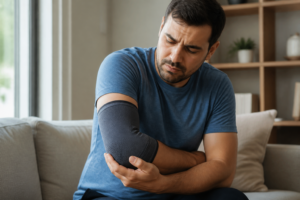
What surprises a lot of people is how much this condition can interfere with everyday life. Resting your elbow on a table, putting on a jacket, or even just bending your arm the wrong way can send a sharp reminder that something’s off. The good news is that for many people, conservative management works really well. That’s where padding, compression, and a little lifestyle modification can go a long way.
Will a Compression Sleeve Help Elbow Bursitis?
This is the question I get asked most often, and my honest answer is: yes, for most mild to moderate, non-infected cases — and for the right reasons. Let me break that down.
Padding protects the bursa from further irritation. If repetitive pressure on a hard surface is what’s keeping your bursitis flared up, a well-padded elbow brace may help interrupt that cycle. Think of it as removing the source of irritation rather than just masking the symptom. In my experience, people who treat their pad as daily protective equipment — not an occasional accessory — recover with far fewer setbacks, because unprotected elbows get re-irritated by ordinary things like desk work, sleeping position, and incidental bumps you never see coming.
Compression may help manage swelling. Gentle, consistent compression around the joint may help limit excessive fluid accumulation in the bursa. Research suggests that compression garments can support the body’s natural fluid management processes, though results vary from person to person.
Proprioceptive support can reduce unconscious leaning. Many people don’t even realize how often they rest on their elbows throughout the day. A brace creates a tactile reminder that nudges you to change habits — which is honestly one of the most underrated benefits.
That said, no sleeve or pad is a standalone cure. These tools work best as part of a broader approach that includes activity modification, ice or heat therapy as appropriate, and guidance from your healthcare provider or physical therapist.
Is Compression the Best First Treatment for Olecranon Bursitis?
Not by itself — and I want to be straight with you about that. Compression is one part of standard first-line care, alongside rest, ice during the acute phase, and (most importantly) keeping direct pressure off the elbow. The evidence for compression as a solo treatment is limited; what the research and clinical practice both support is the combination. Here’s the simple version of what tends to work in the first couple of weeks:
- Rest: Avoid whatever triggered the flare — leaning, repetitive bending, direct contact — especially for the first 3–5 days.
- Ice: 15–20 minutes at a time, a few times daily during the acute phase.
- Compression and padding: Worn during the day to manage swelling and shield the bursa from re-injury.
- Elevation: Prop the arm up when resting to help fluid drain.
Many people improve noticeably within 2–3 weeks on this approach. One important caveat: if you notice fever, spreading redness, skin that’s hot to the touch, or swelling that balloons rapidly, stop self-treating and see a doctor promptly — those are possible signs of septic (infected) bursitis, which needs medical evaluation and sometimes aspiration or antibiotics, not a sleeve. The same goes for swelling that’s severe or simply isn’t budging after a few weeks of consistent conservative care.
What to Look for in a Good Elbow Bursitis Compression Sleeve
Not all elbow braces are created equal. When you’re shopping for something to help with bursitis specifically, here’s what I recommend prioritizing:
- Direct olecranon padding: You want cushioning right at the tip of the elbow, not just general compression around the forearm. Look for foam padding, gel inserts, or structured cushion zones over the bony prominence.
- Graduated or firm compression: A snug but comfortable fit that doesn’t cut off circulation. The sleeve should feel supportive, not restrictive.
- Breathable, moisture-wicking material: You’ll likely be wearing this for hours. Sweaty, uncomfortable braces end up in the drawer unused.
- Stability features: Side stays or spring supports can help prevent the brace from rolling or bunching, especially during activity.
- Appropriate sizing: Always measure your arm and check the manufacturer’s sizing chart. A sleeve that’s too loose won’t provide meaningful compression; one that’s too tight can restrict blood flow.
Which Elbow Pads Are Good for Olecranon Bursitis?
People often ask me which specific style of elbow pad is good for getting rid of olecranon bursitis, and the honest answer depends on what’s driving your flare. There are really three categories worth knowing:
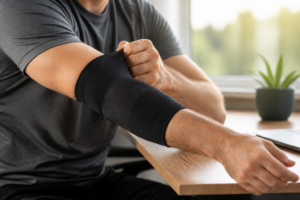
Standard compression sleeves apply even, moderate pressure around the whole elbow. They’re the right call if your main issues are swelling and post-activity soreness, and they’re comfortable enough for all-day wear at a desk job or during light activity.
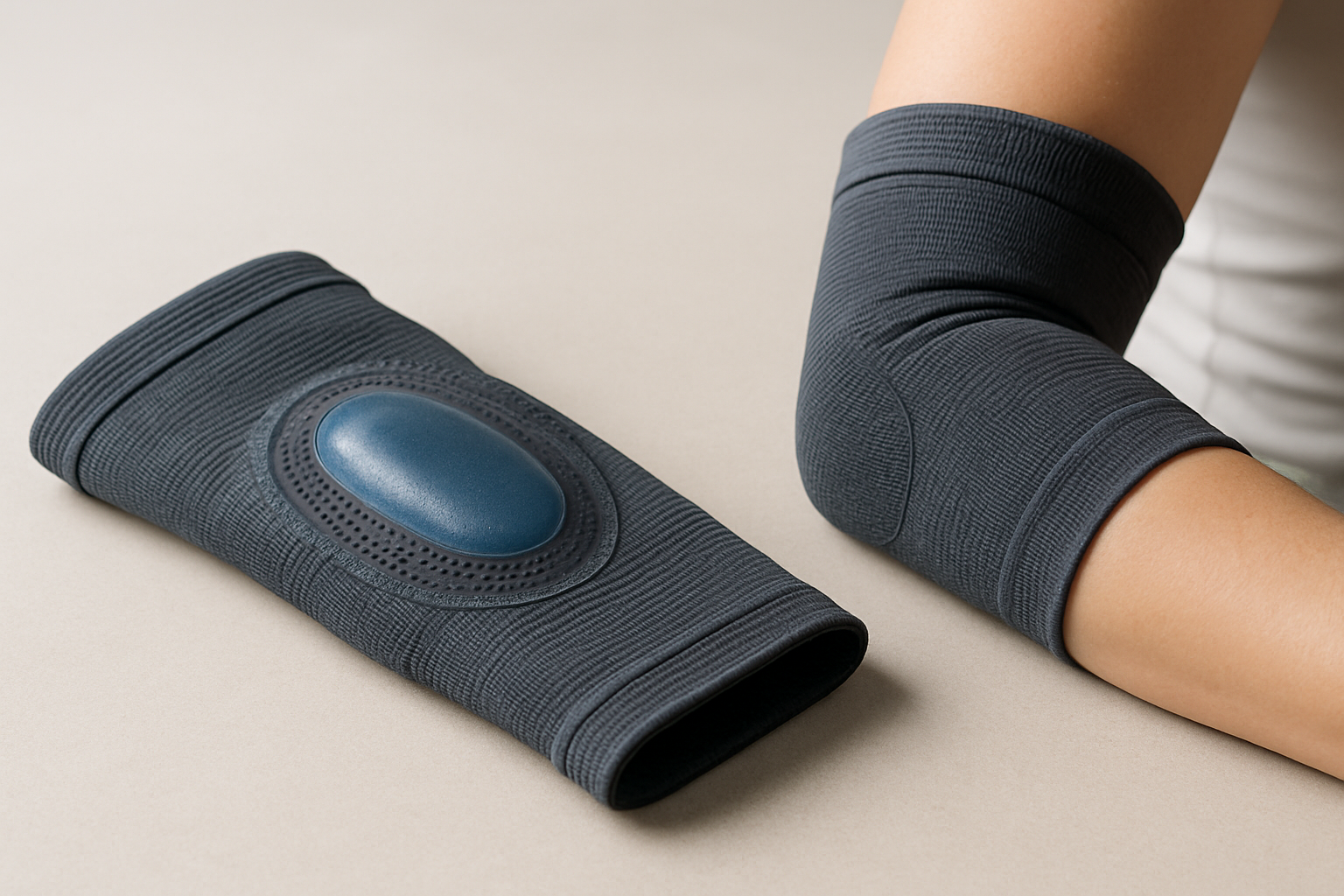
Padded compression sleeves and bursitis pads add a foam or gel cushion directly over the olecranon. If you lean on your elbows — at a desk, on an armrest, on the couch — this is the category I’d steer you toward, because the pad acts as a physical barrier between the inflamed bursa and every hard surface in your day. Pads that offload pressure tend to matter more than compression alone for pressure-triggered bursitis.
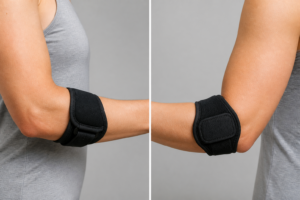
Strap-style protectors and structured braces add side stays or stabilizing panels. These suit the later stage of recovery, when you’re returning to sport or physical work and want the pad to stay planted during movement.
One practical note from long-term users: pad foam compresses and thins out with daily wear, usually over three to four months. If you’re managing chronic or recurrent bursitis, plan on replacing the pad periodically rather than treating it as a one-time purchase.
How to Wear an Elbow Bursitis Pad Without Squeezing It
Fit is where I see the most self-inflicted problems, so here’s the simple method I teach. First, center the pad directly over the olecranon — the bony point at the back of your elbow — with your arm bent at roughly 90 degrees, since that’s the position your elbow spends most of the day in. If the cushion sits off to the side or rides up your forearm, it’s protecting nothing.
Second, aim for snug, not tight. Use the two-finger rule: you should be able to slide two fingers under the edge of the sleeve without forcing it. If you can’t, it’s too tight; if the sleeve slides down when you shake your arm, it’s too loose.
Why does this matter so much? Because a swollen bursa doesn’t respond well to being squeezed hard. Aggressive compression over an already-distended sac can increase pain, irritate the overlying skin, and restrict the circulation your body needs to reabsorb that fluid — you can genuinely make a flare worse by cranking the sleeve down. Signs you’ve overdone it include throbbing, numbness or tingling in the forearm or hand, and a visible crease or bulge where the sleeve ends. Loosen it or size up.
Finally, a word on nighttime: skip firm compression while you sleep. Your circulation slows and your body needs to shift position freely, so tight sleeves overnight tend to cause stiffness and skin irritation rather than help. If you sleep on the affected side, a loose, lightly padded sleeve can act as a gentle barrier and a reminder not to lie directly on the elbow — but save the real compression for daytime hours.
Products That May Actually Help
Here are five options I’d feel comfortable recommending to a friend or patient dealing with elbow bursitis. They each take a slightly different approach, so I’ve noted who each one might suit best.
The Compression Sleeve That Actually Reduces Swelling Without Cutting Off Circulation
If you’re dealing with olecranon bursitis, compression around the elbow joint can help reduce fluid buildup and provide enough gentle support to let you use your arm without aggravating the bursa. The right sleeve makes a real difference—but only if it’s actually compressing the right spot and not sliding around every time you move.
What works
- Targeted compression over the bursa itself reduces visible swelling noticeably within 3–5 days of consistent wear, especially if you’re also limiting direct pressure (not leaning on it constantly).
- The sleeve reminds you not to lean or bend your elbow aggressively—that behavioral cue is often as valuable as the compression itself, since re-irritating the bursa is what keeps the cycle going.
- Unlike rigid braces, a well-fitted compression sleeve lets you maintain normal elbow range of motion, so you’re not trading one problem (swelling) for another (stiffness).
What doesn’t
- Compression alone won’t fix bursitis if you keep doing the thing that irritated it—leaning on your elbow, repetitive bending, or carrying weight. You have to actually change the behavior.
- If your bursa is severely inflamed or infected, a sleeve is a comfort tool, not a treatment; you need medical evaluation and possibly aspiration or antibiotics, not just compression.
Compression sleeves aren’t a quick fix—they work best as part of a strategy that includes rest and behavior change, and results vary depending on how aggressively you’re protecting the joint.
The Padded Elbow Brace That Protects Without Restricting Movement
If you have active olecranon bursitis and your day involves desks, armrests, or hard surfaces, you need padding that absorbs impact AND keeps pressure off the inflamed bursa—not just compression that makes you feel supported but does nothing for the root problem. The BraceAbility brace combines both: thick gel padding over the bursa site plus a structured sleeve that keeps you from leaning directly on the elbow.
What works
- The gel padding is genuinely thick enough to buffer direct pressure—this matters if you work at a desk or lean on your elbows, which is often what keeps bursitis flared in the first place.
- The sleeve stays in place without cutting off circulation or feeling like a tourniquet; most people report they can wear it for 6–8 hours without the forearm swelling that comes with too-tight braces.
- Mechanical pressure relief tends to speed recovery more than compression alone for pressure-triggered olecranon bursitis—and this brace actually delivers on that, not just the idea of it.
What doesn’t
- A brace won’t heal bursitis on its own if you keep doing the movements that inflamed it—you still need to modify how you use your elbow, or the bursa keeps refilling with fluid and the cycle repeats.
- The padding compresses over time (usually 3–4 months of daily wear), so if you’re dealing with chronic recurrent bursitis, you’re looking at replacing it periodically, not a one-time buy.
A padded brace is a tool for managing pain and protecting the bursa while you’re healing—not a cure, and not a substitute for actually giving your elbow a break from whatever caused this in the first place. BraceAbility Bursitis Elbow Pad Brace (L/XL)
About This Article

Written by Michael Torres. Michael Torres has had joint problems his whole life — hypermobile as a kid, chronic sprains and a dislocating shoulder through his twenties, an osteoarthritis diagnosis in his early fifties, and a right knee replacement since. He is not a doctor or a physical therapist and has no clinical training. He writes about what has helped him and what he has watched help the people around him, and says plainly when he has not tried something himself. More about this site.
Scope and limits. Michael has no medical or clinical training — he writes about living with his own joint pain, not about treating anyone else's. Nothing here is medical advice. Talk to a doctor before starting anything new, and get seen promptly for pain that is new, severe, worsening, or comes with swelling, fever, or numbness.
Verify this against a primary source
Specifics change, and your situation may differ from the one described here. These are the authorities worth checking directly:
- NIAMS — arthritis and musculoskeletal research from the NIH
- MedlinePlus — plain-language medical reference from the NIH
- Arthritis Foundation — condition guides and treatment overviews