I Tried a Key Turner Aid for My Arthritic Fingers: Simple but Life-Changing

This post contains affiliate links. As an Amazon Associate, I earn from qualifying purchases at no extra cost to you.

I am not a medical professional. The experiences shared here are personal. Consult your doctor before starting any new treatment.

When Unlocking My Front Door Became a Daily Battle

For about three years, my mornings started the same way. Stiff fingers, swollen knuckles, and a front door that seemed to mock me every single day. Rheumatoid arthritis had gradually stolen so many small pleasures. However, it was the key — that tiny, flat piece of metal — that broke me emotionally one rainy Tuesday in October. I stood on my own doorstep for nearly four minutes, fighting back tears, unable to generate enough grip to turn the lock.

My rheumatologist had already adjusted my medication. My occupational therapist had given me some exercises. That said, those solutions helped with the bigger picture, not the daily micro-frustrations. Locking and unlocking doors, the car, the garden gate — these happened dozens of times a week. Each attempt sent a sharp, pinching pain through my index finger and thumb joints.

That is when I started researching a key turner aid for arthritis. I needed something simple, practical, and affordable. What I found changed my daily routine more than I ever expected.

Why I Chose the Dext Keywing Over Everything Else

I spent about two weeks reading reviews, watching videos, and scrolling through occupational therapy forums before buying anything. Several options came up repeatedly. However, one kept appearing in recommendations from OT professionals specifically: the Dext – Keywing Key Turner Aid for People with Arthritis, Parkinson’s, and More, Comfortable and Secure Grip for Weak Hands, Lightweight, Durable, Click-On Design, Suitable for Flat Keys (Multipack, 3).

The science behind grip aids made sense to me. Research published in Arthritis Care & Research suggests that adaptive tools designed to increase lever length can significantly reduce the joint torque required to complete everyday tasks. In plain terms, a larger handle means your fingers work less. The Keywing’s wide, wing-shaped body is built on exactly this principle.

Beyond the mechanics, I liked several practical details. First, it clips directly onto any flat key without permanent modification. Second, the multipack of three meant I could outfit my front door key, car key, and a spare — all at once. Third, reviews from people with Parkinson’s and MS gave me confidence the design was genuinely functional, not just a gimmick.

On the other hand, I did hesitate over the price point relative to simpler rubber grip options. Ultimately, the click-on design and the occupational therapy endorsements pushed me toward the Keywing. I ordered it that evening.

First Impressions: Unboxing and Build Quality

The package arrived in two days. Opening it was straightforward — no excessive plastic clamshell packaging, which I genuinely appreciated. My fingers were having a rough morning, and wrestling with hard plastic would have been an ironic start.

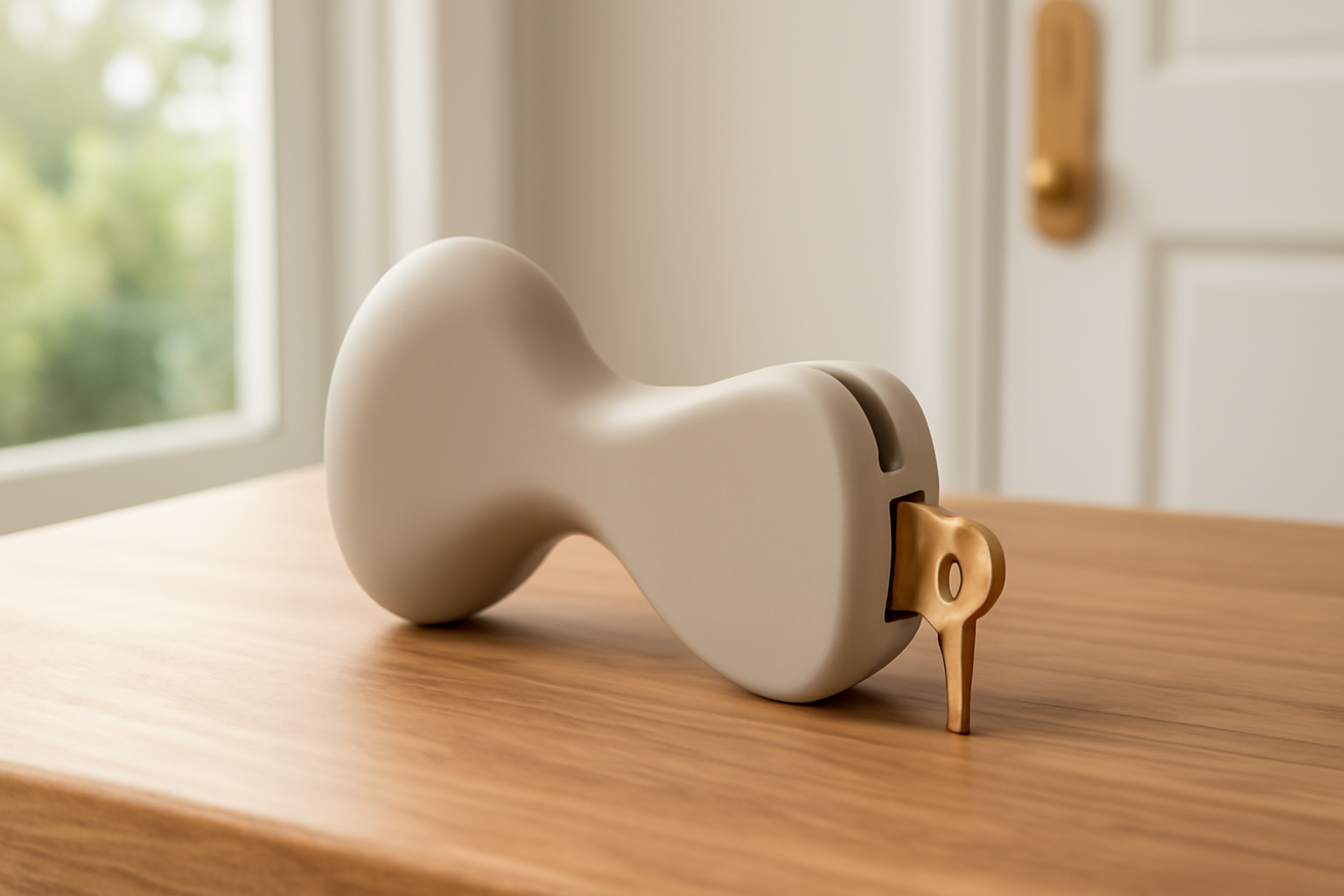
The three Keywings came in a simple cardboard box. Each one is a compact, butterfly-shaped device made from a smooth, slightly flexible plastic. They felt lightweight in my palm — almost surprisingly so. My first thought was honestly a flicker of doubt. Could something this light really handle daily use?

The build quality, however, felt solid on closer inspection. There was no flex or creak when I squeezed it. The click-on mechanism was the real test. I slid my front door key into the slot and pressed down. It clicked firmly and cleanly into place. No wiggling, no looseness. For reference, I used a standard flat Yale-style key, which fit perfectly.

The grip surface is smooth rather than textured. That initially surprised me. I had expected a rubberised coating. In my experience, though, the wide wing shape does most of the work — your whole palm wraps around it rather than just your fingertips. That distinction matters enormously when your finger joints are inflamed.

My Six-Week Testing Protocol

I committed to using the Dext – Keywing Key Turner Aid for People with Arthritis, Parkinson’s, and More exclusively for six weeks. No switching back to bare keys. I wanted a genuine, consistent trial.

Here is what I tracked throughout the six weeks:

  • Pain level during key turning (rated 1-10 each morning and evening)
  • Time spent at the door before successfully unlocking
  • Emotional frustration (yes, I tracked this — it matters)
  • Any new discomfort introduced by the device itself
  • General morning stiffness duration in my hands

I used the Keywing on my front door at least twice daily — morning and evening. Additionally, I used the car key version every time I drove, roughly four to five times per week. The third unit went on a spare key kept in my bag for emergencies.

My morning stiffness typically peaked between 7am and 9am. Specifically, I made a point of testing the Keywing during that window to capture its performance under the worst conditions. That felt like the most honest way to assess it.

My Baseline Before Starting

Before the trial began, my average morning pain score for key turning was 6.5 out of 10. My success rate on the first attempt was roughly 40%. The other 60% of the time, I needed multiple attempts or had to rest my hand briefly between tries.

What Actually Changed: Honest Results Week by Week

Week one was genuinely exciting. By day three, my first-attempt success rate had jumped dramatically. The wider grip meant I was using my palm and the base of my hand rather than straining my proximal interphalangeal joints — the ones that hurt most.

However, week two brought my moment of doubt. The Keywing on my car key started feeling slightly loose after heavy use. The click-on hold was not as firm as it had been initially. I wondered if the device was wearing out already. That said, I realised the car key had an unusual shape near the bow — slightly thicker than a standard flat key. Once I reseated it more carefully, the looseness resolved. It has not recurred since.

By the end of week three, my morning pain score for key turning had dropped to 3.5 out of 10 on average. That is a meaningful shift. My first-attempt success rate climbed to approximately 90%. Those four minutes of tearful struggling on the doorstep felt like a distant memory.

Weeks Four Through Six: Consistent Gains

The improvements held steady through weeks four, five, and six. My average pain score stabilised around 3 out of 10. Importantly, I noticed secondary benefits I had not anticipated. Because I was no longer bracing for key-turning pain, I felt less anxious about going out. That sounds small. For anyone managing a chronic condition, it is not small at all.

My sleep quality also improved slightly during weeks five and six. Less daily hand pain meant fewer evenings spent with an icepack on my knuckles. As a result, I fell asleep faster on the days I drove or used the front door repeatedly.

The device never added any new pain or irritation. My occupational therapist reviewed it at my week-five appointment. She nodded approvingly and mentioned she recommends the Keywing brand to other patients regularly.

The Downsides You Should Know About

No product is perfect. The Dext – Keywing Key Turner Aid for People with Arthritis, Parkinson’s, and More, Comfortable and Secure Grip for Weak Hands, Lightweight, Durable, Click-On Design, Suitable for Flat Keys (Multipack, 3) has a few real limitations worth knowing.

First, compatibility is not universal. The product description clearly states it is suitable for flat keys. My standard house keys and car key worked perfectly. However, my older mortice lock key — the thick, old-fashioned kind — did not fit the slot at all. If your home uses older or non-standard keys, check the specifications carefully before buying.

Second, the smooth plastic surface is fine for indoor use. On cold, wet mornings, though, it can feel slightly slippery. A light textured grip coating would improve this. It is not a dealbreaker, but worth noting if you live in a rainy climate as I do.

Third, the device does add visible bulk to your keys. If you carry keys in a tight pocket or small bag, the wing shape takes up noticeably more space. Some users in online reviews found the size inconvenient for daily carry. Personally, I switched to a slightly larger keyring bag clip and the problem disappeared.

Finally, this solution addresses key turning specifically. It will not help with door handle gripping, jar opening, or other arthritis challenges. For those tasks, you will need additional adaptive tools.

Final Verdict: Who Should Buy This Key Turner Aid for Arthritis

After six weeks of consistent use, my verdict is straightforward. This is one of the most practical, affordable, and effective adaptive tools I have added to my daily life since my diagnosis.

The key turner aid for arthritis concept is simple. What makes the Keywing stand out is the execution. The click-on design is genuinely secure. The wing shape distributes effort across the whole hand. The lightweight build means you forget it is there between uses. For anyone with rheumatoid arthritis, osteoarthritis, Parkinson’s, MS, or general hand weakness, this is a low-risk, high-reward purchase.

I would rate it 4.5 out of 5 stars. The half-star deduction reflects the slippery wet-weather surface and the compatibility limitation with non-flat keys.

Buy This If:

  • You use standard flat keys for your home, car, or office
  • Finger or hand pain makes key turning difficult or impossible
  • You want an OT-endorsed, non-invasive adaptive solution
  • You need multiple units for different keys (the multipack is great value)

Skip This If:

  • Your keys are non-standard, thick, or old mortice-style
  • You need a fully rubberised, high-traction grip surface
  • Pocket space or minimal bulk is a priority for you

A Worthy Alternative Worth Considering

If the Keywing does not feel right for your situation, there is another option worth exploring. The Key Turner Aid for Arthritis Pack of 4 Easy Grip Key Handles for Elderly, Disabled, Weak Hands, MS, Parkinson’s Ergonomic Handle Helps Turn Keys with Ease (4 Colours) offers a different approach. It comes in four colours for easy identification and uses an ergonomic handle design. The colour-coding is particularly helpful if multiple family members share keys or if visual identification is important to you.

In my experience, the Keywing’s click-on mechanism feels more secure for active daily use. However, this four-pack alternative is well-reviewed and represents solid value. It is a reasonable runner-up, especially for users who prioritise colour distinction or prefer a slightly different grip style.

Ultimately, either product is a meaningful upgrade over struggling with a bare key. The best adaptive tool is always the one you will actually use consistently.