
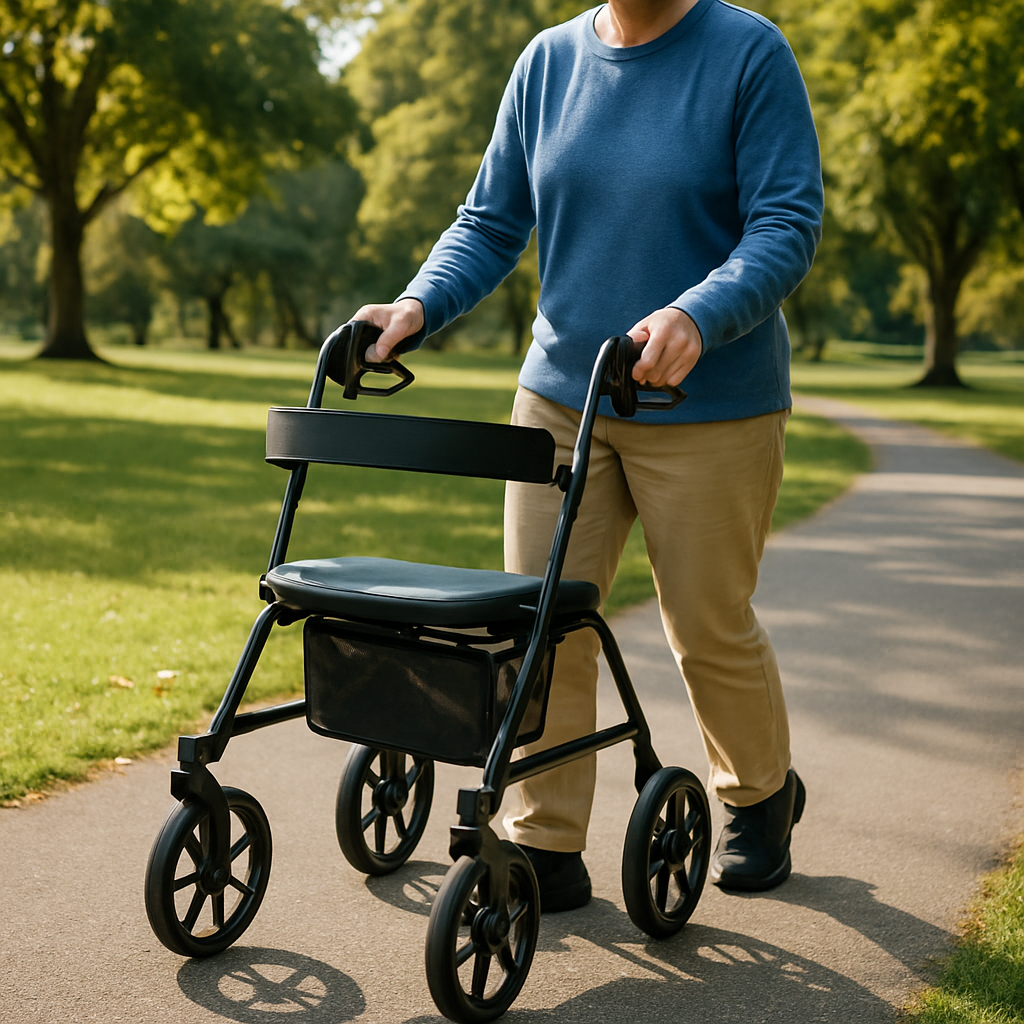
I resisted using any kind of walking aid for a long time because it felt like giving in. But after a bad knee arthritis flare made even a ten-minute walk around the block feel impossible, I finally borrowed a rollator walker and used it on daily walks for six weeks. What surprised me was not just the pain relief — it was how much farther and more confidently I could move once my knees were not absorbing every ounce of my weight with every step. A rollator walker for arthritic knees does something counterintuitive: it doesn’t restrict you, it frees you.
Why I Waited So Long to Try a Rollator Walker
My knee osteoarthritis started quietly about four years ago. A little stiffness when I stood up. A twinge on stairs. Then, gradually, walks that used to feel meditative became something I dreaded. I tried ice, heat, over-the-counter anti-inflammatories, and a few rounds of physical therapy. All helpful, but never quite enough to make walking feel normal again.
When my physical therapist first mentioned a rollator, I felt a small surge of resistance. Not at her, but at the reality of needing one. In my head, a walker meant I was old, or broken, or that my arthritis had won. I now know that thinking was both stubborn and limited. A rollator walker is not a surrender — it’s a tool that lets your knees stay in the game longer.
What finally pushed me over the edge was a three-week flare last spring. My knees swelled, ached constantly, and made even grocery shopping feel like a marathon. A friend who uses a rollator for her own joint issues offered to loan me hers. I accepted, partly out of desperation and partly because I was curious whether it would actually help.
How a Rollator Changes the Biomechanics of Walking With Arthritis
Here’s what happens when you walk without support while your knees are arthritic: your leg muscles have to work harder to stabilize and propel you forward, because the damaged cartilage is not doing its job of absorbing shock and reducing friction. Your quadriceps, hamstrings, and calf muscles compensate by tensing up more, which in turn increases pressure on the joint itself. It’s a difficult cycle — pain leads to muscle guarding, which leads to more pressure and more pain.
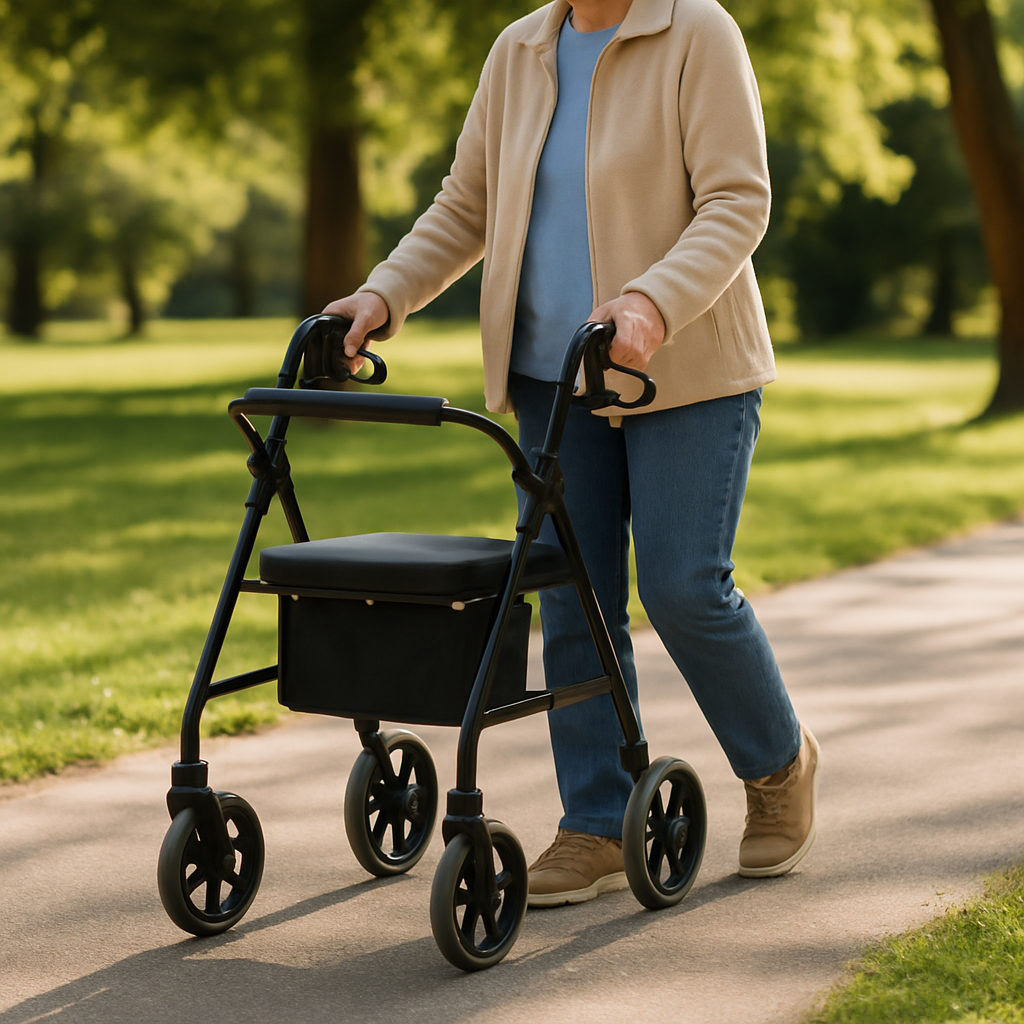
A rollator interrupts that cycle by distributing some of your body weight through the handles instead of forcing your knees to bear it all. You’re not leaning heavily on it — at least, you shouldn’t be — but even the ability to rest 10 to 15 percent of your weight on the frame takes noticeable pressure off the joint. Over the course of a thirty-minute walk, that difference adds up.
What I noticed in the first week was simple: I could walk farther without limping. By week two, I was walking farther without pain spiking afterward. By week four, my pain level during walks had dropped enough that I was actually thinking about the route I was taking rather than counting down the minutes until I could sit down. That shift — from pain management to actual enjoyment — was the real surprise.
What Actually Changed Over Six Weeks
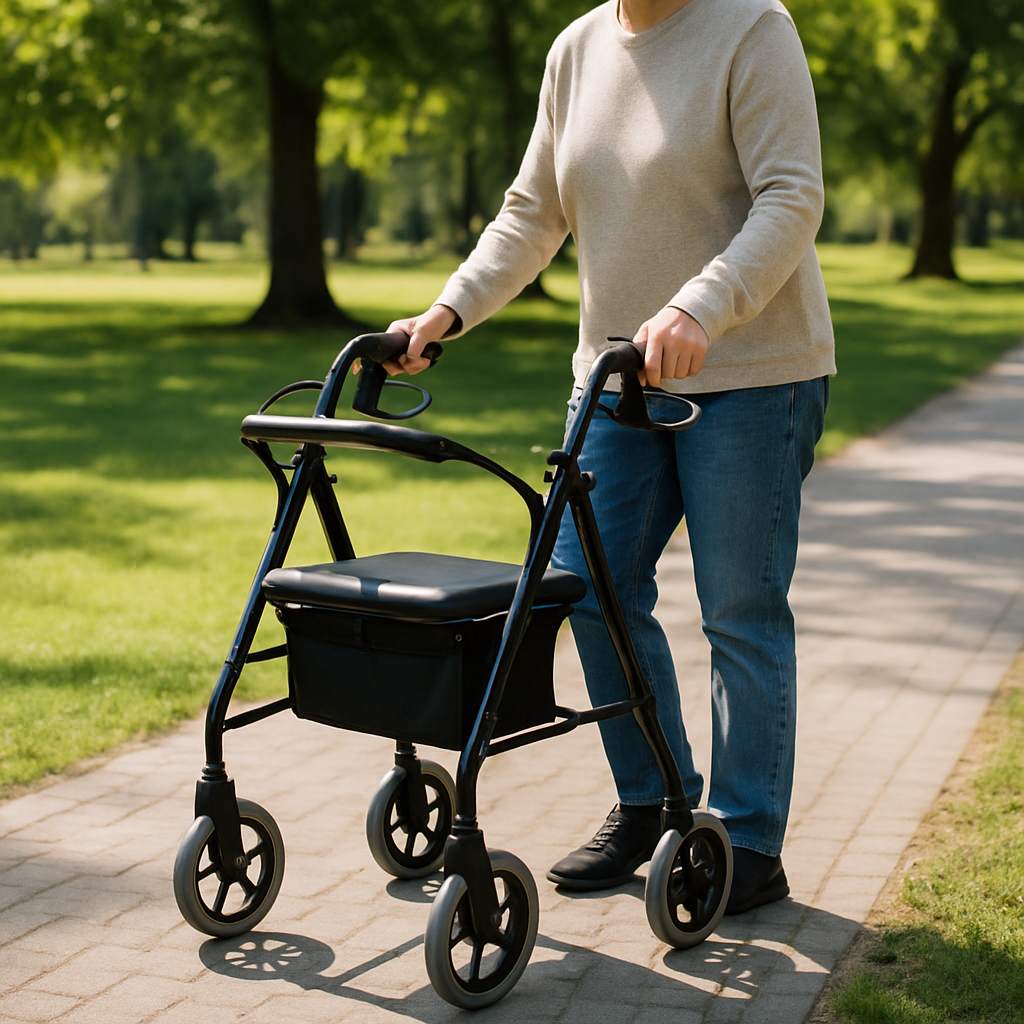
Let me be specific about what improved and what did not.
Walking Distance and Confidence
Before the rollator: I was comfortable walking about 10 to 12 minutes before pain made me want to stop. Anything longer left my knees sore for several hours afterward.
After six weeks with the rollator: I was regularly walking 25 to 30 minutes without significant pain during the walk. The soreness afterward was minimal — more like mild stiffness than the sharp ache I was used to.
That difference let me explore my neighborhood again. I could walk to the coffee shop. I could take a longer loop through the park. Small things, maybe, but they mattered for my mental health as much as my knees.
Pain During Activity
The pain I felt while walking dropped noticeably — from a 6 or 7 out of 10 on bad days to a 2 or 3. This was not because my arthritis healed (it did not), but because the joint was under less mechanical stress.
What Did NOT Change
My underlying knee arthritis is still there. The cartilage damage did not reverse. Without the rollator, my pain returned to baseline quickly. Within a few days of setting it aside, my walking distance shrank back down. A rollator is not a cure — it’s a load-management tool. You have to keep using it to keep getting the benefits.
Also: stairs were still awkward. A rollator does not help much going up or down stairs because you need both hands free for balance and control. I still favored elevators or ramps when I could.
The Practical Details That Matter
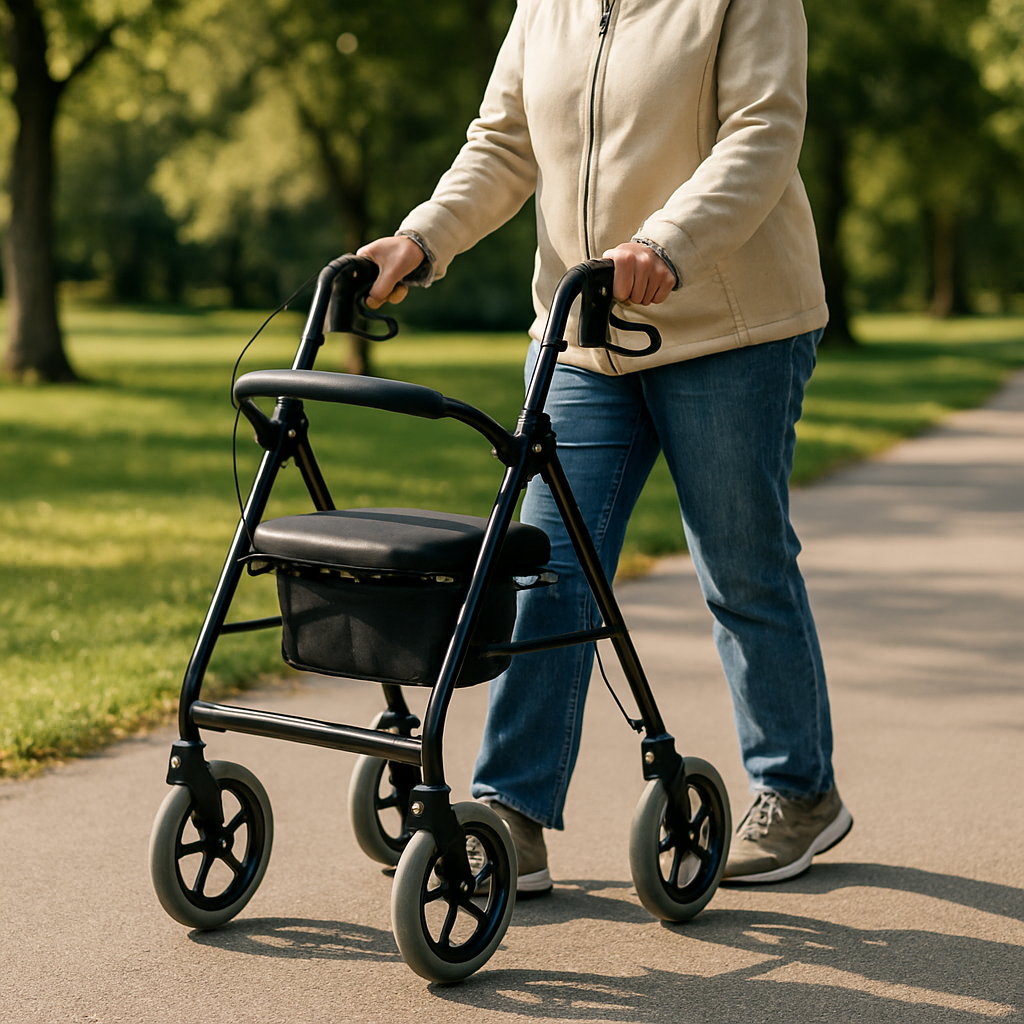
If you are thinking about trying a rollator walker for arthritic knees, here are the real-world details I wish I had known.
Setup and Fit
The rollator my friend lent me had adjustable handle height. This mattered. When the handles were too high, I was reaching up and not actually offloading weight. When they were set to my wrist height (roughly where my hands naturally fall at my sides), the benefit was immediate and obvious. If you borrow or buy one, spend time adjusting it properly.
Braking and Control
Modern rollators have hand brakes that lock, which gives you security on hills or when you need to stop suddenly. The first few times I used one, I was nervous about control — would it roll away? Would I lose my balance? Neither happened. The brakes are intuitive once you use them once or twice.
Weight and Portability
The rollator I used was light enough that I could fold it and fit it in my car trunk if I wanted to take it somewhere. That flexibility meant I was more likely to actually use it on various outings, not just walks in my neighborhood.
Who Should Try a Rollator Walker for Arthritic Knees (and Who Might Not Be Ready)
A rollator walker works well for people whose knee arthritis is limiting their walking distance or causing pain that interferes with daily life. If you are considering one because your PT or doctor suggested it, or because your current walking routine feels compromised, it is worth trying.
It is less useful if your arthritis is very mild and not yet affecting your mobility in any noticeable way. It may feel cumbersome if you do not yet need it. The tool only makes sense when the problem is real enough that offloading pressure would actually help.
It also may not be the right fit if your balance is compromised from other causes (neurological issues, inner ear problems, or significant muscle weakness unrelated to arthritis). A rollator requires you to coordinate pushing it forward while walking — it works best when your legs and core are doing most of the work and the device is just sharing the load.
The Verdict: What I Would Do Differently
If I could go back and talk to my earlier self — the version of me who felt that using a walking aid was somehow a personal failure — I would tell her to try one sooner. I lost months of walking, exploring, and moving freely because of pride. A rollator walker for arthritic knees is not a symbol of giving up; it is a practical way to keep doing the things you want to do for longer.
That said, I do not walk with the rollator every single day anymore. On low-pain days, I can manage without it. But I keep it accessible, and I use it without hesitation on days when my knees are stiffer or when I want to take a longer route. That flexibility — being able to choose based on how I actually feel — is exactly what makes it valuable.
If you have knee arthritis and your walking distances are shrinking, or if your pain is keeping you from moving as much as you want to, borrowing or trying a rollator is a low-risk experiment. Six weeks will tell you whether it helps. For me, it made a real difference in my mobility and my quality of life. It might do the same for you.
I am not a medical professional. The experiences shared here are personal and results vary from person to person. Talk to your doctor or physical therapist before starting any new brace, device, or exercise routine, especially if you have an existing joint condition.About This Article

Written by Michael Torres. Michael Torres has had joint problems his whole life — hypermobile as a kid, chronic sprains and a dislocating shoulder through his twenties, an osteoarthritis diagnosis in his early fifties, and a right knee replacement since. He is not a doctor or a physical therapist and has no clinical training. He writes about what has helped him and what he has watched help the people around him, and says plainly when he has not tried something himself. More about this site.
Scope and limits. Michael has no medical or clinical training — he writes about living with his own joint pain, not about treating anyone else's. Nothing here is medical advice. Talk to a doctor before starting anything new, and get seen promptly for pain that is new, severe, worsening, or comes with swelling, fever, or numbness.
Verify this against a primary source
Specifics change, and your situation may differ from the one described here. These are the authorities worth checking directly:
- NIAMS — arthritis and musculoskeletal research from the NIH
- MedlinePlus — plain-language medical reference from the NIH
- Arthritis Foundation — condition guides and treatment overviews