I am not a medical professional. The experiences shared here are personal. Consult your doctor before starting any new treatment.
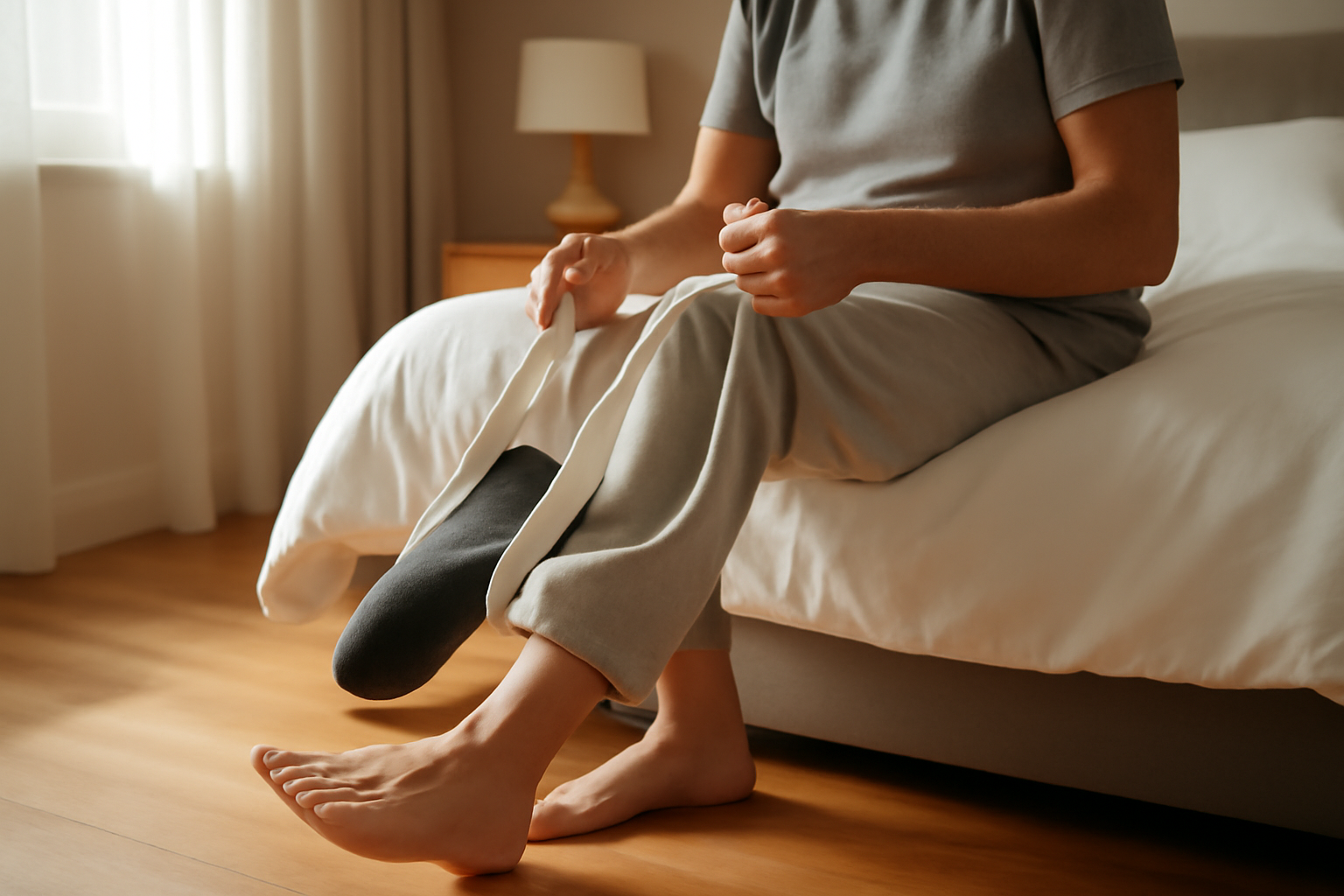
The morning after I came home from the hospital, I learned something humbling fast. Putting on socks was no longer a simple task. My right knee had just been replaced, and bending forward even a few inches sent a sharp, pulling sensation straight through my surgical site. My physical therapist had warned me about this. Still, nothing quite prepares you for standing in your bathroom, staring at a pair of cotton crew socks like they’re some kind of unsolvable puzzle. That moment is exactly what pushed me to research a sock aid device for knee replacement recovery — and eventually led me to the product that genuinely changed my mornings.
For context, I had a total right knee replacement in late autumn of last year. I’m 61 years old, reasonably active before surgery, and I live alone. Independence matters a lot to me. My surgeon gave me strict movement restrictions for the first six weeks — no bending the knee past 90 degrees, no twisting, no reaching toward my feet. Those restrictions are standard protocol after knee replacement surgery. However, daily life doesn’t pause for surgical recovery. I still needed to get dressed, leave the house for PT appointments, and maintain some sense of dignity and routine.
After two frustrating mornings of either skipping socks entirely or waiting for my neighbor to help me, I knew I needed a tool. I started researching sock aids that same week from my recliner, phone in hand.
The Sock Aid Device That Actually Solved the Post-Surgery Dressing Problem
After knee replacement, even basic self-care becomes a negotiation with your range of motion. A sock aid removes the need to bend forward or twist your knee while getting dressed — which means you can actually maintain your physical therapy restrictions and still live independently from day one.
What works
- Eliminates the forward bend and knee flexion required to put on socks — critical when your surgeon has told you to avoid bending past 90 degrees or risking setbacks in your recovery window.
- The foam handles on this model are genuinely easier to grip than plastic-only versions, especially if your hands are weak from pain medications or general post-op fatigue — makes the learning curve less frustrating.
- Works with regular socks (not just compression hose), so you’re not locked into buying special products or dealing with that stiff, medical-supply feel that makes you feel more like a patient.
What doesn’t
- There’s a learning curve — the first 3–4 attempts feel awkward and slow, and you’ll question whether it’s worth it. It is, but expect to feel clumsy at first.
- Not a permanent solution; most people stop needing it once they regain enough knee flexion (usually 4–8 weeks post-op), so think of it as a temporary mobility tool, not a long-term device.
This device buys you independence during the window when you physically can’t bend forward safely — and that psychological win matters as much as the physical one. RMS Deluxe Sock Aid – Socks Helper with Foam Handles for Regular Socks
RMS Deluxe Sock Aid – Socks Helper with Foam Handles for
I used this daily during recovery when I couldn’t bend forward without risking my surgery outcome.
Check Price on Amazon →This post contains affiliate links. As an Amazon Associate, I earn from qualifying purchases at no extra cost to you.