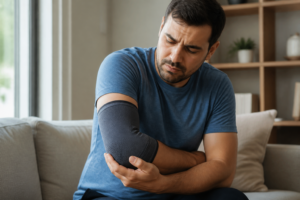

You reach for your coffee mug in the morning and feel that familiar ache along the outside of your elbow. Or maybe it’s the inside. Either way, you know something isn’t right — and if you’ve been Googling “tennis elbow vs golfer’s elbow brace,” you’re probably wondering whether you even have the right diagnosis before you spend money on the wrong product. I’ve been there, and I’ve worked with plenty of people who have too. The good news is that once you understand which condition you’re actually dealing with, finding relief becomes a whole lot more straightforward.
Tennis Elbow vs Golfer’s Elbow: What’s Actually Going On
Both conditions fall under the category of epicondylitis — inflammation or micro-tearing of the tendons that attach your forearm muscles to the bony bumps on either side of your elbow. The key difference comes down to location and which muscle group is involved.
Tennis elbow (lateral epicondylitis) affects the outer side of the elbow. It’s caused by overuse of the muscles responsible for extending your wrist and fingers — the ones you use when you grip a racket, type on a keyboard, or even turn a screwdriver. Despite the name, most people who develop tennis elbow have never picked up a racket in their lives. Office workers, painters, and plumbers are just as commonly affected.
Golfer’s elbow (medial epicondylitis) affects the inner side of the elbow. It involves the flexor muscles — the ones you engage when you curl your wrist, swing a club, or do a lot of gripping and pulling. Golfers, climbers, and people who do repetitive lifting or throwing often develop this condition. Again, the name is misleading. You don’t need to golf to get golfer’s elbow.
A simple self-check: press your fingertip firmly on the outside bony bump of your elbow. Tender there? Likely tennis elbow. Now press on the inside bump. Tender there? That’s more consistent with golfer’s elbow. Many people have both at the same time — which is frustrating, but not uncommon when you’re doing a lot of repetitive upper-body work.
How Braces and Sleeves May Help Both Conditions
Before we talk products, it’s worth understanding what a brace is actually doing for your elbow — because not all elbow supports work the same way, and choosing the wrong style for your condition can mean wearing something all day without much benefit.
There are two main categories you’ll encounter:
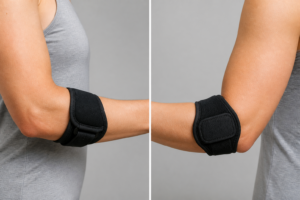
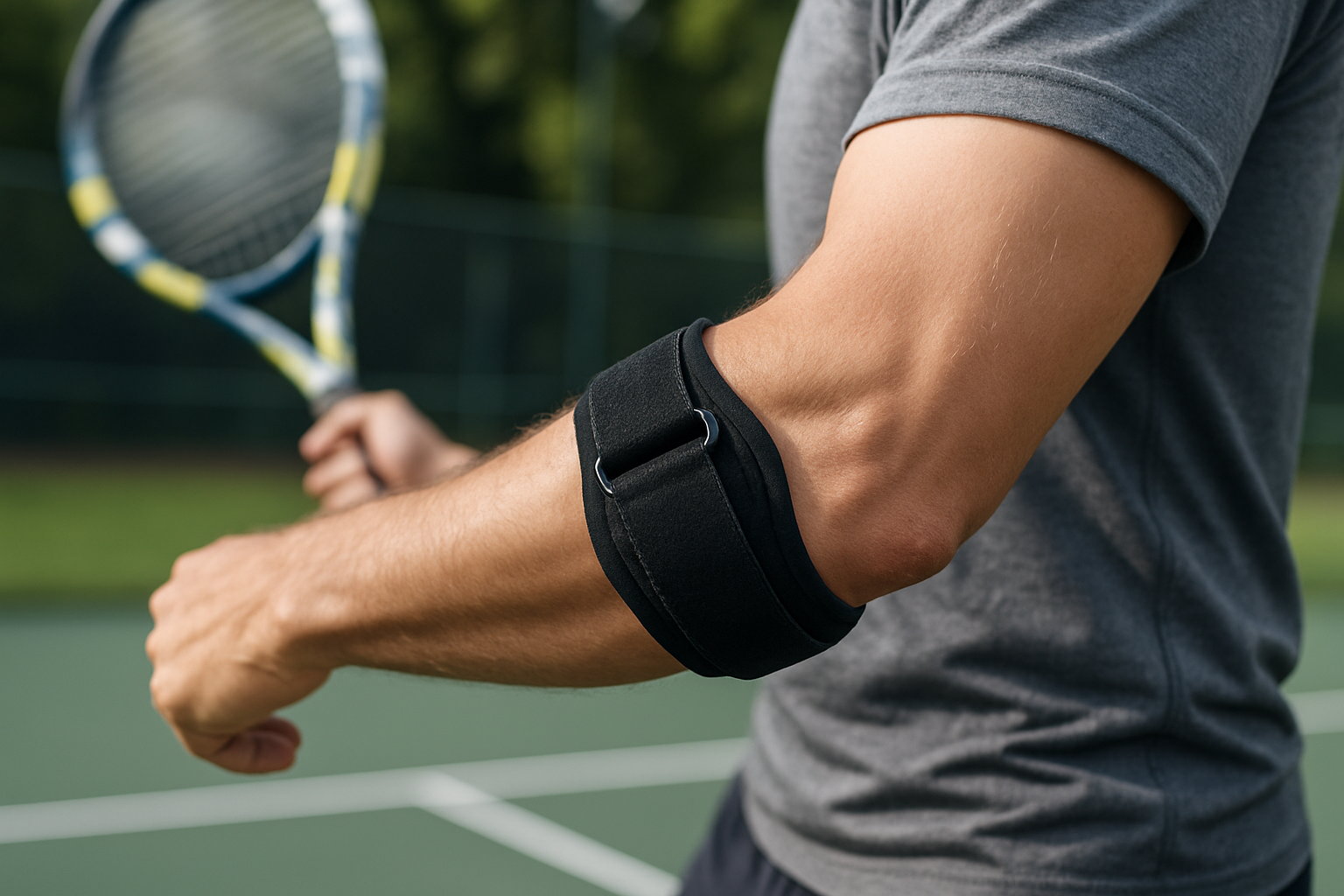
- Counterforce straps (epicondylitis clasps): These are narrow bands worn just below the elbow joint, not over it. They work by applying focused compression to the muscle belly, which may reduce the tension load placed on the inflamed tendon attachment point. Research suggests this mechanism can help reduce pain during activity, particularly for lateral epicondylitis.
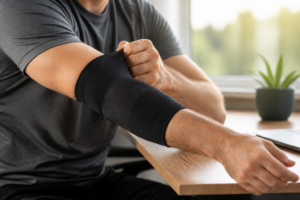
- Compression sleeves: These cover a broader area of the forearm and elbow. They may help by providing warmth, proprioceptive feedback (your body’s awareness of joint position), and general support during movement. Many people find these more comfortable for all-day wear or during workouts.
Neither type is a substitute for rest, targeted physical therapy exercises, or addressing the root cause of your overuse. But used consistently as part of a broader recovery plan, many people find real day-to-day relief with the right support.
What Actually Helps: The Braces I Recommend for Tennis and Golfer’s Elbow
Here are five options I’ve looked into carefully, covering different styles, price points, and use cases. Whether you’re dealing with lateral or medial epicondylitis — or both — there’s something on this list worth trying.
The Counterforce Brace That Actually Reduces Load on the Damaged Tendon
If you’ve confirmed you have tennis elbow (lateral epicondylitis), a counterforce brace works by compressing the forearm muscle just below the elbow, which redistributes tension away from the inflamed tendon attachment. This is the closest thing to a mechanical fix while you’re healing — it’s not a cure, but it meaningfully reduces pain during the activities that aggravate it.
What works
- Research supports counterforce bracing for tennis elbow, with most users reporting noticeable pain reduction within a few days to a week of consistent wear during aggravating activities.
- The compression sits at the right anatomical point (just below the epicondyle) to interrupt the force transmission without restricting elbow movement, so you can actually use it while working, typing, or playing.
- Unlike full elbow sleeves, a targeted counterforce brace is minimal enough that most people don’t abandon it after a week — you’re not sweating through a thick compression sleeve all day.
What doesn’t
- A brace alone won’t heal tennis elbow if you keep doing the exact repetitive motion that caused it — you need concurrent rest, eccentric exercises, or activity modification for actual recovery, not just symptom management.
- If your pain is severe (can’t grip anything without sharp pain), a brace might make daily function tolerable but won’t address whether you need physical therapy, corticosteroid injection, or more aggressive intervention.
A brace is a tool, not a solution — it buys you comfort and function while you address the underlying cause. FREETOO Tennis Elbow Brace
About This Article

Written by Michael Torres. Michael Torres has had joint problems his whole life — hypermobile as a kid, chronic sprains and a dislocating shoulder through his twenties, an osteoarthritis diagnosis in his early fifties, and a right knee replacement since. He is not a doctor or a physical therapist and has no clinical training. He writes about what has helped him and what he has watched help the people around him, and says plainly when he has not tried something himself. More about this site.
Scope and limits. Michael has no medical or clinical training — he writes about living with his own joint pain, not about treating anyone else's. Nothing here is medical advice. Talk to a doctor before starting anything new, and get seen promptly for pain that is new, severe, worsening, or comes with swelling, fever, or numbness.
Verify this against a primary source
Specifics change, and your situation may differ from the one described here. These are the authorities worth checking directly:
- NIAMS — arthritis and musculoskeletal research from the NIH
- MedlinePlus — plain-language medical reference from the NIH
- Arthritis Foundation — condition guides and treatment overviews