
You reach up to grab something off a high shelf — maybe a coffee mug, maybe a bag from the overhead bin — and suddenly there it is: a sharp, nagging pain deep in your shoulder that stops you cold. Sound familiar? If you’ve been dealing with persistent shoulder pain that worsens when you lift your arm, sleep on your side, or reach behind your back, there’s a real chance you’re dealing with a rotator cuff injury. Shoulder support options have come a long way, and understanding what a rotator cuff injury shoulder support can actually do for you may be the first step toward getting your life back.
What Exactly Is a Rotator Cuff Injury?
Your rotator cuff is a group of four muscles and their tendons that surround the shoulder joint, keeping the head of your upper arm bone securely in the socket. These muscles work together every time you raise, rotate, or stabilize your arm — which, if you think about it, is basically all day long. That constant demand makes the rotator cuff surprisingly vulnerable.
Rotator cuff injuries generally fall into a few categories. Tendinitis is the most common starting point — the tendons become irritated and inflamed, often from repetitive overhead movements. Bursitis often tags along, causing the fluid-filled sac (bursa) near the joint to swell and add to that deep, aching pain. Then there are partial or full-thickness tears, which can happen suddenly from a fall or develop slowly over years of wear and tear. Many people are genuinely surprised when imaging reveals a significant tear, because the pain had crept up so gradually they’d normalized it.
Research suggests that rotator cuff problems are incredibly common, particularly in people over 40 and in anyone who does a lot of repetitive arm work — athletes, painters, teachers, caregivers, desk workers who slump and strain. The good news is that many rotator cuff injuries, especially partial tears and tendinitis, respond well to conservative management: rest, physical therapy, ice, and the right supportive tools.
How Shoulder Supports May Help During Recovery
I want to be honest with you here, the way I’d want someone to be straight with me: a shoulder brace or support is not a cure. It won’t repair torn tissue on its own. What it can do — and what many people find genuinely helpful — is reduce unnecessary movement that aggravates healing tissue, provide light compression that may ease inflammation, offload some stress from the joint, and give you a sense of stability when everyday tasks feel unpredictable and scary.
Think of a shoulder support as a tool in your recovery toolkit, not the whole toolkit. Pair it with prescribed exercises, appropriate rest, and ice therapy, and you’re giving your body a much better environment to heal. Here’s what to look for when choosing one:
- Adjustability: Your shoulder isn’t one-size-fits-all. Look for supports with multiple adjustment points so you can dial in the right compression without cutting off circulation.
- Breathability: You’ll be wearing this for hours at a time. A breathable fabric makes a big difference in comfort and compliance.
- Arm sling compatibility: For more acute injuries or post-surgical recovery, a combined brace and arm sling design helps immobilize the shoulder more completely.
- Left/right versatility: A support that works on either arm is practical, especially if you’re unsure which side may eventually need attention, too.
- Cold therapy integration: Compression plus targeted cold therapy is a powerful combination for managing swelling and pain, particularly in the early stages of injury or after activity.
The Shoulder Brace That Actually Keeps Your Rotator Cuff Stable During Recovery
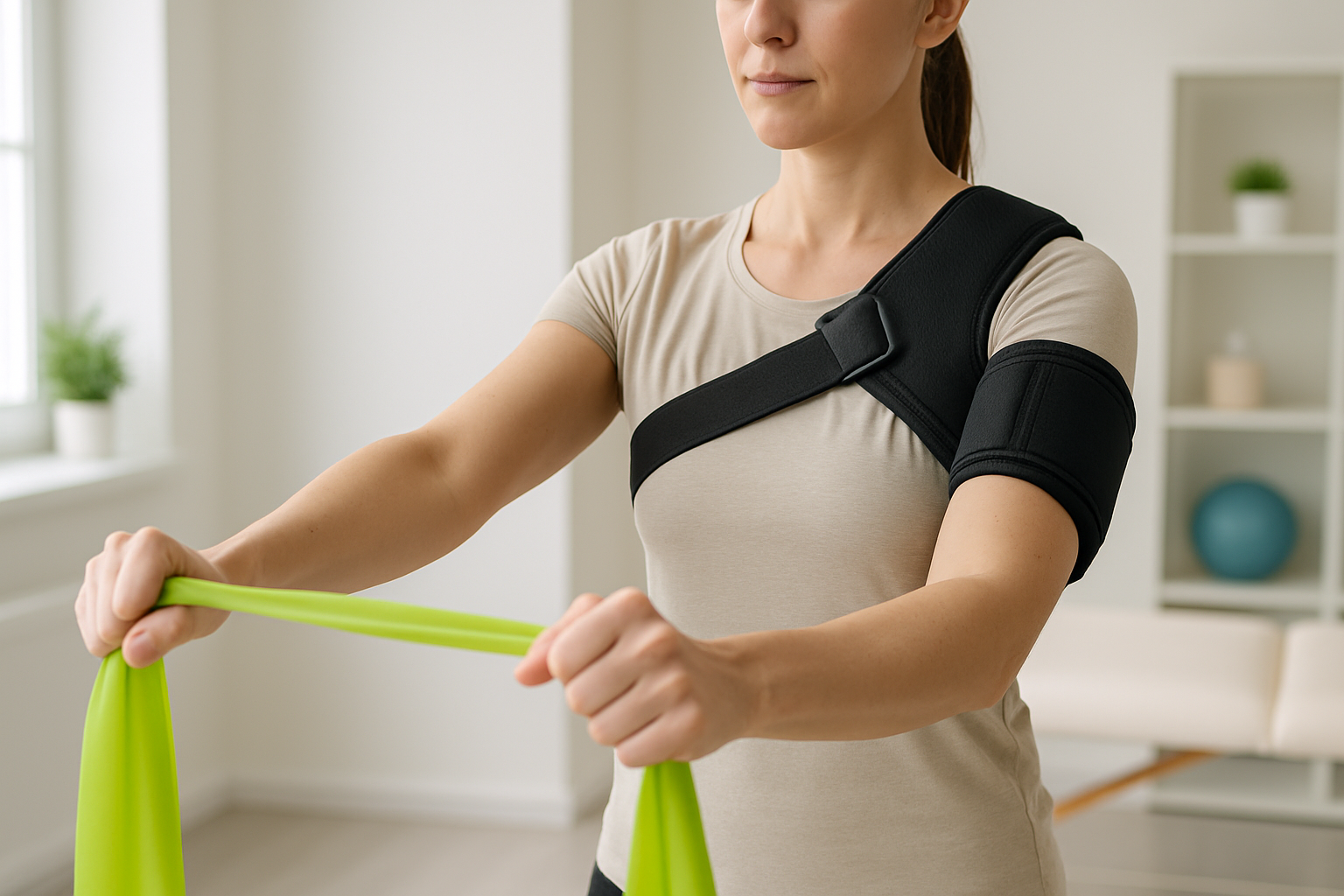
A good shoulder brace does one thing: it prevents the micro-movements that aggravate a healing rotator cuff while you’re retraining stability. If you’re past the acute inflammation phase but still wincing during overhead movements or sleeping on your side, compression and support make the difference between feeling stuck and actually progressing through rehab.
What works
- Dual-strap design actually limits problematic overhead abduction and internal rotation—the movements that keep re-injuring the tendon. You’ll feel the difference in what you can attempt without pain.
- Breathable neoprene means you can wear it for 6+ hours without developing heat buildup or skin irritation, which matters if you’re wearing it during work or during the day when your shoulder is most active.
- Research supports compression sleeves for proprioceptive feedback—your nervous system literally gets better input about where your shoulder is in space, which accelerates neuromuscular retraining during physical therapy.
What doesn’t
- A brace is stabilization, not healing. If you have a significant rotator cuff tear or haven’t done any physical therapy, wearing a brace without addressing weakness or movement dysfunction will just delay the real work.
- It takes 4-6 weeks of consistent wear alongside actual rehab exercises to feel meaningful improvement. If you’re looking for pain relief that works immediately, you need ice or anti-inflammatories first—the brace comes after.
A brace isn’t a substitute for physical therapy or addressing the muscle imbalances that caused the injury in the first place. Check out the Komoko Shoulder Brace if you’re already doing the rehab work and need something that won’t slip or dig into your armpit during a full day of activity.
About This Article

Written by Michael Torres. Michael Torres has had joint problems his whole life — hypermobile as a kid, chronic sprains and a dislocating shoulder through his twenties, an osteoarthritis diagnosis in his early fifties, and a right knee replacement since. He is not a doctor or a physical therapist and has no clinical training. He writes about what has helped him and what he has watched help the people around him, and says plainly when he has not tried something himself. More about this site.
Scope and limits. Michael has no medical or clinical training — he writes about living with his own joint pain, not about treating anyone else's. Nothing here is medical advice. Talk to a doctor before starting anything new, and get seen promptly for pain that is new, severe, worsening, or comes with swelling, fever, or numbness.
Verify this against a primary source
Specifics change, and your situation may differ from the one described here. These are the authorities worth checking directly:
- NIAMS — arthritis and musculoskeletal research from the NIH
- MedlinePlus — plain-language medical reference from the NIH
- Arthritis Foundation — condition guides and treatment overviews