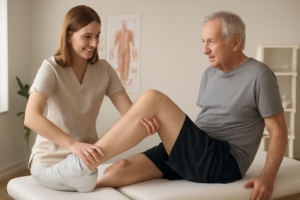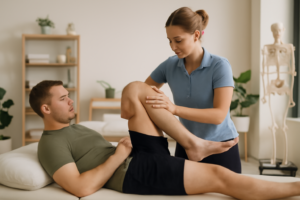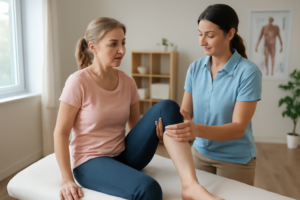


If you’re searching for a complete guide to joint health, you’ve landed in the right place. I’ve spent over 15 years working hands-on in musculoskeletal health and as a sports medicine writer, working with everyone from 16-year-old high school athletes to 78-year-old grandparents who just want to walk without pain. In that time, I’ve seen one pattern repeat itself constantly: people wait far too long to take joint health seriously. They come to me after the damage is done, asking why nobody told them sooner. That’s exactly why I built this guide.
This isn’t a quick-fix article. It’s the resource I wish everyone had read before they ever needed physical therapy. We’re going to cover anatomy basics, common conditions, the best exercises, supplements, diet, lifestyle changes, and when to finally see a specialist. Whether you’re 25 and feeling your first knee click, or 65 and managing daily stiffness, there’s something here that will change how you move and how you feel.
I’ll be direct with you throughout this guide. I won’t oversell miracle cures, and I won’t hedge every sentence with unnecessary disclaimers. What I will do is give you the same honest, evidence-informed advice I’d give a close friend. Let’s start from the beginning.
Understanding Joint Anatomy — What’s Actually Going On Inside
Most people think of joints as simple hinges. They’re not. A healthy joint is an extraordinarily complex structure, and understanding its parts helps you understand why it breaks down — and how to protect it.
Every synovial joint — your knees, hips, shoulders, and fingers — contains several key components. Articular cartilage covers the ends of your bones, acting as a shock absorber and friction reducer. Synovial fluid lubricates the joint, keeping everything gliding smoothly. Ligaments connect bone to bone, providing stability. Tendons anchor muscle to bone, generating movement. Finally, the joint capsule wraps everything together. When even one of these components is compromised, the whole system feels it.
Here’s the part that surprises most people: cartilage has no direct blood supply. That means it can’t heal the way a cut on your skin heals. Nutrients reach it only through the compression and release of normal movement — essentially, you “pump” nutrients into cartilage by loading it. This is one powerful reason why staying active, even gently, is so much better for joints than resting them completely.
The Joints You Need to Protect Most
Not all joints carry equal risk. In my experience, the four joints that come up most often are knees, hips, lower back facet joints, and shoulders. Knees take roughly 1.5 times your body weight with each step — and up to 5 times your body weight when climbing stairs. That load adds up fast over a lifetime. Hips are similarly load-bearing and deeply affected by sitting posture and hip flexor tightness. Shoulders are uniquely vulnerable because their mobility comes at the cost of stability. The more mobile a joint, the more reliant it is on surrounding muscles for protection. Keep that principle in mind throughout this entire guide.
Common Joint Conditions — Knowing What You’re Dealing With
Accurate self-awareness starts with understanding what conditions actually exist. I’m not asking you to self-diagnose — that’s my job. However, understanding the landscape helps you recognize warning signs early and have better conversations with your healthcare provider.
Osteoarthritis
Osteoarthritis (OA) is the most common joint condition worldwide, affecting over 32.5 million adults in the United States alone. It involves the gradual breakdown of articular cartilage, leading to pain, stiffness, and reduced range of motion. OA is not purely a “wear and tear” disease — inflammation and metabolic factors play significant roles. It most commonly affects knees, hips, hands, and the spine.
Rheumatoid Arthritis
Rheumatoid arthritis (RA) is an autoimmune condition, not a mechanical one. The immune system attacks the joint lining (synovium), causing inflammation, pain, and eventual joint damage. RA often presents symmetrically — meaning both wrists or both knees affected simultaneously. Morning stiffness lasting longer than 30 minutes is a classic red flag. If you suspect RA, see a rheumatologist promptly. Early treatment can dramatically slow disease progression.
Tendinitis and Bursitis
Tendinitis is inflammation of a tendon, commonly occurring at the rotator cuff, Achilles, or patellar tendons. Bursitis involves inflammation of the fluid-filled sacs (bursae) that cushion joints. Both conditions typically respond well to conservative treatment — rest, ice, targeted physical therapy, and addressing the underlying movement dysfunction that caused them. In my experience, these are among the most preventable and most mismanaged joint conditions out there.
The Best Exercises for Joint Health at Every Age
Exercise is the single most powerful tool for protecting your joints. Full stop. However, not all exercise is created equal, and the wrong approach can genuinely cause harm. Let me break this down by what actually works.
Strength Training — Your First Priority
Strong muscles absorb force that would otherwise transfer directly to your joints. For every pound of quadriceps strength you gain, your knee experiences roughly 4 pounds less compressive load during daily activities. That’s not a small number. I recommend resistance training at least 2-3 times per week for every adult, regardless of age. Bodyweight exercises work. Resistance bands work. Free weights work. The specific tool matters far less than the consistency.
For beginners, I typically start with these foundational movements: chair squats, wall push-ups, glute bridges, and seated rows using a band. These build the muscles that protect your four most vulnerable joints simultaneously. Aim for 2-3 sets of 10-15 repetitions, resting 60-90 seconds between sets. That’s a manageable starting point that takes under 30 minutes, three times a week.
Mobility and Flexibility Work
Mobility is active control through a range of motion. Flexibility is passive range. Both matter, but mobility is more functional for joint health. Stiff joints are vulnerable joints — they’re forced into compensatory movement patterns that overload surrounding structures. Spending just 10 minutes daily on targeted mobility work produces measurable improvements within 4-6 weeks.
Specifically, focus on hip flexor stretches, thoracic spine rotations, ankle mobility drills, and shoulder CAR (controlled articular rotations). These four areas create a cascade effect — freeing them up reduces strain on your knees, lower back, and neck simultaneously.
Low-Impact Cardio for Joint Longevity
Swimming, cycling, elliptical training, and walking on flat terrain are all excellent low-impact options. Swimming is my personal recommendation for anyone managing active joint pain — water reduces effective body weight by up to 90%, allowing pain-free movement that still builds cardiovascular fitness and light muscular endurance. Aim for at least 150 minutes of moderate-intensity cardio per week, as recommended by the American College of Sports Medicine.
Nutrition and Supplements for Healthy Joints
I’ll be straightforward here: diet is underrated in joint health conversations, and many supplements are overrated. Let me separate the evidence from the enthusiasm.
Anti-Inflammatory Diet Foundations
Chronic systemic inflammation is a major driver of joint degeneration. Your diet directly influences your inflammatory baseline. A Mediterranean-style eating pattern — rich in fatty fish, olive oil, colorful vegetables, legumes, and nuts — consistently shows anti-inflammatory effects in research. Specifically, omega-3 fatty acids found in salmon, mackerel, and sardines have demonstrated measurable reductions in joint inflammation markers.
On the other side, ultra-processed foods, refined sugars, and excessive alcohol all promote inflammation. I’ve had patients reduce chronic knee pain noticeably within 6-8 weeks simply by overhauling their diet — not changing their exercise at all. Food is not a replacement for treatment, but it’s an incredibly powerful adjunct.
What the Research Says About Joint Supplements
Glucosamine and chondroitin are the most studied joint supplements. The evidence is genuinely mixed. The large GAIT trial found that the combination may help people with moderate-to-severe knee OA pain specifically, but showed limited benefit for mild pain. That said, both supplements have excellent safety profiles at standard doses. For people with moderate OA who want to try something conservative, they’re a reasonable option to discuss with your doctor.
Collagen peptides show promising early evidence for reducing joint pain and improving function, particularly in athletes. Vitamin D deficiency is strongly associated with increased joint pain — and deficiency is remarkably common, affecting an estimated 40% of American adults. Getting your vitamin D level tested costs roughly $30-50 at most labs and is one of the most useful first steps I recommend.
Lifestyle Factors That Make or Break Your Joint Health
Exercise and diet get most of the attention. However, several lifestyle factors influence joint health just as powerfully — and they’re frequently overlooked.
Body Weight and Joint Load
This one is direct and important. Every 10 pounds of excess body weight adds approximately 40 pounds of extra pressure on your knee joints during walking. Over years and decades, that cumulative load accelerates cartilage breakdown significantly. Losing even 10-15 pounds produces measurable reductions in knee pain and OA progression in research studies. I say this not to shame anyone — I say it because it’s actionable, and it genuinely matters.
Sleep and Joint Recovery
During deep sleep, your body performs the majority of its tissue repair and inflammatory regulation. Poor sleep elevates inflammatory cytokines — the same molecules that drive joint pain and degeneration. Adults who consistently sleep fewer than 6 hours per night show significantly higher rates of chronic musculoskeletal pain. Seven to nine hours of quality sleep isn’t a luxury. For joint health, it’s a clinical necessity.
Posture, Ergonomics, and Movement Habits
I learned this the hard way early on. I was spending 10 hours a day hunched over a desk writing code and treatment plans. Within 18 months, I had significant neck and shoulder pain. The problem wasn’t weakness — it was sustained, unvaried load on the same joint structures, day after day. Changing my workstation setup and building in movement breaks every 45 minutes resolved the issue within two months. Static postures, regardless of whether they’re “good” or “bad,” become problematic over time. Movement variety is the real goal.
When to See a Specialist — Recognizing Serious Warning Signs
Self-care is powerful. It handles the majority of joint health maintenance. However, some situations genuinely require professional assessment. Waiting too long is one of the most common and costly mistakes I see.
See a physician or physical therapist promptly if you experience any of the following:
- Joint swelling that appears suddenly or doesn’t resolve within 48-72 hours
- Joint pain that wakes you from sleep consistently
- A “locking” or “giving way” sensation in the knee or hip
- Significant pain following a specific injury or fall
- Morning stiffness lasting longer than 30-60 minutes
- Visible joint deformity or redness with warmth
- Pain that prevents you from performing normal daily activities for more than two weeks
A standard physical therapy evaluation typically costs $150-250 without insurance, though most major insurers cover at least a portion. An orthopedic consultation is similar in range. These are worthwhile investments when the alternative is months or years of worsening damage. Early intervention almost always produces better outcomes and lower overall costs than delayed treatment.
Which Specialist Should You See First?
For most musculoskeletal joint problems, starting with a physical therapist or your primary care physician is appropriate. A physical therapist can assess movement dysfunction, identify the source of the problem, and build a treatment plan — often without a referral, depending on your state. For suspected autoimmune conditions like RA, go directly to a rheumatologist. For significant structural injuries — torn ligaments, suspected fractures — an orthopedic surgeon is the right choice. Don’t let the word “surgeon” intimidate you. Most orthopedic consultations don’t end in surgery. They end in a clear diagnosis and a conservative management plan.
Common Mistakes and Frequently Asked Questions
Mistake #1: Resting a Painful Joint Completely
This is the most damaging misconception I encounter. Complete rest feels intuitive — if it hurts, stop using it. However, for most chronic joint conditions, prolonged rest causes muscle atrophy, reduced cartilage nutrition, and stiffness — all of which make the underlying problem worse. Active rest is the correct approach. Keep moving gently within a pain-free range while avoiding the specific aggravating activity. The goal is relative rest, not total inactivity.
Mistake #2: Ignoring Pain Until It’s Severe
Pain is a signal, not an enemy. Mild, persistent pain that lasts longer than 2 weeks deserves attention — not because it necessarily means something catastrophic, but because early-stage problems are dramatically easier and cheaper to treat. A joint issue caught at a 2 out of 10 pain level might need 4-6 weeks of targeted exercise. That same issue ignored until it reaches 7 out of 10 might need 6-12 months of therapy, imaging, and potentially injection or surgical intervention.
Mistake #3: Assuming Joint Pain Is Just “Getting Old”
Age is a risk factor for joint conditions. It is not an inevitable sentence. There are people in their 70s and 80s with significantly better joint function than plenty of 40-year-olds. The difference is almost entirely lifestyle — consistent movement, reasonable body weight, adequate sleep, and proactive management of early symptoms. Aging affects joints. Neglect destroys them.
FAQ: Is Cracking Your Knuckles Harmful?
This one comes up constantly. The short answer: no, habitual knuckle cracking does not cause arthritis. The sound is caused by the rapid collapse of gas bubbles in synovial fluid — a process called cavitation. A notable 1998 study by Donald Unger even tracked his own knuckle-cracking habits over 60 years to test this. The only real risk is potential minor soft tissue irritation with excessive, forceful cracking. Otherwise, it’s harmless.
FAQ: Should I Use Heat or Ice on a Sore Joint?
The general rule: ice for acute inflammation (new injury, swelling, heat in the joint), heat for chronic stiffness and muscle tension. Apply ice for 15-20 minutes at a time, with a cloth barrier to protect skin. Apply heat similarly — 15-20 minutes for moist heat, slightly less for dry heat packs. That said, this is a guideline, not a law. Use whichever actually makes your joint feel better. Patient comfort is a legitimate clinical outcome.
Final Thoughts — Your Complete Guide to Joint Health Starts Today
This complete guide to joint health covers a lot of ground deliberately. Joint health isn’t one decision — it’s hundreds of small, daily decisions stacked over months and years. The good news is that even modest improvements compound significantly over time. You don’t need to overhaul your entire life this week. Start with one thing: add a 10-minute mobility routine, swap one processed meal for a salmon-and-vegetable dinner, or schedule that PT evaluation you’ve been putting off for six months.
In my 15 years of clinical work, the patients who fare best aren’t the ones with the most favorable genetics or the easiest diagnoses. They’re the ones who take consistent, informed, proactive action — even when it’s modest. They ask questions. They show up. They treat their joints like the lifelong assets they are.
Your joints carry you through every experience life offers. Treat them accordingly. Bookmark this guide, come back to specific sections as your situation evolves, and use it as a foundation for everything else you’ll read on this site. The rest of the resources here are designed to go deeper on each topic covered above — consider this your starting point, not your finish line.
About This Article

Written by Michael Torres. Michael Torres has had joint problems his whole life — hypermobile as a kid, chronic sprains and a dislocating shoulder through his twenties, an osteoarthritis diagnosis in his early fifties, and a right knee replacement since. He is not a doctor or a physical therapist and has no clinical training. He writes about what has helped him and what he has watched help the people around him, and says plainly when he has not tried something himself. More about this site.
Scope and limits. Michael has no medical or clinical training — he writes about living with his own joint pain, not about treating anyone else's. Nothing here is medical advice. Talk to a doctor before starting anything new, and get seen promptly for pain that is new, severe, worsening, or comes with swelling, fever, or numbness.
Verify this against a primary source
Specifics change, and your situation may differ from the one described here. These are the authorities worth checking directly:
- NIAMS — arthritis and musculoskeletal research from the NIH
- MedlinePlus — plain-language medical reference from the NIH
- Arthritis Foundation — condition guides and treatment overviews