

When Your Body Finally Stops Whispering and Starts Shouting
Last winter taught me something I should have learned years earlier. Chronic inflammation doesn’t announce itself dramatically. Instead, it quietly builds — stiffening joints, dulling energy, disrupting sleep — until one day, you simply can’t ignore it anymore.
My knee wasn’t just sore. It was visibly swollen, warm to the touch, and resistant to every excuse I invented. I cycled through explanations like a checklist:
- New running route on harder pavement
- Drafty bedroom causing stiffness
- Too many hours hunched over a laptop
- Simply “getting older”
None of those explanations were entirely wrong. However, none of them addressed the real issue underneath.
—
The Word My Doctor Almost Threw Away
Inflammation. She said it plainly, almost casually. Yet that single word reframed everything.
Chronic inflammation differs significantly from acute inflammation. Acute inflammation heals a wound. Chronic inflammation, however, lingers without resolution. It becomes background noise your body eventually normalizes — until damage accumulates quietly over months or years.
My grandmother used to say, “Pain that stays is pain that’s trying to teach you something.” I finally understood what she meant.
—
Why Turmeric Entered the Conversation
My doctor mentioned turmeric almost as an afterthought. Nevertheless, that offhand comment carried real scientific weight behind it.
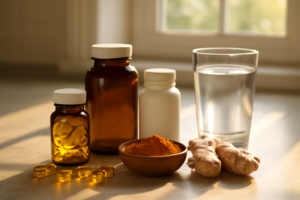
Curcumin — turmeric’s active compound — has been studied extensively for its anti-inflammatory properties. Research suggests it may inhibit specific inflammatory pathways, particularly NF-kB, a molecule linked to chronic inflammation.
Furthermore, turmeric has been used medicinally for over 4,000 years across Ayurvedic and Chinese medicine traditions. It wasn’t a trendy wellness suggestion. It was a well-documented, underutilized tool hiding in plain sight.
That realization is exactly why I stopped sprinkling turmeric on my eggs and hoping for the best, and started actually researching which supplement was worth buying. Food-based turmeric and a purpose-built supplement are not the same conversation, and most buying guides online blur the two together.
Why Food Alone Rarely Gets You a Therapeutic Dose
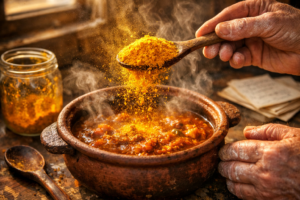
Curcumin — the compound doing most of the work — makes up only about 2–5% of turmeric by weight. Source A curry-sized pinch of turmeric powder delivers a genuinely small dose of curcumin, and on its own that curcumin absorbs poorly. That’s not a knock on cooking with turmeric — it’s genuinely good for you as a daily habit — but if your goal is a measurable anti-inflammatory dose for joint pain, food alone usually isn’t enough to get you there consistently.
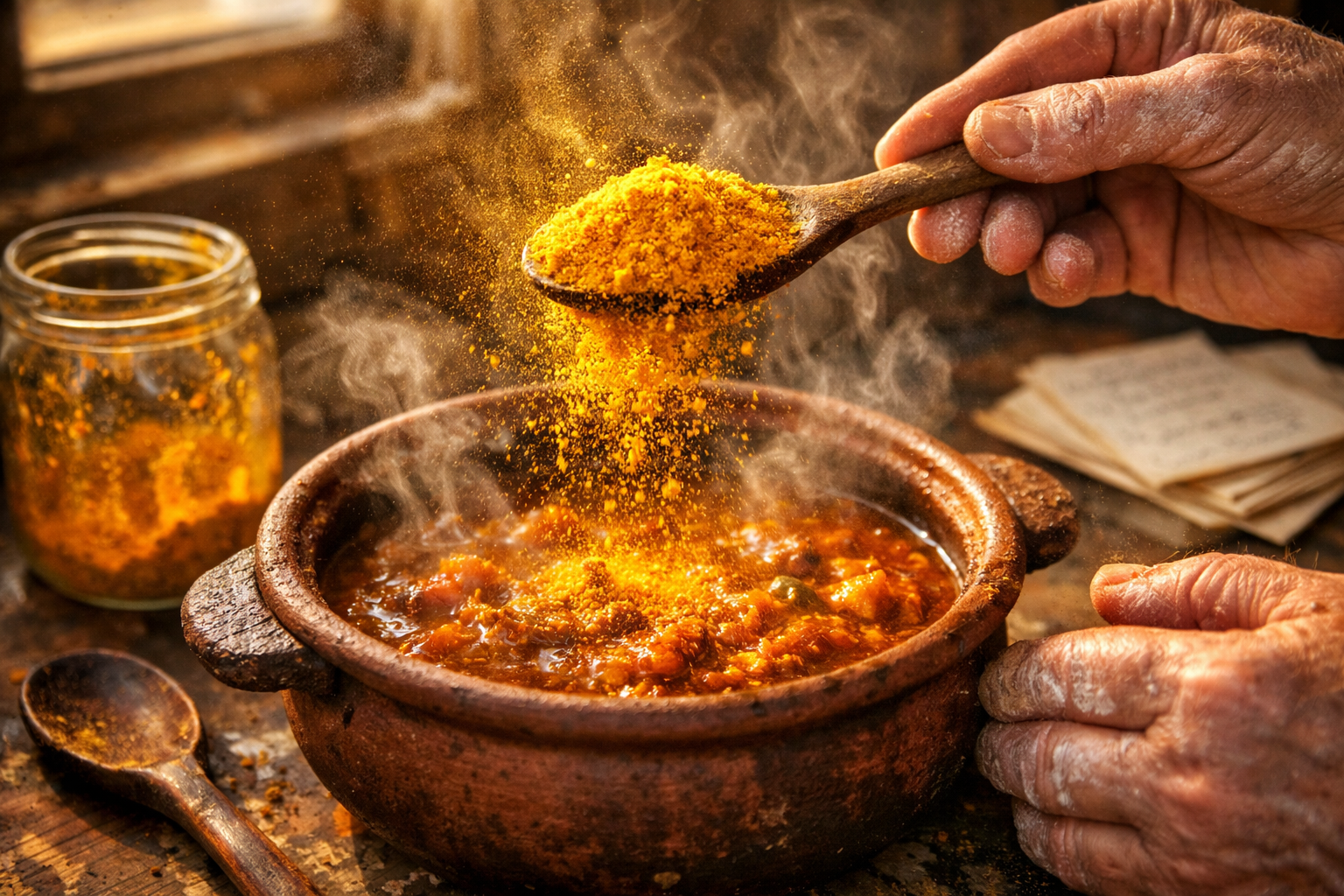
Most people try the food route first — a nightly mug of golden milk, turmeric worked into curries — before turning to a supplement for a more concentrated, consistent dose. That’s a completely reasonable path, and it’s worth trying. But if you’ve already been drinking golden milk for weeks and still aren’t feeling a difference, that’s usually a sign you need a measured dose rather than a dietary habit.

This is the gap supplements exist to close: a concentrated, standardized amount of curcumin, in a form your body can actually absorb. But “turmeric supplement” covers a surprisingly wide range of products, and they are not interchangeable. Here’s how to tell them apart.
Comparing Turmeric Supplement Forms
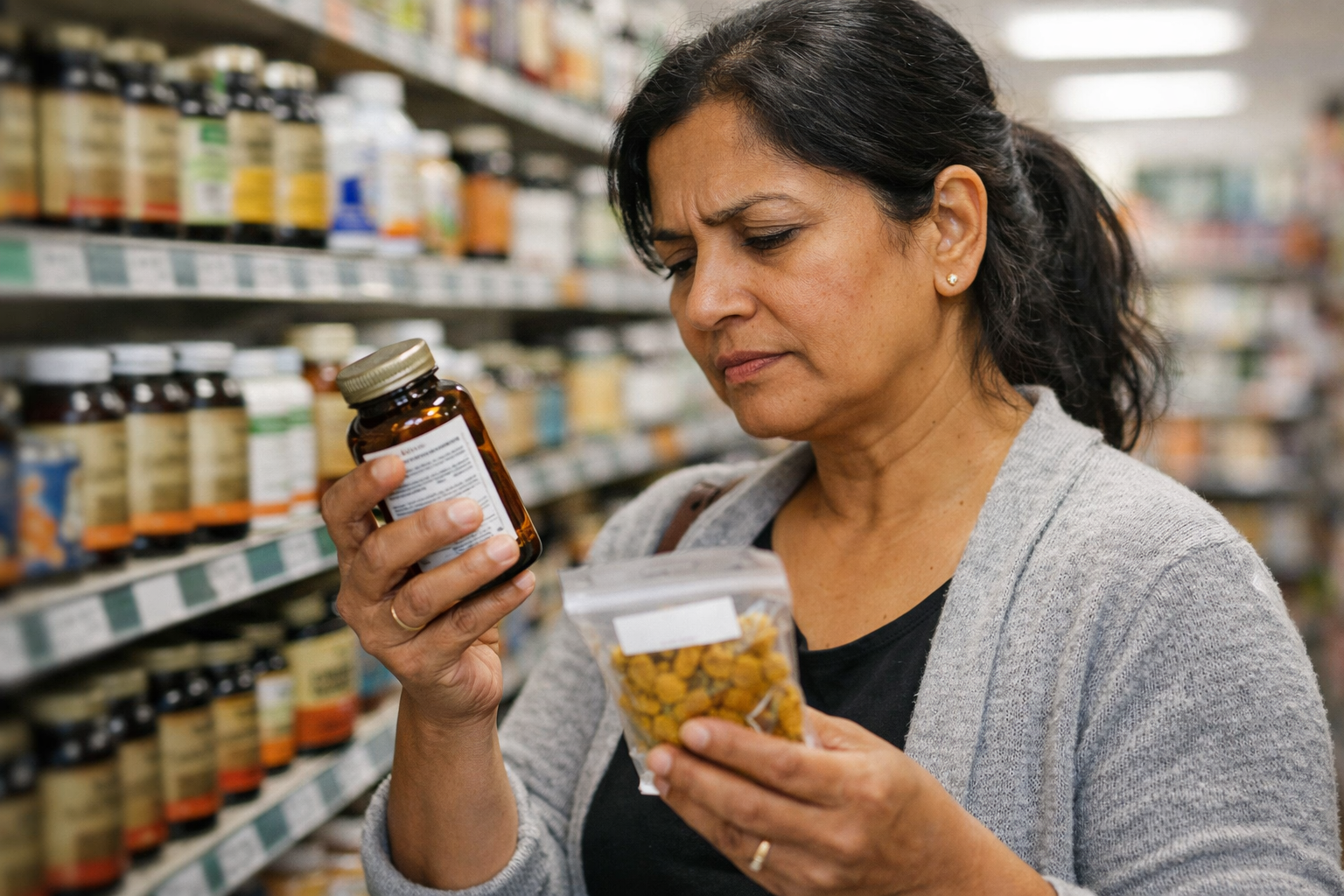
Walk down a supplement aisle and you’ll see turmeric sold four different ways. They are not equivalent, and the price difference between them usually reflects a real difference in how much curcumin actually reaches your bloodstream.
Whole Turmeric Root Powder (Capsuled)
This is dried, ground turmeric root packed into a capsule — essentially the same spice from your kitchen cabinet, just easier to swallow in a measured dose. It still contains only 2–5% curcumin by weight, so a 500 mg capsule of turmeric root powder is not the same as 500 mg of curcumin. It’s the least concentrated, least absorbable, and usually the cheapest option.

Standardized Curcumin Extract (95% Curcuminoids)
This is turmeric root that has been processed to concentrate the curcuminoids, then standardized so every capsule delivers a known, consistent amount — typically labeled “95% curcuminoids.” This is a meaningful step up from whole-root powder because you actually know your dose. However, on its own, curcumin extract still absorbs poorly; concentrating it doesn’t automatically solve the bioavailability problem.
Curcumin + Piperine (Black Pepper Extract)
Piperine, the active compound in black pepper, is the most common — and cheapest — way manufacturers try to fix curcumin’s absorption problem. The widely cited figure is a 2,000% increase in bioavailability from a small 1998 human study (Shoba et al., Planta Medica), which paired 2 g of curcumin with 20 mg of piperine. That figure has never been independently replicated at that scale, and more recent research suggests piperine mainly works by slowing down how quickly your liver clears curcumin from your bloodstream, rather than helping your gut absorb more of it in the first place.
That distinction matters for safety, not just semantics: piperine does this by inhibiting the same liver and gut enzymes — CYP3A4, CYP2C9, and UGT — that your body uses to clear a range of medications, including statins, blood thinners, immunosuppressants, and some antidepressants. Source In practical terms, a piperine-containing curcumin supplement deserves the same “check with your doctor or pharmacist first” caution as turmeric itself if you take any of those medications daily — more on this in the safety section below.
Liposomal and Phytosome (Phospholipid-Bound) Curcumin
These are the more expensive formulations, and the evidence for them is genuinely stronger than a marketing claim — though the exact numbers vary by study. A landmark human trial on a phytosome formulation (curcumin bound to phosphatidylcholine, commonly sold under the brand name Meriva) found total curcuminoid absorption roughly 29 times higher than an unformulated curcumin mixture. Source A more recent randomized crossover trial found smaller, but still substantial, gains — phytosome and submicron-particle formulations increased blood levels roughly 6.5 to 7.5 times over 24 hours compared to standard curcumin, while a liposomal formulation in that same trial did not show a statistically significant improvement. Source
The honest takeaway: phytosome-bound curcumin has the most consistent research behind it for meaningfully improved absorption. “Liposomal” curcumin is a real delivery technology, but the research on it is mixed, and quality varies a lot between brands — a cheap liposomal product and a well-formulated one are not the same thing, and the label alone won’t tell you which you’re getting.
How to Read a Turmeric Supplement Label
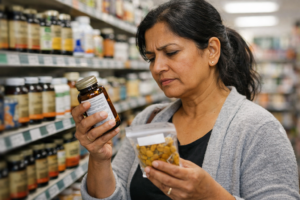
Once you understand the forms above, the label starts to make a lot more sense. Here’s what to actually check before buying:
- Curcumin or curcuminoid content in milligrams — not just “turmeric root powder” milligrams. A bottle that only lists total turmeric weight is hiding the number that actually matters.
- Standardization percentage — look for “95% curcuminoids” or similar. This tells you the extract is concentrated and consistent, not just ground root.
- An absorption strategy named on the label — piperine/BioPerine, a phytosome complex, or a liposomal delivery system. If none of these are mentioned, assume it’s a standard extract with the same poor absorption as plain curcumin.
- Third-party testing or a Certificate of Analysis (COA) — especially for heavy metals. This matters more than most buyers realize (see the next section).
- Manufacturing standard — a “cGMP-certified facility” claim on the label is a reasonable baseline sign of quality control, though it isn’t a substitute for actual test results.
Quality and Purity: Why Sourcing Actually Matters
This is the part most buying guides skip, and it’s genuinely important: turmeric is one of the more commonly adulterated spices sold worldwide. In some regions, turmeric powder has been intentionally cut with lead chromate — a yellow pigment — to make lower-quality turmeric look more vibrant, and testing has found lead-contaminated turmeric for sale in U.S. grocery stores, with documented cases of lead exposure traced back to it. Source
A recent scoping review of turmeric adulteration found roughly 1 in 6 commercial samples adulterated overall — but the rate was far higher for turmeric extracts specifically (about 42%) than for plain powder (about 15%). Source In other words, the more processed and concentrated the product, the more important it is to buy from a brand that actually tests for this — which is exactly the category most curcumin supplements fall into.
Practically, that means favoring brands that publish third-party heavy-metal testing results or a Certificate of Analysis, rather than assuming a higher price automatically means a cleaner product.
Dosage Guidance for Supplement Users
For general wellness and everyday antioxidant support, a common daily range is 500 to 1,000 mg of curcumin. For more targeted support with active joint discomfort or persistent inflammation, many practitioners suggest 1,500 to 2,000 mg of curcumin daily, typically split into two or three doses to keep levels more consistent throughout the day.
One important caveat specific to supplement shopping: those milligram ranges generally describe standard curcumin extract. If you choose a high-absorption formulation — phytosome or a well-studied liposomal product — the effective dose can be considerably lower, because far more of it actually reaches your bloodstream per milligram. Follow the specific serving size on that product’s label rather than assuming standard-extract dosing applies; a phytosome product dosed like a standard extract may be delivering far more absorbed curcumin than you intended.
Don’t expect overnight results regardless of the form you choose. Most people report noticeable changes after four to eight weeks of consistent daily use.
Safety and Drug Interactions
Turmeric is generally well-tolerated, but concentrated supplements are a different exposure level than a pinch of spice in your cooking, and a few interactions are worth taking seriously.
- Blood thinners. Curcumin has mild anticoagulant properties on its own, and can interact with blood-thinning medications like warfarin or aspirin, potentially increasing bleeding risk. If your supplement also contains piperine, that risk deserves extra attention, since piperine independently affects how your body clears warfarin and similar drugs — always check with your doctor before combining the two.
- Statins and other CYP3A4-cleared medications. Piperine-containing formulas can slow the breakdown of certain statins and other drugs metabolized by the same liver pathway, raising their blood levels unpredictably. Mention any piperine-based supplement to your pharmacist if you take a daily prescription medication.
- Gallbladder disease. Curcumin stimulates bile production, which can worsen symptoms for people with gallstones or bile duct obstruction.
- Pregnancy and breastfeeding. Culinary amounts of turmeric are considered fine. High-dose supplements are a different story — they may stimulate uterine contractions, so they’re best avoided without a doctor’s specific sign-off.
- Diabetes medication and upcoming surgery. Curcumin can lower blood sugar further when combined with diabetes medication, and its mild anticoagulant effect means many providers recommend stopping supplements roughly two weeks before a scheduled surgery.
- Digestive side effects at high doses. Mild nausea, digestive cramping, bloating, or loose stools are the most common complaints, usually at higher doses taken on an empty stomach. Taking supplements with food largely resolves this.
Always consult your doctor or pharmacist before starting a turmeric or curcumin supplement if any of the above applies to you. None of this is a reason to avoid turmeric supplements altogether — it’s a reason to pick a product deliberately and mention it at your next appointment, the same way you would any other daily supplement.
Putting It Together: How I’d Actually Shop
If you’re buying a turmeric supplement for the first time, here’s the short version: skip plain turmeric-root capsules, look for a labeled curcumin milligram amount with a named absorption strategy (piperine, phytosome, or a well-reviewed liposomal formula), confirm the brand publishes third-party testing, and start at the lower end of the dosage range for your chosen form. More milligrams isn’t automatically better once absorption technology is involved — matching the dose to the formulation matters more than chasing the biggest number on the label.
The Curcumin Formula That Actually Absorbs (And Why Bioavailability Matters More Than Dosage)
Turmeric’s active compound, curcumin, is notoriously difficult for your body to absorb — most of it passes right through you unless you pair it with black pepper’s piperine. This curcumin with bioperine formulation addresses exactly that problem: it’s designed so your joints and tissues actually get access to the anti-inflammatory compounds you’re paying for.
What works
- Piperine genuinely improves curcumin bioavailability — the headline 2,000% figure comes from a single small 1998 human study using 2 g of curcumin with 20 mg of piperine, and it has not been independently replicated, so treat it as a direction rather than a promise. Combining the two still matters more than chasing a higher dose alone.
- Most people notice a reduction in joint stiffness and swelling after 4–6 weeks of consistent use, with continued improvement over 2–3 months — the timeline is slow, but it’s measurable if you’re paying attention.
- This formulation avoids the digestive upset that turmeric alone can cause, and the combination is gentle enough to take daily without the bloating or nausea some people experience with other anti-inflammatory supplements.
What doesn’t
- If you’re on blood thinners or certain medications, curcumin can interact — this isn’t a grab-and-go supplement if you have a complex medication list. Talk to your pharmacist first.
- This won’t fix structural joint damage or replace physical therapy — if your inflammation is the symptom of a deeper biomechanical problem (weak stabilizers, poor movement patterns, old injury), the supplement will help you manage pain, but it won’t address the root cause.
Curcumin is genuinely one of the better-researched anti-inflammatory supplements, but it works best as part of a bigger picture — it buys you pain relief and reduced swelling, not a cure. turmeric curcumin supplement
About This Article

Written by Michael Torres. Michael Torres has had joint problems his whole life — hypermobile as a kid, chronic sprains and a dislocating shoulder through his twenties, an osteoarthritis diagnosis in his early fifties, and a right knee replacement since. He is not a doctor or a physical therapist and has no clinical training. He writes about what has helped him and what he has watched help the people around him, and says plainly when he has not tried something himself. More about this site.
Scope and limits. Michael has no medical or clinical training — he writes about living with his own joint pain, not about treating anyone else's. Nothing here is medical advice. Talk to a doctor before starting anything new, and get seen promptly for pain that is new, severe, worsening, or comes with swelling, fever, or numbness.
Verify this against a primary source
Specifics change, and your situation may differ from the one described here. These are the authorities worth checking directly:
- NIAMS — arthritis and musculoskeletal research from the NIH
- MedlinePlus — plain-language medical reference from the NIH
- Arthritis Foundation — condition guides and treatment overviews