
You wake up in the morning, and before your feet even hit the floor, you already know it’s going to be one of those days. That familiar ache radiates across your lower back, tightens with every movement, and makes even the simplest tasks feel like a negotiation. If that sounds like your reality, you’re far from alone — and you deserve honest, practical information about chronic back pain relief that actually works in the real world, not just in a clinical study.
Why Chronic Back Pain Is So Complicated (And Why That’s Not Your Fault)
Chronic back pain — typically defined as pain lasting more than 12 weeks — is one of the most common reasons people visit a doctor in the United States. But here’s what most people don’t hear enough: it’s also one of the most misunderstood conditions in medicine. Chronic back pain isn’t just “a bad back.” It often involves a complex mix of structural issues, muscle imbalances, inflammation, nerve irritation, and even central nervous system sensitization.
Common culprits include herniated or bulging discs, degenerative disc disease, spinal stenosis, sacroiliac joint dysfunction, and facet joint arthritis. That last one is particularly relevant if your pain tends to be worse in the morning, eases with movement, and then flares again after prolonged sitting or standing. Facet joint pain often responds well to a procedure called radiofrequency ablation (RFA), where small nerve branches that carry pain signals from the facet joints are essentially quieted using heat. Research suggests RFA may provide meaningful, lasting relief for carefully selected patients — and it’s worth asking your doctor about if conservative treatments haven’t moved the needle for you.
But before you get to any procedure, most providers will want to see you try a structured conservative care plan first. That’s where a lot of the day-to-day management tools come in.
What Actually Helps: Evidence-Informed Strategies for Chronic Back Pain Relief
As someone who has spent years in the rehab world, I want to be upfront: there’s no single cure for chronic back pain. Anyone who tells you otherwise is overselling. But there are genuinely effective strategies that many people find provide meaningful relief when used consistently and in combination.
Movement and Physical Therapy
I know — when your back hurts, the last thing you want to do is move. But research consistently suggests that graded, purposeful movement is one of the most powerful tools available. A physical therapist can assess your movement patterns, identify compensations, and build a program that strengthens the muscles supporting your spine without aggravating your symptoms. Core stability work, hip strengthening, and gentle flexibility training are typically the foundation. If you don’t have access to PT right now, even a daily 20-minute walk may help reduce inflammation and improve pain tolerance over time.
Heat, Cold, and Compression
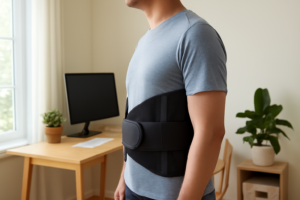
Heat therapy may help relax tight muscles and increase blood flow to the area, while cold therapy can help reduce acute inflammation and numb sharp pain. Many people find alternating between the two gives better results than either alone. Compression through a well-fitted back brace can also provide meaningful support during activities that tend to trigger flares — like long drives, grocery shopping, or yard work.
Mindfulness and Pain Neuroscience
This one surprises a lot of people, but the brain plays a significant role in chronic pain. Research suggests that mindfulness-based stress reduction (MBSR) and pain neuroscience education may help retrain the nervous system’s response to pain signals. Apps like Calm or Headspace offer guided programs that many chronic pain patients have found helpful as part of a broader approach.
Products Worth Trying for Day-to-Day Support
While products aren’t a replacement for treatment, the right supportive gear can make a real difference in how you get through your day. Here are a few options worth considering:
Why a Back Brace Actually Helps—and When It’s Just a Band-Aid
If you’re dealing with acute flare-ups or need stabilization during activity, a quality back brace can reduce compensatory strain and give your core a chance to engage properly instead of letting pain dictate your movement. It’s not a cure, but it’s genuinely useful for breaking the pain-guarding cycle that keeps muscles locked tight.
What works
- Reduces excessive spinal flexion and rotation during flare-ups, which research shows can lower pain intensity enough to allow actual movement and physical therapy participation.
- Most users report noticeable relief within 1–2 days of consistent wear, especially during activities like sitting at a desk or walking—the brace does the stabilization work so your muscles don’t have to contract in panic mode.
- The FEATOL design uses a dual-strap system that actually stays in place (doesn’t ride up or slip), and the compression level is adjustable—no one-size-fits-all rigidity that either does nothing or cuts off circulation.
What doesn’t
- If your pain is driven by weakness or poor movement patterns, a brace masks the problem without fixing it—you’ll need actual rehab work (PT, core engagement, posture correction) or you’ll be right back where you started the moment you take it off.
- Wearing it 24/7 can actually weaken your core over time by offloading the stabilization work entirely—it’s a temporary tool during flare-ups or high-demand days, not a permanent solution.
Think of a back brace as a bridge that gets you moving again, not a destination—it buys you time to address the underlying mechanics without being sidelined by pain. FEATOL Back Brace Support Belt
About This Article

Written by Michael Torres. Michael Torres has had joint problems his whole life — hypermobile as a kid, chronic sprains and a dislocating shoulder through his twenties, an osteoarthritis diagnosis in his early fifties, and a right knee replacement since. He is not a doctor or a physical therapist and has no clinical training. He writes about what has helped him and what he has watched help the people around him, and says plainly when he has not tried something himself. More about this site.
Scope and limits. Michael has no medical or clinical training — he writes about living with his own joint pain, not about treating anyone else's. Nothing here is medical advice. Talk to a doctor before starting anything new, and get seen promptly for pain that is new, severe, worsening, or comes with swelling, fever, or numbness.
Verify this against a primary source
Specifics change, and your situation may differ from the one described here. These are the authorities worth checking directly:
- NIAMS — arthritis and musculoskeletal research from the NIH
- MedlinePlus — plain-language medical reference from the NIH
- Arthritis Foundation — condition guides and treatment overviews