
My physical therapist warned me that an inversion table for back pain was not a magic fix for my herniated disc, but that gentle traction could take pressure off the compressed nerve between flare-ups. I started with two minutes a day at a shallow angle and built up from there over six weeks, tracking exactly when it helped and the one time it clearly did not. Here’s what I learned about whether an inversion table actually works for chronic back pain—and who it might help.
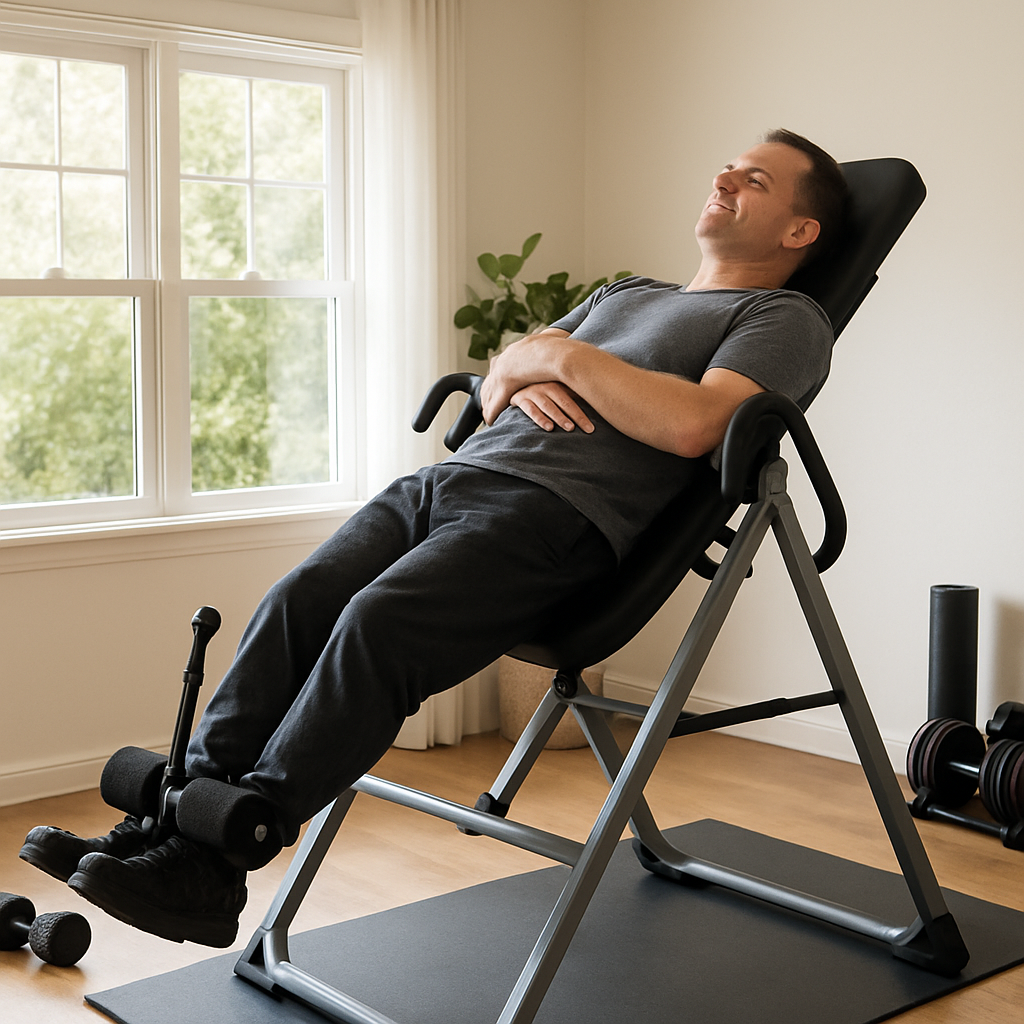
For three years, I lived with a herniated disc at L4-L5 that sent sharp, radiating pain down my right leg. I’d tried physical therapy, anti-inflammatories, and core strengthening. Some days were better; others, I couldn’t sit comfortably for more than twenty minutes. My physical therapist, Sarah, mentioned inversion therapy almost as an afterthought one session. “It won’t fix the herniation,” she said, “but if you do it right, the decompression might give you relief between treatments.”
That’s what brought me to an inversion table—not as a cure-all, but as a targeted tool for temporary pain relief. After six weeks of consistent use, I’m genuinely surprised by what worked and what didn’t.
What an Inversion Table Actually Does (and Doesn’t Do)
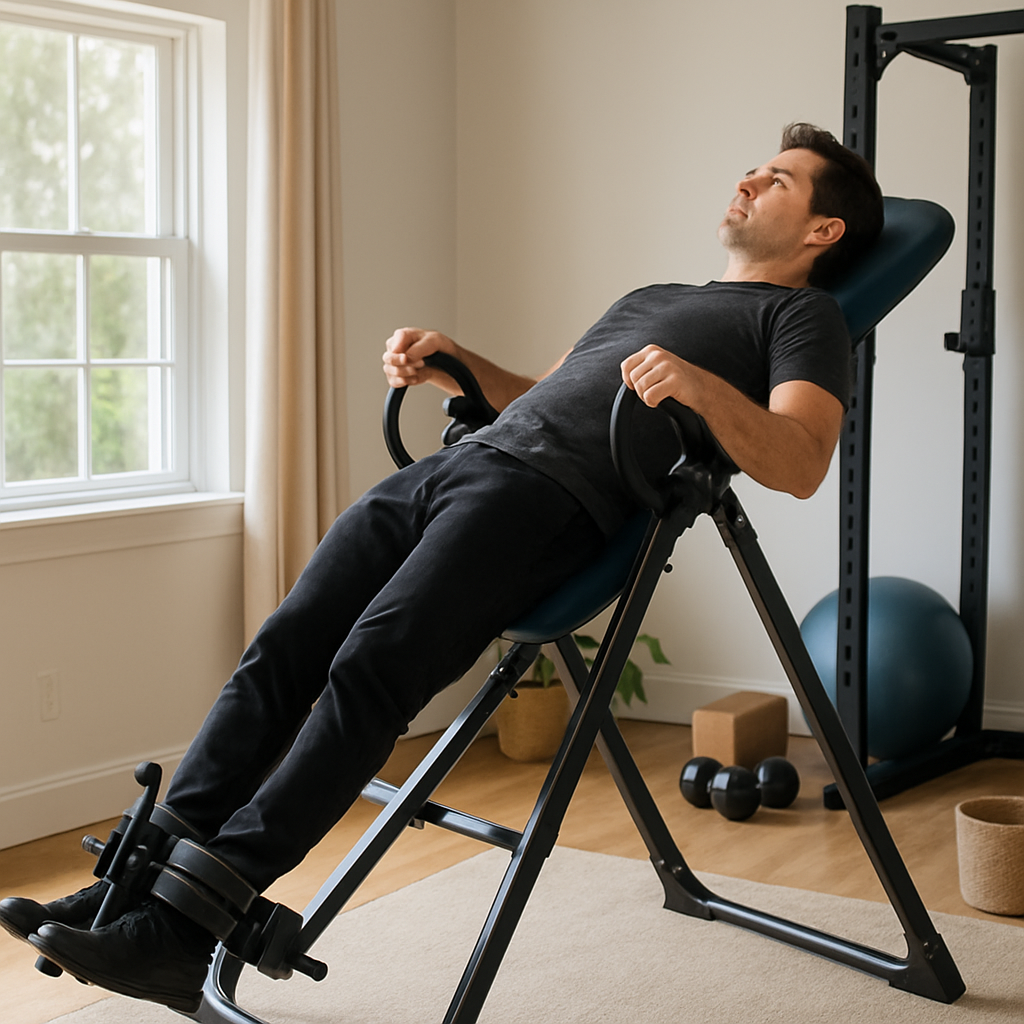
Before I bought one, I needed to understand the biomechanics. When you hang upside down or at an angle on an inversion table, gravity pulls your upper body away from your spine. Theoretically, this reduces the pressure between your vertebrae and takes tension off nerves that might be compressed.
That’s the promise. The reality is more nuanced. An inversion table doesn’t fix a herniated disc—the disc material doesn’t move back into place. What it can do is create temporary negative pressure in the disc space, which may reduce nerve compression and pain. It’s also a form of spinal traction, which has decades of clinical use behind it, though results vary widely from person to person.
The key word is temporary. I didn’t wake up one day without back pain. What I noticed instead was relief during and immediately after inversion, which could buy me pain-free hours to do physical therapy, walk, or sit at my desk.
My Six-Week Test: How I Used It and What Changed
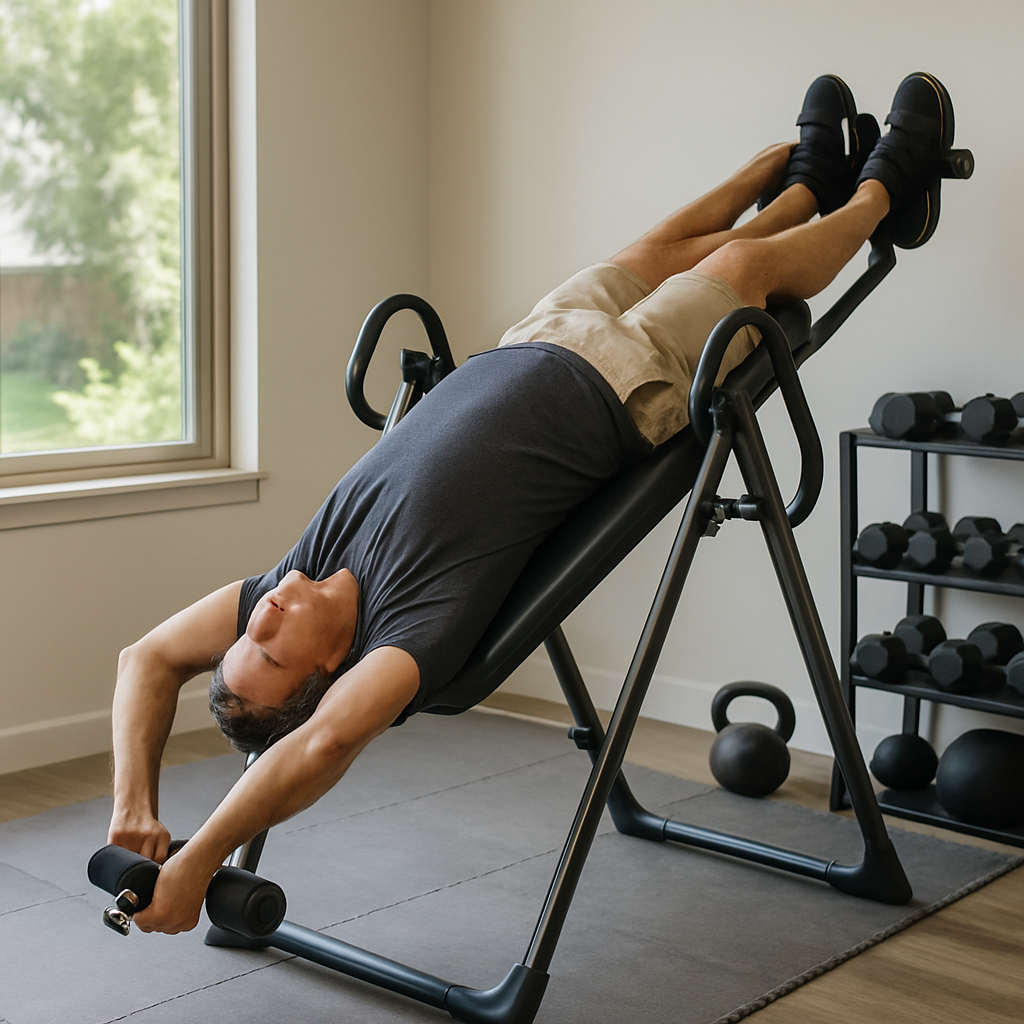
I started with the Teeter EP-560 Ltd. Inversion Table, which my physical therapist recommended because of its FDA registration and adjustable safety features. It felt solid—not wobbly or cheap—and the ankle lock system was intuitive enough that I felt secure getting inverted.
Week 1: I started at a 20-degree angle for exactly two minutes, three times per week. This is the golden rule Sarah gave me: shallow and short at first. My lower back felt strange—not painful, but oddly released, like my spine was exhaling. After I got off, I could feel the pressure relief for about thirty minutes.
Week 2-3: I increased to three minutes at the same angle, then added a fourth session. By day ten, I was brave enough to go to 30 degrees. This made a noticeable difference. The nerve pain that usually flared up by afternoon didn’t show up on inversion days.
Week 4: I hit 40 degrees and four to five sessions per week. This is when I felt the most benefit—enough relief that I could do my physical therapy exercises without triggering pain spikes. I was tracking everything in a simple spreadsheet: angle, duration, pain level before and after (using a 1-10 scale), and any flare-ups.
Week 5: I got ambitious and went to 50 degrees for five minutes. This was a mistake. I woke up the next morning with increased sciatic nerve pain. The compression I was trying to relieve got worse, not better. Sarah explained what happened: beyond a certain angle and duration, your hip flexors and hamstrings tighten, which can actually increase spinal compression. I backed off to 40 degrees and stayed there.
Week 6: I settled into a routine of four sessions per week at 40 degrees for four to five minutes. The pain relief was consistent but modest—a 2-3 point drop on my pain scale, which meant the difference between uncomfortable and manageable.
What Surprised Me (And What Didn’t)
I expected inversion to feel dramatic. It didn’t. There was no sudden “pop” or alignment shift. Instead, the benefit was cumulative and subtle—more like physical therapy than like taking a painkiller.
What surprised me was how much the timing mattered. If I inverted in the morning, I’d have pain relief for four to six hours. If I did it mid-afternoon during a flare-up, the relief came, but the window was shorter. My physical therapist explained that doing inversion before exercise—especially before core work—was most effective because it gave my nerve room to calm down.
What I didn’t expect was the psychological benefit. Knowing I had a tool that worked gave me permission to push a little harder in therapy. I wasn’t white-knuckling through exercises; I was doing them from a less painful baseline.
And what didn’t change: my underlying herniation. MRI scans don’t care about inversion tables. The disc damage stayed the same. What improved was pain management and my ability to stay mobile, which is actually how most chronic back pain gets better—not through heroic interventions, but through staying active without pain sabotaging you.
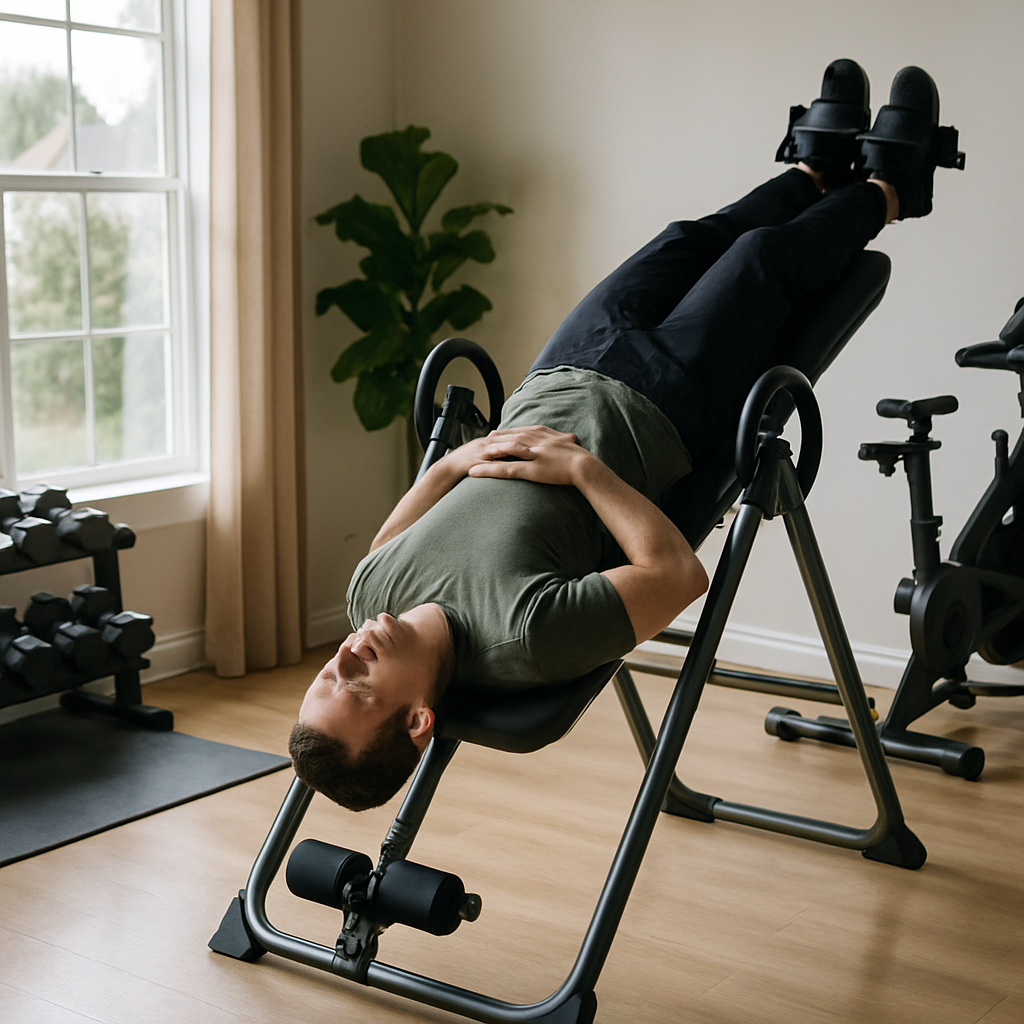
Who Should Try an Inversion Table—and Who Shouldn’t
After my six-week experiment, here’s my honest take on who this is for and who should skip it.
Good fit for inversion tables:
- You have disc-related back pain or sciatica (not facet joint arthritis or other causes)
- You’ve tried physical therapy and it helps, but you still have flare-ups
- Your pain is worse at the end of the day or after sitting
- You’re willing to be patient and consistent—this isn’t a quick fix
- You can start shallow (20-30 degrees) and go slow
Not a good fit:
- You have high blood pressure or glaucoma (inverting increases intracranial pressure)
- You’ve had recent spinal surgery
- Your pain is sharp and acute right now (wait until it’s controlled)
- You’re looking for a replacement for physical therapy
- You have osteoporosis or significant spinal instability
Which Inversion Table Should You Choose?
If you’re considering this route, I’d start with something mid-range that has safety certifications and doesn’t require you to completely commit financially. The Teeter EP-560 Ltd. Inversion Table is what I used and what my physical therapist approved—it’s FDA-registered and has an easy ankle lock system.
If you want something with a bit more comfort, the Teeter FitSpine LX9 Inversion Table includes a back pain relief kit and is designed for easier angle adjustments. For those on a tighter budget, the YOLEO Gravity Heavy Duty Inversion Table offers good reviews at a lower price point.
If you’re investing in a premium option, the Teeter FitSpine LX9 and Teeter FitSpine X3 Inversion Table both come with comfort upgrades and more stable frame designs. For heavy-duty use, the Verakare ITX9550 Heavy Duty Inversion Table is built tough and won’t wobble.
One other solid option is the INNOVA HEALTH AND FITNESS ITM5900 Advanced Heat and Massage Inversion Table, which adds heat and massage functions—nice for someone with both disc pain and muscular tension.
The best table is the one you’ll actually use. Mine sat in my bedroom, and I used it because it was convenient and didn’t feel clunky. Pick something stable, check the reviews for durability, and make sure the angle adjustments are intuitive.
The Bottom Line: Is an Inversion Table Worth It?
For my herniated disc and chronic back pain, yes—but with important caveats.
An inversion table for back pain works best as part of a larger strategy, not as a standalone tool. It gave me relief when I used it consistently, started slowly, and knew my limits. The week I pushed to 50 degrees proved that more isn’t better; shallow, frequent sessions beat aggressive inversion every time.
Six weeks in, my pain hadn’t disappeared, but my pain-free hours had increased. I could do more physical therapy without compensation patterns kicking in. I could sit for longer without that familiar radiating ache. Those things matter when you’re managing chronic pain—not because they’re a cure, but because they’re the difference between a life that feels limited and a life that feels possible.
If you’re considering an inversion table, talk to your physical therapist or doctor first. Start at 20-30 degrees for two to three minutes. Track what works. And remember: this tool is meant to buy you relief so you can stay active, not to replace the other work your back needs. Used that way, an inversion table can genuinely help.
About This Article

Written by Michael Torres. Michael Torres has had joint problems his whole life — hypermobile as a kid, chronic sprains and a dislocating shoulder through his twenties, an osteoarthritis diagnosis in his early fifties, and a right knee replacement since. He is not a doctor or a physical therapist and has no clinical training. He writes about what has helped him and what he has watched help the people around him, and says plainly when he has not tried something himself. More about this site.
Scope and limits. Michael has no medical or clinical training — he writes about living with his own joint pain, not about treating anyone else's. Nothing here is medical advice. Talk to a doctor before starting anything new, and get seen promptly for pain that is new, severe, worsening, or comes with swelling, fever, or numbness.
Verify this against a primary source
Specifics change, and your situation may differ from the one described here. These are the authorities worth checking directly:
- NIAMS — arthritis and musculoskeletal research from the NIH
- MedlinePlus — plain-language medical reference from the NIH
- Arthritis Foundation — condition guides and treatment overviews