
Knowing that stress worsens hip and back pain is the easy part. Actually doing something about it during a genuinely stressful week is harder — you don’t have time for an hour-long relaxation routine when you’re already behind on everything. Here’s a practical toolkit of stress-reduction techniques specifically chosen because they’re fast enough to actually fit into a bad week, not just a calm one.
The 2-Minute Hip Flexor Release
Since hip flexors are one of the first places stress-related tension accumulates, a brief kneeling hip flexor stretch — 30 seconds per side, done a couple of times through the day — directly targets where a lot of stress-driven back pain originates. This doesn’t require changing clothes or clearing a schedule block; it fits into a bathroom break.
Box Breathing Before It Escalates
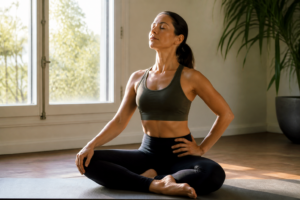
A simple pattern — inhale for 4 counts, hold for 4, exhale for 4, hold for 4, repeated for a minute or two — activates your parasympathetic nervous system and can interrupt the fight-or-flight muscle guarding that tightens around your hips and spine during acute stress. Doing this at the first sign of a stress spike, rather than waiting until you’re already in pain, tends to be more effective than doing it reactively after the tension has set in.
Progressive Muscle Relaxation, Shortened
The full version of this technique takes 15-20 minutes; a shortened version doesn’t. Tense your lower back and hip muscles hard for 5 seconds, then release completely and notice the difference — repeat two or three times. This teaches your body what “actually relaxed” feels like in muscles that have been unconsciously braced for hours, which is often the first step to letting go of tension you didn’t realize you were holding.
Protect Your Sleep Window Even When You’re Behind
During a stressful stretch, sleep is often the first thing sacrificed — and it’s exactly when your joints need that recovery window most. Protecting even a consistent 7-hour window, rather than a “catch up later” approach, matters more during high-stress periods than during calm ones, since both stress and sleep deprivation compound the same inflammatory and pain-sensitivity pathways.
A Two-Minute Walk Between Tasks
Stress often keeps people locked at a desk pushing through, which compounds both the mental tension and the physical muscle guarding. A short walk — even just around the room — between stressful tasks breaks the sustained static tension pattern and gives your hip flexors and lower back a brief reset before the next demand hits.
Build the Habit Before You Need It
These techniques work best when they’re already familiar habits by the time a genuinely stressful week hits — trying to learn box breathing for the first time in the middle of a crisis is harder than falling back on something you already know. Practicing these during ordinary weeks, even briefly, means they’re actually available to you when stress spikes.
A Passive Reminder for the Days You Can’t Focus on Technique
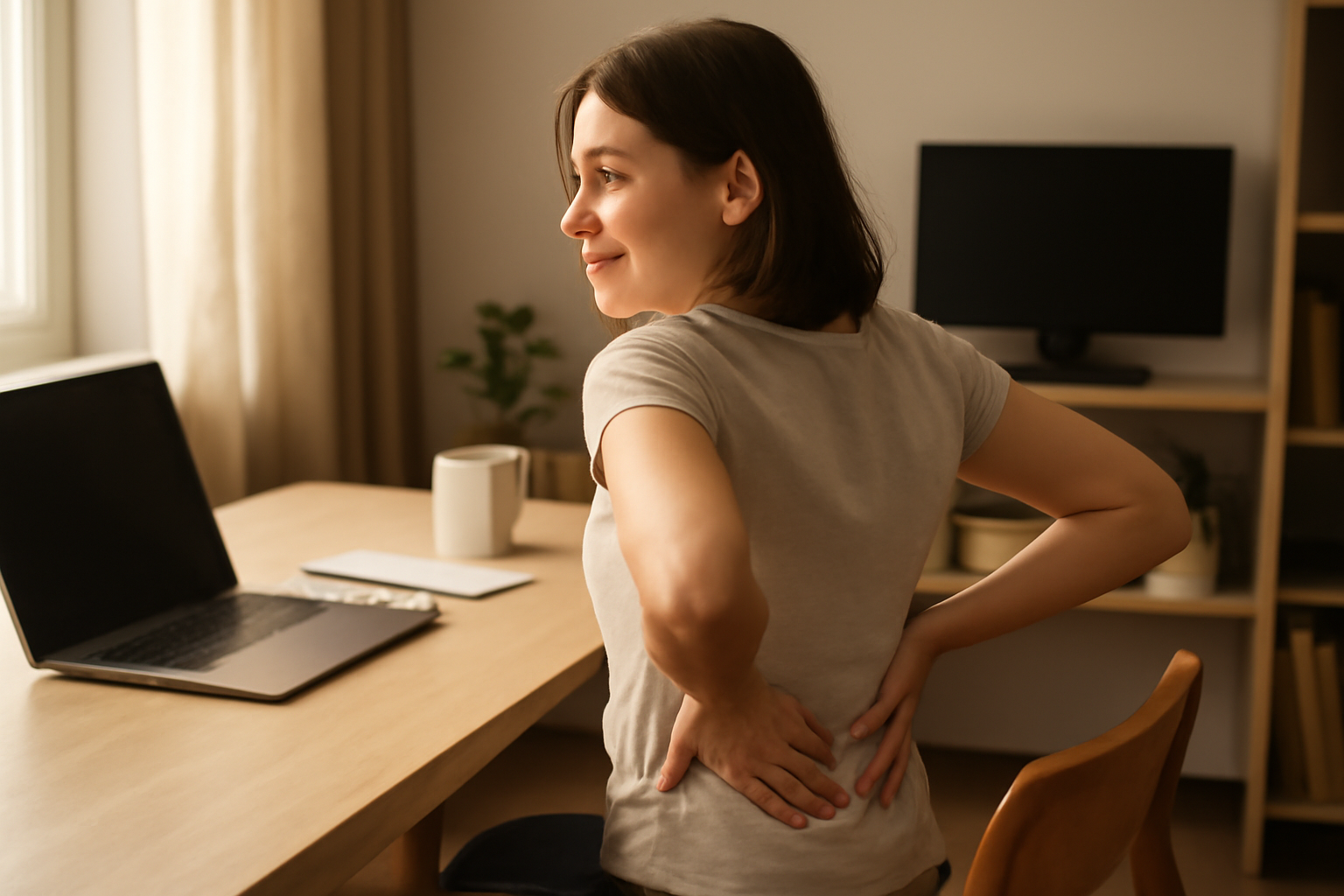
On the busiest, most stressful days, remembering to do any of the above consistently is genuinely hard. A posture corrector works passively in the background, interrupting the forward-hunched, tension-holding posture that stress creates, without requiring you to remember to do anything.
What works
- Proprioceptive feedback reminds you to sit upright without requiring active attention on the busiest days, when you’re least likely to remember any of the active techniques above.
- Lightweight enough for all-day wear without feeling restrictive, so it’s realistic to keep on through a genuinely demanding day.
What doesn’t
- A posture corrector is a passive backstop, not a replacement for the active techniques above — it addresses posture, not the underlying stress response.
The best technique is the one you’ll actually use during a genuinely bad week — pick one or two from above and build them into a habit before you need them. Fit Geno Back Brace Posture Corrector
About This Article

Written by Michael Torres. Michael Torres has had joint problems his whole life — hypermobile as a kid, chronic sprains and a dislocating shoulder through his twenties, an osteoarthritis diagnosis in his early fifties, and a right knee replacement since. He is not a doctor or a physical therapist and has no clinical training. He writes about what has helped him and what he has watched help the people around him, and says plainly when he has not tried something himself. More about this site.
Scope and limits. Michael has no medical or clinical training — he writes about living with his own joint pain, not about treating anyone else's. Nothing here is medical advice. Talk to a doctor before starting anything new, and get seen promptly for pain that is new, severe, worsening, or comes with swelling, fever, or numbness.
Verify this against a primary source
Specifics change, and your situation may differ from the one described here. These are the authorities worth checking directly:
- NIAMS — arthritis and musculoskeletal research from the NIH
- MedlinePlus — plain-language medical reference from the NIH
- Arthritis Foundation — condition guides and treatment overviews