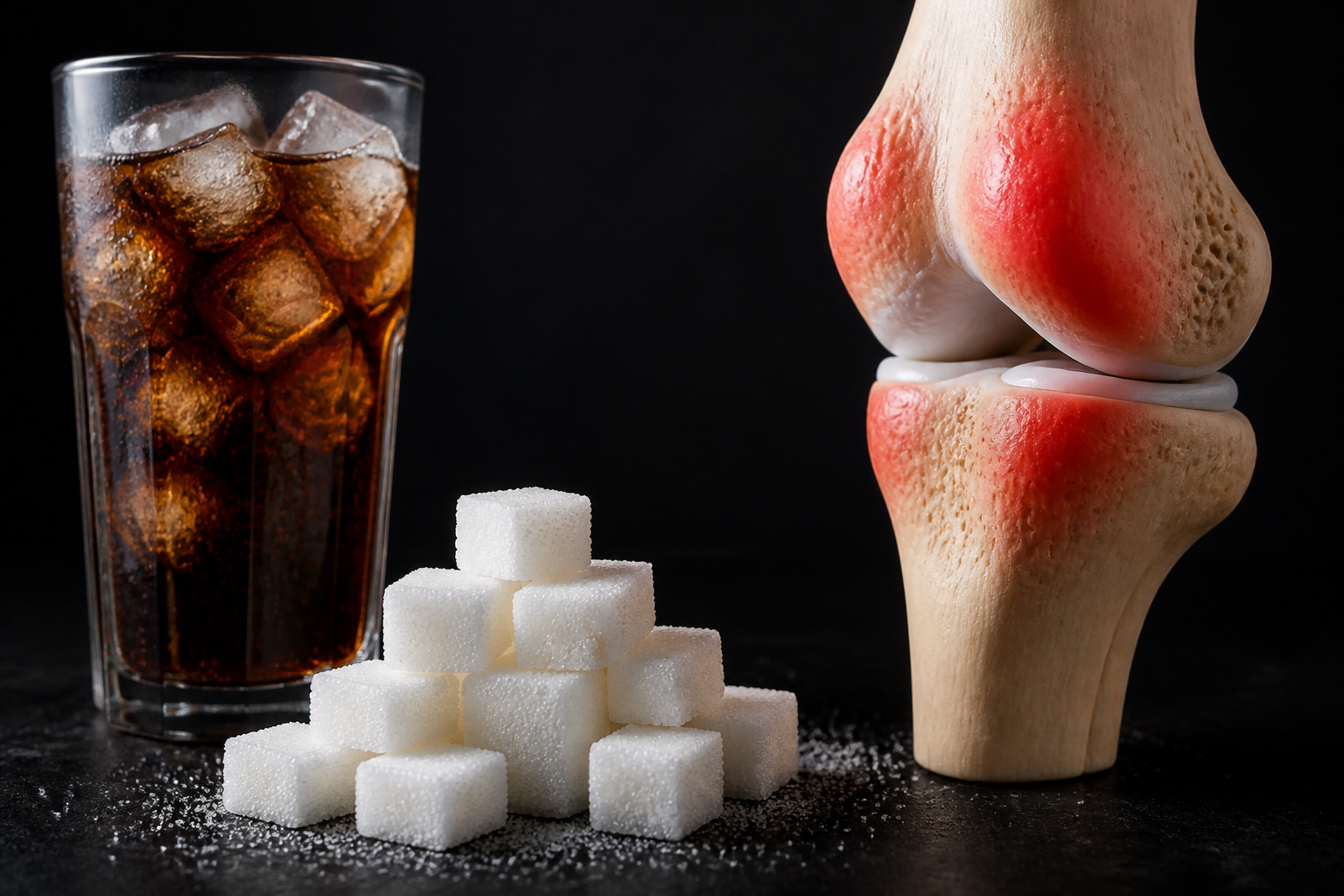

You wake up with stiff knees. Your afternoon energy crash hits hard, and by evening, your joints are aching more than usual. Maybe you’ve noticed this pattern after having dessert or a sugary drink—a connection you’ve wondered about but weren’t sure was real.
Here’s what I want you to know: that intuition is backed by solid science. The relationship between sugar and joint inflammation is genuine, and understanding it can help you make choices that actually reduce your pain. Today, I’m walking you through exactly how sugar drives inflammation in your joints, why blood sugar spikes matter so much, and what you can realistically do about it.
Sugar and Joint Inflammation: The Biological Connection
When we talk about sugar and joint pain, most people think about eating a candy bar and feeling sore the next day. But the mechanism is more sophisticated—and honestly, more concerning—than that simple cause-and-effect.
Here’s what happens at a cellular level: when you consume excess sugar, your bloodstream floods with glucose. Your body works to manage this spike, but over time—or even acutely during a blood sugar surge—something problematic occurs. Excess glucose doesn’t just get burned for energy. Some of it undergoes a process called glycation, where it bonds to proteins in your body without the normal enzyme regulation. This creates compounds called Advanced Glycation End Products, or AGEs.
AGEs are inflammatory troublemakers. When they accumulate in joint cartilage, they trigger your immune system to release pro-inflammatory cytokines—signaling molecules that tell your joints to mount an inflammatory response. Your body essentially treats these glycation products as a threat, and your joints pay the price.
For people with arthritis or gout, this process is especially relevant. Existing joint damage makes cartilage more vulnerable to AGE accumulation. And for gout sufferers, excess sugar (particularly fructose) increases uric acid levels, making flare-ups more frequent and severe.
Blood Sugar, Insulin, and Why Joint Pain Gets Worse
The story doesn’t end with AGEs. There’s another critical pathway: the insulin-inflammation connection. When blood sugar spikes, your pancreas releases insulin to shuttle glucose into cells. But if you’re eating refined carbs and sugars regularly, your cells gradually become resistant to insulin’s signal. This is insulin resistance, the hallmark of pre-diabetes and type 2 diabetes.
Here’s what matters for your joints: insulin resistance doesn’t just affect blood glucose metabolism. It amplifies systemic inflammation. Your body stays in a chronic low-grade inflammatory state, which directly impacts your joints. People with pre-diabetes or diabetes often report that their joint pain worsens when their blood sugar control slips—and research supports this observation.
I’ve worked with countless clients who didn’t realize their joint pain was partly driven by metabolic dysfunction. They’d cut back on sugary foods, stabilize their blood sugar, and within weeks, they’d notice reduced stiffness and improved mobility. It’s not magical; it’s physiology.
The Fructose Problem
Not all sugars are created equal when it comes to joint inflammation. Fructose—found in high-fructose corn syrup, regular sugar, agave, and many processed foods—is particularly problematic. Your liver metabolizes fructose differently than glucose, and this process generates more inflammatory markers and AGEs more readily. If you’re trying to reduce blood sugar joint pain, cutting fructose first often yields faster results.
Which Foods and Sugars Are Worst for Your Joints?
Let me be practical here. I’m not going to tell you never to have dessert. But I will tell you which choices matter most for sugar and joint pain:
- Refined carbohydrates: White bread, pastries, and processed snacks spike blood sugar aggressively and are high in AGE precursors. These are the top priority to reduce.
- High-fructose corn syrup: Found in soda, many condiments, and packaged foods. This is fructose in concentrated form and exceptionally inflammatory for joints.
- Sugary beverages: Soda, sweetened teas, and energy drinks deliver a massive insulin spike without fiber to slow absorption. They’re among the worst offenders.
- Processed sweets: Cookies, candy, and store-bought pastries combine refined carbs, sugar, and often unhealthy fats—a triple threat to joint health.
Better alternatives: If you’re managing sugar joint pain, focus on whole fruit (which includes fiber), dark chocolate with 70%+ cacao, and small amounts of honey or maple syrup in tea. The fiber in whole foods slows glucose absorption and reduces AGE formation.
The Curcumin Dose That Actually Blocks Sugar-Driven Inflammation
If you’re cutting sugar but your joints still ache, curcumin—the active compound in turmeric—addresses the inflammatory cascade that sugar triggers at the cellular level. The challenge is that most turmeric supplements don’t absorb well enough to matter, which is why black pepper extract (piperine) is non-negotiable here.
What works
- Research consistently shows curcumin reduces inflammatory markers (TNF-α, IL-6) that spike after sugar consumption—the 1500mg dose in this formulation sits in the sweet spot where the literature shows measurable benefit without requiring mega-dosing.
- Black pepper extract increases curcumin absorption by up to 2000%, which means you’re actually getting bioavailable compound instead of expensive urine—most people report noticing joint stiffness improve after 3-4 weeks of consistent use, not days.
- This formulation avoids the junk fillers and unnecessary “joint blends” that dilute the actual active ingredient, so you know exactly what you’re taking and why.
What doesn’t
- Curcumin is not a sugar substitute—it won’t erase the damage of eating a cake every night, and it’s not a permission slip to ignore the actual inflammatory driver in your diet.
- If you’re on blood thinners or have a history of kidney stones, you need to talk to your doctor first; curcumin can interact with certain medications and isn’t appropriate for everyone.
Curcumin works slowly and requires consistency—don’t expect relief in 48 hours, and results vary depending on how much inflammatory sugar damage you’re actually dealing with. If you want to try the formulation that’s held up in my own routine, grab the Turmeric Curcumin with Black Pepper Extract 1500mg.
About This Article

Written by Michael Torres. Michael Torres has had joint problems his whole life — hypermobile as a kid, chronic sprains and a dislocating shoulder through his twenties, an osteoarthritis diagnosis in his early fifties, and a right knee replacement since. He is not a doctor or a physical therapist and has no clinical training. He writes about what has helped him and what he has watched help the people around him, and says plainly when he has not tried something himself. More about this site.
Scope and limits. Michael has no medical or clinical training — he writes about living with his own joint pain, not about treating anyone else's. Nothing here is medical advice. Talk to a doctor before starting anything new, and get seen promptly for pain that is new, severe, worsening, or comes with swelling, fever, or numbness.
Verify this against a primary source
Specifics change, and your situation may differ from the one described here. These are the authorities worth checking directly:
- NIAMS — arthritis and musculoskeletal research from the NIH
- MedlinePlus — plain-language medical reference from the NIH
- Arthritis Foundation — condition guides and treatment overviews