
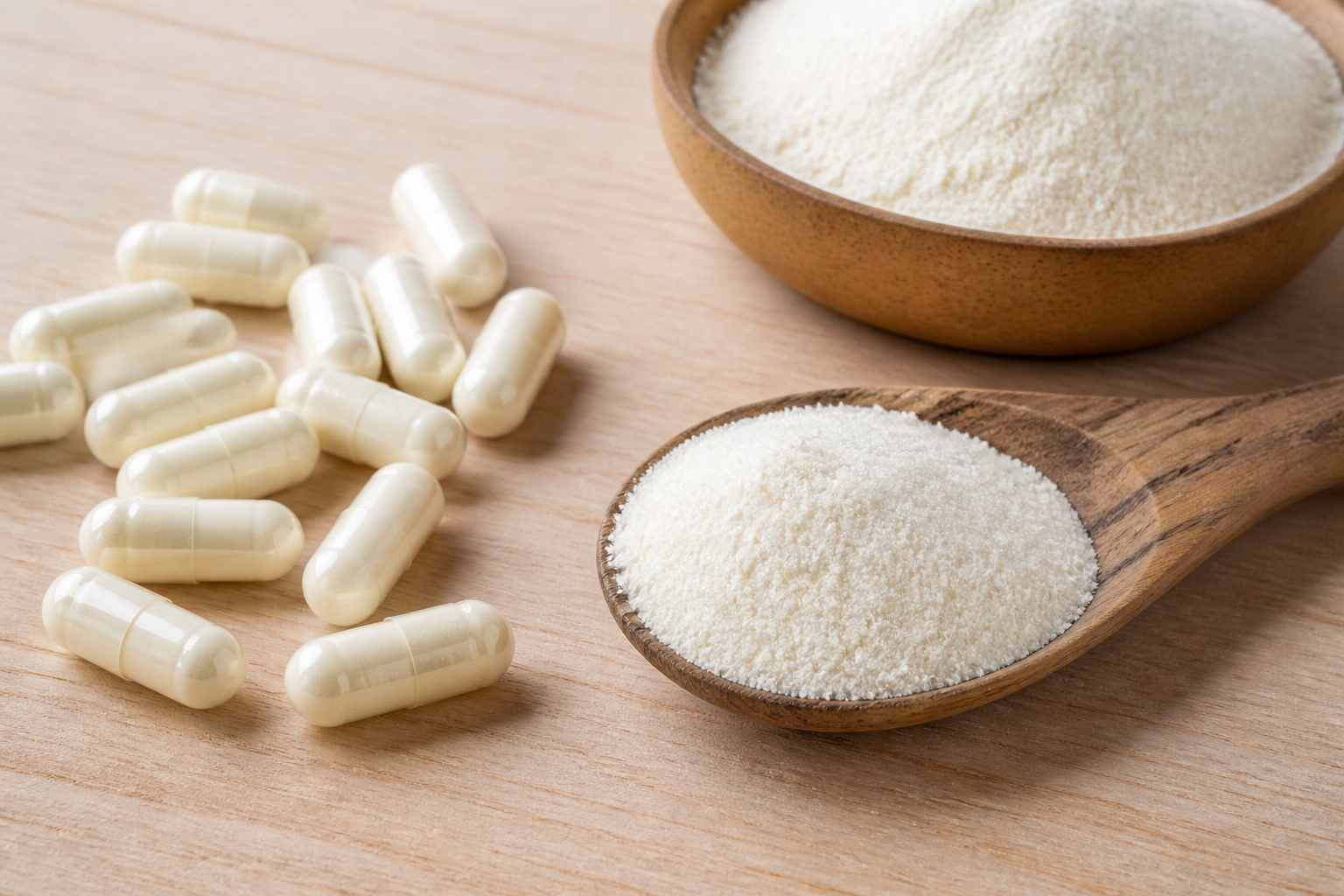

You’ve noticed your knees feel stiffer in the morning. Your shoulder clicks when you reach for something on a high shelf. A friend mentions collagen supplements, and suddenly you’re staring at dozens of products online—some labeled “Type I,” others “Type II,” a few claiming to be “multi-collagen blends.” Which one actually works for joints? And is the best collagen type 2 supplements for joints really that different from the others you see everywhere?
I’ve been there myself, and I’ve worked with countless clients asking these same questions. The truth is, not all collagen supplements are created equal—especially when it comes to supporting your joints. Today, I want to walk you through the real differences, help you understand what the research actually shows, and show you exactly what to look for on the label so you can make a confident choice.
Understanding Collagen Types: Why Type II Is Special for Joints
Let me start with the fundamental difference, because this changes everything about which product you should choose.
Your body contains multiple types of collagen. Type I and Type III are primarily found in skin, tendons, and ligaments. They’re what give your skin elasticity and help repair connective tissues. Type II collagen, however, is the star player in your cartilage—that smooth, rubbery tissue that cushions your joints and allows them to move without friction.
This is crucial: if your goal is collagen for joint support, you need Type II, not Type I. Many popular supplements marketed as “collagen” are actually Type I or multi-collagen blends heavy in Type I. They may be great for skin health, but they won’t target cartilage the way Type II does. I’ve seen people spend months taking the wrong type and wonder why their joint discomfort didn’t improve.
When shopping for which collagen is best for joints, always check the label first. It should specifically say “Type II” or “UC-II” (undenatured Type II collagen). That’s your signal you’re looking at the right product category.
Undenatured Type II (UC-II) vs. Hydrolyzed Type II Collagen: What’s the Difference?
Now, here’s where it gets interesting. Type II collagen supplements come in two main forms, and how they work is fundamentally different.
Undenatured Type II Collagen (UC-II)
Undenatured means the collagen protein structure remains intact—it hasn’t been broken down through heat or processing. UC-II works through a mechanism called “oral tolerance.” In simple terms, when you take a small amount of intact Type II collagen (typically 40mg per dose), your immune system recognizes it as part of your own cartilage. Research suggests this may help train your immune response and reduce inflammatory signaling in your joints.
The key here: UC-II works at low doses. Most clinical studies used 40mg daily, not thousands of milligrams. This is actually an advantage because you need fewer capsules, and the dose is very cost-effective.
Hydrolyzed Type II Collagen
Hydrolyzed collagen has been broken down into smaller peptides through a process that exposes it to heat and enzymes. This makes it easier to absorb, and you typically take higher doses (10-20 grams daily). Instead of working through oral tolerance, hydrolyzed collagen provides amino acid building blocks that your body may use to repair cartilage and connective tissue.
Both approaches have research supporting them, but they’re different strategies. UC-II is about signaling; hydrolyzed is about providing raw materials.
Best Collagen Supplements for Joints: What to Look For
When you’re evaluating best collagen supplements for joints, here’s my practical checklist:
- Verify Type II content: Look for “Type II Collagen” or “UC-II” explicitly on the label. Avoid products that only list “collagen” without specifying the type.
- Check the dose: For UC-II, 40mg is the research-backed amount. For hydrolyzed Type II, aim for 10-20 grams daily (which may require multiple servings).
- Third-party testing: Look for seals from NSF, USP, or ConsumerLab. This means the product was independently tested for quality and label accuracy.
- Avoid unnecessary fillers: You don’t need added sugars, artificial flavors, or dozens of other ingredients. Simpler is often better.
- Consider convenience: UC-II supplements are usually capsules (easy to take). Hydrolyzed collagen often comes as a powder that mixes in drinks (more versatile but requires blending).
Who Should Take Type II Collagen—And What to Realistically Expect
Type II collagen supplements may be especially helpful if you’re dealing with:
- Osteoarthritis or joint wear-related discomfort
- General joint soreness after activity
- Cartilage-related concerns (knees, hips, shoulders)
- Preventative support if you’re athletically active
That said, I need to be honest about timelines. This isn’t a pain reliever. Many people find relief with Type II collagen, but it typically takes 8 to 12 weeks of consistent use before you notice meaningful change. This is because collagen remodeling in your cartilage is a slow biological process. If you’re expecting results in a week, you’ll be disappointed. If you commit to 12 weeks, you have a much better chance of noticing improvement.
Also, Type II collagen works best as part of a broader joint-care strategy. Combine it with consistent movement, strength training, and adequate hydration, and you’ll see better results than taking a supplement alone.
UC-II Type II Collagen for Morning Stiffness and Cartilage Support
If your joints feel stiffest in the morning or you’re dealing with cartilage wear in weight-bearing joints like knees and hips, UC-II (undenatured Type II collagen) is specifically designed to target the cartilage matrix itself. Unlike Type I collagen, which supports skin and connective tissue, Type II is what your cartilage is actually made from—so the mechanism makes sense on paper and in the research.
What works
- The undenatured (native) form matters: research shows UC-II activates immune tolerance to your own cartilage, which is different from hydrolyzed collagen peptides and worth the extra cost if joint inflammation is your main issue.
- Most users report noticeable reduction in morning stiffness after 4-8 weeks of consistent use, with improvements continuing over 3-4 months—not overnight, but a meaningful difference in range of motion and ease of movement.
- This formulation uses 40mg of UC-II per capsule, which matches the dosage used in clinical studies showing efficacy, so you’re not buying an underdosed product banking on brand recognition.
What doesn’t
- If your joint pain is driven by inflammation from arthritis or injury flare-ups, collagen supplements alone won’t replace anti-inflammatory strategies (movement, weight management, ice/heat, sometimes medication)—they support cartilage health, not active inflammation control.
- Results aren’t universal: some people see meaningful improvement, others notice minimal change even after 12 weeks; individual response depends on age, severity of cartilage loss, and whether you’re still actively damaging the joint.
Collagen supplements work slowly and quietly—you’re investing in cartilage support over months, not solving a joint problem in weeks. NOW Foods Supplements UC-II Type II Collagen with Undenatured Type II Collagen, 120 Veg Capsules
About This Article

Written by Michael Torres. Michael Torres has had joint problems his whole life — hypermobile as a kid, chronic sprains and a dislocating shoulder through his twenties, an osteoarthritis diagnosis in his early fifties, and a right knee replacement since. He is not a doctor or a physical therapist and has no clinical training. He writes about what has helped him and what he has watched help the people around him, and says plainly when he has not tried something himself. More about this site.
Scope and limits. Michael has no medical or clinical training — he writes about living with his own joint pain, not about treating anyone else's. Nothing here is medical advice. Talk to a doctor before starting anything new, and get seen promptly for pain that is new, severe, worsening, or comes with swelling, fever, or numbness.
Verify this against a primary source
Specifics change, and your situation may differ from the one described here. These are the authorities worth checking directly:
- NIAMS — arthritis and musculoskeletal research from the NIH
- MedlinePlus — plain-language medical reference from the NIH
- Arthritis Foundation — condition guides and treatment overviews