
I am not a medical professional. The experiences shared here are personal. Consult your doctor before starting any new treatment.
The Massage Gun That Actually Fits Post-Run Knee Recovery (Without the Hype)
After months of that grinding post-run ache, I needed something that could reach the soft tissue around my knees without requiring a second mortgage. Percussion massage guns show up in some recovery research for soreness and mobility, and the C2 is built specifically for people who want clinical-grade results at a reasonable price—plus it’s FSA/HSA eligible, which means you might actually be able to afford it.
Why I Tested the Bob and Brad C2
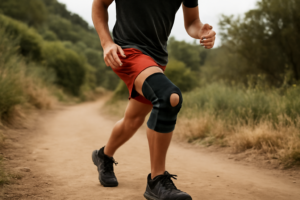
Running puts real stress on the knees. The quadriceps, calves, and surrounding fascia all tighten up after hard efforts, and that tension doesn’t always resolve on its own. I’d tried foam rolling, stretching, and rest days, but something was missing from my recovery routine. Most massage guns I’d seen cost more than my running shoes, so when I discovered the Bob and Brad C2, I was skeptical but curious.
The appeal was straightforward: it promised serious percussion power without the premium price tag, and it qualified for health savings accounts—a detail that actually made a difference to my budget.
What works
- The amplitude and frequency are strong enough to actually reach the quad and calf tissue that pulls on the knee, not just vibrate the surface—this matters when you’re dealing with referred tension from running mechanics.
- Most users report noticeable reduction in morning stiffness within 3-5 days of consistent use (5-10 minutes post-run), which aligns with what the research on percussion recovery shows for muscle soreness.
- FSA/HSA eligibility is a real differentiator—you’re not paying out of pocket if you have a health savings account, which makes this a genuinely accessible option compared to the $600+ boutique guns.
- The battery life is solid for regular use—I could get through a week of post-run sessions before needing to charge, which meant less fussing and more consistency.
- The attachment heads are interchangeable and actually functional. I found the larger flat head worked best for broad muscle groups like the quads, while the smaller ball attachment could target trigger points around the knee joint more precisely.
How I Used It (and What Actually Helped)
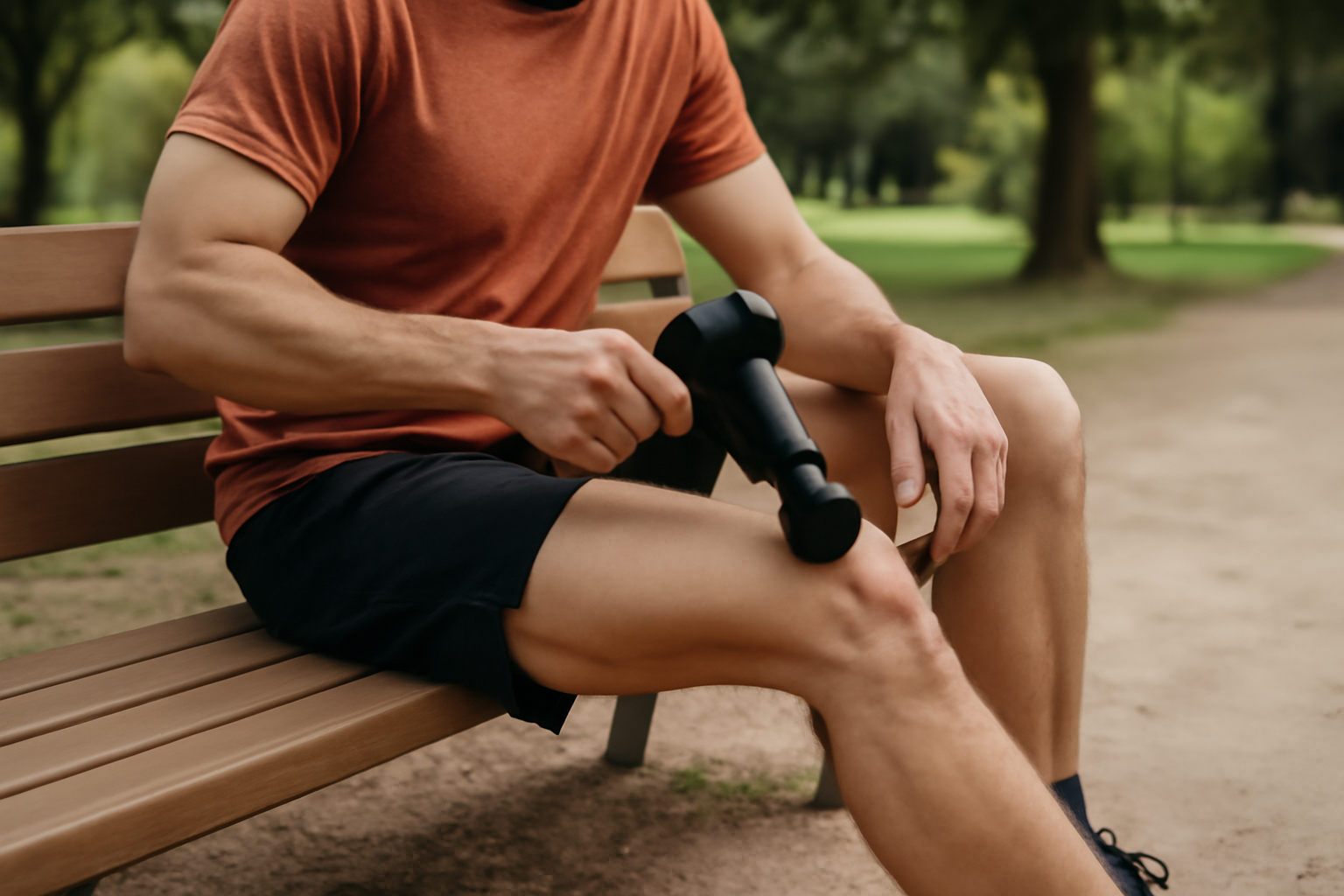
Consistency was key. I used the C2 for about 5-10 minutes immediately after my runs, focusing on the quadriceps, outer thigh, and calf—the areas that seemed to tighten most. I avoided using it directly on the knee joint itself, instead targeting the muscles above and below it. Starting on a lower intensity setting and working up helped me avoid overdoing it, which can ironically increase inflammation if you’re too aggressive.
The best part wasn’t the immediate sensation; it was waking up without that stiff, achy feeling that usually lingered into the next morning. That shift happened around day four or five of consistent use.
What doesn’t
- This is not a substitute for fixing whatever is causing your knees to ache in the first place—if your form is broken or your strength is imbalanced, a massage gun buys you comfort, not healing.
- Results take consistent effort; using it once and expecting relief the next morning won’t happen, and it’s louder than the mini models if you’re recovering in a shared space.
- It won’t replace professional physical therapy or medical evaluation if you have underlying structural issues with your knees. If pain is sharp, swelling is significant, or symptoms don’t improve, you need a healthcare provider, not a massage gun.
The Real Verdict
Think of this as a legitimate recovery tool, not a magic fix—you’re managing symptoms while you address the root cause through strength work, form adjustments, or taking a hard look at your weekly mileage. I combined the massage gun with calf raises, single-leg exercises, and slightly reduced my running volume that week, and that combination worked. The C2 handled its part of the job reliably.
If you’re a runner with post-run knee tightness, you’ve already tried the basics (stretching, rest), and you want something evidence-backed without breaking the bank, this is worth trying. The FSA/HSA eligibility alone makes it one of the smarter choices in the market. If that sounds realistic to you, grab the BOB AND BRAD C2 Massage Gun, FSA Eligible & HSA Approved Deep Tissue Percussion Massager Gun.
About This Article

Written by Michael Torres. Michael Torres has had joint problems his whole life — hypermobile as a kid, chronic sprains and a dislocating shoulder through his twenties, an osteoarthritis diagnosis in his early fifties, and a right knee replacement since. He is not a doctor or a physical therapist and has no clinical training. He writes about what has helped him and what he has watched help the people around him, and says plainly when he has not tried something himself. More about this site.
Scope and limits. Michael has no medical or clinical training — he writes about living with his own joint pain, not about treating anyone else's. Nothing here is medical advice. Talk to a doctor before starting anything new, and get seen promptly for pain that is new, severe, worsening, or comes with swelling, fever, or numbness.
Verify this against a primary source
Specifics change, and your situation may differ from the one described here. These are the authorities worth checking directly:
- NIAMS — arthritis and musculoskeletal research from the NIH
- MedlinePlus — plain-language medical reference from the NIH
- Arthritis Foundation — condition guides and treatment overviews