
I am not a medical professional. The experiences shared here are personal. Consult your doctor before starting any new treatment.
The Night Splint That Finally Stopped the Morning Stabbing Pain
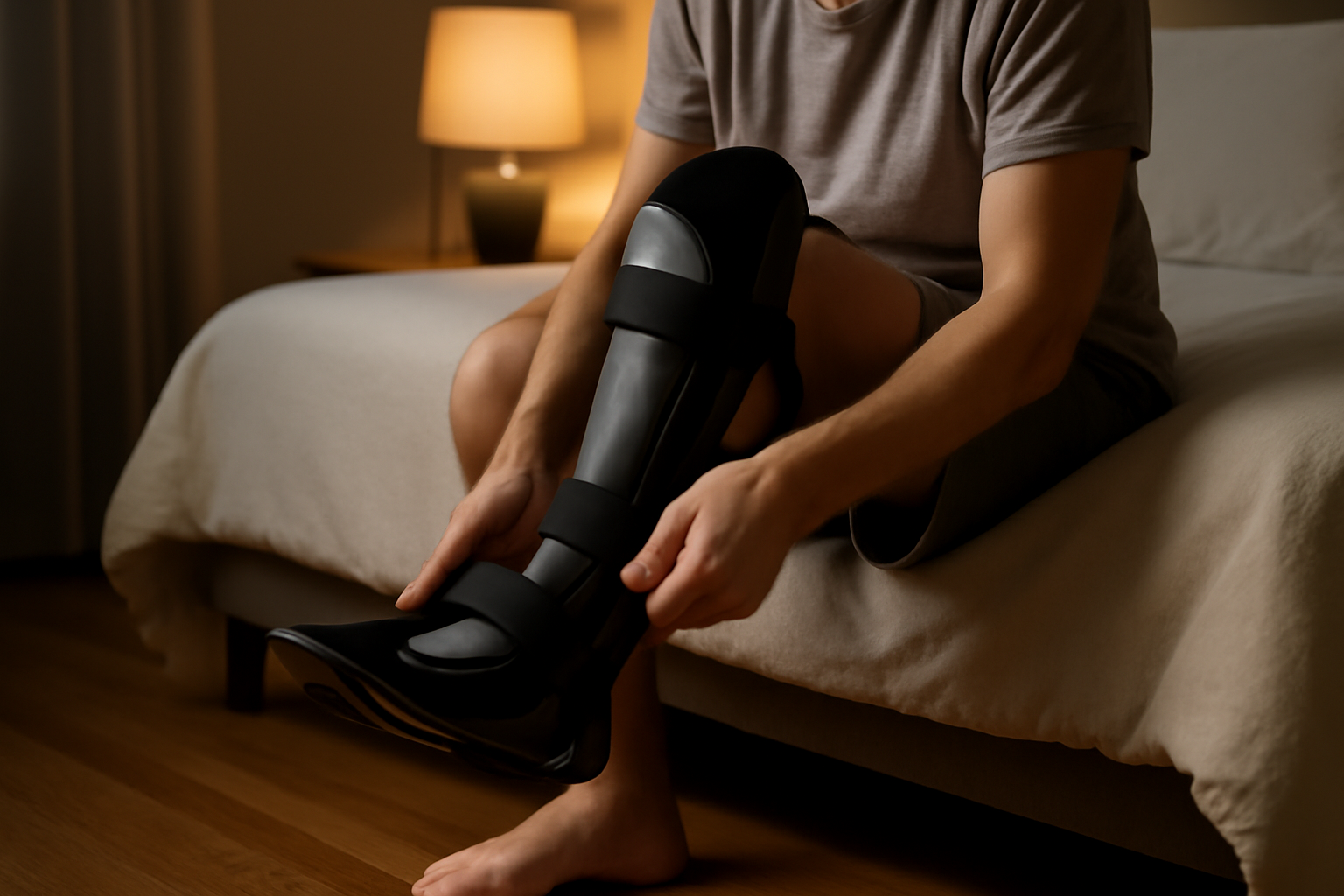
For months, I dreaded getting out of bed. That first step onto the floor every morning felt like walking on broken glass, and the pain in my heel would linger for the first twenty minutes of my day. I’d stretch, ice, bought expensive insoles—nothing seemed to break the cycle. Then I tried a night splint, and within a week, I was sleeping through without waking up to stabbing plantar fascia pain. Here’s what actually worked and what didn’t.
How Night Splints Actually Work
Night splints work by keeping your plantar fascia in a lengthened position while you sleep, so you’re not waking up to that first-step agony when the tissue suddenly contracts again. During the day, your foot naturally relaxes into a shortened position—especially if you’re sitting or walking on hard floors. Overnight, the fascia tightens further, and when you stand up in the morning, that suddenly stretched tissue causes sharp, intense pain. A night splint prevents that cycle by maintaining gentle tension on the fascia throughout the night.
If you’re dealing with that classic morning heel pain, night splinting is one of the few interventions with actual research backing it—and it’s also one of the few that doesn’t require swallowing anything or waiting weeks to notice a difference. Most people feel relief within days rather than months.
What Works
- Most people report noticeable reduction in morning pain within 3–5 nights of consistent use, which is faster than oral supplements or physical therapy alone typically deliver. In my case, I felt a significant difference by night four.
- The adjustable strap design on this model lets you control dorsiflexion (how much your foot is bent back), so you can start gentle and increase tension as your tissue adapts—not a one-size-fits-all angle that leaves you waking up sore. I started at about 50% tension and gradually increased it over two weeks.
- The fit is secure but not painfully tight around the leg and foot. I was worried about circulation issues, but the design distributes pressure evenly, and I’ve had no numbness or tingling.
- Research supports night splinting as an effective complement to stretching and ice; the combination of holding the stretch overnight plus daytime calf work tends to produce better long-term results than either alone. I continued my morning calf stretches and added evening stretches, which seemed to accelerate improvement.
What Doesn’t Work—And Common Mistakes
- Some people find the sensation of a dorsiflexed foot uncomfortable at first and quit after a night or two—but the adjustment period is real, and you may need to dial back the tension for the first week. I felt strange in it the first night, like my foot was being held in an unnatural position. By night three, it felt normal.
- This is a management tool, not a cure; if you’re still doing whatever caused the plantar fasciitis in the first place (high-impact work, terrible shoes, zero calf stretching), the pain will come back when you stop wearing it. I had to be honest with myself: I was wearing worn-out sneakers and sitting for eight hours a day. I invested in better footwear and started taking walking breaks.
- Missing nights undoes progress faster than you’d think. I skipped two nights while traveling, and my morning pain came right back. Consistency is non-negotiable if you want sustained relief.
- If the strap is adjusted too tight, you can wake up with calf or foot cramping. Finding the right tension takes trial and error—start conservatively and adjust by small increments.
Is It Right for You?
A night splint works best when you actually wear it consistently—missing nights undoes the progress—so be honest with yourself about whether you’ll commit to it. If you’re willing to wear it every night and also address the underlying causes of your plantar fasciitis (stretching, footwear, activity modification), it’s absolutely worth trying. The price point is reasonable, and it’s one of the safest interventions available. I’d recommend starting with a conservative strap tension and gradually increasing it over the first two weeks as your foot adapts.
United Ortho Plantar Fasciitis Adjustable Leg Support Brace Fits Right or Left Foot for Soreness Relief, Foot Pain and Stretching, Large, Black
About This Article

Written by Michael Torres. Michael Torres has had joint problems his whole life — hypermobile as a kid, chronic sprains and a dislocating shoulder through his twenties, an osteoarthritis diagnosis in his early fifties, and a right knee replacement since. He is not a doctor or a physical therapist and has no clinical training. He writes about what has helped him and what he has watched help the people around him, and says plainly when he has not tried something himself. More about this site.
Scope and limits. Michael has no medical or clinical training — he writes about living with his own joint pain, not about treating anyone else's. Nothing here is medical advice. Talk to a doctor before starting anything new, and get seen promptly for pain that is new, severe, worsening, or comes with swelling, fever, or numbness.
Verify this against a primary source
Specifics change, and your situation may differ from the one described here. These are the authorities worth checking directly:
- NIAMS — arthritis and musculoskeletal research from the NIH
- MedlinePlus — plain-language medical reference from the NIH
- Arthritis Foundation — condition guides and treatment overviews