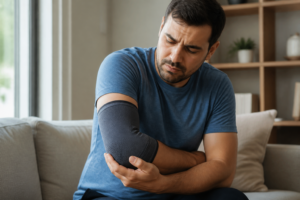

You’re scrolling through the internet at midnight, elbow throbbing, wondering if you need a golfer’s elbow brace or a tennis elbow brace. Maybe you’re not even sure which condition you have—you just know your elbow hurts and you want relief. I’ve been there, and I’ve helped hundreds of people navigate exactly this confusion. The good news? Understanding the difference between these two conditions and their braces is simpler than you think, and choosing the right support can genuinely transform your recovery. In this guide, I’ll walk you through everything you need to know about golfers elbow brace vs tennis elbow brace, so you can make an informed decision and get back to doing what you love.
Golfer Elbow vs Tennis Elbow: What’s Actually Different?
Here’s the thing: golfer’s elbow and tennis elbow are basically cousins in the overuse injury family. Both are forms of tendonitis that develop from repetitive arm movements. But the key difference lies in where the pain is located on your elbow.
Tennis elbow (lateral epicondylitis) affects the outside of your elbow. The tendons on the lateral (outer) side become inflamed from gripping, serving, or repetitive wrist extension. Golfers, painters, and computer workers get this too—it’s not exclusive to tennis players.
Golfer’s elbow (medial epicondylitis) affects the inside of your elbow. The tendons on the medial (inner) side become irritated from gripping, swinging, or repetitive wrist flexion movements. Again, it’s not just golfers—anyone who grips and pulls repetitively can develop this.
Think of it this way: the lateral side is your “outside” elbow, and the medial side is your “inside” elbow. This anatomical difference matters because it determines which brace will actually provide you targeted compression where you need it most.
How Braces Work for Each Condition
A good elbow brace doesn’t cure tendonitis—nothing does overnight. But research suggests that targeted compression and support can reduce pain, stabilize the joint, and allow you to maintain activity while healing. Here’s how:
- Compression: Reduces swelling and inflammation around the affected tendons
- Support: Limits excessive movement that aggravates the injury
- Load distribution: Spreads pressure across the elbow instead of concentrating it on the painful epicondyle
- Proprioceptive feedback: Reminds your brain to use better mechanics, preventing re-injury
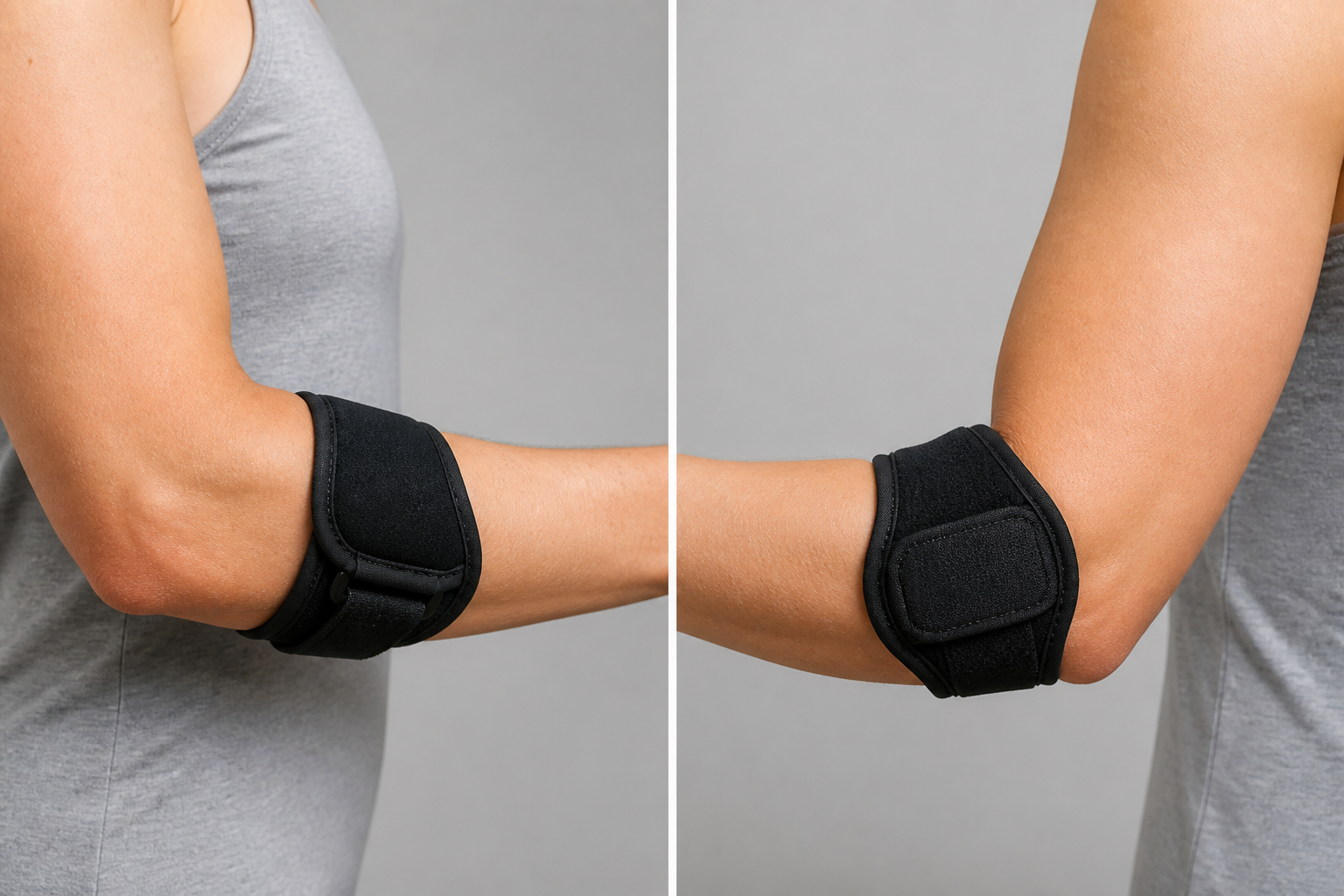
The most effective braces for tennis elbow typically feature a compression strap positioned just below the elbow crease, directly over the lateral epicondyle. This targets the outer tendon attachment point. For golfer’s elbow, you need compression positioned more toward the inner elbow, over the medial epicondyle. The positioning is everything.
Do Tennis Elbow Braces Also Work for Golfer’s Elbow?
This is the question I hear most often, and honestly, it depends on the brace design. A standard tennis elbow strap that targets only the lateral side? No, it won’t help golfer’s elbow much. You’d essentially be compressing the wrong side of your elbow.
However—and this is important—some dual-purpose braces are designed with compression systems that can address both conditions, or at least provide general elbow stabilization that benefits both. These versatile options use wraparound designs or adjustable compression that works for either medial or lateral epicondylitis.
If you’re unsure which condition you have, a dual-purpose brace might be the smarter initial investment. That said, if you know exactly where your pain is (inside or outside), a condition-specific brace will deliver better targeted relief.
Brace for Golfer’s Elbow vs Tennis Elbow: Key Features to Compare
Tennis Elbow Brace Features
- Compression strap positioned on the outer (lateral) forearm
- Focus on reducing wrist extensor strain
- Ideal for people with outer elbow pain
- Often sleeveless for breathability during activity
Golfer’s Elbow Brace Features
- Compression strap positioned on the inner (medial) forearm
- Focus on reducing wrist flexor strain
- Ideal for people with inner elbow pain
- Also commonly sleeveless for active use
Both types may include neoprene sleeves for additional warmth and compression, but the strap placement is the critical distinction.
Golfer Elbow vs Tennis Elbow: Price Considerations
Let’s talk money. A quality condition-specific tennis or golfer’s elbow brace typically ranges from $25 to $60. Dual-purpose braces fall in the same range, sometimes even cheaper because they’re mass-produced for a wider market.
Here’s my honest take: don’t skimp on quality to save $10. A poorly made brace with thin compression straps and flimsy materials won’t provide the support you need and might create false hope. Invest in a reputable option with good reviews from people who actually had your specific condition.
You’ll also notice that many retailers don’t differentiate pricing much between golfers elbow brace vs tennis elbow brace—they’re in the same ballpark. The real value difference comes from adjustability, durability, and how well the brace stays in place during movement.
The Brace That Actually Stabilizes Tennis Elbow Without Cutting Off Your Circulation
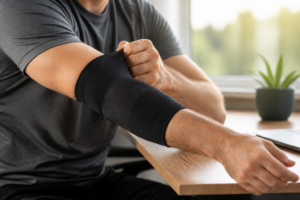
If you’ve confirmed it’s tennis elbow (lateral epicondylitis), you need compression that targets the forearm extensor tendon without restricting blood flow or sliding down your arm mid-activity. The Sleeve Stars brace is designed for exactly this scenario—it stays put and delivers consistent pressure where it actually matters.
What works
- The compression sleeve design keeps even pressure on the forearm extensor tendon throughout the day, which research supports as effective for reducing strain during gripping and repetitive motions—most users report noticeable relief within 3–5 days of consistent wear.
- Unlike counter-force straps, the full sleeve doesn’t restrict wrist or elbow mobility, so you can still do your job or exercise; it’s genuinely wearable for 8+ hours without your arm going numb.
- The material is breathable and doesn’t trap heat like thicker neoprene braces, which means people actually keep it on instead of ripping it off after an hour because they’re uncomfortable.
What doesn’t
- A brace alone won’t fix tennis elbow if you keep doing the exact movement that caused it—you still need to modify your activity, strengthen your forearm, and give the tendon time to heal (which takes weeks to months, not days).
- If your tennis elbow is severe or hasn’t improved after 2–3 weeks of consistent brace use plus activity modification, you likely need physical therapy or evaluation by a healthcare provider; a sleeve isn’t a substitute for addressing the underlying mechanical problem.
A brace is a tool for managing symptoms while you actually address what caused the injury—it’s not a cure, and expecting relief without changing the activity or strengthening the area will leave you disappointed. Sleeve Stars Tennis Elbow Brace for Men & Women
About This Article

Written by Michael Torres. Michael Torres has had joint problems his whole life — hypermobile as a kid, chronic sprains and a dislocating shoulder through his twenties, an osteoarthritis diagnosis in his early fifties, and a right knee replacement since. He is not a doctor or a physical therapist and has no clinical training. He writes about what has helped him and what he has watched help the people around him, and says plainly when he has not tried something himself. More about this site.
Scope and limits. Michael has no medical or clinical training — he writes about living with his own joint pain, not about treating anyone else's. Nothing here is medical advice. Talk to a doctor before starting anything new, and get seen promptly for pain that is new, severe, worsening, or comes with swelling, fever, or numbness.
Verify this against a primary source
Specifics change, and your situation may differ from the one described here. These are the authorities worth checking directly:
- NIAMS — arthritis and musculoskeletal research from the NIH
- MedlinePlus — plain-language medical reference from the NIH
- Arthritis Foundation — condition guides and treatment overviews