
Here’s something I wish more people knew before they went shopping: the shoes that work great for mild foot arthritis are often the wrong choice once arthritis progresses — and vice versa. I see this mistake constantly. Someone with early-stage arthritis buys a heavily built “orthopedic” shoe they don’t need yet, or someone with more advanced joint changes keeps buying regular athletic shoes that can’t accommodate the swelling and toe deformities that have developed over time. Matching your shoe to where your arthritis actually is right now — not where it was two years ago — makes a real difference in daily comfort.
Mild Arthritis: What Your Feet Actually Need Right Now
If you’re in the early stages — occasional stiffness in the morning, mild soreness after a long day on your feet, no visible swelling or joint changes yet — you don’t need a maximalist orthopedic shoe. In fact, going too supportive too early can actually be counterproductive, since your foot muscles benefit from doing some of the stabilizing work themselves for as long as they comfortably can.
What actually helps at this stage:
- A moderate cushioned midsole — enough to take the edge off impact without feeling unstable. You don’t need maximum cushioning yet, and overly soft shoes can make balance feel worse, not better.
- A slightly wider toe box than your “normal” size, but not necessarily a dedicated wide-width shoe — just enough room that your toes aren’t compressed at the end of a long day.
- A shoe you can still be active in. This stage is actually the best window to stay consistent with walking and low-impact exercise, since movement helps joint health long-term — pick something that supports that rather than something so rigid it discourages activity.
Moderate Arthritis: When Structure Starts to Matter
Once you’re noticing regular swelling, more consistent pain, and maybe the beginning of visible changes like a bunion forming, it’s time to get more deliberate about shoe features.
- A rocker sole becomes genuinely valuable here, especially if your big toe joint (hallux rigidus) is involved — it reduces how much that joint has to bend during push-off.
- Removable insoles so you have the option to add a custom or off-the-shelf orthotic as your needs increase, without needing to replace the whole shoe.
- Adjustable closures — laces or velcro rather than slip-ons — because your foot’s volume may now vary noticeably between morning and evening, and you need a shoe that can adjust with it.
Severe Arthritis: Accommodating a Foot That’s Changed Shape
This is the stage a lot of shoe-buying advice skips over, and it’s honestly where people struggle the most — because by this point, standard shoe sizing and shapes often just don’t work anymore. If you’re dealing with significant daily swelling, bunions, hammer toes, or other structural changes from long-standing arthritis or rheumatoid arthritis specifically, the priorities shift again.
- A genuinely wide, deep toe box — not just “roomier than average,” but built for feet that have actually changed shape. This is non-negotiable at this stage; a merely wider shoe still won’t accommodate real deformity.
- Seamless or minimal-seam interior construction to reduce friction points against bunions, hammer toes, or areas where skin has become more fragile.
- Maximum accommodating cushioning rather than firm support — at this stage the priority shifts from “guiding” foot motion to simply protecting a foot that may have limited natural shock absorption left.
- Sizing up and going wide as standard practice, and genuinely considering shoes marketed for swollen or diabetic feet — the design goals overlap significantly with what severe arthritic feet need, even if arthritis isn’t the primary condition the shoe was designed for.
A Shoe Built for the Moderate-to-Severe Stage
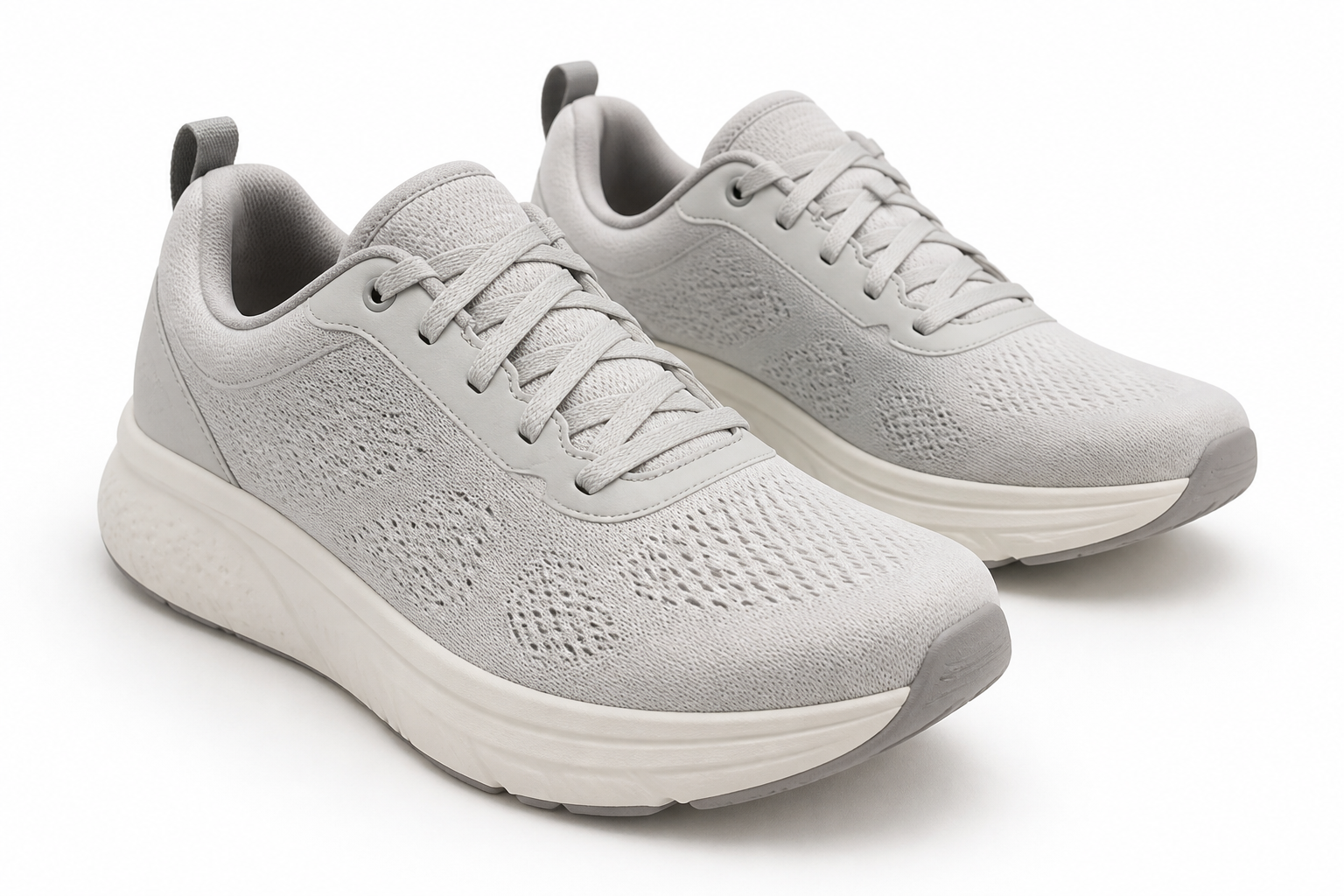
This is exactly the gap I see most often — people whose feet have genuinely changed shape from swelling, bunions, or long-standing arthritis, still trying to squeeze into standard “wide” shoes that aren’t actually built for it. A shoe designed around neuropathy and swelling accommodation tends to solve this better than a shoe that’s simply labeled “wide width,” because the whole last (the shape the shoe is built on) is different, not just the number on the box.
What works
- The toe box is genuinely deep and wide — built to accommodate bunions and hammer toes, not just a half-size roomier than standard.
- Removable insoles mean it works whether you’re using an off-the-shelf cushioned insert or a custom orthotic from a podiatrist.
- Non-slip soles add stability, which matters more at this stage since joint changes can also affect balance and proprioception.
What doesn’t
- If you’re still in the mild stage, this is more shoe than you need right now — save it for when your feet actually require this level of accommodation.
- It’s not a substitute for a podiatrist evaluation if deformities are progressing quickly or causing skin breakdown — that needs professional attention, not just better footwear.
Match the shoe to the stage you’re actually in, and reassess every several months — arthritic feet change, and the “right” shoe two years ago isn’t necessarily the right shoe today. Scurtain Women’s Neuropathy Shoes with Wide Toe Box
About This Article

Written by Michael Torres. Michael Torres has had joint problems his whole life — hypermobile as a kid, chronic sprains and a dislocating shoulder through his twenties, an osteoarthritis diagnosis in his early fifties, and a right knee replacement since. He is not a doctor or a physical therapist and has no clinical training. He writes about what has helped him and what he has watched help the people around him, and says plainly when he has not tried something himself. More about this site.
Scope and limits. Michael has no medical or clinical training — he writes about living with his own joint pain, not about treating anyone else's. Nothing here is medical advice. Talk to a doctor before starting anything new, and get seen promptly for pain that is new, severe, worsening, or comes with swelling, fever, or numbness.
Verify this against a primary source
Specifics change, and your situation may differ from the one described here. These are the authorities worth checking directly:
- NIAMS — arthritis and musculoskeletal research from the NIH
- MedlinePlus — plain-language medical reference from the NIH
- Arthritis Foundation — condition guides and treatment overviews