
Nobody warned me how dangerous a wet tile floor becomes when you cannot fully bend or bear weight on a knee that was just replaced. Standing to shower in those first few weeks was genuinely frightening — one slip and I could undo the whole surgery. A shower chair for knee replacement recovery ended up being one of the simplest, least glamorous purchases that made the biggest difference in my recovery, and I want to explain exactly how I picked the right one and how long I actually kept using it.
The first time I stood at the shower entrance after my knee replacement, my physical therapist’s words echoed in my head: “No sudden twisting. No full weight bearing for six weeks.” I was non-weight-bearing on my surgical leg, using crutches, and my knee was still swollen enough that bending it past 90 degrees sent sharp pain down my shin. The bathroom suddenly felt like an obstacle course. The shower floor was slick. I couldn’t hold onto the walls without risking my balance. And if I fell, months of careful rehab could be erased in a second.
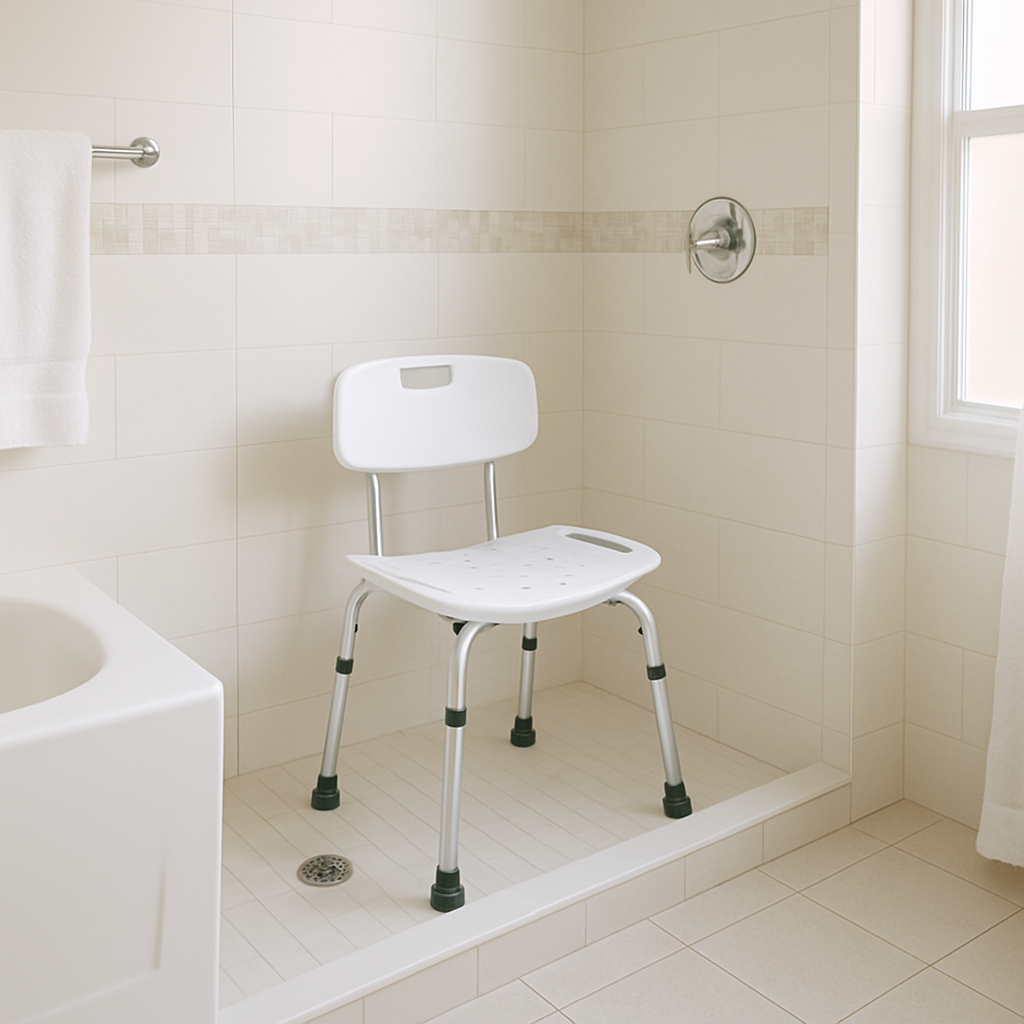
Why a Shower Chair Became Non-Negotiable for Me
My surgeon mentioned “adaptive equipment” during discharge, but casually — like I was picking up extra gauze. My physical therapist was the one who actually recommended a shower chair, and the moment she said it, I understood the real problem I’d been ignoring: hygiene during early recovery is a genuine safety issue, not a luxury concern.
Here’s what was happening in my body during those first six weeks. My knee was in the acute inflammatory phase — swollen, stiff, and neurologically “fragile” in the sense that my proprioception (sense of where my leg is in space) was compromised. The quadriceps muscles, which stabilize the knee and prevent falls, were still partially inhibited from surgery. My brain hadn’t fully relearned how to control that leg. Combine that with a wet, slippery surface, and you have a recipe for injury. A shower chair wasn’t about comfort; it was about removing an unnecessary fall risk during a time when I was genuinely vulnerable.
What surprised me was how much mental bandwidth it freed up. Before I got one, every shower was an anxiety event. I was hypervigilant about foot placement, gripping the grab bars so hard my hands hurt, and rushing through cleaning because I was terrified. Once I could sit, showers became something I could actually focus on — I could be thorough, relax my grip, and not emerge more exhausted from stress than from the actual bathing.
What I Actually Looked for in a Shower Chair
I made the mistake of looking at shower chairs generically at first. But not all chairs are created equal for knee recovery, and I learned this the hard way by almost buying something that would have been useless.
The critical features I needed:
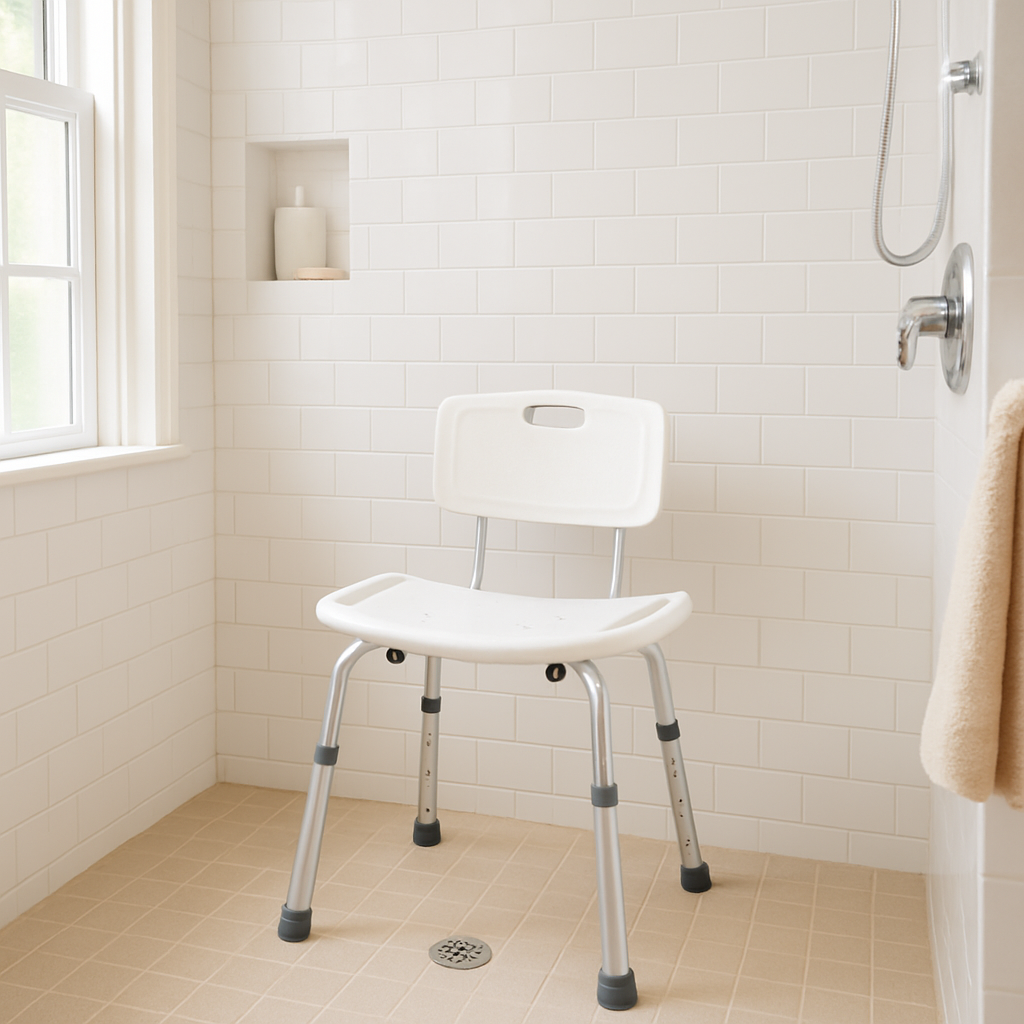
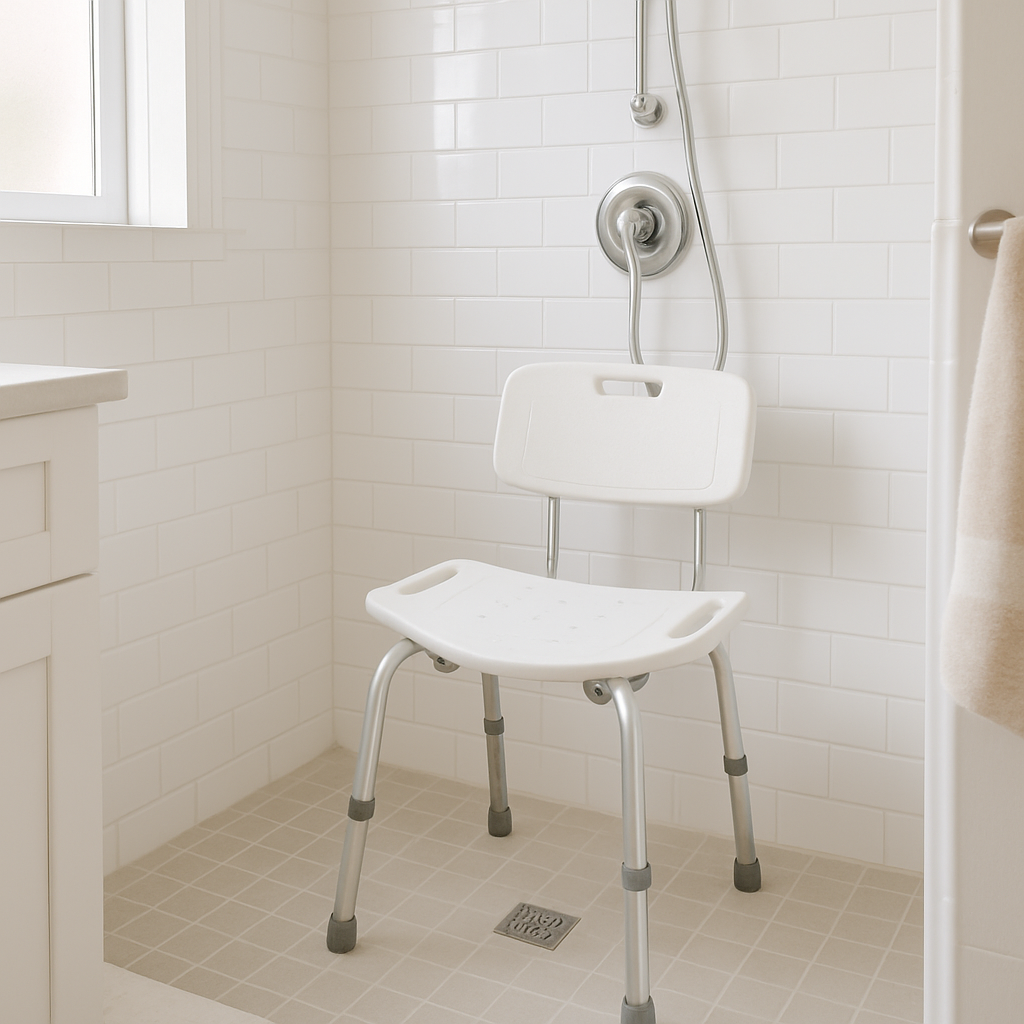
- Proper height. My physical therapist explained that I needed a chair high enough that my hip was at or slightly above knee level when seated. This reduces the bending demand on the surgical knee. Too low, and you’re forcing that knee into deeper flexion — the opposite of what you want. I ended up needing 18 inches, not the standard 16-inch bath stool.
- Non-slip feet with good drainage. A chair that slides around is useless. I needed rubber feet that gripped the shower floor, and a seat surface that wasn’t going to trap water and become slippery itself. Open design, not solid, was key.
- Armrests or high sides I could grip. My leg couldn’t help me lower into or rise from a seat, so my upper body was doing all the work. Armrests let me use my arms to control the descent and ascent rather than relying on that knee to brake my movement.
- Lightweight enough to move. I needed to position it exactly where I stood to shower, and I had to be able to do this one-handed (crutch in the other hand). Anything over 8 or 9 pounds became frustrating.
I also tested whether I actually needed a back support. The answer was no — in fact, I preferred a chair without a back because it let me reach my legs and feet more easily. A back would have felt restrictive.
How Long I Actually Used It (and When I Phased It Out)
This is where real-world experience diverges from what I expected. I thought I’d use the shower chair for the full six weeks of non-weight-bearing. In reality, I used it for about four weeks, then for another two weeks during the early weight-bearing phase, then sporadically for another month.
By week five, I could bear some weight and my proprioception was returning. Showers without the chair were no longer terrifying, though I kept it in the bathroom “just in case.” By week eight, I was standing showers confidently, though my knee still swelled if I stood for longer than 10 minutes. By week 12, I wasn’t using the chair at all.
What I didn’t expect: I kept the chair. A year later, on days when my knee was inflamed or after particularly intense physical therapy sessions, I’d use it again. On travel, when I’m in an unfamiliar shower with questionable grab bars, I sometimes take it. It turns out the real value of a shower chair during recovery isn’t that you’ll use it forever — it’s that it buys you safety and dignity during the vulnerable window when you genuinely need it, and it’s cheap enough to keep as insurance afterward.
Who Should Actually Get One (and Who Might Not Need It)
Honestly, if you’re having knee replacement surgery and your surgeon or physical therapist hasn’t explicitly recommended shower modifications, I’d ask them about it. The cost is minimal — usually $40 to $80 — compared to the risk of falling and delaying your recovery by months.
You should probably get a shower chair if you’re:
- Non-weight-bearing or partial-weight-bearing after knee surgery
- Using crutches and can’t safely stabilize yourself in a wet environment
- Still in significant pain or swelling when standing for more than a few minutes
- Living alone and concerned about fall risk
You might skip it if:
- You had arthroscopic surgery or a very minor procedure where you’re weight-bearing immediately
- Your shower has excellent grab bars and you’re confident in your balance
- Your bathroom setup is too cramped to accommodate one (though most showers can fit a compact chair)
The honest truth: a shower chair isn’t glamorous, and it’s easy to feel like you’re “giving up” by using one. But recovery isn’t about toughness — it’s about giving your healing tissues the safest possible environment. A fall or slip during those first weeks could add weeks or months to your recovery and derail your rehab progress. A shower chair is about being smart with your joints, not weak.
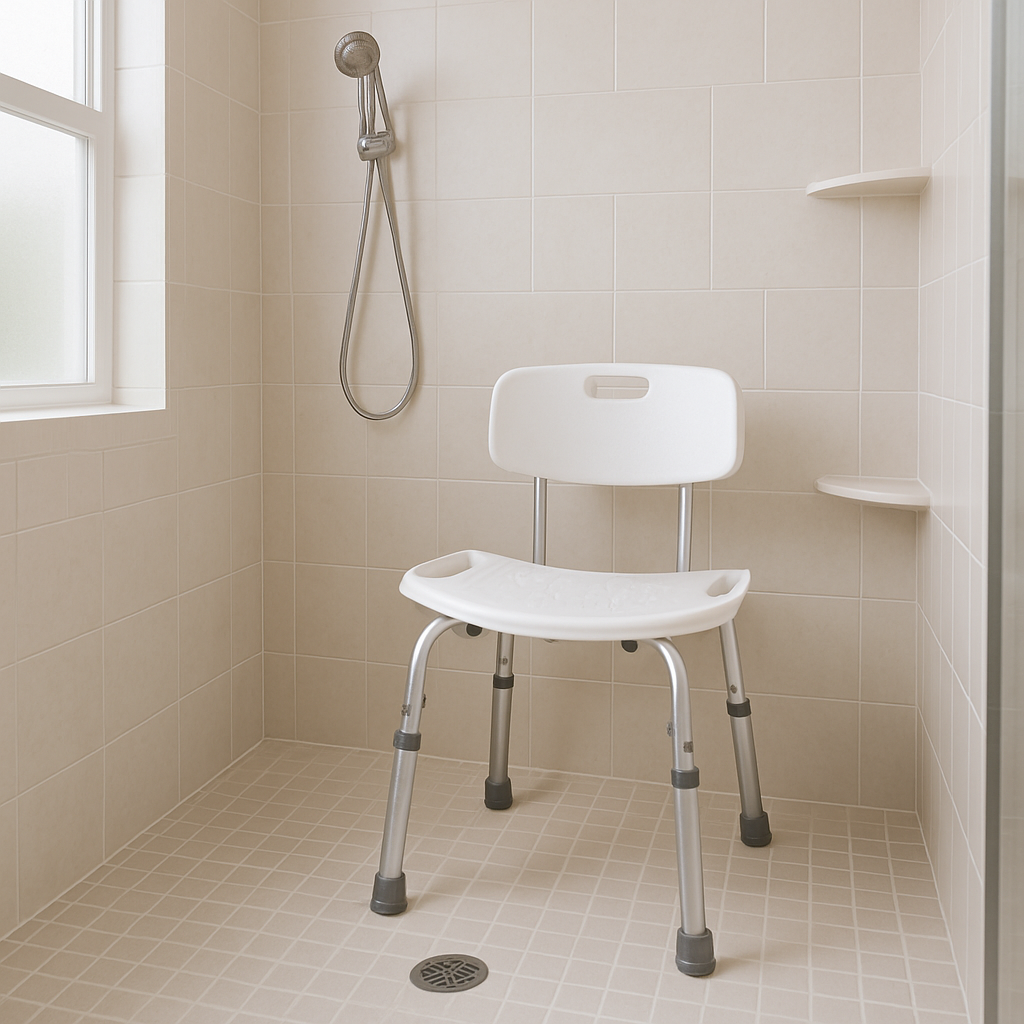
If you’re facing knee replacement surgery and worried about how you’ll handle basic hygiene during recovery, get the shower chair. Buy one that’s the right height, has good grip, and lets you use your arms to control your movement. Use it for as long as you need it — whether that’s four weeks or four months — and don’t feel pressured to abandon it before you’re ready. Your future knee will thank you for prioritizing safety during the critical early healing phase.
I am not a medical professional. The experiences shared here are personal and results vary from person to person. Talk to your doctor or physical therapist before starting any new brace, device, or exercise routine, especially if you have an existing joint condition.About This Article

Written by Michael Torres. Michael Torres has had joint problems his whole life — hypermobile as a kid, chronic sprains and a dislocating shoulder through his twenties, an osteoarthritis diagnosis in his early fifties, and a right knee replacement since. He is not a doctor or a physical therapist and has no clinical training. He writes about what has helped him and what he has watched help the people around him, and says plainly when he has not tried something himself. More about this site.
Scope and limits. Michael has no medical or clinical training — he writes about living with his own joint pain, not about treating anyone else's. Nothing here is medical advice. Talk to a doctor before starting anything new, and get seen promptly for pain that is new, severe, worsening, or comes with swelling, fever, or numbness.
Verify this against a primary source
Specifics change, and your situation may differ from the one described here. These are the authorities worth checking directly:
- NIAMS — arthritis and musculoskeletal research from the NIH
- MedlinePlus — plain-language medical reference from the NIH
- Arthritis Foundation — condition guides and treatment overviews