
A physical therapist taped my knee before a challenging hike years ago, and I was genuinely shocked by how much more stable everything felt. That single experience stuck with me, but I never followed up—until recently, when I decided to learn kinesiology tape application myself. Over the past month, I’ve worn kinesiology tape on both knees and a chronically cranky shoulder through workouts, daily errands, and everything in between. My question was simple: does kinesiology tape for joint pain actually work when you’re the one applying it, not a trained professional? Here’s what I learned.
Why I Decided to Try Kinesiology Tape
Both my knees have been temperamental for years—nothing severe enough to stop me from exercising, but enough to remind me they’re there. My right shoulder has also developed a nagging pain that flares up during overhead movements and certain yoga poses. I’ve done physical therapy, I wear a supportive brace occasionally, and I’m generally good about mobility work. But that memory of the taped knee stuck with me. I wanted to know if learning to apply kinesiology tape myself could provide similar support without relying on a professional appointment each time.
What surprised me most was discovering how much of kinesiology tape’s benefit comes from proper application technique. The tape itself is just cotton and adhesive—the magic is in how you stretch it, where you anchor it, and understanding what you’re actually trying to accomplish. That’s why I was skeptical at first about doing this myself. Would my DIY application even compare to what a trained PT had done?
Understanding How Kinesiology Tape Actually Works
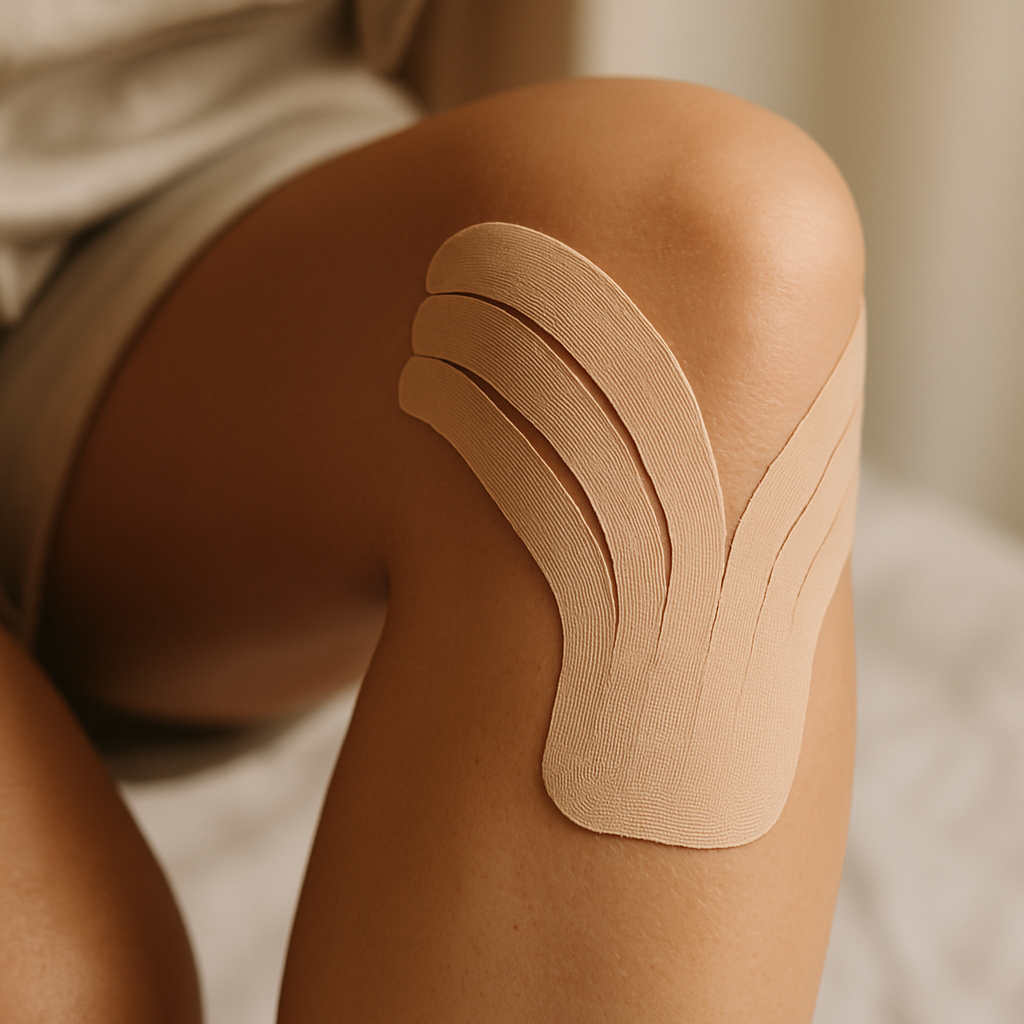
Before I started wrapping myself up like a science experiment, I spent time understanding the mechanics. Kinesiology tape—also called kinetic tape—is designed to provide support and proprioceptive feedback to joints and muscles without restricting range of motion like a rigid brace would. The tape gently lifts the skin, which theoretically improves circulation and reduces pressure on pain receptors. It also reminds your nervous system where your joint is in space, which is especially helpful for knees and shoulders that have lost some confidence.
The research on kinesiology tape is honestly mixed. Some studies show measurable benefits for pain and proprioception; others suggest the effect is modest or partially placebo. But in my experience—and from conversations with physical therapists—the tape seems to work best when combined with actual movement and strengthening, not as a standalone treatment. Think of it as a training tool, not a cure.
My Month-Long Test: What I Actually Did
I started with the CKeep Kinesiology Tape, Uncut Premium Elastic Athletic Tape 2 Rolls, Beige, since I wanted standard uncut tape to learn proper application patterns. I also grabbed a set of Kinesiology Tape Precut Strips Pro Athletic (3 Rolls, 60 Strips) so I’d have backup options when my DIY cuts weren’t perfect.
My routine over four weeks looked like this: I taped both knees twice a week during my regular workout schedule (strength training, hiking, and yoga), and I taped my shoulder 3-4 times a week depending on what activities I had planned. I wore each application for 3-5 days before removing and reapplying. I kept notes on pain levels, perceived stability, and whether the tape stayed put during sweat and showers.
Here’s what changed: by week two, my knees felt noticeably more stable during single-leg exercises and lateral movements. The sensation was similar to what the professional taping felt like years ago—not a dramatic pain elimination, but a genuine sense of “this joint is being held in place.” My shoulder took longer to show consistent benefit, but by week three, I could do overhead presses with less discomfort than I’d experienced in months.
The Honest Challenges I Faced
Let me be clear: learning proper application technique was harder than I expected. My first few attempts were messy. The tape bunched, didn’t stick smoothly, or didn’t provide the right tension. I watched multiple YouTube videos and eventually found an online guide from a physical therapist that showed me the specific starting point, tension level, and anchoring method for each joint. That made all the difference.
Durability was another factor. The uncut tape held up better than I anticipated through showers and workouts, lasting a solid 4-5 days before the edges started curling. Precut strips were more convenient but didn’t last quite as long. In a humid climate, you’ll probably get closer to 3-4 days before needing reapplication.
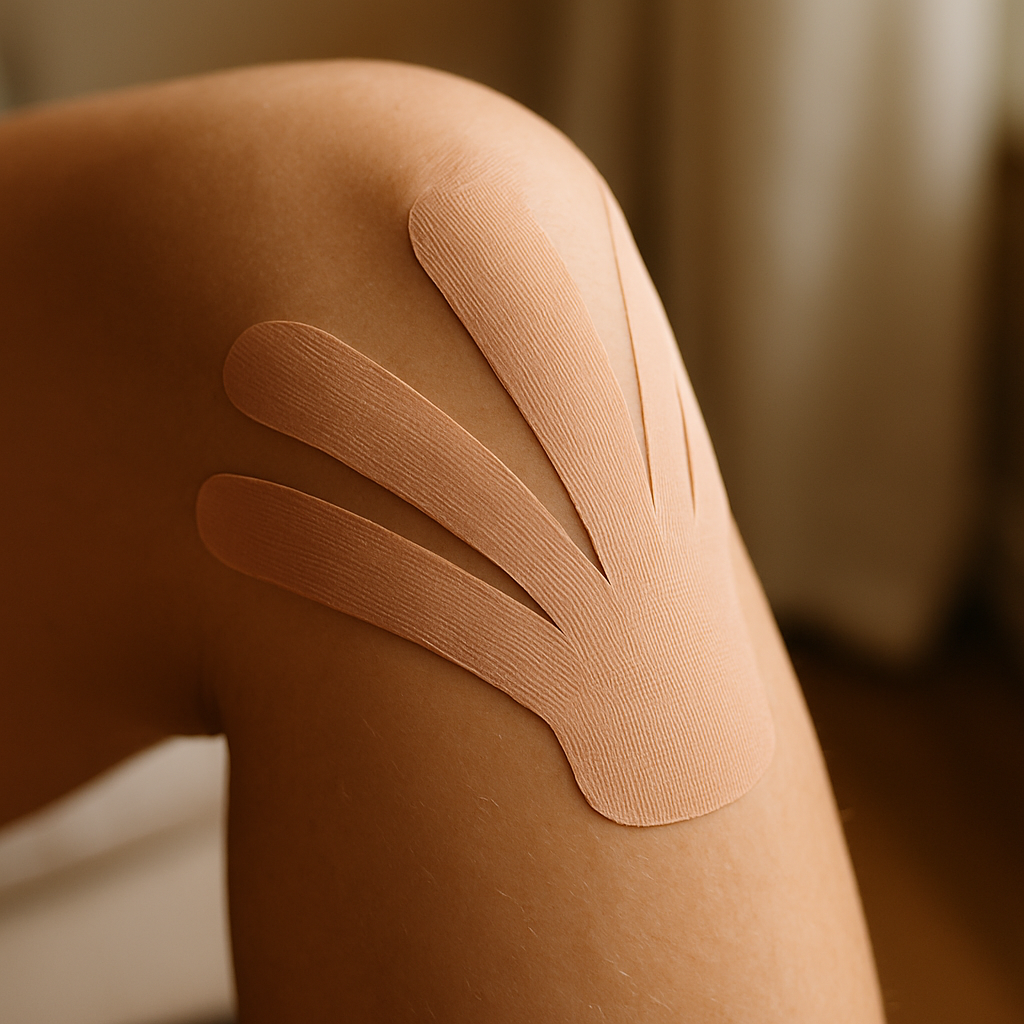
Here’s what kinesiology tape did NOT do for me: it didn’t eliminate my pain. It reduced it, made movement feel more confident, and helped me push harder in my workouts without that nagging fear of the joint giving out. But if I’d skipped my strengthening exercises or my mobility work, the tape alone wouldn’t have solved the underlying problem. It’s a tool, not a treatment in isolation.
I also noticed that taping my own shoulder was significantly trickier than taping my knees. Reaching around your own back requires either extra flexibility or a second pair of hands. I ended up asking my partner to help with some applications, which reminds me that there’s a reason people see professionals for hard-to-reach areas.
What Worked Best for Me
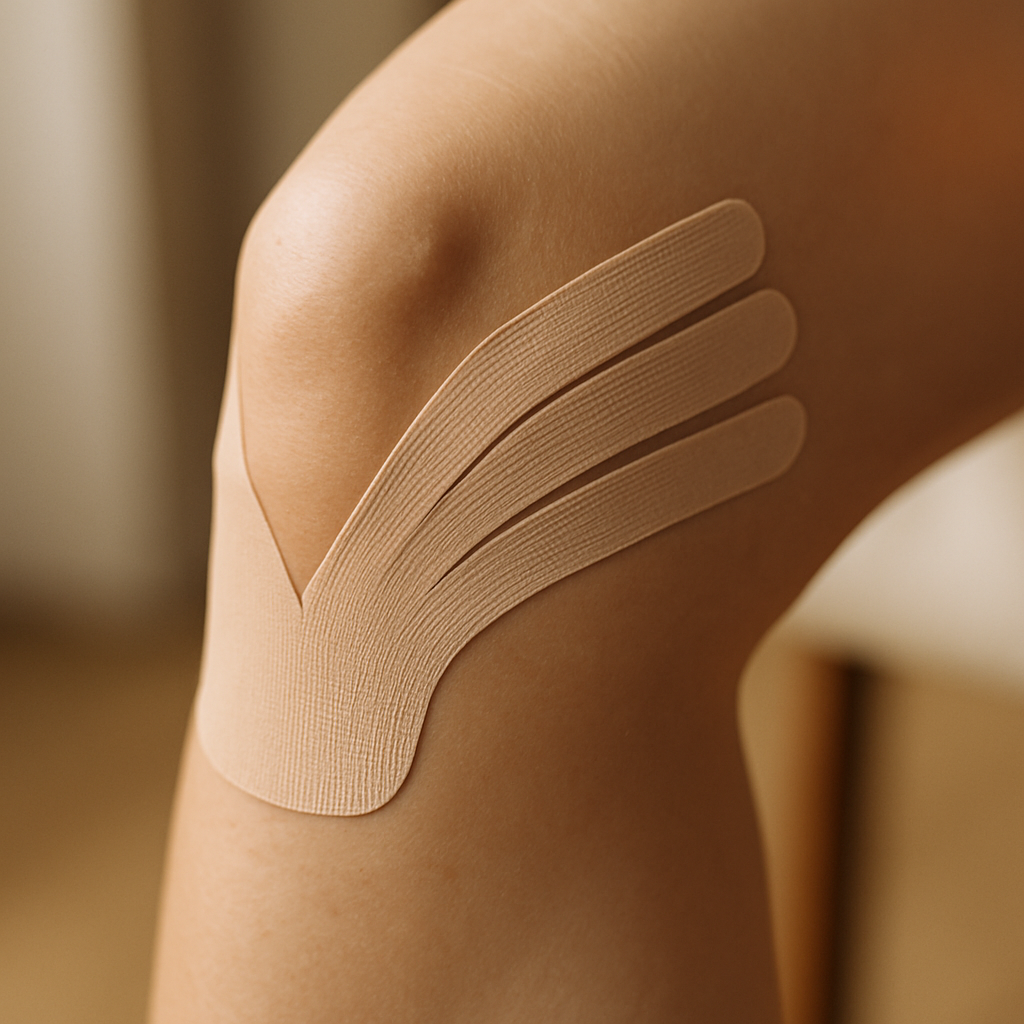
The knee taping was the most straightforward success. I used an X-pattern across the kneecap with light to moderate tension, applying strips from below the knee upward. This seemed to provide the most noticeable proprioceptive benefit—I felt more aware of where my knee was during movement, and I could squat deeper without compensating. For my shoulder, I used a combination of support strips along the rotator cuff, and that took some trial and error to get right.
I’m a fan of having both uncut and precut options on hand. The 5 Rolls Kinesiology Tape, 5 Colors 2 inch x 16.4 Feet Waterproof Athletic Tape gave me variety for different applications, and the KT Tape Pro Synthetic Kinesiology Athletic Tape in Jet Black precuts were genuinely helpful on mornings when I didn’t have time to cut and apply custom strips.
Is Kinesiology Tape Right for You?
After a month of consistent use, here’s my honest recommendation: kinesiology tape for joint pain works best if you’re already doing the work. If you’re strengthening the muscles around your joint, addressing mobility restrictions, and moving with intention, the tape amplifies that effort. It gives you the confidence and proprioceptive feedback to push harder and move better. But if you think the tape alone will fix a joint problem, you’ll be disappointed.
This is a good fit for you if: you have chronic mild to moderate joint pain that doesn’t stop you from exercising, you’re already working with a physical therapist or doing strengthening work, you want an affordable option to improve proprioception and stability, or you’re training through a recovering injury and want extra support during workouts.
This is probably NOT a good fit if: you have acute severe pain that needs immediate medical attention, you’re looking for a replacement for physical therapy or medical treatment, you have sensitive skin prone to adhesive reactions, or you need support from hard-to-reach areas and don’t have help applying the tape.
Would I recommend learning to apply kinesiology tape yourself instead of always seeing a professional? Yes, with the caveat that spending time learning proper technique is essential. Watch quality instructional videos, maybe have one professional session to see exactly how it should feel and look, and then practice. The learning curve is real, but once you get it, you’ve got an affordable, portable tool you can use anytime.
For the cost—uncut rolls run about $10–15 for multiple applications—this is worth experimenting with if you have chronic joint issues. Just go in with realistic expectations. The tape stabilizes, supports, and reminds your nervous system where your joint is. It doesn’t heal, cure, or substitute for the actual work of building strength and mobility. But as part of a comprehensive approach to joint health, I’m genuinely glad I gave it a real shot.
About This Article

Written by Michael Torres. Michael Torres has had joint problems his whole life — hypermobile as a kid, chronic sprains and a dislocating shoulder through his twenties, an osteoarthritis diagnosis in his early fifties, and a right knee replacement since. He is not a doctor or a physical therapist and has no clinical training. He writes about what has helped him and what he has watched help the people around him, and says plainly when he has not tried something himself. More about this site.
Scope and limits. Michael has no medical or clinical training — he writes about living with his own joint pain, not about treating anyone else's. Nothing here is medical advice. Talk to a doctor before starting anything new, and get seen promptly for pain that is new, severe, worsening, or comes with swelling, fever, or numbness.
Verify this against a primary source
Specifics change, and your situation may differ from the one described here. These are the authorities worth checking directly:
- NIAMS — arthritis and musculoskeletal research from the NIH
- MedlinePlus — plain-language medical reference from the NIH
- Arthritis Foundation — condition guides and treatment overviews