
My orthopedist was clear: running was off the table for good after my last knee flare-up. The impact was non-negotiable. But she mentioned something that stuck with me—a recumbent bike for arthritis puts almost no compressive load through the joint compared to an upright bike or even walking. The reclined, seated position was designed precisely for people like me, managing osteoarthritis while staying active. I decided to test this claim myself. For eight weeks, I rode a recumbent bike three times a week, 20 to 30 minutes per session, and paid close attention to how both my knees and hips responded. What I found surprised me, particularly when it came to my hip mobility—something I hadn’t expected to improve.
Why a Recumbent Bike Works Differently for Arthritic Joints
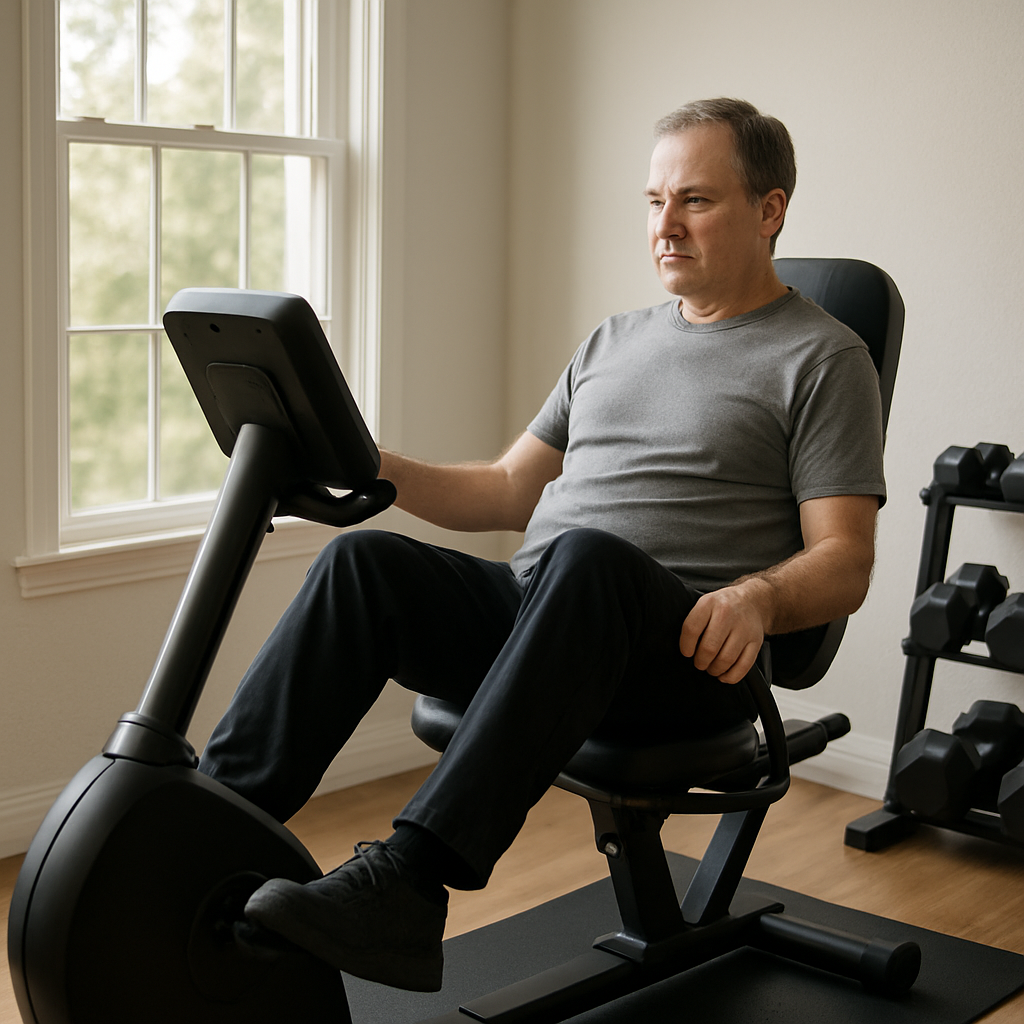
Before I get into my eight-week experience, it helps to understand the mechanics of why a recumbent bike is gentler on arthritic knees and hips than other cardio options. When you walk or run, your knee and hip joints absorb force equal to 1 to 3 times your body weight with each stride. Even a regular upright stationary bike puts some compressive load on the knee joint, because you’re sitting upright and pedaling underneath you. With a recumbent bike, your legs extend in front of you, and your back is supported by a reclined seat. The pedaling motion is more of a pushing action than a downward press, which fundamentally changes how force travels through the joint.
A physical therapist I consulted before starting explained it this way: “Your knee joint slides more smoothly through its range of motion on a recumbent bike. There’s no impact, and your body weight isn’t bearing down on the cartilage the way it does when you’re standing.” That distinction mattered to me because I’d been sedentary for months after my flare-up, and I needed something that would let me rebuild aerobic fitness without triggering pain.
The First Two Weeks: Soreness vs. Actual Pain
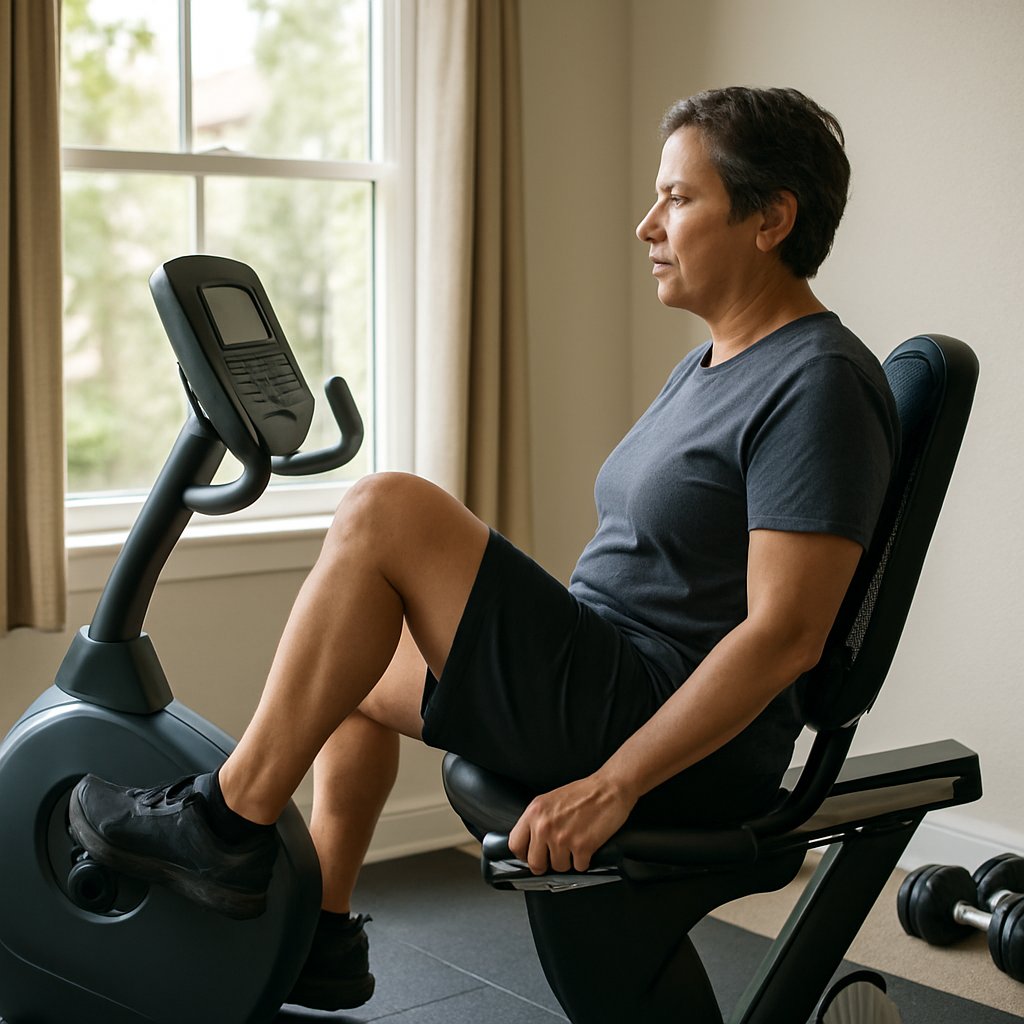
I borrowed a recumbent bike from a friend—a basic model, nothing fancy—and set it up in my living room. My plan was three sessions per week, starting conservatively at 20 minutes with low resistance. This distinction between soreness and pain matters more than most people realize. In my experience, people with arthritis often confuse the two, and it can derail them from beneficial movement.
The first session was eye-opening. My quads were sore the next day—the good kind of sore you get when muscles are working after rest. My knee felt stable and pain-free. By day three, that muscle soreness had settled, and I noticed my knee mobility was slightly better. The range of motion felt easier, less stiff in the morning. I wasn’t expecting that response so quickly.
Weeks two brought no surprises in a good way. My body had adapted to the movement pattern, and I was comfortable increasing to 28 minutes per session at moderate resistance. Pain levels stayed at zero. What did shift was my awareness of hip tension. I realized how tight my hip flexors had become during my sedentary months, and the extended-leg position of the recumbent bike was actually gently lengthening those muscles throughout each session.
Weeks Three Through Five: Where Hip Mobility Improved
This is where things got interesting. Around week three, I noticed I could tie my shoes without the familiar hip pinching that had plagued me for years. I remember standing up from the bike one afternoon and thinking, “Did my hip just move that easily?” It sounds small, but for someone managing osteoarthritis, these incremental improvements in functional movement are what life quality is actually built on.
The recumbent position seemed to be addressing my hip flexor tightness in a way that walking or standing stretches never had. The sustained, gentle lengthening through each pedal stroke—combined with the stability of being supported by the seat—was creating real change. My knees remained pain-free, and my resting knee stiffness in the mornings had noticeably decreased.
During this phase, I was riding for 28 to 30 minutes per session, three times weekly, with resistance set around level 5 out of 10. I wasn’t pushing hard; I was maintaining a conversational pace, which is exactly where aerobic benefit meets joint safety.
Weeks Six Through Eight: Sustaining Gains and Realistic Limitations
By week six, I was in a rhythm. My aerobic capacity was noticeably better—I could hold 30 minutes at resistance level 6 without feeling winded, where that same effort had felt challenging at week three. My knees showed no signs of irritation or swelling. Hip flexibility remained improved. But I need to be honest about what didn’t change: my osteoarthritis didn’t reverse. The underlying cartilage damage is still there. What changed was my pain levels, my functional mobility, and my ability to move without fear.
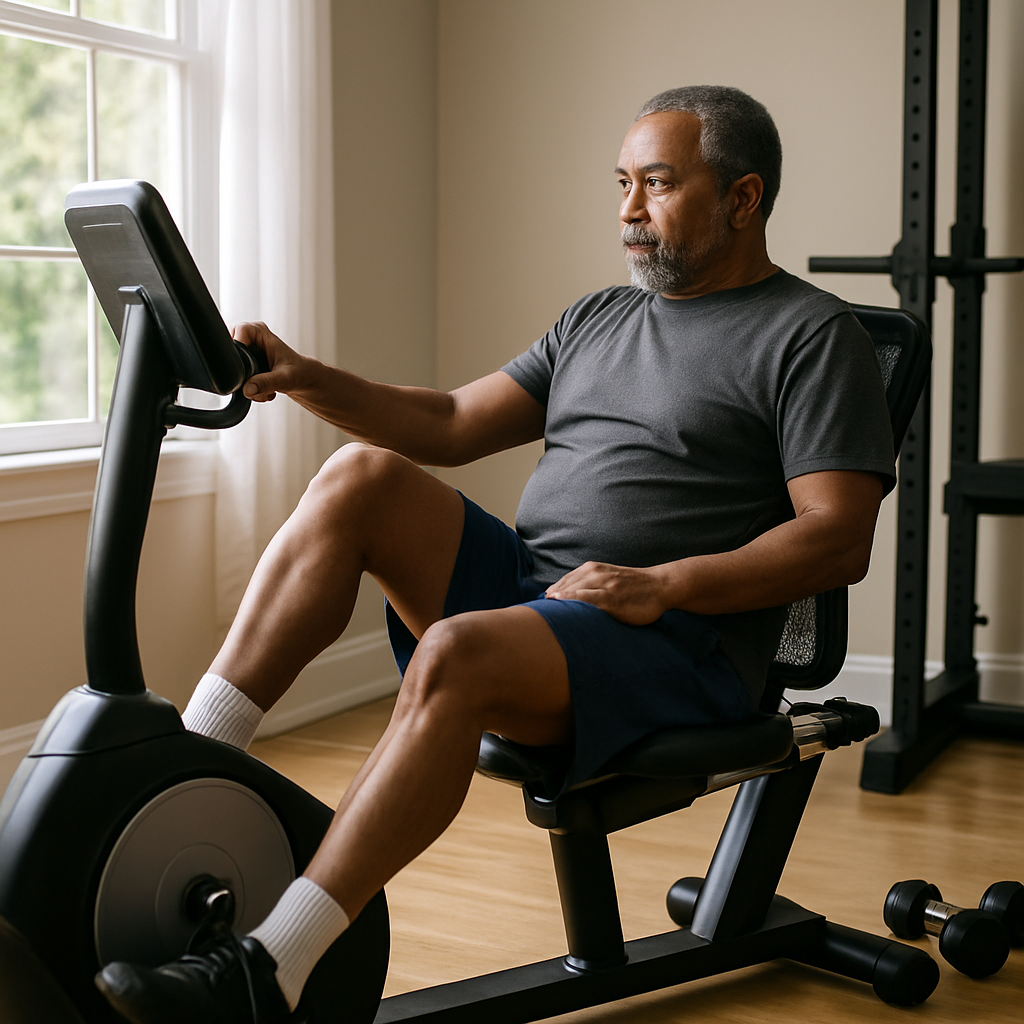
A crucial reality check came in week seven. I got ambitious and increased resistance to level 8 for a full 30-minute session. I paid for it—not with sharp pain, but with a dull ache in my knee by evening and mild stiffness the next morning. It was a gentle reminder that “no pain during exercise” doesn’t mean you can disregard load management. I backed off to level 6, where I’d been comfortable, and stayed there through week eight. The lesson: progression matters, but so does knowing your ceiling.
One more honest note: a recumbent bike is not a cure, and it’s not a replacement for targeted physical therapy or medical care. What it is is a tool for maintaining aerobic fitness, building strength in the quadriceps and glutes (which actually stabilize arthritic knees), and managing pain while doing it. For me, that combination was transformative.
Which Recumbent Bike Should You Choose?
If you’re considering this path, the bike itself matters less than comfort and consistency. I tested the borrowed model for eight weeks, but I’ve also tried nicer models at physical therapy clinics and gyms. For home use with arthritis, I’d recommend something with an adjustable seat (crucial for proper knee alignment), smooth pedal action, and enough resistance variety to allow progression without forcing you into high-impact territory.
The Recumbent Exercise Bike for Home, Recumbent Stationary Bikes for Seniors is designed with exactly this population in mind—comfortable back support, adjustable seat, and straightforward controls. If you want something with more built-in programs and connectivity, the MERACH Recumbent Exercise Bikes for Home Light Commercial High-end or MERACH S08 Next-generation Recumbent Exercise Bike for Home offer more features without sacrificing the joint-friendly design. For budget-conscious shoppers who still want quality, the Goimu Exercise Bike, 5 in 1 Foldable Stationary Bike for Seniors provides a solid option with adjustable resistance and a high weight capacity.
Who This Is Good For—and Who It’s Not
A recumbent bike is a strong fit if:
- You have knee or hip osteoarthritis and want to maintain aerobic fitness
- You’ve been cleared by your doctor or PT for low-impact cardio
- You have mobility limitations that make standing balance difficult
- You’re recovering from knee or hip surgery and need gentle, controlled movement
- You want something you can sustain long-term without joint aggravation
It’s a weaker fit if:
- You have lower back pain that worsens with reclined positions (talk to your PT first)
- You need high-intensity interval training for specific fitness goals
- You’re looking for a quick fix rather than a long-term management tool
- You haven’t discussed your specific arthritis pattern with a medical professional
The Verdict
After eight weeks of consistent use, I’m sold on the recumbent bike as a practical, sustainable tool for managing arthritic knees and hips. I’m back to regular movement without fear, my functional mobility has improved in ways I didn’t expect, and I’ve rebuilt enough aerobic fitness to feel genuinely stronger. Pain is no longer my baseline. That’s not nothing.
Would I recommend this to someone else with arthritis? Absolutely—but with the caveat that it works best as part of a broader joint-health strategy that includes physical therapy, medical oversight, and realistic expectations. A recumbent bike for arthritis won’t heal damaged cartilage, but it can help you move better, manage pain more effectively, and build the muscular support your joints desperately need. For someone like me, that’s been worth every session.
I am not a medical professional. The experiences shared here are personal and results vary from person to person. Talk to your doctor or physical therapist before starting any new brace, device, or exercise routine, especially if you have an existing joint condition.
About This Article

Written by Michael Torres. Michael Torres has had joint problems his whole life — hypermobile as a kid, chronic sprains and a dislocating shoulder through his twenties, an osteoarthritis diagnosis in his early fifties, and a right knee replacement since. He is not a doctor or a physical therapist and has no clinical training. He writes about what has helped him and what he has watched help the people around him, and says plainly when he has not tried something himself. More about this site.
Scope and limits. Michael has no medical or clinical training — he writes about living with his own joint pain, not about treating anyone else's. Nothing here is medical advice. Talk to a doctor before starting anything new, and get seen promptly for pain that is new, severe, worsening, or comes with swelling, fever, or numbness.
Verify this against a primary source
Specifics change, and your situation may differ from the one described here. These are the authorities worth checking directly:
- NIAMS — arthritis and musculoskeletal research from the NIH
- MedlinePlus — plain-language medical reference from the NIH
- Arthritis Foundation — condition guides and treatment overviews