
Padding, compression, ice, and rest resolve most cases of elbow bursitis within a few weeks. But not all cases respond to conservative care, and knowing what happens next — and which symptoms mean you shouldn’t wait for conservative treatment to work — matters just as much as knowing how to wear a compression sleeve correctly.
Signs Bursitis Has Become Septic (Infected) — Don’t Wait on These
Non-infectious bursitis and septic (infected) bursitis can look similar early on, but the distinction matters enormously for how it’s treated. Fever, spreading redness or warmth beyond the immediate bursa area, increasing pain rather than gradual improvement, or a wound or break in the skin near the elbow are all signs that point toward possible infection. Septic bursitis needs prompt medical evaluation — often same-day — rather than a continued trial of home compression and ice, since an infected bursa typically requires antibiotics and sometimes drainage.
Aspiration: What It Is and When Doctors Recommend It
If a bursa is significantly swollen, uncomfortable, or not responding to conservative measures after a couple of weeks, a doctor may recommend aspiration — using a needle and syringe to withdraw the excess fluid directly from the bursa. This is typically a quick, in-office procedure. Aspiration can also help distinguish infectious from non-infectious bursitis, since the withdrawn fluid can be sent for lab analysis if infection is suspected. Aspiration relieves pressure and swelling, but it doesn’t address the underlying cause, so activity modification afterward still matters to prevent the fluid from re-accumulating.
Corticosteroid Injections: What They Do and the Tradeoff Involved
For persistent inflammatory (non-infectious) bursitis that isn’t resolving with conservative care, a doctor may consider a corticosteroid injection directly into the bursa to reduce inflammation. This isn’t typically a first-line treatment — it carries its own considerations, including a small risk of infection introduced by the injection itself and, with repeated injections, potential effects on the surrounding skin and tissue. It’s a decision made between a patient and their doctor after conservative measures have had a genuine trial, not a routine next step.
When Surgery Becomes Part of the Conversation
Surgical removal of the bursa (bursectomy) is reserved for cases that don’t respond to repeated conservative treatment and aspiration, or for chronic, recurrent bursitis that keeps returning despite genuine trigger avoidance. It’s an uncommon endpoint for elbow bursitis specifically, but it exists as an option when the bursa has become a persistent, unresolving problem rather than a healing one.
What a Realistic Timeline Looks Like
Most non-infectious cases treated conservatively with rest, ice, compression, and trigger avoidance improve meaningfully within two to three weeks. If you’re past that window with minimal improvement, that’s a reasonable point to check in with a doctor about next steps, rather than continuing to wait indefinitely on home treatment alone. Getting evaluated sooner rather than later, when conservative care genuinely isn’t working, tends to lead to faster resolution than an extended trial-and-error period at home.
Compression Support Worth Trying Before Escalating
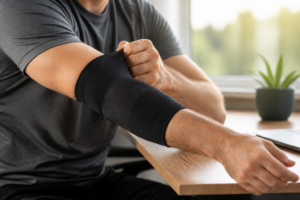
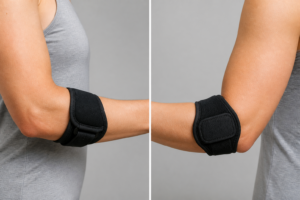
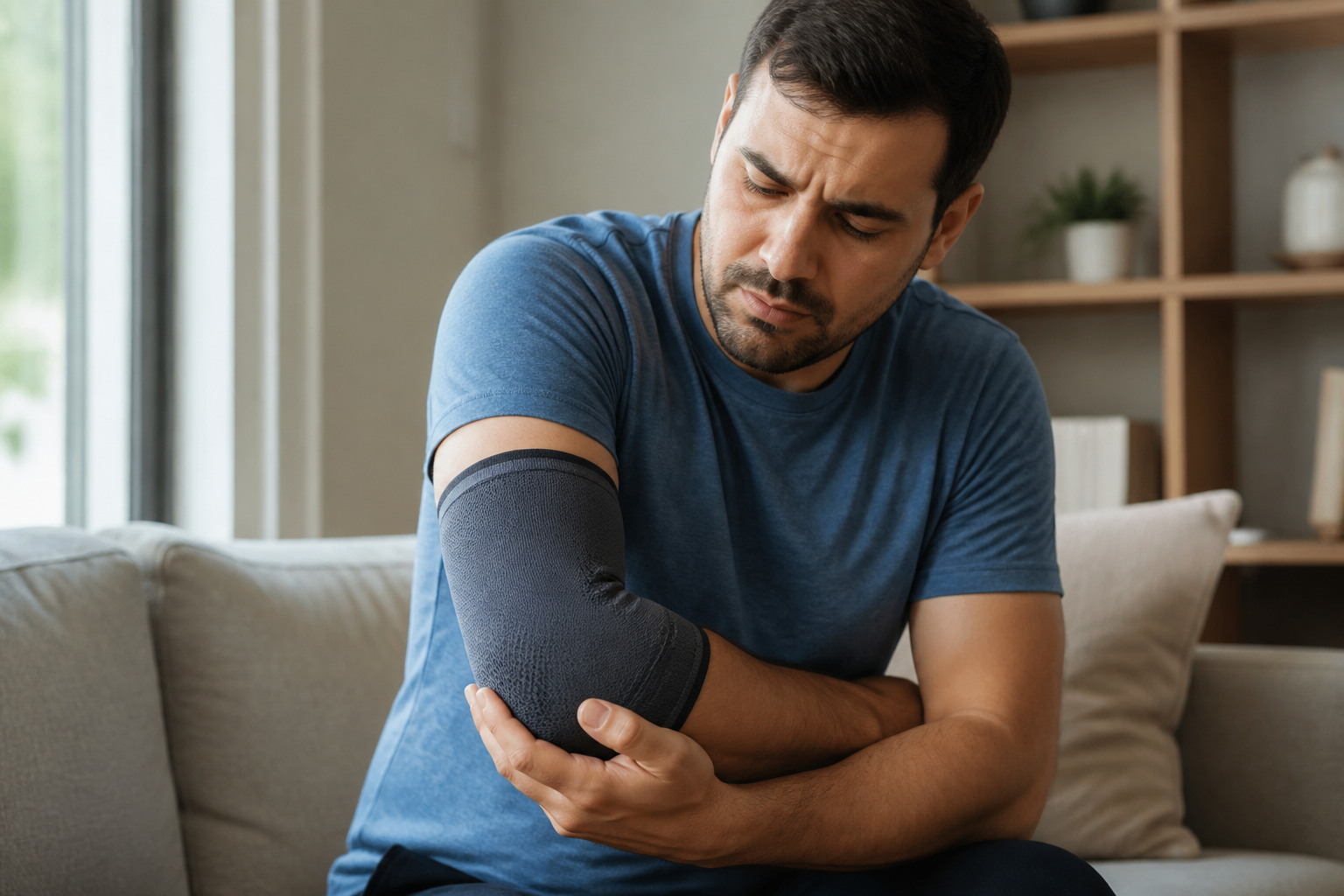
Before any of the medical interventions above become necessary, a proper compression sleeve is a reasonable and low-risk conservative step — genuinely worth a real trial before assuming you need aspiration or an injection.
What works
- Targeted pressure over the bursa reduces swelling for many people within the two-to-three-week window where conservative care is expected to work.
- Allows full range of motion, unlike rigid immobilization, so you’re not developing stiffness while you wait to see if conservative treatment is working.
What doesn’t
- A compression sleeve won’t resolve septic bursitis or a bursa that genuinely needs aspiration — it’s a conservative-care tool, not a substitute for medical evaluation when the signs above are present.
Give conservative care a genuine trial, but know the signs that mean it’s time to stop waiting and get evaluated. BraceAbility Elbow Compression Sleeve for Bursitis
About This Article

Written by Michael Torres. Michael Torres has had joint problems his whole life — hypermobile as a kid, chronic sprains and a dislocating shoulder through his twenties, an osteoarthritis diagnosis in his early fifties, and a right knee replacement since. He is not a doctor or a physical therapist and has no clinical training. He writes about what has helped him and what he has watched help the people around him, and says plainly when he has not tried something himself. More about this site.
Scope and limits. Michael has no medical or clinical training — he writes about living with his own joint pain, not about treating anyone else's. Nothing here is medical advice. Talk to a doctor before starting anything new, and get seen promptly for pain that is new, severe, worsening, or comes with swelling, fever, or numbness.
Verify this against a primary source
Specifics change, and your situation may differ from the one described here. These are the authorities worth checking directly:
- NIAMS — arthritis and musculoskeletal research from the NIH
- MedlinePlus — plain-language medical reference from the NIH
- Arthritis Foundation — condition guides and treatment overviews