
You wake up in the morning, swing your legs over the side of the bed, and the moment your feet hit the floor — there it is. That deep, nagging ache in your knees or hips that makes you wince before the day has even started. If that sounds familiar, you’re not alone. Millions of people are searching for natural ways to manage joint discomfort, and one of the most common questions I hear is whether turmeric curcumin joint inflammation remedies actually work — or whether it’s just another wellness trend dressed up in a golden spice. I want to give you a straight, honest answer on that today.
What Is Curcumin and Why Does It Matter for Your Joints?
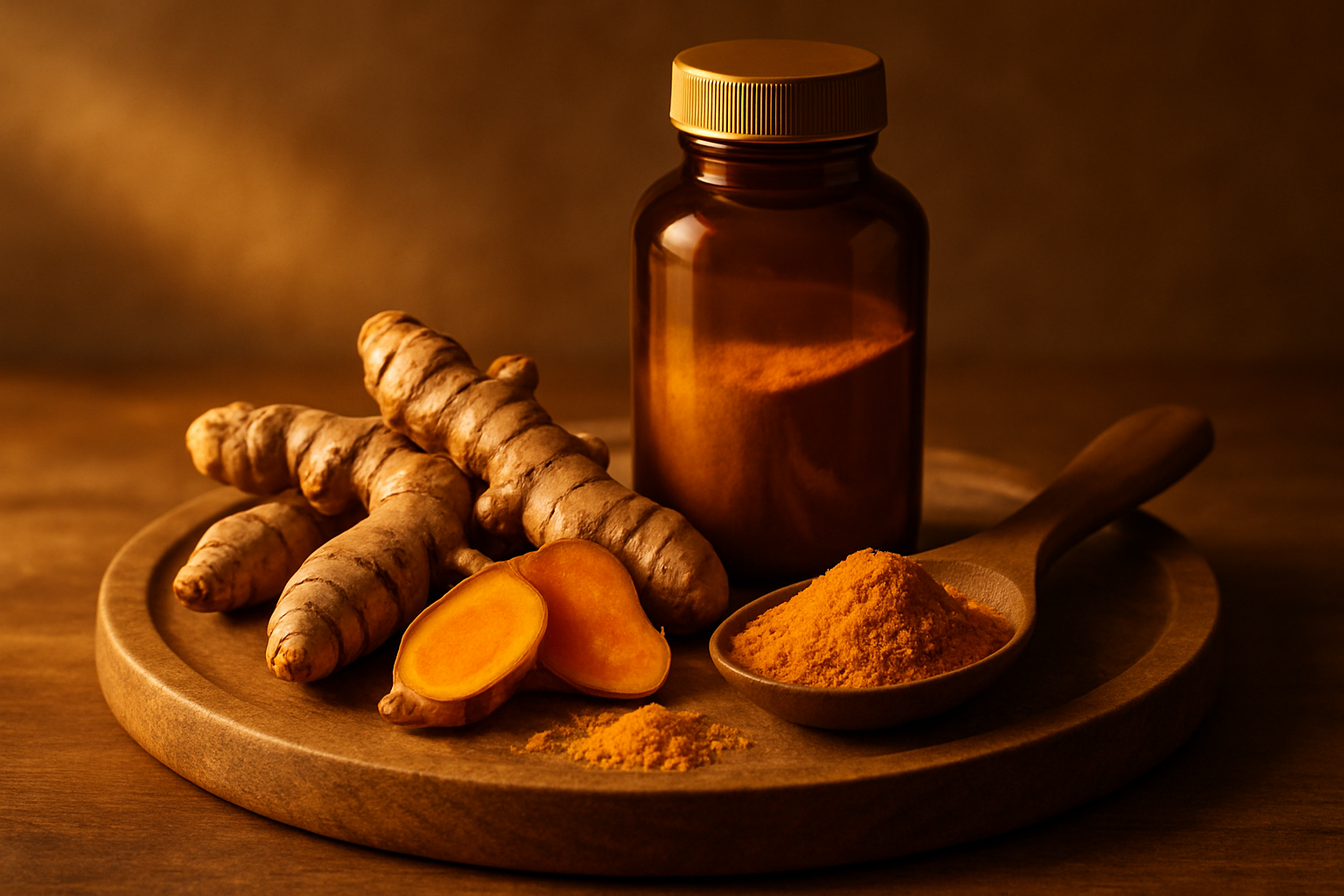
Turmeric is the bright yellow root you’ve probably seen in curry dishes or golden lattes. But the real active ingredient is curcumin — a naturally occurring compound that researchers have been studying for its potential to support a healthy inflammatory response in the body. When your joints are dealing with chronic low-grade inflammation, that’s often what’s driving the stiffness, swelling, and discomfort you feel day to day.
Research suggests curcumin may help interrupt some of the inflammatory pathways that contribute to joint pain. A number of clinical studies have looked at curcumin supplementation in people with osteoarthritis and rheumatoid arthritis, and many participants reported meaningful reductions in stiffness and discomfort over time. I want to be clear — curcumin is not a cure, and it won’t work the same way for everyone. But for many people, it becomes a genuinely helpful part of a broader joint care routine.
The Bioavailability Problem — and How to Actually Solve It
Here’s the part most people skip over, and it’s honestly the most important thing I can tell you: raw turmeric and even plain curcumin powder have notoriously poor bioavailability. Your body struggles to absorb and use curcumin on its own. You could be swallowing capsules every day and getting very little benefit simply because the compound isn’t making it into your bloodstream effectively.
So what actually helps with absorption? There are two main approaches the supplement industry has developed, and both have solid evidence behind them:
- Black pepper extract (BioPerine/piperine): Studies suggest that combining curcumin with piperine — the active compound in black pepper — can meaningfully increase curcumin bioavailability. The widely quoted 2,000% figure traces to a single small 1998 human study that paired 2 g of curcumin with 20 mg of piperine and has not been independently replicated. This is still the most common and cost-effective approach you’ll see in quality supplements.
- Phospholipid complex (Meriva/Phytosome technology): This method binds curcumin to a phospholipid called lecithin, which makes it significantly more bioavailable without needing piperine. This is a good option if you’re sensitive to black pepper or take medications that interact with it.
If a supplement doesn’t mention either of these delivery methods on the label, I’d honestly pass it by. Plain curcumin powder at a low price is rarely a bargain.
Turmeric Curcumin Joint Inflammation Supplements: What I Actually Recommend
After looking at what’s available, I’ve narrowed down a handful of options I feel comfortable pointing people toward. Here’s what I like and why.
The Curcumin Dose That Actually Shows Up in Bioavailability Research
If you’ve tried turmeric before and felt nothing, the problem likely wasn’t turmeric itself — it was bioavailability. Curcumin is notoriously difficult for your body to absorb, which is why this formula pairs 1500mg of turmeric with black pepper extract (BioPerine): that combination increases curcumin absorption by up to 2000%, which is the difference between a supplement that works and one that just becomes expensive urine.
What works
- The 1500mg dose aligns with what the clinical research actually used — studies showing measurable reductions in joint inflammation and morning stiffness used doses in this range, not the 500mg bottles you see everywhere.
- Black pepper (BioPerine) isn’t just marketing fluff; multiple studies confirm it enhances curcumin absorption significantly, which means you’re actually getting the active ingredient your joints need instead of just the appearance of a supplement regimen.
- Most people who stick with this for 4-6 weeks report a noticeable decrease in morning stiffness and a softer ache during or after activity — not elimination, but a real shift in what you can do before discomfort kicks in.
What doesn’t
- Results take time — most research shows meaningful improvement starts around week 3-4, not day 3, so if you’re expecting relief by Friday you’ll be disappointed (and likely to quit before it works).
- If you have severe joint damage or are taking blood thinners, this needs a conversation with your doctor first; curcumin has mild anticoagulant properties and isn’t a substitute for addressing serious structural issues or medical treatment.
Curcumin works best as part of a consistent routine — taking it sporadically or expecting it to work while you’re still doing the same movements that aggravate your joints will limit what you notice. Turmeric Curcumin with Black Pepper Extract 1500mg (90 Capsules)
About This Article

Written by Michael Torres. Michael Torres has had joint problems his whole life — hypermobile as a kid, chronic sprains and a dislocating shoulder through his twenties, an osteoarthritis diagnosis in his early fifties, and a right knee replacement since. He is not a doctor or a physical therapist and has no clinical training. He writes about what has helped him and what he has watched help the people around him, and says plainly when he has not tried something himself. More about this site.
Scope and limits. Michael has no medical or clinical training — he writes about living with his own joint pain, not about treating anyone else's. Nothing here is medical advice. Talk to a doctor before starting anything new, and get seen promptly for pain that is new, severe, worsening, or comes with swelling, fever, or numbness.
Verify this against a primary source
Specifics change, and your situation may differ from the one described here. These are the authorities worth checking directly:
- NIAMS — arthritis and musculoskeletal research from the NIH
- MedlinePlus — plain-language medical reference from the NIH
- Arthritis Foundation — condition guides and treatment overviews