
You’ve just woken up with your thumb locked in a bent position again, and you’re wondering: how long to wear a thumb splint for trigger finger? Maybe your doctor handed you one yesterday, or you’re considering whether splinting is even worth your time. The honest answer is simpler than you might think—and it contradicts what a lot of people assume about wearing splints.
After 15 years of managing my own joint issues and reading through the research on trigger finger, I’ve learned that splinting works—but only when you use it the right way. The biggest mistake? Thinking you need to wear a thumb splint all day and all night to see results. Spoiler: you usually don’t. In fact, doing so can sometimes make things worse.
How Long to Wear a Thumb Splint for Trigger Finger: The Short Answer
Research consistently points to a protocol of 6 to 10 weeks of splinting as the standard timeframe for trigger finger relief. But here’s the critical part: the strongest evidence is for nighttime splinting only.
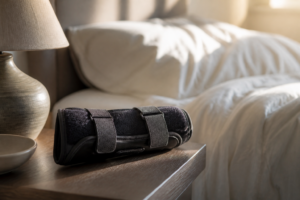
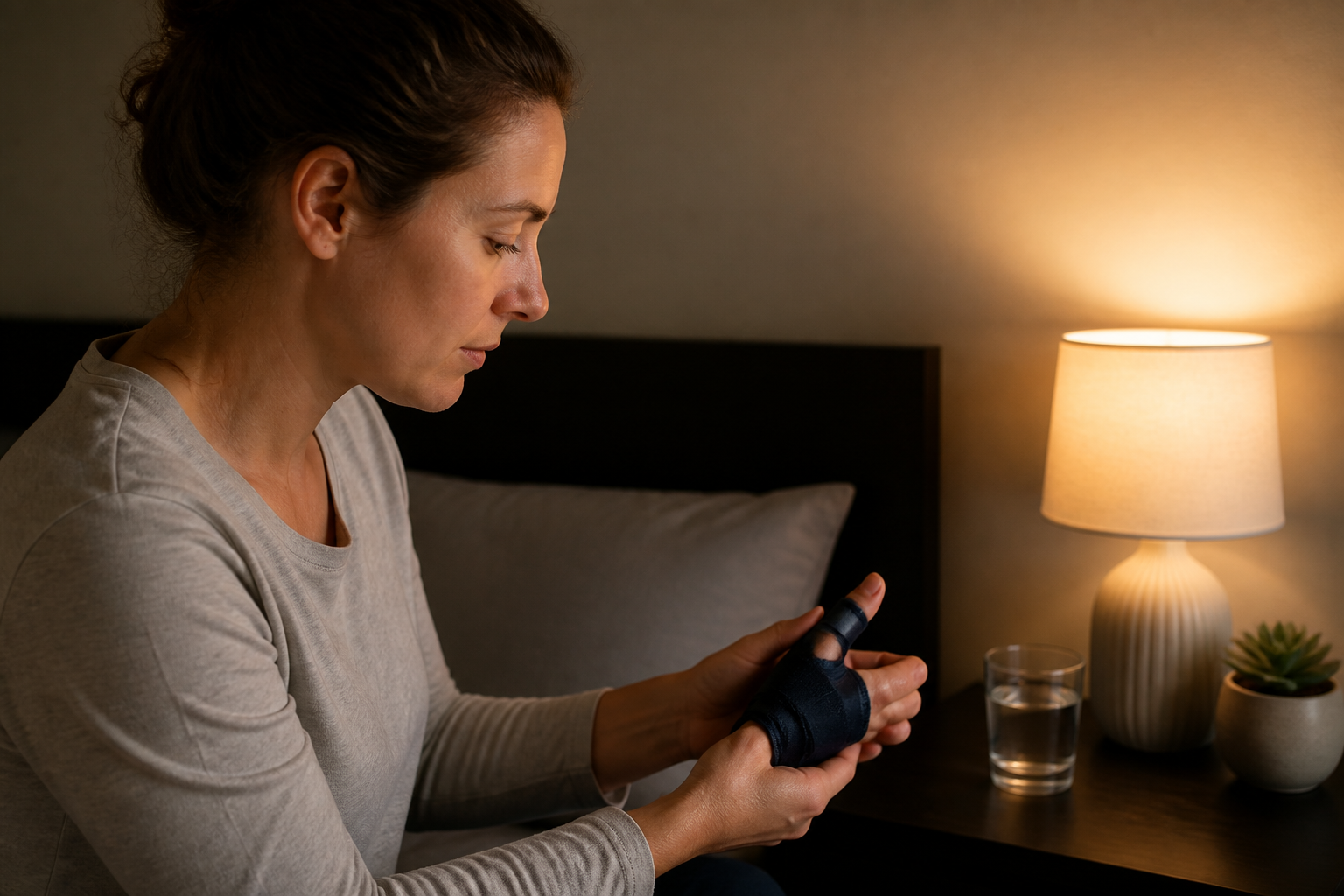
Why? Because trigger finger is often worst when you wake up. While you sleep, your hand naturally curls into a fist—your fingers flex without resistance. This repeated overnight flexion causes the tendon to swell, and the next morning you wake with your thumb stuck in a bent position until you manually straighten it. A night splint keeps your thumb in slight extension while you sleep, preventing that overnight swelling cycle from worsening. Many people see meaningful improvement in 3 to 6 weeks using this approach alone, especially in milder cases.
That said, this is general information based on common clinical practice patterns—not a prescription. Your own doctor’s timeline may differ based on your specific situation, and you should follow their guidance.
Should I Wear a Thumb Splint All Day? Why That’s Usually Not the Answer
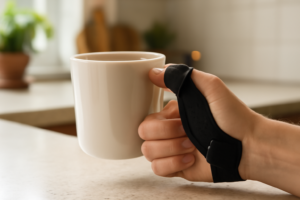
One of the most common questions I see is: should I wear a thumb splint all day? The impulse makes sense—more immobilization sounds like more healing. In reality, wearing a trigger finger splint all day or wearing a trigger finger splint 24 hours a day often backfires.
Here’s why: your joints and tendons need movement to stay healthy. When you immobilize a thumb completely, several things happen:
- Joint stiffness develops. The cartilage surfaces need gentle loading and motion to maintain flexibility.
- Ligaments and tendons can shorten and tighten. This contracture is hard to reverse once it starts.
- Supporting muscles weaken. Your hand muscles need to work against light resistance to stay strong.
- The splint itself can irritate skin and create pressure points if worn nonstop.
This is why trigger finger splint all day or just at night has such a clear answer in the research: nighttime is better. During the day, your thumb should be moving gently through its full range of motion.
Severe Trigger Finger Splint: When Longer Wear May Be Necessary
There is an exception. If you have severe trigger finger—meaning your thumb locks constantly, you have to pry it straight with your other hand, you feel a painful nodule at the base of your thumb, or your symptoms are genuinely disabling—your clinician might prescribe longer daytime wear, sometimes combined with nighttime use.
This is not a decision you should make yourself. Severe cases warrant evaluation by a hand specialist or physical therapist who can assess whether extended immobilization is appropriate for your particular presentation. Some severe cases may eventually need a corticosteroid injection or even a minor surgical procedure to release the tendon sheath, and your clinician needs to rule that out.
How Many Weeks to Splint Trigger Finger: A Realistic Timeline
So what should you realistically expect? Here’s the typical timeline:
- Weeks 1–3: Many people notice a reduction in morning locking and pain fairly quickly. The nighttime splint is interrupting the swelling cycle.
- Weeks 3–6: If your case is mild to moderate, significant improvement often occurs by this point. Morning symptoms are less severe, and the thumb may move more freely throughout the day.
- Weeks 6–10: This is when persistent or stubborn cases start to resolve. Tendons adapt, swelling subsides, and the nodule (if present) may soften.
- Beyond 8 weeks with no improvement: This is a clear signal to see a hand specialist. Splinting alone isn’t working for everyone, and other interventions may be needed.
A key reminder: mild cases respond best to early splinting. If you catch trigger finger early and use a splint correctly from the start, you have a much better chance of avoiding injections or surgery down the road.
What to Do During the Day: Beyond the Splint
While you’re wearing a thumb splint at night, your daytime strategy matters just as much. Here are evidence-informed approaches:
- Gentle tendon-gliding exercises: These guided hand movements help the tendon slide smoothly within its sheath. Your doctor or therapist can show you the sequence.
- Activity modification: Avoid repetitive gripping, power tools, and activities that aggravate locking. If your work involves intense hand use, talk to your employer about temporary adjustments.
- Ice after activity: A 10–15 minute ice session after activities that irritate your thumb can help manage swelling.
- Rest breaks: Don’t use your thumb for sustained gripping. Take frequent pauses.
Splinting + activity modification + gentle movement often work together to resolve trigger finger. It’s rarely one thing alone.
Red Flags: When to Stop Splinting and Seek Specialist Care
Stop splinting and contact your doctor or hand specialist immediately if you notice:
- No improvement after 6–8 weeks of consistent nighttime splinting.
- Your thumb locks in a permanently bent position and won’t straighten, even passively.
- Numbness or tingling in your thumb or fingers—this may indicate nerve involvement.
- Severe swelling or redness around the base of your thumb.
- You have diabetes. Trigger finger in diabetic patients is often more stubborn and more likely to require injection or surgery. Don’t rely on splinting alone—see a specialist sooner.
If your doctor has prescribed a specific splinting schedule, stick with it unless they tell you to change it. This post is general information, not medical advice.
What I Recommend: A Reliable Splint That Stays Put
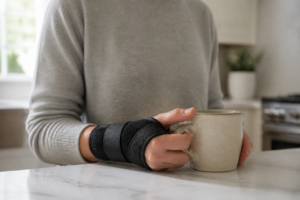
If you’re starting nighttime splinting, having a properly fitting, comfortable splint makes all the difference in compliance. After researching options, I recommend the Thumb Splint (2 Pack) Trigger Thumb Splint, Thumb Brace for Pain Relief. This two-pack gives you a backup splint (handy while one is being washed), features adjustable straps so you can dial in the right tension without cutting off circulation, and many users report that it stays in place all night without sliding. The neoprene material is breathable, which helps with skin comfort during extended wear. At this price point, it’s a solid entry into conservative trigger finger management.
The Bottom Line: Splinting Works, But Only When Done Right
How long to wear a thumb splint for trigger finger? The research answer is 6 to 10 weeks of nighttime splinting for most people—not all day. Many see real relief in 3 to 6 weeks. Pair splinting with daytime activity modification and gentle movement, and you’ve given yourself the best shot at avoiding injections or surgery. Severe cases and cases that don’t improve in 6–8 weeks need a specialist’s evaluation, not doubled-down splinting on your own.
If you’re starting this journey, be patient with the process. Trigger finger didn’t develop overnight, and it usually won’t resolve overnight either. But consistent nighttime splinting, combined with smart daytime habits, truly does work for most people. You’ve got this.
About This Article

Written by Michael Torres. Michael Torres has had joint problems his whole life — hypermobile as a kid, chronic sprains and a dislocating shoulder through his twenties, an osteoarthritis diagnosis in his early fifties, and a right knee replacement since. He is not a doctor or a physical therapist and has no clinical training. He writes about what has helped him and what he has watched help the people around him, and says plainly when he has not tried something himself. More about this site.
Scope and limits. Michael has no medical or clinical training — he writes about living with his own joint pain, not about treating anyone else's. Nothing here is medical advice. Talk to a doctor before starting anything new, and get seen promptly for pain that is new, severe, worsening, or comes with swelling, fever, or numbness.
Verify this against a primary source
Specifics change, and your situation may differ from the one described here. These are the authorities worth checking directly:
- NIAMS — arthritis and musculoskeletal research from the NIH
- MedlinePlus — plain-language medical reference from the NIH
- Arthritis Foundation — condition guides and treatment overviews