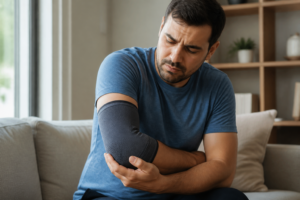

You’ve been leaning on your desk for hours, and that sharp pain in your elbow is back. By evening, the outside of your joint is noticeably puffy. A friend mentions compression sleeves. So you’re asking yourself: Do compression sleeves reduce bursitis swelling? Will one actually help, or is it just wishful thinking?
I’ve been there—watching swelling come and go, trying to figure out what genuinely works versus what’s marketing hype. Over 15 years of managing my own joint issues and reading the research, I’ve learned that the honest answer is: yes and no. Compression sleeves can help reduce the swelling of bursitis, but they don’t cure it. Let me explain what’s really happening inside your bursa, what compression actually does, and how to use it safely and effectively.
What Is Bursitis Swelling, and Why Does It Happen?
A bursa is a tiny, fluid-filled cushion that sits between bone, tendons, and skin. Its job is to reduce friction during movement. When you repeatedly bump, lean on, or overuse that area, the bursa gets irritated and inflames. In response, it fills with extra fluid—that’s the swelling you see and feel.
Olecranon bursitis (at the back of the elbow), prepatellar bursitis (in front of the knee), trochanteric bursitis (at the hip), and shoulder bursitis all follow the same pattern. The more the bursa refills with fluid, the more swollen it gets. The more it swells, the more it gets bumped or irritated, and the cycle continues.
This is where compression comes in—not to cure the underlying irritation, but to limit how much the bursa can re-swell.
Do Compression Sleeves Help Reduce Bursitis Swelling?
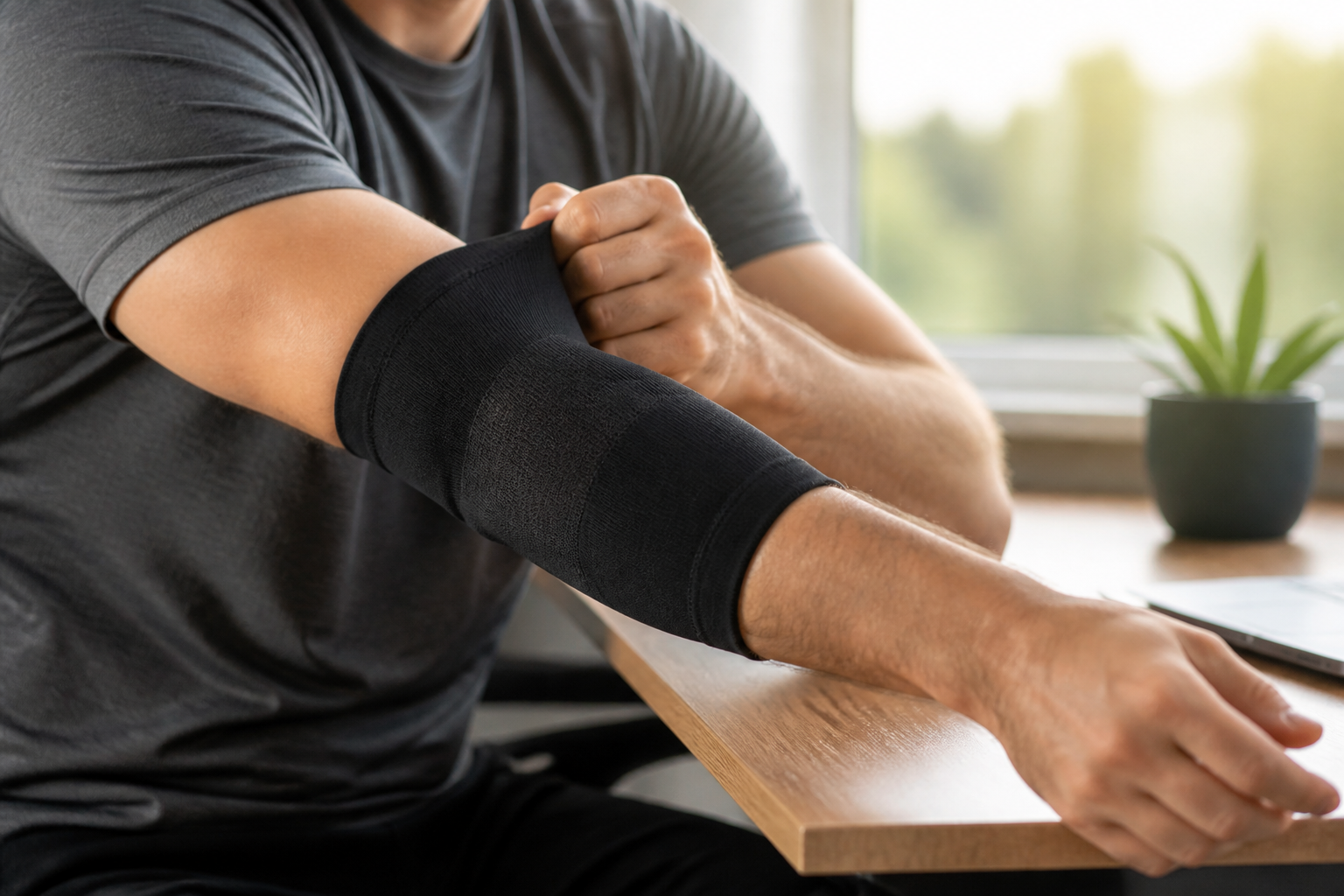
Yes—compression sleeves genuinely do help reduce bursitis swelling. Here’s the mechanism: external pressure from the sleeve physically opposes the build-up of fluid inside the bursa. When you wear a properly fitting compression sleeve, you’re creating a gentle external force that makes it harder for the bursa to re-accumulate fluid at the same rate.
Additionally, a good compression sleeve protects the bursa from repeated trauma. If you have elbow bursitis and you’re constantly leaning on your desk or bumping your elbow on a desk edge, a padded compression sleeve reduces those micro-injuries. Less irritation means less inflammation, which means less fluid production.
That said, compression does not:
- Address the root cause of the irritation (repetitive pressure, overuse, or biomechanical issues)
- Speed up healing of the inflamed tissue
- Help at all if your bursitis is caused by infection (septic bursitis)
Compression is a management tool, not a cure. Think of it as part of a team approach that includes rest, ice, elevation, and addressing whatever caused the irritation in the first place.
Is a Compression Sleeve Good for Elbow Bursitis?
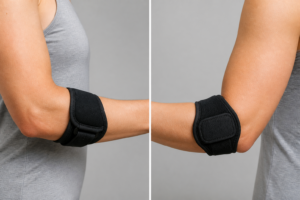
Absolutely. Elbow bursitis is one of the most common forms—especially olecranon bursitis, which develops at the tip of the elbow. Many people find that a compression sleeve for olecranon bursitis, worn during daytime hours and during activities that aggravate it, helps keep swelling down and makes the joint feel more stable and protected.
For elbow bursitis specifically, a padded compression sleeve is often more effective than a plain one, because the padding protects the bursa from direct contact and pressure if you’re the type of person who leans on your elbows or rests them on a desk.
How Tight Should a Bursitis Compression Sleeve Be?
This is critical. Too loose and it won’t help. Too tight and you risk reducing circulation, causing numbness, tingling, skin discoloration, or making pain worse.
The right fit feels snug—like a firm handshake, not a stranglehold. Here’s how to check:
- You can slide one finger under the sleeve with mild resistance
- Your skin below the sleeve does not turn white, blue, or purple
- You have no tingling or numbness in your hand or fingers
- Mild swelling reduction occurs, but you don’t feel a tourniquet effect
If any of those warning signs appear, remove the sleeve immediately and try a looser size.
How Long Should You Wear a Compression Sleeve for Bursitis?
Most people find relief wearing compression during the day, especially during activities that aggravate the bursa. If you have desk work or hobbies that put pressure on your elbow, wear it throughout those periods.
Do not sleep in firm compression. Many people think wearing a sleeve all night will accelerate healing, but prolonged firm compression while you’re stationary can impair circulation and actually increase stiffness. Remove the sleeve at night unless your doctor specifically advises otherwise.
A typical helpful pattern: wear the sleeve 8–12 hours per day during activities, remove it at night, and combine it with ice (15 minutes after activity) and rest. As swelling improves over weeks, many people gradually reduce how often they wear it.
What I Recommend
After years of trying different sleeves for my own joint issues, I’ve found that the CAMBIVO 2 Pack Elbow Brace Compression Sleeve strikes an excellent balance between effective compression, comfort, and breathable fabric. It’s designed for tennis and golfer’s elbow, but the compression principle works just as well for bursitis. The sleeve is snug without being restrictive, and many people appreciate the two-pack so they can have one in the wash while wearing the other. It’s affordable, widely available, and has solid user feedback from people managing various forms of elbow inflammation.
Compression as Part of a Bigger Picture
Compression works best when combined with:
- Rest and activity modification: Stop or reduce whatever caused the irritation. If you have elbow bursitis from leaning on your desk, adjust your workspace or use an ergonomic pad.
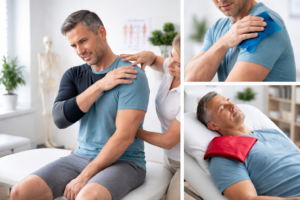
- Ice: Apply ice for 15 minutes after activity to reduce inflammation. Never apply ice directly to skin; wrap it in a towel.
- Elevation: When resting, keep your elbow elevated to help fluid drain by gravity.
- Gentle movement: Complete immobility can increase stiffness. Light, pain-free movement is usually better than no movement.
If swelling doesn’t improve within 2–3 weeks despite compression, rest, and ice, talk to your doctor. They may recommend aspiration (draining the bursa) or a corticosteroid injection to speed recovery.
Critical Safety: When NOT to Use Compression
There is one situation where compression is the wrong move: if your bursitis is infected (septic bursitis). Compression can trap bacteria and make infection worse.
Seek same-day medical care if you notice:
- The skin over the bursa is hot to the touch
- Redness that is spreading or worsening
- Fever or chills
- Pain that is rapidly worsening despite rest and ice
- A break in the skin over the bursa
- Sudden, severe swelling that came on very quickly
These are signs of possible infection, and you need medical evaluation before using any compression.
The Bottom Line on Compression and Bursitis Swelling
Do compression sleeves help reduce bursitis swelling? Yes—they limit fluid re-accumulation, protect the bursa from repeated trauma, and many people experience real relief. But they’re not a standalone cure. They work best when combined with rest, ice, elevation, and identifying and addressing the root cause of the irritation.
If you’re dealing with swollen elbow bursitis, a well-fitting compression sleeve worn during the day—especially during aggravating activities—is a smart, low-risk step. Pair it with the other recovery basics, give it a few weeks, and watch how your bursa responds. Most bursitis improves, but patience and consistency matter far more than any single tool.
This post is general joint health information and not a substitute for medical advice. Always discuss any new symptoms or treatment approaches with your doctor or a qualified healthcare provider.
About This Article

Written by Michael Torres. Michael Torres has had joint problems his whole life — hypermobile as a kid, chronic sprains and a dislocating shoulder through his twenties, an osteoarthritis diagnosis in his early fifties, and a right knee replacement since. He is not a doctor or a physical therapist and has no clinical training. He writes about what has helped him and what he has watched help the people around him, and says plainly when he has not tried something himself. More about this site.
Scope and limits. Michael has no medical or clinical training — he writes about living with his own joint pain, not about treating anyone else's. Nothing here is medical advice. Talk to a doctor before starting anything new, and get seen promptly for pain that is new, severe, worsening, or comes with swelling, fever, or numbness.
Verify this against a primary source
Specifics change, and your situation may differ from the one described here. These are the authorities worth checking directly:
- NIAMS — arthritis and musculoskeletal research from the NIH
- MedlinePlus — plain-language medical reference from the NIH
- Arthritis Foundation — condition guides and treatment overviews