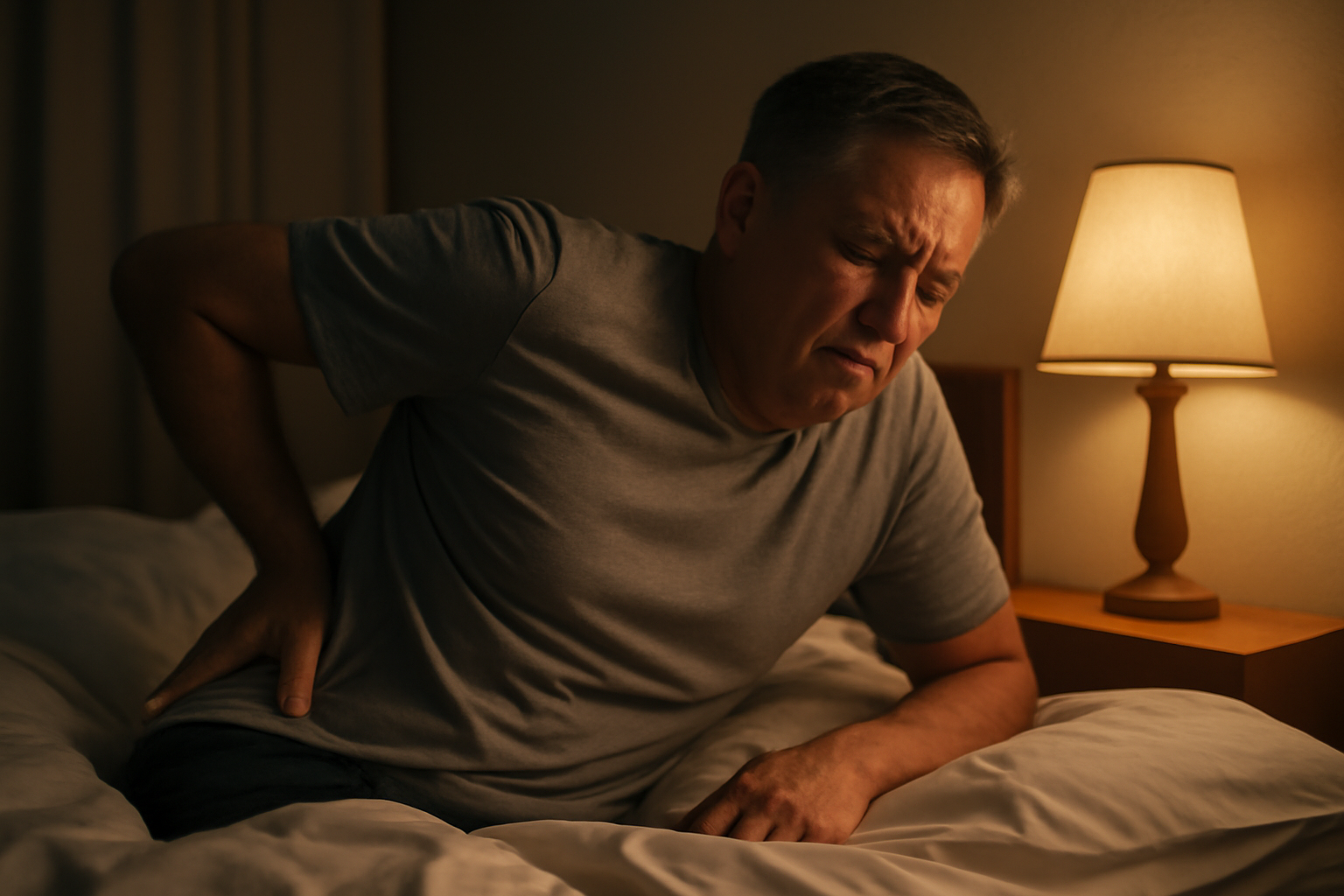

You know that feeling — you finally drag yourself to bed after a rough night, your lower back is already aching before your head even hits the pillow, and no matter how you position yourself, nothing feels right. You wake up exhausted, stiff, and somehow in more pain than when you went to sleep. If that sounds familiar, you’re not alone. The connection between sleep and joint pain — especially in the hips and lower back — is something I talk about with patients constantly, and it’s more complicated than most people realize. Throw depression into the mix, and you’ve got a cycle that can feel nearly impossible to break.
The Sleep-Pain-Depression Triangle Nobody Talks About
Here’s the honest truth: poor sleep, depression, and joint pain don’t just coexist — they actively feed each other. Research suggests that people living with depression are significantly more likely to experience chronic pain, and chronic pain is one of the most common reasons people develop or worsen depressive symptoms. Meanwhile, both pain and depression demolish sleep quality, and poor sleep lowers your pain threshold. It’s a loop, and your hips and lower back are often caught right in the middle of it.
Depression changes how your brain processes pain signals. It can amplify the sensation of discomfort, make you more sensitive to inflammation, and reduce your body’s natural ability to recover overnight. When you’re depressed, you’re also far less likely to move during the day — and for hip and back health, movement is medicine. Prolonged sitting, slouching, and inactivity stiffen the hip flexors, compress the lumbar discs, and weaken the stabilizing muscles that your spine depends on.
Sleep is when your body repairs cartilage, reduces inflammatory markers, and resets your nervous system. When that window gets disrupted — whether by depression-driven insomnia, restless sleep, or poor sleep posture — your joints miss out on their nightly maintenance window. Over time, that adds up.
What Poor Sleep Actually Does to Your Hips and Lower Back
Most people think of joint pain as something that happens during the day — from activity, exercise, or sitting too long. But nighttime is just as important. Here’s what happens to your hip and back joints when sleep is consistently poor:
- Inflammation goes unchecked. Your body manages inflammatory responses during deep sleep. Disrupted sleep means inflammation lingers longer, making joints feel sorer and stiffer in the morning.
- Muscle tension doesn’t release. Deep, restorative sleep is when muscle guarding and tension finally let go. Without it, your hip flexors and lumbar paraspinals stay tight — and tight muscles pull on joints.
- Your pain tolerance drops. Sleep deprivation measurably reduces your pain threshold. The same level of hip or back discomfort that you could manage on seven hours of sleep feels unbearable on five.
- Posture during sleep matters more than you think. If you’re sleeping without proper lumbar support — especially on your side or back — your lower spine spends hours in a misaligned position, compressing discs and stressing the sacroiliac joint.
That last point is one of the most actionable things you can actually do something about tonight. You can’t fix depression with a pillow, but you can absolutely reduce the physical strain your spine is under while you sleep.
Products Worth Trying: Lumbar Support for Better Sleep and Less Pain
I want to be upfront: no product is a cure, and I always encourage people to work with a healthcare provider on the depression and sleep side of this equation. But proper lumbar support during sleep is something research supports, and many people find genuine relief when they address their sleep positioning. These are some options worth looking into.
The Lumbar Pillow That Actually Keeps Your Spine Neutral When Depression Kills Your Sleep Posture
When depression and poor sleep combine, your body defaults to protective postures—curling up, tensing your lumbar spine, rotating your hips into positions that aggravate existing pain. A properly designed lumbar pillow won’t fix the depression or insomnia, but it can prevent your sleeping hours from making the joint damage worse.
What works
- Maintains neutral spine alignment even when you’re too depressed or exhausted to actively “sleep correctly”—the pillow does the work your conscious effort can’t sustain through eight hours.
- Reduces morning stiffness and that sharp “locked” feeling in the lower back that happens when your lumbar spine spends all night in flexion or rotation, which research shows worsens inflammation sensitivity the next day.
- The adjustable fill and contoured design mean it actually fits people with different body types and sleep positions—not the one-size-fits-all rigidity that slides out of place by 3 a.m.
What doesn’t
- It’s not a substitute for addressing the sleep schedule and depression—a pillow can’t override circadian dysfunction or mood disorders; it can only prevent the joint damage from getting worse while you work on those foundations.
- Results take 2–3 weeks of consistent use to notice; if you’re expecting morning relief after night one, you’ll be disappointed and likely abandon it before the adaptation period ends.
A pillow is one part of the equation, not the whole answer—your nervous system and sleep architecture have to shift too, which takes time and often requires the help mentioned above. If you’re serious about protecting your hips and back while you address the mental health piece, the Vamorry Lumbar Pillow for Sleeping is the one I’ve seen stick with people long-term because it’s actually adjustable and doesn’t flatten out after a month.
About This Article

Written by Michael Torres. Michael Torres has had joint problems his whole life — hypermobile as a kid, chronic sprains and a dislocating shoulder through his twenties, an osteoarthritis diagnosis in his early fifties, and a right knee replacement since. He is not a doctor or a physical therapist and has no clinical training. He writes about what has helped him and what he has watched help the people around him, and says plainly when he has not tried something himself. More about this site.
Scope and limits. Michael has no medical or clinical training — he writes about living with his own joint pain, not about treating anyone else's. Nothing here is medical advice. Talk to a doctor before starting anything new, and get seen promptly for pain that is new, severe, worsening, or comes with swelling, fever, or numbness.
Verify this against a primary source
Specifics change, and your situation may differ from the one described here. These are the authorities worth checking directly:
- NIAMS — arthritis and musculoskeletal research from the NIH
- MedlinePlus — plain-language medical reference from the NIH
- Arthritis Foundation — condition guides and treatment overviews