
You’re three hours into your workday and you catch yourself slumped over your keyboard — shoulders rounded forward, chin jutting out, upper back curved like a question mark. Sound familiar? If you’ve been down the rabbit hole of searching for a posture corrector brace review, you’re probably at that point where the neck tension, shoulder aches, and general fatigue have gotten old enough that you’re ready to actually do something about it. I’ve been there too, and I’ve compared notes with dozens of people working through the same frustration. Let me give you the honest, practical breakdown you deserve.
What a Posture Corrector Actually Does (And What It Can’t)
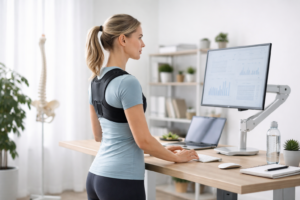
Here’s the thing I always tell people before they invest in any kind of brace: a posture corrector is a tool, not a cure. It’s like a cast for a broken wrist — useful, supportive, but not a substitute for the rehabilitation work underneath. Many people find real relief with a well-fitted posture brace, especially in the early stages of retraining their body. Research suggests that consistent external cuing from a brace may help reinforce better spinal alignment and reduce muscle fatigue in the upper back and shoulders.
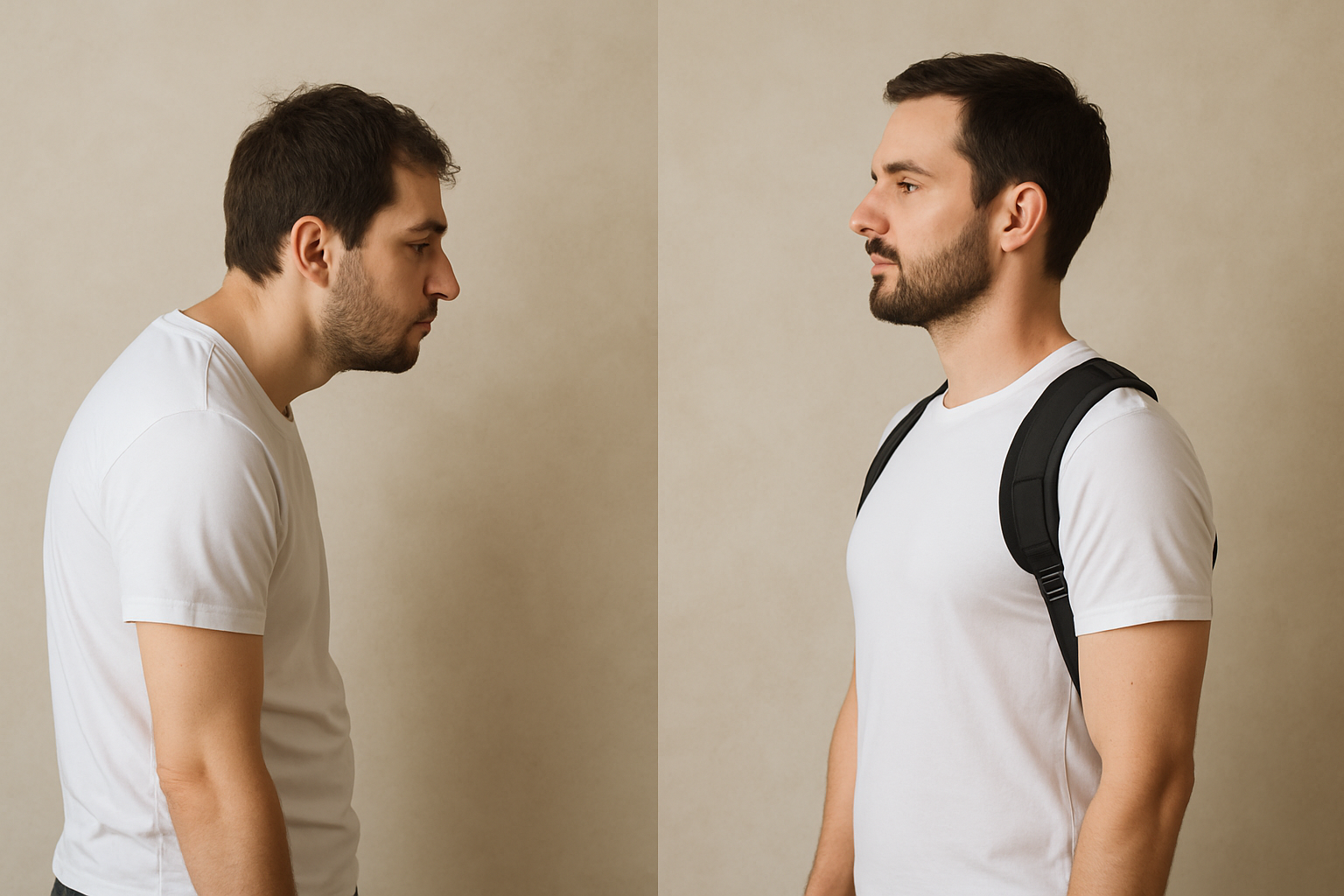
What these braces do well is provide gentle proprioceptive feedback — essentially reminding your nervous system where “upright” feels like. When you start to slump, the brace creates a subtle pull that brings your awareness back to your posture. Over time, with intentional use, many wearers report that they begin to self-correct even without the brace on.
What they won’t do is strengthen your muscles on their own. If you wear a posture corrector all day, every day, without pairing it with targeted exercises, you may actually weaken the postural muscles that need to be doing the work. Think of it as training wheels — incredibly helpful during the learning phase, but eventually you want to ride on your own.
Who May Benefit Most From a Posture Brace
Not everyone needs one, but certain situations make a posture corrector a genuinely smart addition to your routine. You may benefit from trying one if you:
- Spend long hours at a desk or looking at screens
- Experience recurring upper back or neck tension that tends to build throughout the day
- Are recovering from a clavicle injury or shoulder strain (with your doctor’s approval)
- Have been told you have mild kyphosis or a forward head posture pattern
- Find it difficult to maintain awareness of your posture without a physical reminder
If you have scoliosis, a herniated disc, or any diagnosed spinal condition, please loop in your healthcare provider before strapping anything on. A brace can complement treatment, but the wrong one — or worn incorrectly — may do more harm than good in those cases.
Posture Corrector Brace Review: The Products I Actually Recommend
I’ve looked at a lot of these products, and there’s a real range in quality, comfort, and design. Here are five that I think are worth your consideration, depending on your needs and body type.
The Posture Corrector That Actually Reminds You to Sit Straight Without Feeling Like a Straitjacket
If you’ve tried wearing a posture brace before and ditched it after an hour because it felt restrictive or dug into your shoulders, the VOKOKOYA Posture Corrector is designed to be the one you can actually tolerate wearing long enough to build better habits. It bridges the gap between a flimsy reminder and an uncomfortable compression brace.
What works
- The pull-back tension is noticeable enough to interrupt slouching without being so aggressive that you can’t wear it for 2–4 hours at a time, which is actually long enough to start retraining muscle memory.
- Most users report reduced shoulder and upper back fatigue within the first week of consistent wear, even if posture doesn’t feel “fixed”—that’s the brace doing its job as a cue, not a cure.
- The shoulder straps don’t slip as much as cheaper alternatives, which means you’re not constantly readjusting it and defeating the purpose of wearing it in the first place.
What doesn’t
- A posture corrector is a training tool, not a fix—the moment you take it off, your body defaults back to whatever habits got you here in the first place, so you need to pair this with actual postural strengthening (think: scapular rows, planks, chin tucks).
- Some people find it uncomfortable under fitted clothing or during hot weather, and wearing it more than 4–5 hours daily can actually weaken the postural muscles you’re trying to build because the brace is doing the work instead of you.
A posture corrector works best as part of a bigger strategy—wearing it during work hours while you’re building strength and awareness, not as your sole solution. VOKOKOYA Posture Corrector
Posture Corrector Side Effects: What to Watch For
Before you strap one on for eight hours straight, it’s worth knowing what can go wrong. Most side effects come down to one thing: wearing a brace that’s too tight, for too long, without easing into it.
- Skin irritation and chafing — the straps that cross your shoulders and underarms are the most common culprits, especially in warm weather or under fitted clothing. A moisture-wicking base layer helps.
- Restricted or shallow breathing — if the brace pulls your shoulders back aggressively, it can compress your chest enough to make deep breathing uncomfortable. That’s a sign it’s fitted too tight, not that you should push through it.
- Numbness or tingling in the arms — straps that dig into the armpit area can compress nerves running through that space. Stop wearing it immediately if you notice this and reassess the fit.
- Muscle dependency — as I mentioned above, wearing a brace all day, every day, lets your postural muscles coast instead of doing the work, which can leave them weaker over time.
My rule of thumb: if you feel numbness, tingling, chest tightness, or skin breakdown, take it off and don’t force it. A properly fitted brace, worn for a few focused hours a day alongside real strengthening work, shouldn’t produce any of these. If it does, the fit is wrong before the concept is wrong.
About This Article

Written by Michael Torres. Michael Torres has had joint problems his whole life — hypermobile as a kid, chronic sprains and a dislocating shoulder through his twenties, an osteoarthritis diagnosis in his early fifties, and a right knee replacement since. He is not a doctor or a physical therapist and has no clinical training. He writes about what has helped him and what he has watched help the people around him, and says plainly when he has not tried something himself. More about this site.
Scope and limits. Michael has no medical or clinical training — he writes about living with his own joint pain, not about treating anyone else's. Nothing here is medical advice. Talk to a doctor before starting anything new, and get seen promptly for pain that is new, severe, worsening, or comes with swelling, fever, or numbness.
Verify this against a primary source
Specifics change, and your situation may differ from the one described here. These are the authorities worth checking directly:
- NIAMS — arthritis and musculoskeletal research from the NIH
- MedlinePlus — plain-language medical reference from the NIH
- Arthritis Foundation — condition guides and treatment overviews