Understanding Anatomy and Function
Understanding the Complex Architecture of the Wrist
The wrist represents one of the most sophisticated joint systems in the human body. Furthermore, this remarkable structure facilitates everything from delicate finger movements to powerful gripping actions. Most people never consider the complexity hidden beneath their skin. However, the wrist contains an elaborate network of bones, ligaments, and tendons working in perfect harmony.
What Are the Carpal Bones?
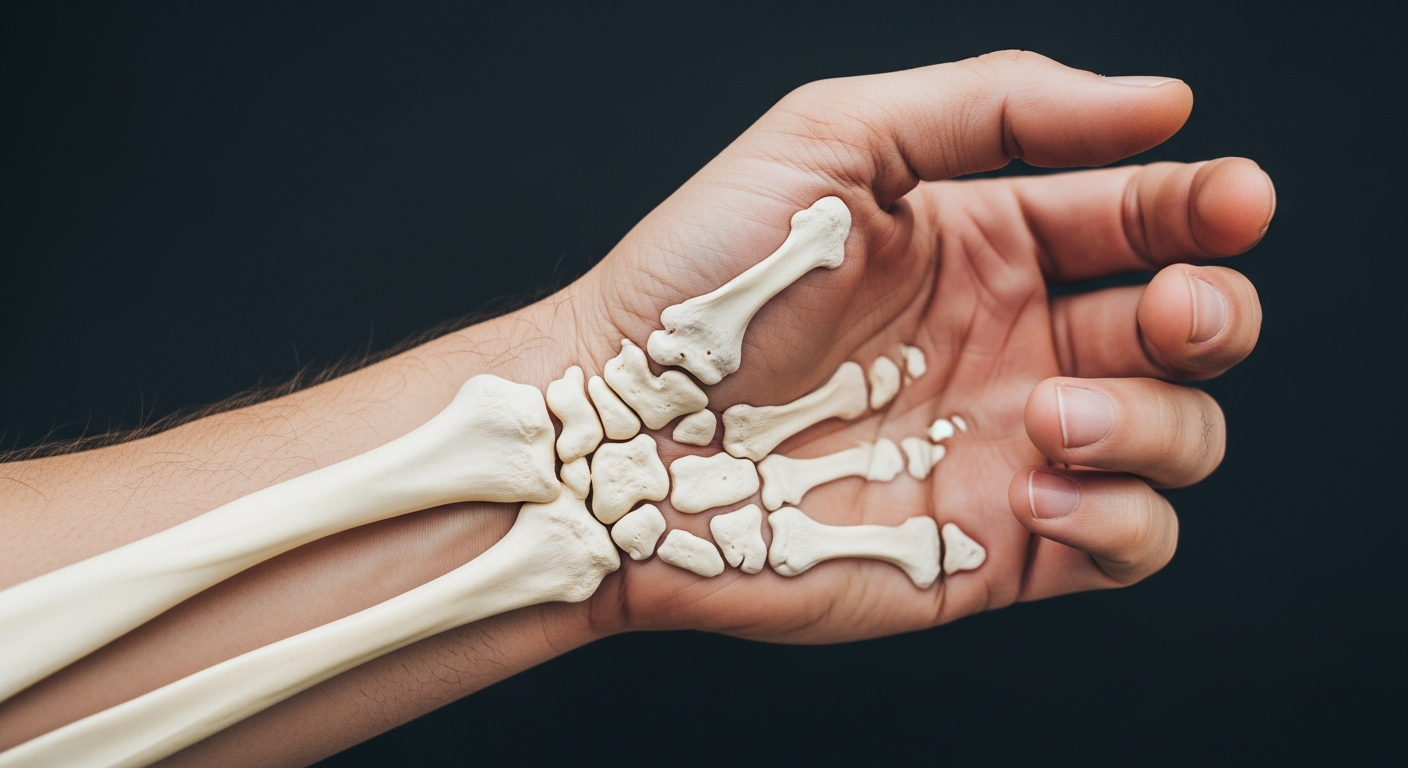
The carpal bones, also known as the carpus, form the structural foundation of your wrist. Despite their small size, these eight bones play an outsized role in hand function and mobility. Each carpal bone is no larger than a pea, yet together they create one of the body’s most flexible joints. Understanding their location and arrangement helps explain why wrist injuries can be so debilitating.
The eight carpal bones are arranged in two rows. The proximal row—closest to your forearm—includes the scaphoid, lunate, triquetrum, and pisiform. The distal row—toward your hand—consists of the trapezium, trapezoid, capitate, and hamate. This two-row configuration allows for the wrist’s remarkable range of motion while maintaining stability during load-bearing activities.
Location and Anatomical Position
Your carpal bones sit in the narrow space between your forearm bones (the radius and ulna) and the metacarpal bones of your hand. This region forms what we commonly call the wrist. If you place your hand palm-down and look at the underside of your wrist, the carpal bones occupy roughly the width of your hand between your forearm and your palm. You can actually feel some of these bones on the back of your wrist—particularly the scaphoid—when you bend your wrist backward.
The carpal tunnel, a narrow passageway formed by carpal bones and ligaments, deserves special mention. This channel protects nine tendons and the median nerve as they travel from your forearm into your hand. When pressure builds inside this tunnel due to swelling, repetitive strain, or inflammation, carpal tunnel syndrome develops—a condition affecting millions of people who spend long hours typing or performing repetitive hand movements.
How the Carpal Bones Function Together
The genius of carpal bone architecture lies in how they work as a coordinated system. These bones don’t move in isolation; they glide smoothly against each other, supported by a network of ligaments and connected to muscles through tendons. This interconnected design enables your wrist to flex, extend, and rotate through multiple planes of motion.
When you grip something tightly, bend your wrist downward, or rotate your forearm, your carpal bones shift position slightly to allow these movements. The scaphoid bone, located on the thumb side of your wrist, bears significant load during gripping activities and is the most commonly fractured carpal bone. The lunate, positioned in the center of the proximal row, distributes force throughout the wrist during weight-bearing activities.
Common Issues Affecting the Carpal Bones
Because the carpal bones experience constant stress from daily activities, they’re susceptible to various injuries and conditions. Fractures typically result from falls onto an outstretched hand—the scaphoid and lunate are particularly vulnerable. Ligament sprains occur when you roll your wrist or land awkwardly, stretching the delicate ligaments connecting these bones.
Osteoarthritis can develop in the carpal joints over time, particularly affecting the wrist’s base where the carpal bones connect to the forearm. Additionally, repetitive strain from typing, crafting, or assembly work can cause chronic inflammation in the tissues surrounding the carpal bones, leading to pain and reduced mobility. If you experience persistent wrist pain, swelling, or limited range of motion, consulting a healthcare professional for proper diagnosis is essential.
The Wrist Brace That Actually Stays in Place During Real Work
If you’re dealing with wrist pain, instability, or repetitive strain from the carpal bones and surrounding joints, a properly fitted wrist brace can provide the stabilization your wrist needs while you address the underlying issue. The key is finding one that doesn’t slip, doesn’t cut off circulation, and you’ll actually wear consistently.
What works
- Research supports short-term immobilization for carpal tunnel and wrist strain—braces reduce repetitive micromotion that irritates inflamed tissues and ligaments around the carpal bones.
- A well-designed brace with dual straps and palm support actually stays put during typing and gripping, unlike flimsy sleeves that shift around and defeat the purpose.
- Most people notice reduced nighttime pain and morning stiffness within 2–3 weeks of consistent use, especially if worn during activities that aggravate the wrist.
What doesn’t
- A brace is a stabilizer, not a cure—if your wrist pain stems from postural issues, repetitive strain patterns, or underlying joint damage, the pain returns when you take it off without addressing those root causes.
- Wearing a brace too long (beyond 4–6 weeks) can weaken supporting muscles, so it’s best paired with gentle wrist mobility work and ergonomic adjustments rather than used as a permanent substitute.
A brace buys you time and reduces pain signals, but it won’t rebuild the underlying stability in your carpal bones and wrist ligaments on its own. wrist brace
Supporting Carpal Bone Health Long-Term
Beyond bracing, protecting your carpal bones involves practical daily habits. Maintain neutral wrist posture when typing—your wrists should align with your forearms, not bent upward or downward. Take regular breaks from repetitive activities to reduce cumulative strain on the carpal bones and surrounding tissues. Gentle wrist stretches and strengthening exercises, performed correctly, help maintain flexibility and support the stabilizing muscles around the wrist.
Ergonomic adjustments matter significantly. Positioning your keyboard at elbow height, using a mouse that keeps your wrist neutral, and adjusting your workspace can dramatically reduce stress on the carpal bones over time. If your job involves repetitive hand work, these modifications are not optional—they’re essential for long-term wrist health.
About This Article

Written by Michael Torres. Michael Torres has had joint problems his whole life — hypermobile as a kid, chronic sprains and a dislocating shoulder through his twenties, an osteoarthritis diagnosis in his early fifties, and a right knee replacement since. He is not a doctor or a physical therapist and has no clinical training. He writes about what has helped him and what he has watched help the people around him, and says plainly when he has not tried something himself. More about this site.
Scope and limits. Michael has no medical or clinical training — he writes about living with his own joint pain, not about treating anyone else's. Nothing here is medical advice. Talk to a doctor before starting anything new, and get seen promptly for pain that is new, severe, worsening, or comes with swelling, fever, or numbness.
Verify this against a primary source
Specifics change, and your situation may differ from the one described here. These are the authorities worth checking directly:
- NIAMS — arthritis and musculoskeletal research from the NIH
- MedlinePlus — plain-language medical reference from the NIH
- Arthritis Foundation — condition guides and treatment overviews