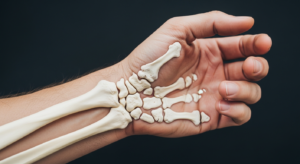


Understanding the Radiocarpal Joint Structure
The radiocarpal joint serves as the primary connection between your forearm and hand. This intricate articulation involves the radius bone meeting the proximal row of carpal bones. The radiocarpal joint type is a condyloid (ellipsoid) synovial joint, which means it permits movement in two planes. To answer the common question directly: the radiocarpal joint is classified as a condyloid type of synovial joint, distinguished by its oval-shaped convex surface fitting into an elliptical concave socket. Additionally, the joint includes the articular disc that separates the ulna from direct carpal contact. This disc acts as a cushion and stabilizer during movement.
Understanding this anatomy is crucial because it explains why your wrist moves the way it does and why certain movements cause pain while others feel natural. The radius, which is the larger of the two forearm bones on the thumb side, connects directly to the scaphoid, lunate, and triquetrum bones of your wrist. The ulna, on the pinky side, doesn’t articulate directly with the carpals—instead, it connects through the triangular fibrocartilage complex (TFCC), a shock-absorbing structure that distributes forces across the wrist.
The Six Primary Movements of the Radiocarpal Joint
Because the radiocarpal joint is a condyloid joint, it allows movement in two planes, creating six distinct motions:
- Flexion: Bending your wrist downward, bringing your palm toward your forearm
- Extension: Straightening your wrist or tilting the back of your hand upward
- Radial deviation: Moving your hand toward the thumb side
- Ulnar deviation: Moving your hand toward the pinky side
- Circumduction: A circular motion combining all four previous movements in sequence
- Pronation and supination: These rotational movements occur primarily at the radioulnar joints but involve coordinated radiocarpal movement
Most people don’t think about these movements individually, but when one becomes painful or restricted, you quickly notice. For example, if extending your wrist causes sharp pain, gripping becomes difficult. If radial deviation is limited, you can’t properly rotate your forearm to turn a doorknob or use a screwdriver comfortably.
Why the Radiocarpal Joint Is Vulnerable to Injury
The radiocarpal joint’s mobility comes with a tradeoff: it sacrifices some stability. The joint relies heavily on ligaments, tendons, and the surrounding muscles to stay stable during movement. Common issues include sprains from falls, repetitive strain injuries from typing or gripping activities, and osteoarthritis from cumulative wear.
If you’ve experienced wrist pain, you might notice it’s worse in certain positions. This is because end-range movements—extreme flexion, extension, or deviation—place the greatest stress on the radiocarpal joint capsule and supporting structures. Over time, repeated stress in these positions can lead to inflammation, micro-tears, and gradually worsening pain.
Managing Radiocarpal Joint Strain: The Wrist Compression Strap for Daily Support
If you’re dealing with radiocarpal joint irritation from repetitive motion, typing, or sports, a compression strap addresses the immediate problem: unstable movement and inflammation during activity. This isn’t a cure, but it gives your wrist the external support it needs while you’re actually using it—which matters when the pain is keeping you from doing the movements that would strengthen the joint long-term.
What works
- Reduces excessive motion in the condyloid plane without completely immobilizing—lets you move naturally while limiting the painful end-range flexion and extension that aggravates the radiocarpal joint.
- Most people notice reduced pain during activity (typing, gripping, racquet sports) within the first few uses, which is significant because it actually allows you to stay functional instead of compensating with your elbow or shoulder.
- Adjustable compression means you can dial in enough support for your specific activity without cutting off circulation—tighter for high-impact days, looser for recovery days.
What doesn’t
- A strap is a Band-Aid on the underlying instability or weakness—wear it long enough and you might actually depend on it, which is why you need strengthening work (wrist flexor/extensor exercises) happening at the same time.
- If your radiocarpal pain is coming from osteoarthritis or a structural issue (torn ligament, previous fracture), compression alone won’t address cartilage loss or chronic inflammation—you’ll likely need imaging and professional assessment first.
Compression works best when it’s part of a bigger plan: strap during aggravating activities, but also rebuild stability and strength so you’re not wearing it forever. wrist compression strap
Strengthening the Radiocarpal Joint for Long-Term Health
Beyond compression support, the real solution to radiocarpal joint problems lies in building strength and mobility. The muscles surrounding the radiocarpal joint—the flexor carpi radialis, flexor carpi ulnaris, extensor carpi radialis, and extensor carpi ulnaris—stabilize the joint during movement. When these muscles are weak, the radiocarpal joint bears too much mechanical stress.
Simple exercises like wrist curls with light weights, resistance band work, and gentle stretching can significantly improve long-term outcomes. The key is consistency and patience—you won’t see results in days, but over weeks and months, you’ll notice improved stability and reduced pain during activities that previously aggravated your wrist.
If you’re experiencing persistent radiocarpal joint pain, swelling, or loss of motion, consulting with a healthcare professional or physical therapist is advisable. They can assess whether your symptoms are from strain, arthritis, or a structural issue and recommend treatment accordingly.
About This Article

Written by Michael Torres. Michael Torres has had joint problems his whole life — hypermobile as a kid, chronic sprains and a dislocating shoulder through his twenties, an osteoarthritis diagnosis in his early fifties, and a right knee replacement since. He is not a doctor or a physical therapist and has no clinical training. He writes about what has helped him and what he has watched help the people around him, and says plainly when he has not tried something himself. More about this site.
Scope and limits. Michael has no medical or clinical training — he writes about living with his own joint pain, not about treating anyone else's. Nothing here is medical advice. Talk to a doctor before starting anything new, and get seen promptly for pain that is new, severe, worsening, or comes with swelling, fever, or numbness.
Verify this against a primary source
Specifics change, and your situation may differ from the one described here. These are the authorities worth checking directly:
- NIAMS — arthritis and musculoskeletal research from the NIH
- MedlinePlus — plain-language medical reference from the NIH
- Arthritis Foundation — condition guides and treatment overviews