

You know that feeling — you bend down to pick something up off the floor, and suddenly your lower back seizes up like it’s staging a protest. Or maybe you’ve spent a long day at your desk, only to stand up and realize your back has been quietly tightening for hours. If any of that sounds familiar, you’re in very good company. Back pain is one of the most common complaints I hear about, and understanding the common causes of back pain is honestly the first step toward doing something real about it. Let’s break it all down — what’s actually going on, why it happens, and what may actually help you feel better day to day.
The Most Common Causes of Back Pain You Should Know About
Back pain rarely comes out of nowhere, even when it feels that way. In most cases, there’s a combination of factors building up quietly over time until something finally tips the scale. Here are the main culprits I see come up again and again.
1. Muscle Strain and Ligament Sprains
This is probably the most common source of sudden back pain. Lifting something heavy with poor form, twisting awkwardly, or even just reaching the wrong way can strain the muscles and ligaments that support your spine. The resulting inflammation and spasm can range from mildly annoying to completely debilitating. The good news is that muscle strain often responds well to rest, gentle movement, and supportive tools — more on that in a moment.
2. Herniated or Bulging Discs
The discs between your vertebrae act like shock absorbers. When one herniates or bulges, it can press on nearby nerves, causing pain that may radiate down into the hips, glutes, or legs — what many people experience as sciatica. Sitting for long periods, poor posture, and repetitive bending or lifting can all contribute to disc issues over time. Research suggests that many people with herniated discs experience significant improvement without surgery, especially with consistent physical therapy and lifestyle adjustments.
3. Poor Posture and Prolonged Sitting
If you work at a desk — or spend a lot of time driving — your back is quietly paying a price. When you sit without proper lumbar support, the natural curve of your lower spine flattens out, putting excess stress on the vertebrae, discs, and surrounding muscles. Over months and years, this can lead to chronic aching, stiffness, and even structural changes. This one is particularly sneaky because the damage accumulates so gradually.
4. Degenerative Disc Disease and Osteoarthritis
As we age, the discs in our spine naturally lose some hydration and flexibility. The joints in the spine (called facet joints) can also develop osteoarthritis over time. Neither of these conditions is a death sentence for your back health — many people manage them successfully — but they do mean your spine needs more intentional care, including movement, support, and sometimes supplementation.
5. Scoliosis and Structural Imbalances
Some people have a lateral curve in their spine — scoliosis — that may not cause obvious symptoms until adulthood. Structural imbalances like this can put uneven stress on spinal muscles and joints, leading to chronic pain and fatigue, especially after long periods of standing or sitting. Targeted core strengthening and the right support gear can make a meaningful difference for many people in this situation.
How to Protect Your Back Joints Every Day
Understanding what causes back pain is empowering, but what you actually do about it matters most. Here are practical strategies that many people find genuinely helpful — things you can start incorporating today.
- Move more, not less. It might feel counterintuitive when you’re hurting, but gentle movement — walking, stretching, swimming — helps maintain circulation to spinal tissues and prevents stiffening. Research suggests that staying active (within a comfortable range) often leads to faster recovery than bed rest.
- Strengthen your core. Your abdominal and back muscles are your spine’s natural support system. A consistent routine of low-impact core exercises — like bridges, bird dogs, and modified planks — may significantly reduce pain over time.
- Watch your lifting mechanics. Bend at the knees, keep the object close to your body, and avoid twisting while carrying weight. It sounds simple, but this habit alone protects a lot of people from acute injury.
- Improve your workstation setup. Your monitor should be at eye level, your feet flat on the floor, and your lower back should feel supported — not hanging in space.
- Use supportive tools strategically. A back brace during physically demanding activities, or a quality seat cushion for long sitting sessions, can take real pressure off your spine during the times it needs it most.
Products Worth Trying for Back Pain Relief and Support
I want to be upfront: none of these products are cures, and they work best as part of a broader approach that includes movement, posture habits, and ideally some guidance from a healthcare provider. That said, many people find that the right supportive gear makes a real, tangible difference in their daily comfort — especially during flare-ups or long workdays. Here are a few options I think are genuinely worth considering.
The Back Brace That Actually Stabilizes Without Feeling Like a Straitjacket
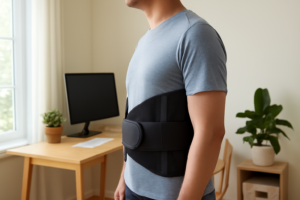
If your back pain is coming from instability, poor posture during the day, or that post-injury phase where you need external support while you rebuild core strength, a quality back brace can genuinely reduce pain and prevent compensation patterns that make things worse. The key is finding one that actually stays in place and supports without turning into a sweat trap you tear off after two hours.
What works
- The compression and lumbar support reduce excessive movement in the lower spine during daily activities—research shows this can decrease pain intensity, especially during repetitive motions or prolonged sitting.
- Unlike flimsy alternatives, this one has reinforced stays that don’t collapse after a few weeks of use, and the straps adjust enough to actually fit different body types without pinching or riding up.
- Most people notice reduced end-of-day back soreness within the first week if they’re wearing it consistently—not because it “heals” anything, but because it’s removing strain from irritated tissues while they recover.
What doesn’t
- A brace is not a substitute for addressing the root cause—if your pain is coming from a herniated disc, severe stenosis, or untreated postural dysfunction, you still need physical therapy or professional evaluation, not just external support.
- Prolonged reliance (more than 3–4 months continuous wear) can actually weaken your core muscles because they’re not working as hard, so this is a tool for the acute or recovery phase, not a permanent solution.
A brace buys you time and comfort while your body heals, but it won’t work if you’re still sitting slouched at a desk all day or lifting with your back instead of your legs. Check out the FEATOL Back Brace Support Belt if you’re in that acute-pain or post-injury window and need something that actually stays put.
About This Article

Written by Michael Torres. Michael Torres has had joint problems his whole life — hypermobile as a kid, chronic sprains and a dislocating shoulder through his twenties, an osteoarthritis diagnosis in his early fifties, and a right knee replacement since. He is not a doctor or a physical therapist and has no clinical training. He writes about what has helped him and what he has watched help the people around him, and says plainly when he has not tried something himself. More about this site.
Scope and limits. Michael has no medical or clinical training — he writes about living with his own joint pain, not about treating anyone else's. Nothing here is medical advice. Talk to a doctor before starting anything new, and get seen promptly for pain that is new, severe, worsening, or comes with swelling, fever, or numbness.
Verify this against a primary source
Specifics change, and your situation may differ from the one described here. These are the authorities worth checking directly:
- NIAMS — arthritis and musculoskeletal research from the NIH
- MedlinePlus — plain-language medical reference from the NIH
- Arthritis Foundation — condition guides and treatment overviews