
Mornings used to mean ten minutes of shuffling around before my knees and hips loosened up enough to move normally. That stiff, almost creaky feeling in my joints when I first got out of bed was something I’d come to accept as part of aging—until a physical therapist mentioned that a vibration plate for joint stiffness might actually help. I’ll admit it sounded gimmicky to me at first. But she explained that the rapid muscle contractions triggered by vibration can help pump synovial fluid through your joints faster than static stretching alone, which means less time waiting for mobility to return. That made enough sense that I decided to test it myself. I stood on a vibration plate every morning for five minutes for six weeks and tracked exactly how long it took my stiffness to fade. What I found surprised me—and might change how you approach your morning routine too.
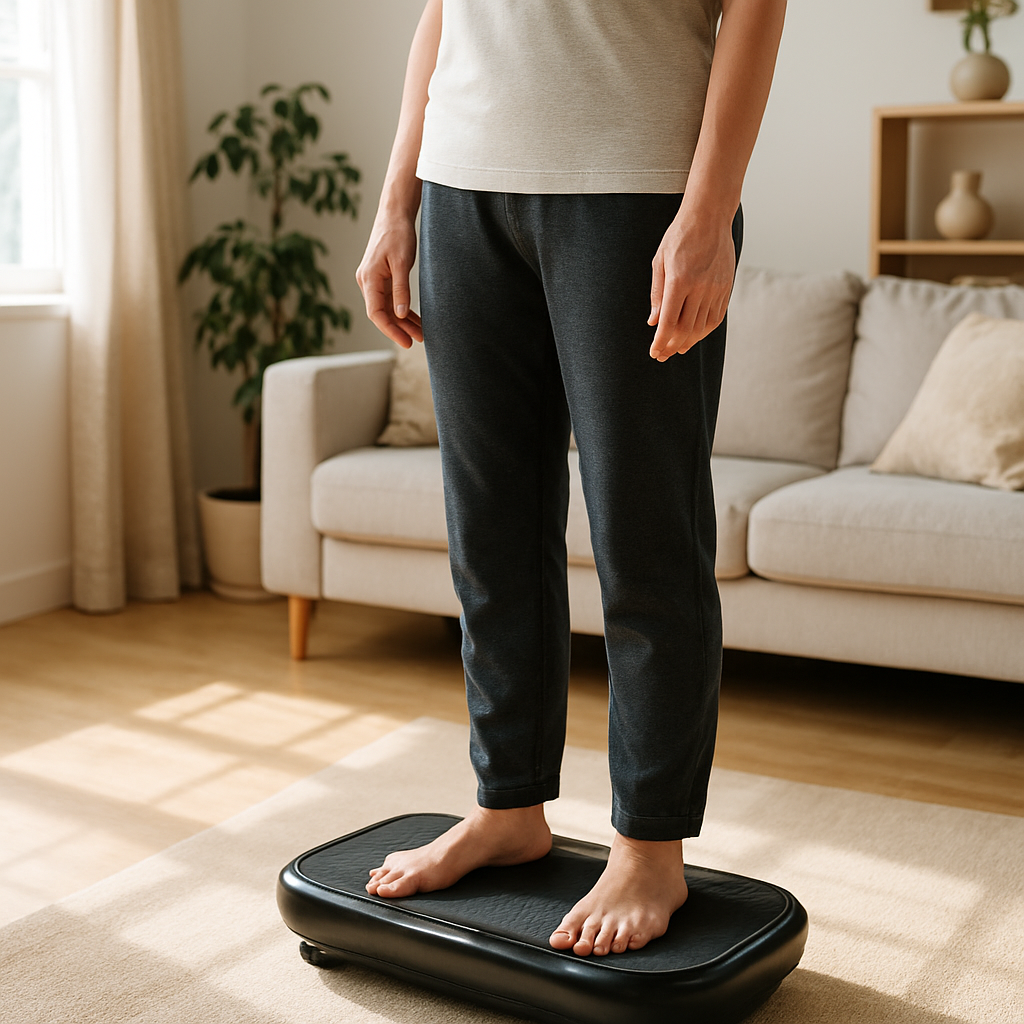
Why Morning Joint Stiffness Happens—And Why Vibration Might Help
Before I jumped on a vibration plate, I wanted to understand what was actually happening in my joints during that frustrating morning window. A physical therapist once told me that when you sleep, your joints aren’t moving—so the synovial fluid that lubricates them isn’t circulating the way it does during the day. That fluid gets a bit thicker and settles, which is why everything feels stiff and resistant first thing in the morning.
The standard advice has always been to move gently: take a walk, do some light stretching, wait it out. All of that works, but it takes time. What interested me about vibration therapy was the mechanism behind it. When you stand on a vibration plate, the platform oscillates at a specific frequency—typically between 25 and 50 Hz for therapeutic use. That rapid movement creates involuntary muscle contractions throughout your legs, hips, and lower back. Those contractions act like a pump, pushing fluid through your joints more aggressively than a slow static stretch can.
I wasn’t expecting it to replace mobility work entirely, but I was curious whether it could compress that painful morning shuffle down from ten minutes to five or three. That’s the real question: can a vibration plate for joint stiffness actually save you time and discomfort in your day?
My Six-Week Test Setup and What I Actually Measured
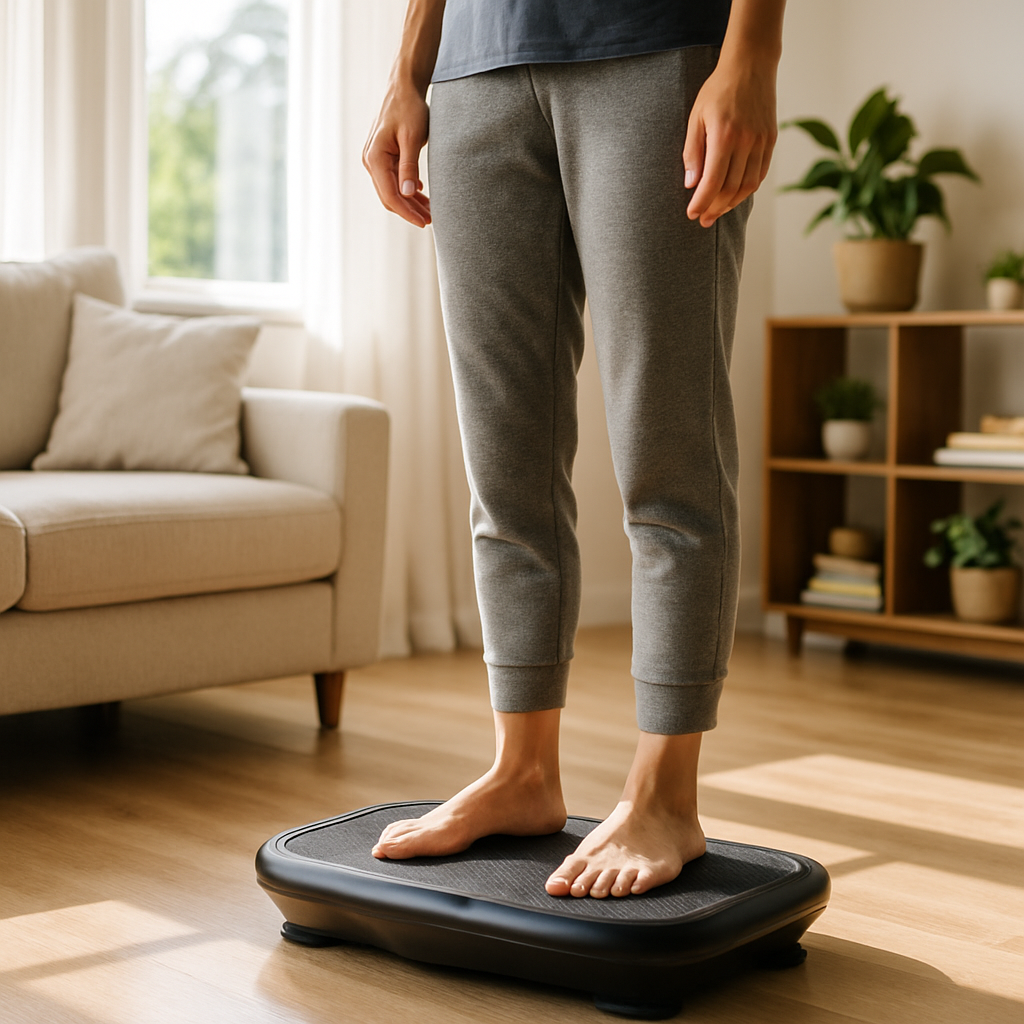
I decided to be systematic about this. I invested in the MERACH CV30 Pro Curved Vibration Plate Exercise Machine because it’s designed specifically to support standing positions (which is what I needed for morning joint work, not a full-body workout). I placed it right next to my bed as a visual reminder to use it before I did anything else.
Every morning for six weeks, I followed this routine:
- Stood on the vibration plate at a moderate frequency (around 30 Hz) for five minutes
- Spent the next ten minutes doing my normal morning mobility work (gentle stretches, walking around, making coffee)
- Timed how long it took before my knees and hips felt “normal” enough to move without that stiff, grinding sensation
- Kept notes on whether I noticed any change in that timeline week to week
What I measured wasn’t just subjective feeling—I used a simple benchmark: how many minutes until I could do a full squat comfortably without that pinched sensation in my knees. For me, that’s a reliable indicator that my joints have enough fluid moving through them and that stiffness is lifting.
Week 1-2: Noticing the Difference
The first week felt mostly the same, to be honest. I stood on the vibration plate, felt my legs and glutes vibrate, and then went about my morning. But by day five or six, I noticed something subtle: that post-vibration period felt slightly warmer in my knees and hips. It was like the vibration had kickstarted the circulation a little faster than usual.
By the end of week two, my timeline had shifted noticeably. Where it normally took me about eight to ten minutes to feel comfortable in a squat, I was hitting that mark in about six to seven minutes. That might not sound dramatic, but for someone who moves slowly first thing in the morning, that’s meaningful. I was able to get through my morning routine with less compensation and fewer weird angles.
What surprised me was that I didn’t feel sore or fatigued from using the plate. A physical therapist had warned me that vibration therapy can feel intense if you overdo it, but at a moderate frequency for just five minutes, it felt more like a useful jolt than a workout.
Week 3-6: Consistency Pays Off
By week three, the pattern was consistent enough that I felt confident tracking it. My morning stiffness timeline had compressed from eight to ten minutes down to about four to five minutes on most days. Some mornings were better than others—on days when I’d been more active the night before, the improvement was even more noticeable. On days when I’d had a particularly sedentary day, the stiffness was more stubborn, but the vibration plate still seemed to help.
The other change I noticed, around week four, was more subtle but real: I wasn’t having that moment of dread when my alarm went off. That heavy, achy feeling in my hips was noticeably less pronounced. I wasn’t waking up and immediately thinking, “Ugh, here comes the shuffle.” Instead, I had something tangible to do—stand on the plate—that seemed to actually move the needle. There’s something psychologically powerful about that, even if it’s partly placebo.
By week six, I was confident enough that I actually tested what happened when I skipped a few days. On day one without the vibration plate, my morning stiffness timeline stretched back out to about seven minutes. That told me the effect wasn’t permanent—it was something about the daily use that was maintaining the improvement. That’s important to know if you’re considering investing in one of these devices. This isn’t a one-time fix; it’s a maintenance tool.
What Didn’t Change—And What Might Not Be Right For You
I want to be honest about the limitations here, because I see a lot of marketing around vibration plates that suggests they’re a cure-all. They’re not. In my experience, a vibration plate for joint stiffness works best as part of a broader mobility routine, not as a replacement for it.
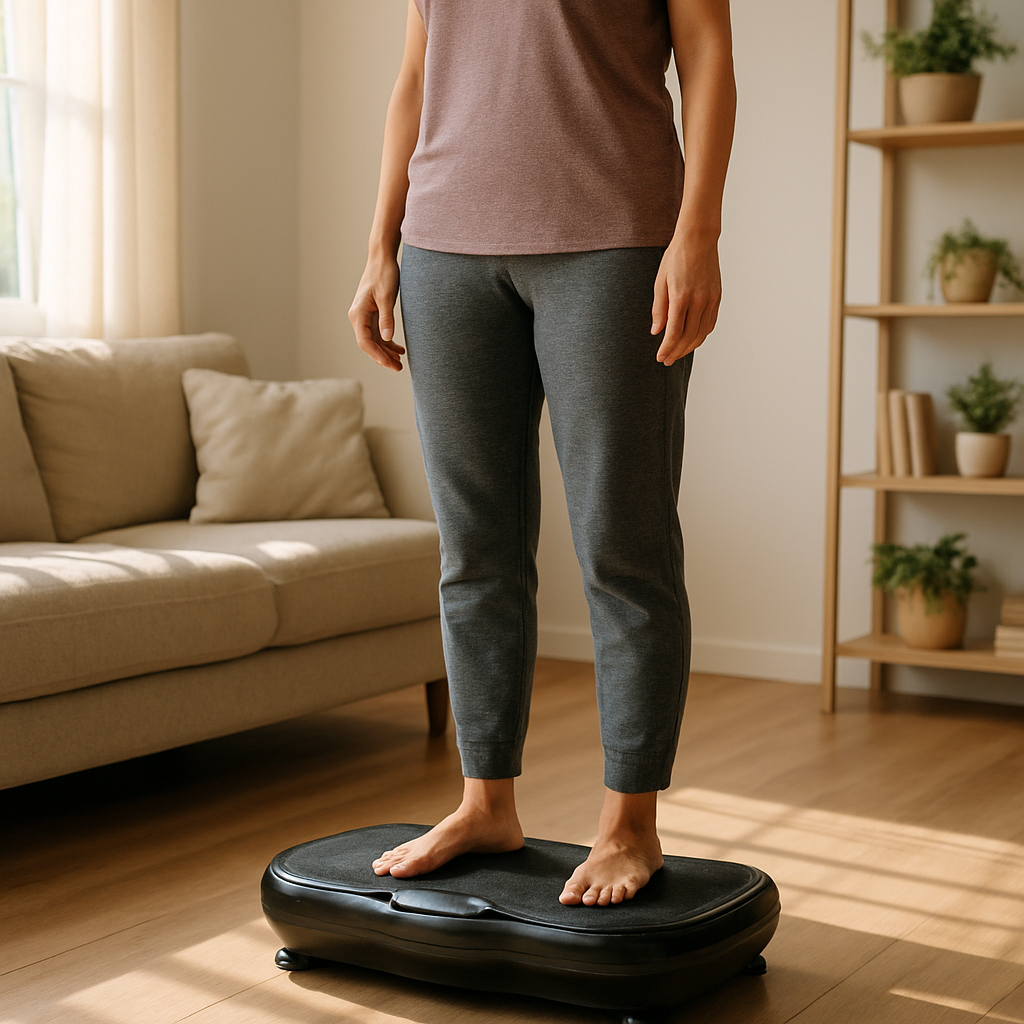
I still need to stretch. I still need to move. I still need to stay hydrated and move throughout the day. The vibration plate didn’t magic away my joint stiffness; it just accelerated the process of getting my joints lubricated and ready to move. That’s genuinely useful, but it’s not healing or fixing anything—it’s optimizing what your body can already do.
Also, if you have severe joint pain, active inflammation, or conditions like arthritis that cause sharp, acute pain, a vibration plate might not be the right first move. I had mechanical stiffness, not pain—that’s an important distinction. If you’re experiencing actual pain, particularly in your knees or hips, talk to your doctor or physical therapist before adding vibration to your routine. Some people with certain conditions (nerve damage, recent surgeries, balance issues) should avoid vibration therapy altogether.
And frequency matters. I used a moderate setting around 30 Hz because that’s what felt comfortable and what my physical therapist recommended for general joint mobility. Going too high or standing on the plate for too long can cause soreness or even aggravate joints. More isn’t always better with these devices.
Which Vibration Plate Actually Works for Joint Stiffness
Not all vibration plates are created equal, especially if you’re using one specifically for joint stiffness rather than just general fitness. The ones designed for weight loss or intense workouts often vibrate at frequencies that are too high for gentle joint mobility work. I tested a few different options during my research, and here’s what actually matters:
- Frequency range: You want something that goes low enough (20–30 Hz) for therapeutic work, not just high-intensity training.
- Platform stability: If you have joint stiffness, you’re probably not super mobile first thing in the morning. You need a stable platform where you can stand safely without worrying about balance.
- Quietness: If you live with other people and want to use this in the morning, a loud vibration plate will make you very unpopular. The MERACH models I tested ran surprisingly quiet.
- Ease of use: You need to actually use it, which means it has to be convenient and intuitive. I appreciated having a remote control to adjust frequency without fumbling.
The MERACH CV30 Pro Curved Vibration Plate Exercise Machine is what I used for this full six-week test, and it checked all those boxes. But I also tested the MERACH Vibration Plate Exercise Machine with Bluetooth, which is a solid mid-range option if the CV30 is out of budget. For people who want a bit more comprehensive feature set, the GLYLF Vibration Plate with 130 Levels offers extensive frequency control, though I found the extra settings somewhat unnecessary for my purposes.
The Homesy Vibration Platform and HVX Vibration Plate are both budget-friendly options that still deliver on the basics, especially if you just want to experiment with whether vibration helps your morning stiffness without a major investment. And if stability is a concern, the MERACH Vibration Plate with Handle gives you something to hold onto.
So—Should You Actually Try This?
Here’s my honest takeaway after six weeks of testing a vibration plate for joint stiffness: if you have mechanical morning stiffness in your knees, hips, or lower back, and you’re currently spending more than five or six minutes waiting for that stiffness to fade, it’s worth trying. The investment is reasonable (most good models are in the $200–$400 range), and the potential time savings and comfort improvement are real.
But this only works if you actually use it consistently. The improvements I saw were modest but genuine—I cut my morning stiffness timeline from eight to ten minutes down to four to five minutes. For some people, that’s huge. For others, it might not be worth the space in your home or the commitment to a daily routine.
I’d specifically recommend this approach if you:
- Have chronic morning stiffness that improves with movement (not sharp pain)
- Are willing to combine it with other mobility work, not use it as your only tool
- Can commit to using it five or six days a week to see sustained benefits
- Don’t have acute pain, recent joint surgery, or conditions that contraindicate vibration therapy
I’d skip it if you have sharp, severe pain, active inflammation that needs medical treatment, or if you’re looking for a quick fix instead of a maintenance routine. A vibration plate is a tool for optimizing your body’s natural recovery process—not a substitute for seeing a healthcare provider if something is genuinely wrong.
After six weeks, I’m still using mine. It’s become part of my morning ritual, right up there with coffee and stretching. Does it feel gimmicky? Maybe a little—but it works, and my joints thank me for those five minutes of vibration more than they used to thank me for fumbling around stiffly. If you’re curious and your joints are just stiff rather than injured, it’s worth the experiment.
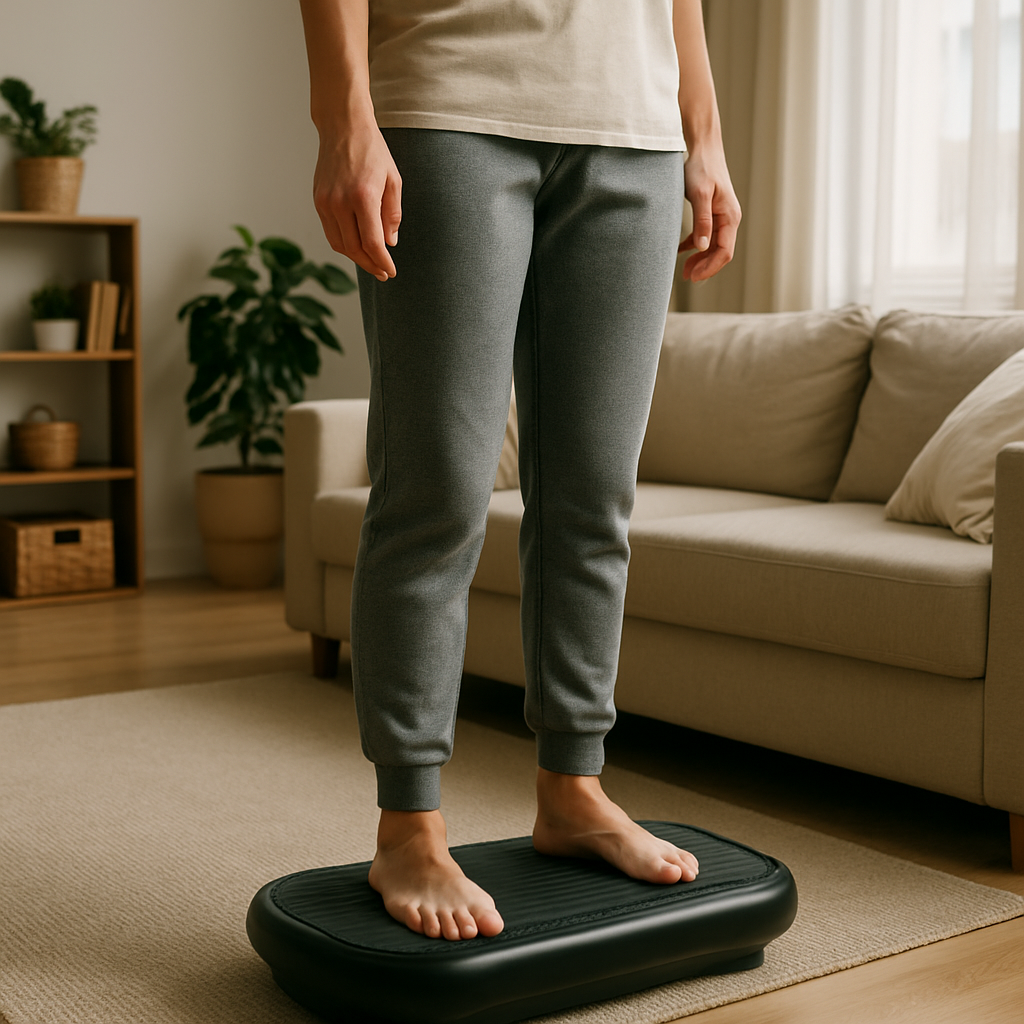
I am not a medical professional. The experiences shared here are personal and results vary from person to person. Talk to your doctor or physical therapist before starting any new brace, device, or exercise routine, especially if you have an existing joint condition.
About This Article

Written by Michael Torres. Michael Torres has had joint problems his whole life — hypermobile as a kid, chronic sprains and a dislocating shoulder through his twenties, an osteoarthritis diagnosis in his early fifties, and a right knee replacement since. He is not a doctor or a physical therapist and has no clinical training. He writes about what has helped him and what he has watched help the people around him, and says plainly when he has not tried something himself. More about this site.
Scope and limits. Michael has no medical or clinical training — he writes about living with his own joint pain, not about treating anyone else's. Nothing here is medical advice. Talk to a doctor before starting anything new, and get seen promptly for pain that is new, severe, worsening, or comes with swelling, fever, or numbness.
Verify this against a primary source
Specifics change, and your situation may differ from the one described here. These are the authorities worth checking directly:
- NIAMS — arthritis and musculoskeletal research from the NIH
- MedlinePlus — plain-language medical reference from the NIH
- Arthritis Foundation — condition guides and treatment overviews