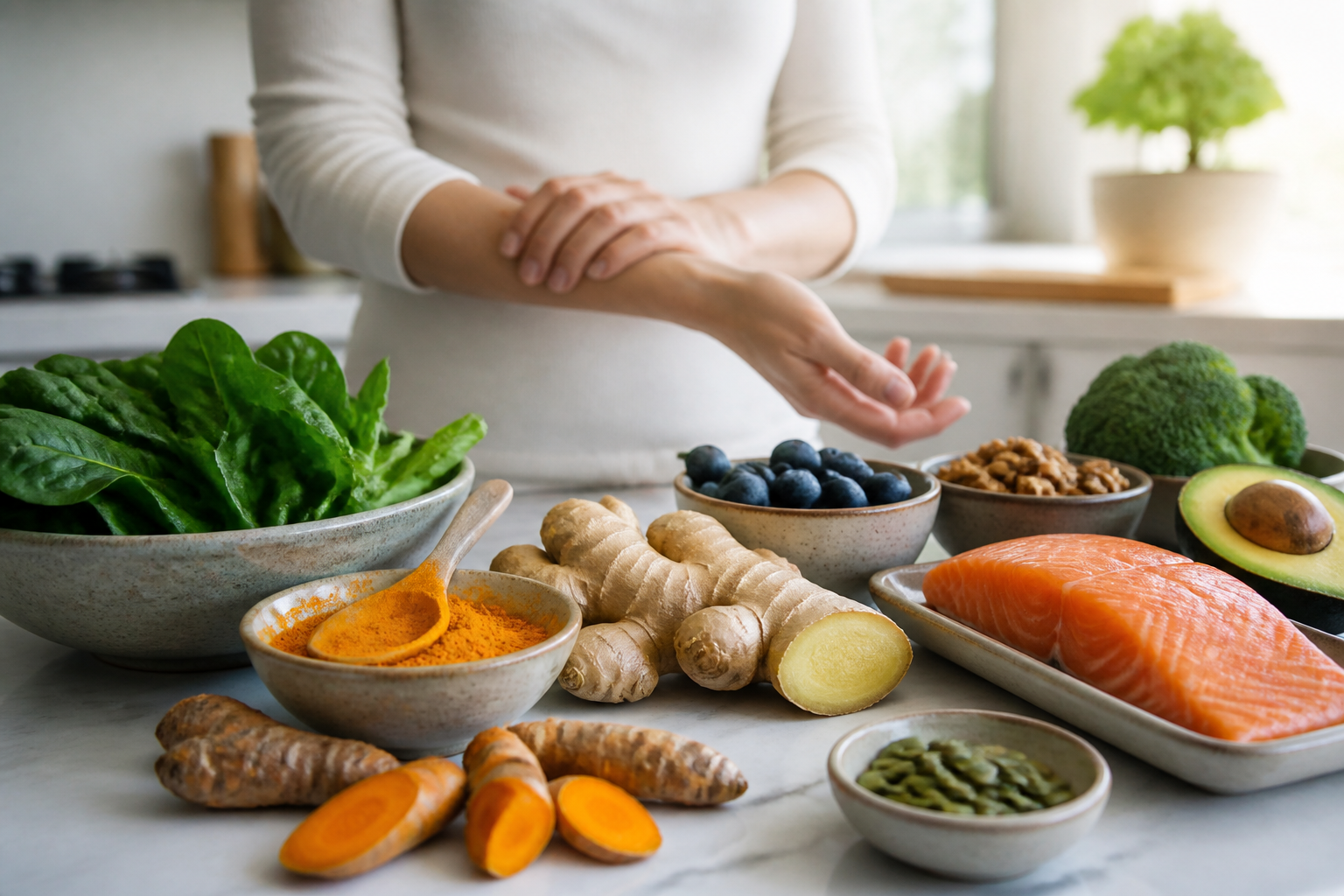

You wake up with stiff, achy joints. Your knees feel swollen. Your hands are tender. You’ve seen a rheumatologist, tried ice and heat, maybe even adjusted your workout routine—but nothing seems to stick. Then one day, after eating pizza or a big pasta dinner, your joints flare up noticeably worse. You start to wonder: could what I’m eating actually be making my joint pain worse?
If this sounds familiar, you’re not alone. The food allergies and joint pain connection is real, and it’s something I’ve helped countless clients explore over the years. The relationship between dietary triggers and joint inflammation is deeper than most people realize—and understanding it might be the missing puzzle piece in your joint health journey.
Understanding the Food Allergies and Joint Pain Connection
Here’s what happens inside your body when you consume a food you’re allergic or sensitive to: your immune system recognizes a protein in that food as a threat and mounts a defense response. This triggers the release of inflammatory compounds—like cytokines and prostaglandins—into your bloodstream. These chemical messengers spread throughout your body, and when they reach your joints, they can inflame the synovial membrane (the tissue that lines your joints), increase fluid production, and activate pain receptors.
The key thing to understand is that this immune response is systemic—meaning it affects your whole body, not just your digestive tract. So even if you don’t have obvious GI symptoms, a food sensitivity could absolutely be contributing to your joint pain.
True Food Allergies vs. Food Intolerances
Before we go further, let me clarify something important: there’s a difference between a true food allergy and a food intolerance, and both can affect your joints differently.
True food allergies involve IgE antibodies—your immune system’s rapid-response team. These cause immediate reactions: hives, swelling, breathing difficulty. They’re serious and medically documented.
Food intolerances and sensitivities are trickier. They involve delayed immune responses (IgG antibodies) and may take hours or even days to show up as joint pain or stiffness. You might not connect the dots between what you ate and how you feel. These aren’t “allergies” in the medical sense, but they absolutely can trigger inflammatory responses that settle in your joints.
For joint health specifically, food intolerances are often the hidden culprit.
Common Culprits: What Foods Inflame Joint Capsules?
Not everyone reacts to the same foods, but certain dietary triggers show up repeatedly in people dealing with joint pain with food allergies. Based on clinical observation and research, here are the most common suspects:
- Gluten – Especially problematic for people with celiac disease or gluten sensitivity. Gluten can trigger cross-reactivity, where your immune system attacks joint tissue because it looks similar to gluten protein.
- Dairy – Casein and lactose can provoke inflammatory responses. Many people find their joints feel better when they eliminate milk, cheese, and yogurt.
- Nightshades (tomatoes, peppers, eggplant, potatoes) – These contain alkaloids that some people’s bodies perceive as inflammatory. The evidence is mixed, but many arthritis sufferers report real improvements when avoiding them.
- Sugar and refined carbohydrates – These are inflammatory all on their own, independent of true allergies. We’ll dive deeper into this below.
- Omega-6 vegetable oils (corn, soy, sunflower) – While not allergenic, these oils promote inflammatory pathways in your body.
The truth is, multiple food allergies and joint pain often go hand-in-hand—people who are sensitive to one food frequently react to others. This is why an elimination diet, done carefully, can be so revealing.
Does Sugar Affect Your Joints?
I get asked this question all the time, and the answer is yes—absolutely. But it’s important to understand why, because sugar doesn’t require an allergic or immune response to harm your joints.
Sugar feeds inflammatory pathways directly. When you consume high amounts of refined sugar or high-fructose corn syrup, your body produces advanced glycation end products (AGEs). These molecules bind to proteins in your joints, triggering oxidative stress and inflammation. Additionally, sugar promotes the growth of inflammatory bacteria in your gut microbiome, which can amplify systemic inflammation.
Does sugar affect your joints? Yes, even if you don’t have a sugar allergy. Reducing sugar intake is one of the single most impactful dietary changes you can make for joint health—often producing results within 2-3 weeks.
The Elimination Diet Approach: Finding Your Personal Triggers
The best way to discover whether your joint pain is connected to food sensitivities is through a structured elimination diet. Here’s how I recommend approaching it:
- Choose an elimination period: Typically 4-6 weeks. You’ll remove the most common inflammatory foods: gluten, dairy, nightshades, sugar, and processed oils.
- Keep a symptom journal: Record your joint pain (on a 1-10 scale), stiffness, swelling, and energy levels daily.
- Reintroduce one food at a time: After the elimination phase, add back one suspect food every 3-5 days and watch for reactions.
- Note your responses: If your pain flares within 24-72 hours of reintroducing a food, you’ve likely found a trigger.
This process takes patience, but it gives you personalized data. What triggers inflammation in your neighbor might be perfectly fine for you.
Natural Support: Curcumin and Anti-Inflammatory Compounds
While you’re working through dietary triggers, there’s strong research supporting certain supplements for joint inflammation. Curcumin, the active compound in turmeric, is one of the most well-studied.
Research suggests curcumin may help reduce joint inflammation through multiple mechanisms—it inhibits inflammatory cytokines and supports the body’s natural antioxidant defenses. But here’s what I hear most often: “What quantity curcumin for joint care should I take?”
Curcumin Dosage for Joint Support
The research suggests effective doses range from 500-1,000 mg of curcumin daily, split into multiple doses. However—and this is crucial—curcumin has poor bioavailability on its own. Your body struggles to absorb it. That’s why the best curcumin supplements include black pepper extract (piperine), which can increase absorption by up to 2,000%.
Many people also benefit from combining curcumin with quercetin and bromelain (an enzyme from pineapple). These compounds work synergistically—they target inflammation from different angles and enhance each other’s effectiveness.
The Quercetin + Bromelain + Turmeric Stack for Food-Triggered Joint Flares
If your joints flare predictably after certain foods, this combination targets the cascade of inflammatory compounds that food sensitivities actually trigger—quercetin blocks histamine release, bromelain breaks down inflammatory proteins, and curcumin hits multiple inflammatory pathways at once. It’s the closest thing to a “matched set” for diet-related joint inflammation I’ve found.
What works
- Quercetin has real research backing its ability to stabilize mast cells and reduce histamine-driven inflammation—particularly relevant if your flares follow specific trigger foods rather than general joint wear.
- Most people report noticeably less joint swelling and morning stiffness within 2–3 weeks of consistent use, especially when combined with eliminating their identified trigger foods (not as a substitute for that elimination).
- The three-ingredient formulation (quercetin, bromelain from pineapple enzyme, turmeric curcuminoids) hits different inflammatory mechanisms, so you’re not relying on one compound to do all the work—bromelain in particular helps with post-meal inflammation timing.
What doesn’t
- This won’t work if you keep eating your trigger foods—I’ve seen people take this daily while continuing to eat the same inflammatory diet and then blame the supplement when nothing changes. You have to actually identify and eliminate (or reduce) the culprits.
- If your joint pain is structural (cartilage loss, bone-on-bone wear) rather than inflammation-driven, this will have minimal impact; food sensitivities are an overlay, not the root cause in every case.
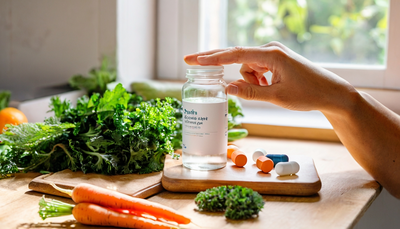
Supplements work best as part of a larger strategy, not as permission to ignore what’s actually triggering your flares—you’ll need to keep a food and symptom log to make real progress. If you’re serious about finding your trigger foods and supporting your joints while you do, Quercetin w/ Bromelain Turmeric Curcumin Supplement – is worth trying for at least 4 weeks.
About This Article

Written by Michael Torres. Michael Torres has had joint problems his whole life — hypermobile as a kid, chronic sprains and a dislocating shoulder through his twenties, an osteoarthritis diagnosis in his early fifties, and a right knee replacement since. He is not a doctor or a physical therapist and has no clinical training. He writes about what has helped him and what he has watched help the people around him, and says plainly when he has not tried something himself. More about this site.
Scope and limits. Michael has no medical or clinical training — he writes about living with his own joint pain, not about treating anyone else's. Nothing here is medical advice. Talk to a doctor before starting anything new, and get seen promptly for pain that is new, severe, worsening, or comes with swelling, fever, or numbness.
Verify this against a primary source
Specifics change, and your situation may differ from the one described here. These are the authorities worth checking directly:
- NIAMS — arthritis and musculoskeletal research from the NIH
- MedlinePlus — plain-language medical reference from the NIH
- Arthritis Foundation — condition guides and treatment overviews