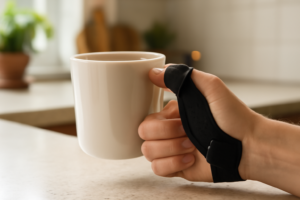
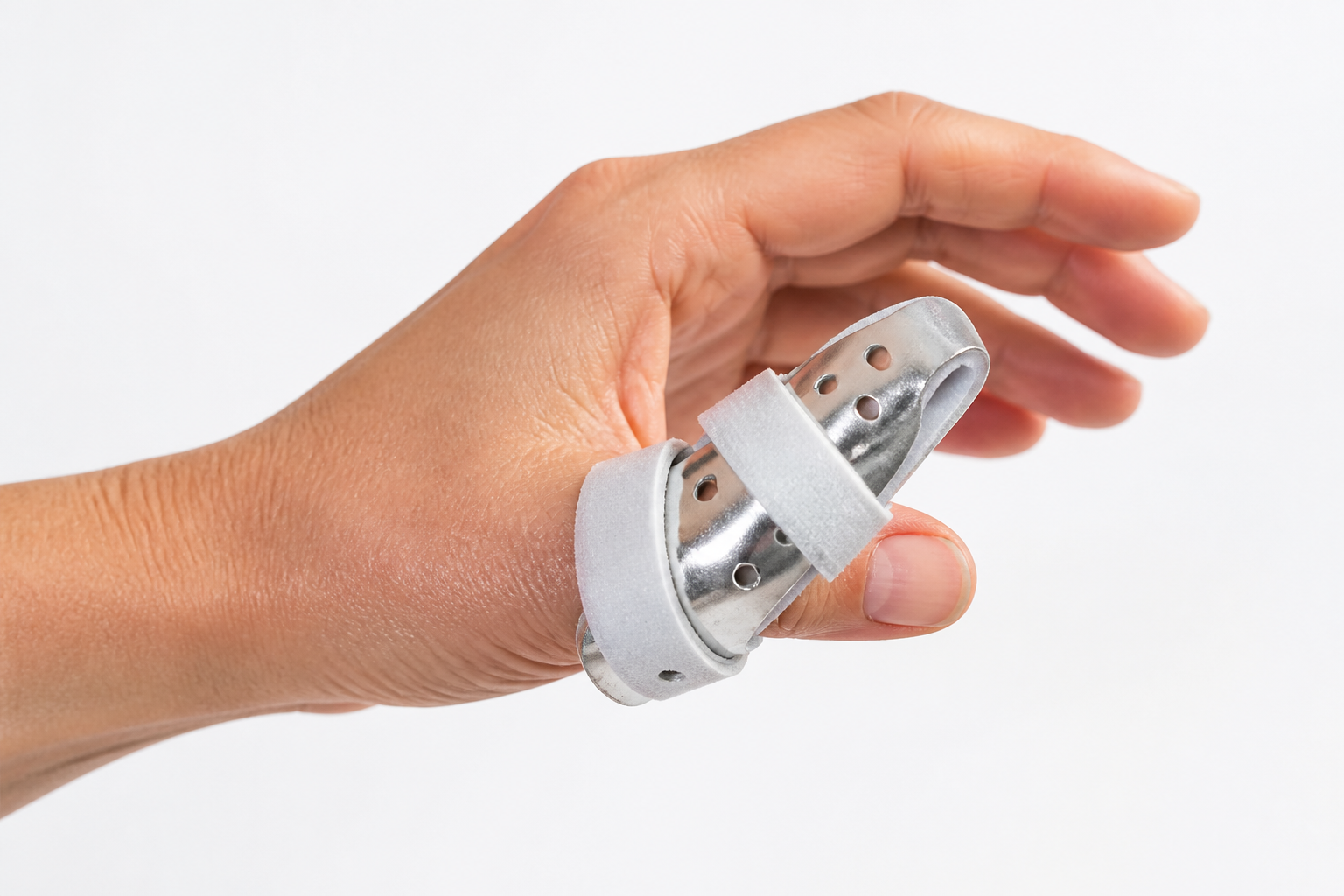

If you’ve ever felt your thumb suddenly catch or lock in place—that unsettling moment where you have to gently straighten it back out—you’re not alone. Trigger thumb is one of those hand problems that seems small until it starts affecting your daily life. Reaching for your coffee mug, texting, or even sleeping becomes uncomfortable. The good news? A well-fitted splint for trigger thumb can be a real game-changer, especially in the early stages. I’m going to walk you through what trigger thumb actually is, how splinting helps, and what you can realistically expect from this conservative treatment approach.
What Is Trigger Thumb, and Why Does It Happen?
Let me start by demystifying the condition. Trigger thumb—medically called stenosing tenosynovitis—occurs when the tendon that straightens your thumb becomes inflamed or thickened. Your thumb tendons run through a sheath (think of it like a tunnel), and when the tendon swells, it catches on the pulley at the base of your thumb. This is why you feel that characteristic locking or catching sensation.
The symptoms are pretty distinctive. You might notice:
- Pain and tenderness at the base of your thumb
- Your thumb locking in a bent position, then suddenly popping straight
- Stiffness, especially in the morning
- Swelling or a small bump at the base of your thumb
- Difficulty gripping or pinching
Trigger thumb can develop from repetitive gripping, overuse, rheumatoid arthritis, or sometimes without an obvious cause. It’s more common than you’d think, and the earlier you address it, the better your chances of finding relief without invasive treatment.
How a Thumb Brace for Trigger Finger Actually Works
Here’s where the splint comes in. When you wear a thumb brace for trigger finger, you’re doing something beautifully simple but powerful: you’re resting the inflamed tendon. By keeping your thumb in a neutral or slightly extended position (especially at night), you reduce the repeated catching that’s perpetuating the inflammation.
Think of it this way: if your tendon is irritated and swollen, every time it catches and pops, you’re re-injuring it. A splint breaks that cycle. Research suggests that many people find significant relief with consistent splinting, particularly when worn during sleep and high-activity periods. The inflamed tissue has a chance to calm down without constant irritation.
I always tell people: a splint isn’t about immobilizing your thumb completely (unless your doctor recommends it). It’s about positioning and support. The best splints allow some gentle movement while preventing the problematic catching motion.
Types of Splints for Trigger Thumb: Finding What Works for You
Not all splints are created equal, and what works for your friend might not be ideal for you. Let me break down the main options:
Ring Splints (Oval-8 Style)
These are my go-to recommendation for mild cases. Ring splints fit right around your thumb joint and are minimal, discreet, and comfortable for daily wear. They provide just enough support to prevent locking without being cumbersome. Many people can wear these at work or during activities.
Full Thumb Spica Splints
These wrap around your thumb and extend partway up your hand, offering more comprehensive support. They’re excellent for moderate cases or when you need maximum stability. The tradeoff is they’re bulkier and better suited for nighttime or rest periods.
Soft vs. Rigid Materials
Soft neoprene splints offer comfort and gentle compression but less rigid support. Splints with aluminum stays or plastic shells provide firmer immobilization. For trigger thumb, I typically recommend a splint that’s moderately rigid—firm enough to prevent the catching motion but not so stiff that it causes irritation.
How to Wear Your Splint Correctly
Going deeper: How Long to Wear a Thumb Splint for Trigger Finger — the full wear-schedule breakdown
Here’s where many people make mistakes. Just owning a splint doesn’t guarantee relief—how you wear it matters enormously.
- Wear it consistently, especially at night. Nighttime splinting is crucial because you can’t control your movements while sleeping. Morning stiffness and locking often improve dramatically with overnight support.
- Position your thumb neutrally or slightly extended. Your thumb should feel supported but not painfully stretched. If it hurts to wear the splint, adjust the position or try a different style.
- Keep it on for at least 3–6 weeks. You won’t see results after a few days. The inflammation needs time to resolve. Many people begin noticing improvement around week 2–3, with significant relief by week 6.
- Combine splinting with activity modification. Avoid repetitive gripping and pinching while your tendon heals. Take breaks during activities that aggravate symptoms.
- Check that it’s not too tight. A splint that cuts off circulation or causes numbness isn’t helping you. You should be able to fit a finger under the strap.
When to Use a Splint vs. When to See a Doctor
I’m an advocate for conservative treatment—splinting really does work for many people. However, let’s be honest about the limits. A splint is your first line of defense for mild-to-moderate trigger thumb. If you’ve had symptoms for less than 6 months and the pain is manageable, splinting combined with rest and anti-inflammatory strategies is absolutely worth trying.
But see your doctor if:
- Pain is severe and limiting your function despite splinting
- Your thumb remains locked in the bent position (can’t straighten it)
- Symptoms worsen after 2–3 months of consistent splinting
- You have signs of infection (redness, warmth, pus)
- You have underlying conditions like diabetes or rheumatoid arthritis affecting healing
Your doctor might recommend corticosteroid injections or, in persistent cases, surgical release of the tendon sheath. These are effective options, but they’re typically reserved for cases where conservative care hasn’t worked.
Realistic Expectations and Timeline for Recovery
I always manage expectations because I’ve seen people get discouraged when improvement doesn’t happen overnight. Here’s what research and clinical experience show:
Weeks 1–2: You might not feel much different yet, but you’re beginning to reduce the inflammatory cycle. Stick with it.
Weeks 3–4: This is often when people notice the catching happens less frequently. Mornings might feel less stiff.
Weeks 5–8: Most people notice significant relief by this point.
If splinting hasn’t clearly helped after two to three months of genuinely consistent wear, that’s your cue to loop in a hand specialist rather than pushing through another month — evidence suggests escalating (usually to a corticosteroid injection) works better than prolonged unsuccessful splinting.
Trigger Thumb Splint FAQ
What type of splint should you use for trigger thumb?
The two main options are a thumb spica splint — which wraps the thumb and part of the hand or wrist, immobilizing the thumb’s base joints — and a smaller blocking splint that restricts just the MP (knuckle) or IP (tip) joint of the thumb while leaving more of your hand free. Evidence doesn’t crown a single winner, so the practical rule is: a spica for maximum rest (nights, moderate-to-severe catching) and a low-profile blocking or ring splint for daytime wear you’ll actually tolerate. Whichever you choose, it must be a thumb-specific design — a standard finger splint won’t immobilize the right joints. If a hand therapist can fit you, they’ll test which joint to block before choosing; follow their guidance.
How should you splint a trigger thumb?
Position the thumb neutral or very slightly extended — supported, never painfully stretched. The splint should stop the catching motion at the affected joint while your fingers stay completely free. Snug but not tight: you should be able to slip a finger under the strap, and any numbness or tingling means it’s too tight. Wear it every night as your foundation, add it during gripping-heavy daytime activities, and take it off a few times a day for gentle motion so the joint doesn’t stiffen.
How long do you need to keep a thumb splint on for trigger thumb?
Plan on a total course of about six to twelve weeks, with nightly wear (roughly your six to eight hours of sleep) as the non-negotiable core. Improvement often shows up by weeks three to four, with more solid relief in the six-to-eight-week range — the timeline in the section above walks through it week by week. When symptoms have clearly settled, wean gradually: drop daytime wear first, keep night wear a while longer, and resume the full schedule if catching returns. Your hand therapist’s protocol overrides any general timeline.
How long should you wear a thumb brace after a steroid shot for trigger thumb?
Protocols genuinely vary here, so your injecting doctor’s instructions win. Some providers skip post-injection splinting entirely; others recommend anywhere from one to three weeks of relative rest and night splinting while the medication takes effect, and some research suggests longer splint use after an injection may help stabilize the benefit. A reasonable middle ground many patients are given: take it easy on the thumb for the first several days, use the brace at night and during heavy hand use for a couple of weeks, and ask at your follow-up when to stop. Injections often bring relief within days to a few weeks — if the catching returns later, that’s worth reporting rather than just re-splinting indefinitely.
Related Reading
If it’s a finger catching rather than (or in addition to) your thumb — or you want the full night-versus-day splinting breakdown and week-by-week wearing schedule — see my guide to trigger finger and thumb splints: what they are and when to wear one.
More Questions About Splint Wear Time
Should I wear my thumb splint all day, or only at night?
For most people, night is where the value is. You catch and lock in the morning because you spent seven hours asleep with the thumb curled, so a night splint targets the actual mechanism. Wearing a splint around the clock tends to backfire — continuous immobilisation brings stiffness, joint tightness and weakness, and the tendon needs to glide through its range during the day to stay healthy.
What if my trigger finger is severe?
If the digit locks constantly, or you have to pry it straight with your other hand, longer daytime wear may genuinely be appropriate — but that is a call for a hand specialist who can examine you, not a decision to make from a search result. Severe and long-standing cases, and trigger digits in people with diabetes, respond less well to splinting alone and more often need a corticosteroid injection or a release procedure. This is general information to help you follow along with your own care, not medical advice — your own clinician has examined you and this page has not.
How many weeks of splinting before I know if it is working?
Studies of trigger digit splinting generally run six to ten weeks, and many people notice a difference somewhere in the three-to-six-week range. Mild and recent cases respond best. If you have been consistent for six to eight weeks and nothing has shifted, that is the point to stop waiting it out and get it looked at rather than splinting indefinitely.
What should I do during the day instead of splinting?
Gentle tendon-gliding exercises, and taking the load off whatever aggravates it — sustained gripping, repetitive squeezing, tools with hard thin handles. Padding out narrow handles helps more than people expect. If your own doctor has given you a specific wear schedule, follow theirs over anything you read here.
About This Article

Written by Michael Torres. Michael Torres has had joint problems his whole life — hypermobile as a kid, chronic sprains and a dislocating shoulder through his twenties, an osteoarthritis diagnosis in his early fifties, and a right knee replacement since. He is not a doctor or a physical therapist and has no clinical training. He writes about what has helped him and what he has watched help the people around him, and says plainly when he has not tried something himself. More about this site.
Scope and limits. Michael has no medical or clinical training — he writes about living with his own joint pain, not about treating anyone else's. Nothing here is medical advice. Talk to a doctor before starting anything new, and get seen promptly for pain that is new, severe, worsening, or comes with swelling, fever, or numbness.
Verify this against a primary source
Specifics change, and your situation may differ from the one described here. These are the authorities worth checking directly:
- NIAMS — arthritis and musculoskeletal research from the NIH
- MedlinePlus — plain-language medical reference from the NIH
- Arthritis Foundation — condition guides and treatment overviews