

You wake up in the morning, swing your legs over the side of the bed, and that familiar ache in your knees hits before you even take a step. Sound familiar? If you’ve been carrying extra weight for a while, you already know that your joints feel every single pound — and that the thought of exercising to lose weight can feel almost cruel when movement itself is painful. That’s exactly why understanding weight loss joint pain relief is so important. The connection between body weight and joint health is one of the most powerful — and most overlooked — tools you have for feeling better every single day.
Why Extra Weight Is So Hard on Your Joints
Here’s something that stopped me in my tracks the first time I learned it: for every pound of body weight you carry, your knees bear roughly four pounds of pressure with each step. That means carrying just 20 extra pounds puts an additional 80 pounds of force on your knee joints every time your foot hits the ground. Now multiply that by the thousands of steps you take each day. It adds up fast.
Your hips, ankles, and lower back are absorbing that same kind of compressive load. Over time, that stress wears down cartilage — the cushioning tissue between your bones — and triggers inflammation that makes everything feel stiff, swollen, and sore. Research suggests that chronic low-grade inflammation caused by excess body fat may also directly irritate joint tissue, independent of mechanical pressure alone. So it’s not just a weight-on-joints problem. It’s also a chemistry problem happening inside your body.
The good news? The reverse is also true. Losing even a modest amount of weight may significantly reduce that load and help calm inflammation throughout your body.
Weight Loss Joint Pain Relief: What the Research Suggests
You don’t have to lose dramatic amounts of weight to start feeling a difference. Studies have found that losing just 10 percent of body weight may lead to meaningful reductions in knee pain for people with osteoarthritis. For someone weighing 200 pounds, that’s only 20 pounds — a very reachable goal when you approach it gradually and sustainably.
Beyond the mechanical relief, many people report a noticeable boost in energy levels as well. This makes complete sense physiologically. When you’re carrying less weight, your heart and muscles don’t have to work as hard to move you through daily life. Your sleep often improves. Inflammation drops. And when your joints hurt less, you naturally move more — which creates a positive cycle of activity, better sleep, reduced pain, and continued weight loss.
I’ve seen this play out time and again: once someone starts feeling even small wins — like climbing stairs without wincing — their motivation shifts. It stops being about a number on the scale and starts being about what their body can do.
Low-Impact Movement: The Smart Way to Start
If your joints are already hurting, the last thing you want to do is pound the pavement or jump into high-intensity workouts. The goal is to move your body in ways that burn calories and build strength without adding more stress to already-irritated joints. Low-impact exercise is your best friend here.
Some of the most joint-friendly options include:
- Swimming or water aerobics — buoyancy takes weight off your joints almost entirely while your muscles still work hard
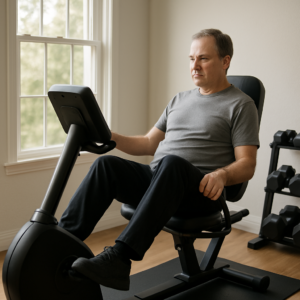
- Cycling — great for knees and hips with minimal impact
- Walking — gentle and underrated, especially on softer surfaces
- Resistance band training — builds the supportive muscles around your joints without heavy loading
- Yoga and stretching — improves flexibility and range of motion, which reduces stiffness
Resistance band training in particular is something I love recommending because it’s so accessible — you can do it at home, sitting in a chair if needed, and it directly strengthens the muscles that support your knees, hips, and shoulders. Stronger surrounding muscles mean less direct pressure on the joint itself.
Products Worth Trying on Your Joint Health Journey
I want to be honest with you: no supplement or piece of equipment is going to replace consistent movement and a healthy diet. But there are some products that many people find genuinely supportive as part of a broader joint health routine. Here’s what I’d point you toward:
The Glucosamine Stack That Actually Holds Up When You’re Losing Weight
When you’re actively losing weight and your joints are bearing less load each week, you want a supplement that supports the cartilage rebuilding process — not one that overpromises and fizzles out after a month. This multi-ingredient formula addresses the gap between where your joints are now and where they’re heading as you get lighter and more mobile.
What works
- The combination of glucosamine, chondroitin, and MSM is backed by more long-term research than any single ingredient alone — studies show consistent benefit for knee and hip pain after 8–12 weeks of consistent use, especially when weight is decreasing.
- Most people report reduced morning stiffness and smoother movement within 4–6 weeks, which matters when you’re trying to build an exercise habit — less pain at the start of the day means fewer excuses to skip a walk.
- The formula is straightforward and doesn’t include a dozen fillers or proprietary blends, so you know exactly what you’re taking and can actually tell if it’s working for you.
What doesn’t
- This is a supplement, not a substitute for weight loss — if you’re not creating a calorie deficit and moving more, glucosamine won’t be the thing that fixes your joints, and throwing it at a sedentary lifestyle is money down the drain.
- Results are individual and take time; some people notice improvement in 4 weeks, others need 12 or don’t respond significantly at all — there’s no way to know until you’re committed to at least 8 weeks of consistent use.
Supplements work best when they’re part of a bigger picture, not a magic band-aid — so pair this with the weight loss and movement changes that are actually doing the heavy lifting. Glucosamine Chondroitin MSM Joint Support Supplement
About This Article

Written by Michael Torres. Michael Torres has had joint problems his whole life — hypermobile as a kid, chronic sprains and a dislocating shoulder through his twenties, an osteoarthritis diagnosis in his early fifties, and a right knee replacement since. He is not a doctor or a physical therapist and has no clinical training. He writes about what has helped him and what he has watched help the people around him, and says plainly when he has not tried something himself. More about this site.
Scope and limits. Michael has no medical or clinical training — he writes about living with his own joint pain, not about treating anyone else's. Nothing here is medical advice. Talk to a doctor before starting anything new, and get seen promptly for pain that is new, severe, worsening, or comes with swelling, fever, or numbness.
Verify this against a primary source
Specifics change, and your situation may differ from the one described here. These are the authorities worth checking directly:
- NIAMS — arthritis and musculoskeletal research from the NIH
- MedlinePlus — plain-language medical reference from the NIH
- Arthritis Foundation — condition guides and treatment overviews