
If you’ve been sitting at your desk for hours only to stand up and feel a sharp, burning pain deep in your buttock—right where you sit—you might be dealing with ischial bursitis. I’ve worked with countless people who’ve experienced this frustrating condition, and I want to be honest with you: it’s uncomfortable, it affects your daily life, and you’re probably wondering what actually works. That’s why I’m diving into ischial bursitis treatment with compression sleeves and padded solutions, because these tools have genuinely helped many of the friends I help find relief.
Let me walk you through what ischial bursitis is, why it happens, and—most importantly—how compression sleeves, cushions, and smart positioning can help you feel better without resorting to invasive treatments.
What Is Ischial Bursitis and Why Are You Feeling Pain?
Your body has small, fluid-filled sacs called bursae (plural of bursa) positioned near your joints. The ischial bursa sits beneath your sit bones—the bony points at the base of your pelvis. When you sit, these bones naturally bear your weight. But when that bursa becomes irritated or inflamed, you get ischial bursitis.
The pain typically feels like a deep ache or sharp pinching sensation right under your buttock, and it often gets worse when you sit, bend forward, or pressure that area directly. Many people describe it as pain that radiates down the back of the leg or concentrates in one spot.
Common causes include prolonged sitting (especially in office chairs), cycling, running on hard surfaces, direct trauma, or even sleeping on your side repeatedly. Essentially, any activity that puts sustained pressure on the sit bones can trigger inflammation in the bursa sack underneath.
Understanding Ischial Bursitis Treatment: Compression Sleeves and Padding Solutions
When it comes to ischial bursitis treatment, compression sleeves and padded cushions work through different but complementary mechanisms. Let me explain what each does and why they matter.
How Compression Helps Your Bursa Sack
A compression sleeve for bursa sack support applies gentle, consistent pressure to the inflamed area. This compression may help:
- Reduce swelling in the bursa by promoting fluid circulation
- Stabilize the area and reduce excessive movement that aggravates the bursa
- Provide sensory feedback that can help you avoid positions that worsen pain
- Increase proprioception (your body’s awareness of position), which helps protect the injured tissue
Research suggests that compression garments may help reduce inflammation and support tissue healing, particularly when combined with rest and proper positioning.
The Power of Pneumatic and Cotton Padded Sleeves for Bursa Relief
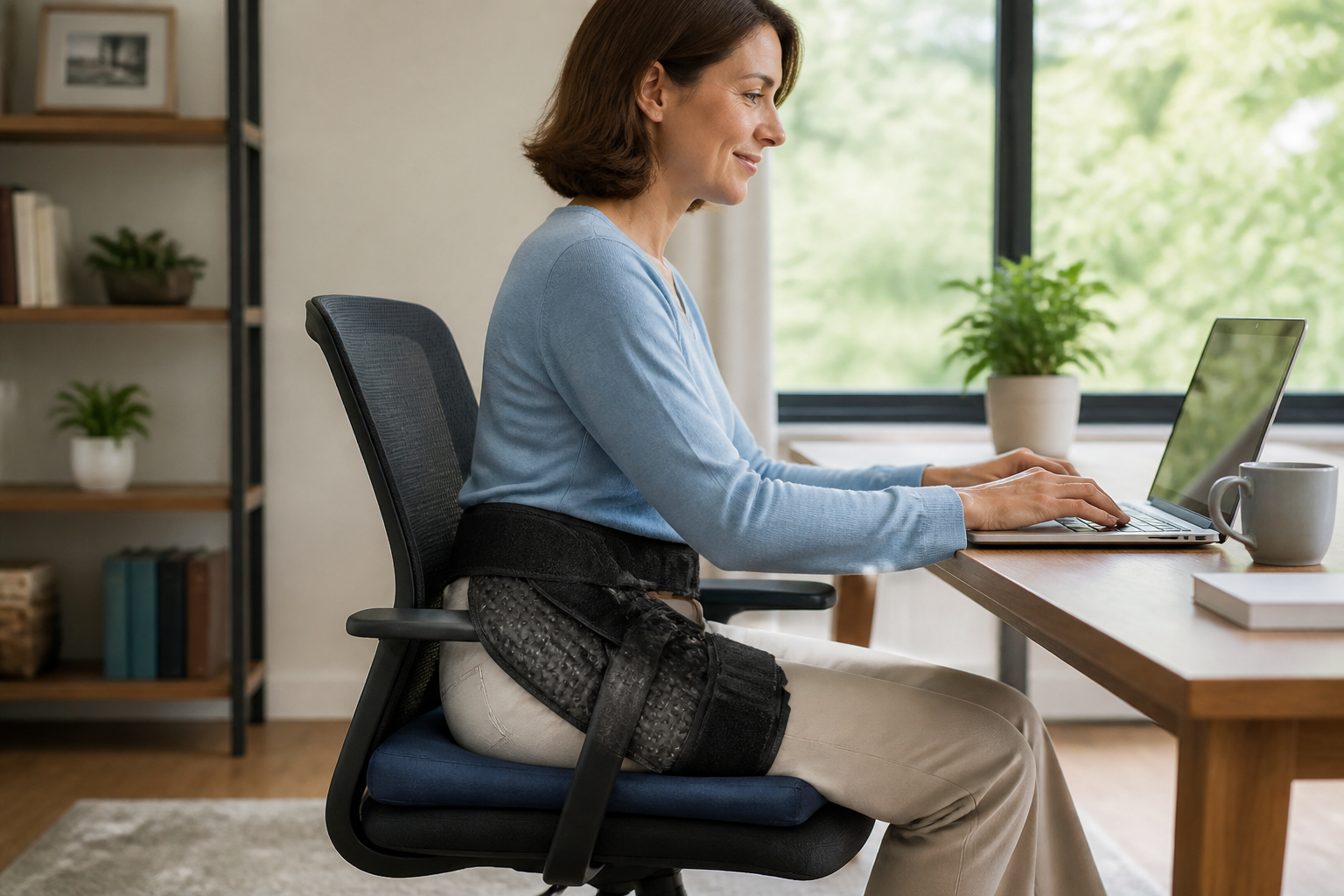
Pneumatic sleeve benefits for ischial bursitis include adjustable pressure that you can customize to your comfort level. Unlike static compression, pneumatic sleeves use air chambers to distribute pressure evenly, which many people find more comfortable during extended wear.
A cotton padded sleeve for bursa comfort takes a different approach. Instead of compression, padding protects the bursa by creating a cushioning barrier between your sit bones and whatever surface you’re sitting on. Padded sleeves are particularly helpful if compression feels too tight or if you need extra cushioning for extended sitting sessions.
Many of the friends I help find that combining light compression with padding—using a sleeve during the day and a padded cushion at their desk—gives them the best results.
Should You Wear Compression Wraps While Sleeping and Other Timing Questions
A question I get frequently is: “Should I wear a compression band on my bursa while I sleep?” The honest answer is: it depends on your comfort and the severity of your inflammation.
For most people, wearing compression throughout the night may feel restrictive and uncomfortable. However, light compression during sleep can be beneficial if:
- You’re experiencing significant swelling that worsens overnight
- You toss and turn and put pressure on the bursa while sleeping
- Your compression sleeve is designed for comfort and breathability
My recommendation: start with compression during the day when you’re most active, and only add nighttime compression if you notice morning swelling or pain. Listen to your body. If compression feels like it’s restricting circulation or causing discomfort, skip it at night and focus on proper pillow positioning instead (sleeping on your non-affected side with a pillow between your knees).
What About Compression for Other Types of Bursitis?
Readers sometimes ask, “Should you use a compression wrap on elbow bursitis?” Yes, the same principles apply to other bursa sites. Elbow bursitis (olecranon bursitis) often responds well to compression sleeves because they reduce repetitive pressure and protect the bursa during arm movement. However, elbow compression should be snug but not cutting off circulation—if your hand swells or feels numb, loosen it.
The Essential Tool Every Office Worker Needs: A Good Desk Pad and Seat Cushion
Here’s what I tell office workers with bursitis: a desk pad to help with bursitis might sound simple, but it’s transformative. More importantly, though, a specialized seat cushion is your first line of defense.
Sitting in a regular office chair puts constant pressure directly on your sit bones—exactly where your ischial bursa is located. Over hours, this pressure irritates the inflamed tissue and perpetuates the pain cycle. A quality padded seat cushion redistributes your weight, takes pressure off the sit bones, and supports the surrounding muscle and tissue.
Beyond seating, a desk pad or foam mat under your legs can help if you tend to lean forward intensely while working. This changes the angle of pressure on your hips and reduces bursa strain.
The Seat Cushion That Actually Offloads Pressure From Your Sit Bones
Ischial bursitis lives or dies by pressure management—the bursa inflames because you’re sitting directly on the bones that anchor it. A properly designed seat cushion does what rest alone can’t: it redistributes your weight away from those sit bones so you can actually sit without triggering pain or extending your recovery timeline.
What works
- The memory foam contours to your unique sit bone anatomy and creates a relief pocket—not just a generic donut hole. Most people report noticeable pain reduction within the first few days of consistent use, especially during the worst sitting offenders (desk work, car rides, flights).
- The coccyx cutout prevents added pressure on an already-irritated area, and the firm-enough foam doesn’t bottom out after a few weeks like cheaper alternatives do. This matters because a flattened cushion becomes useless.
- It’s portable and fits on most office chairs, car seats, and couches without looking medical—so you’re more likely to actually use it consistently, which is what changes the outcome.
What doesn’t
- A cushion alone won’t heal ischial bursitis if you’re sitting 10 hours a day without breaks. You still need to reduce total sitting time, incorporate movement, and possibly address what caused the inflammation in the first place (tight hip flexors, weak glutes, poor posture during activity).
- Some people with very pronounced sit bone anatomy or severe inflammation need additional interventions (physical therapy, anti-inflammatory management, or in rare cases, imaging-guided treatment) before a cushion becomes effective—it’s not a standalone fix for everyone.
A cushion is a tool that reduces aggravation, not a cure that works while you ignore the underlying mechanics—expect 2–3 weeks of consistent use before you know if it’s making a real difference for your specific situation. If pressure relief is part of your strategy, Aylio Socket Seat Cushion for Sit Bone and Ischial Bursitis Relief is worth the investment.
About This Article

Written by Michael Torres. Michael Torres has had joint problems his whole life — hypermobile as a kid, chronic sprains and a dislocating shoulder through his twenties, an osteoarthritis diagnosis in his early fifties, and a right knee replacement since. He is not a doctor or a physical therapist and has no clinical training. He writes about what has helped him and what he has watched help the people around him, and says plainly when he has not tried something himself. More about this site.
Scope and limits. Michael has no medical or clinical training — he writes about living with his own joint pain, not about treating anyone else's. Nothing here is medical advice. Talk to a doctor before starting anything new, and get seen promptly for pain that is new, severe, worsening, or comes with swelling, fever, or numbness.
Verify this against a primary source
Specifics change, and your situation may differ from the one described here. These are the authorities worth checking directly:
- NIAMS — arthritis and musculoskeletal research from the NIH
- MedlinePlus — plain-language medical reference from the NIH
- Arthritis Foundation — condition guides and treatment overviews