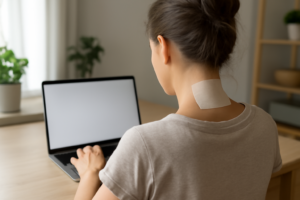


You wake up with a dull, nagging headache that starts at the base of your skull and creeps up one side of your head. You’ve already had two cups of coffee, drank plenty of water, and still — that pressure won’t quit. Sound familiar? If you’re nodding along (carefully, because even that hurts), there’s a good chance your headache isn’t coming from stress or dehydration alone. It may be coming from your cervical spine. Cervical spine headaches, sometimes called cervicogenic headaches, are incredibly common and frustratingly underrecognized. And once you understand the connection between your neck and your head, a lot of things start to make sense.
Research suggests that cervicogenic headaches account for anywhere from 2–4% of all headaches in the general population, but among people with chronic neck pain, that number is likely much higher. Common triggers include poor posture, prolonged screen time, sleeping in an awkward position, old whiplash injuries, and even arthritis in the cervical facet joints.
How to Tell If Your Headache Is Coming From Your Neck
This is where things get interesting — and sometimes confusing. Cervicogenic headaches can masquerade as migraines or tension headaches, which is why so many people go years without identifying the real source of their pain. Here are some signs that your cervical spine may be the culprit:
- Your headache tends to start at the back of your head or base of your skull, then radiates forward
- The pain is usually one-sided and doesn’t switch sides
- Certain neck movements — like turning your head or looking down — trigger or worsen the headache
- You also experience neck stiffness, shoulder tension, or upper back discomfort
- The headache tends to be a steady ache rather than a throbbing or pulsating pain
- Pressing on certain spots at the back of your skull or upper neck seems to reproduce the headache
That last point is particularly telling. If you press gently on the muscles and joints just below your skull and it mimics your headache, that’s a strong clue that your cervical spine is involved. Of course, a proper evaluation from a physical therapist, chiropractor, or physician is always the right next step if you’re dealing with frequent or severe headaches — please don’t use this list as a self-diagnosis tool.
What Your Posture and Sleep Position Are Doing to Your Neck
Forward head posture — that classic “tech neck” position where your head juts out in front of your shoulders — dramatically increases the load on your cervical spine. If you’re spending 8 hours a day at a screen in that position, your neck is quietly taking a beating, and your head may be paying the price.
Sleep position is equally important. If your pillow doesn’t properly support the natural curve of your cervical spine, you could be spending 7–8 hours every night subtly straining the same structures that cause your daytime headaches. Many people find that switching to an ergonomic cervical pillow makes a noticeable difference in both morning neck stiffness and headache frequency.
Products Worth Trying for Cervical Spine Headaches
I want to be upfront: there’s no single product that fixes a structural neck problem. What these tools can do is support better alignment, reduce tension, and help manage discomfort while you’re working on longer-term solutions like exercise and posture correction. Here are a few options I think are genuinely worth considering:
Cervical Support Pillows
If you wake up with a stiff neck or a headache that starts before you’re even out of bed, your pillow is worth examining. These contoured memory foam options are designed to maintain the natural curve of your cervical spine throughout the night:
- Ultra Pain Relief Cooling Cervical Pillow (Standard) — An adjustable, ergonomic contour memory foam pillow with a cooling cover. The adjustable fill is a nice feature because everyone’s neck is a little different.
- Ultra Pain Relief Cooling Cervical Pillow (Queen Size) — Same great design in a larger size for those who move around during sleep or prefer more surface area.
- Osteo Cervical Pillow with Hollow Design — This one features a unique hollow center that may help reduce pressure points for back sleepers, plus an adjustable fill and cooling pillowcase.
Cold Therapy for Headache Relief
Cold therapy is one of the oldest and most evidence-supported approaches to headache relief. Applying cold to the head and neck may help constrict blood vessels, reduce inflammation, and dull pain signals. These wearable options make it easy to apply cold therapy hands-free:
- TheraICE Migraine Relief Cap — This full-coverage gel head wrap applies even, 360-degree cold compression across the forehead, temples, and eyes. Many people with tension and cervicogenic headaches find this kind of wrap much more effective than a standard ice pack held awkwardly against the head.
- Migraine Relief Cap with Hot and Cold Therapy — This option gives you both cold and heat in one cap, useful on days when you’re not sure yet whether warmth or cold will settle the pain faster.
Cold Compression for Cervicogenic Headaches: Why the Right Wrap Beats Ice Packs
Once you’ve matched your symptoms to the list above and suspect your neck is involved, surface-level pain relief won’t cut it — you need sustained, even pressure across the areas where tension actually builds. A properly designed migraine relief cap delivers what a standard ice pack can’t: consistent 360-degree cold therapy without you having to hold it awkwardly in place.
What works
- Full-coverage design means cold reaches the temples, forehead, and the back of the neck simultaneously — the exact zones where cervicogenic tension triggers pain — rather than targeting just one spot.
- Cold therapy reduces inflammation and nerve irritation in the cervical region; most people report noticeable relief within 10–15 minutes of consistent use, especially when combined with gentle neck mobility work.
- Unlike ice packs that thaw and lose effectiveness, a gel wrap maintains even pressure and temperature for 20–30 minutes, which is long enough to interrupt the pain-tension cycle without overloading your system.
What doesn’t
- This is symptom management, not a cure — if your headaches stem from poor posture, muscle weakness, or disc issues, cold compression alone won’t fix the underlying problem and you’ll need to address those separately.
- Some people find prolonged cold uncomfortable or develop sensitivity to it; if you’re prone to migraines triggered by temperature changes, start with shorter sessions (5–10 minutes) to test your tolerance.
This works best as part of a broader neck care routine — not as your only intervention, and not as a substitute for the professional evaluation mentioned above if your symptoms match the self-check list closely. Check out the TheraICE Migraine Relief Cap to see if consistent cold therapy gives you the relief you’ve been chasing.
About This Article

Written by Michael Torres. Michael Torres has had joint problems his whole life — hypermobile as a kid, chronic sprains and a dislocating shoulder through his twenties, an osteoarthritis diagnosis in his early fifties, and a right knee replacement since. He is not a doctor or a physical therapist and has no clinical training. He writes about what has helped him and what he has watched help the people around him, and says plainly when he has not tried something himself. More about this site.
Scope and limits. Michael has no medical or clinical training — he writes about living with his own joint pain, not about treating anyone else's. Nothing here is medical advice. Talk to a doctor before starting anything new, and get seen promptly for pain that is new, severe, worsening, or comes with swelling, fever, or numbness.
Verify this against a primary source
Specifics change, and your situation may differ from the one described here. These are the authorities worth checking directly:
- NIAMS — arthritis and musculoskeletal research from the NIH
- MedlinePlus — plain-language medical reference from the NIH
- Arthritis Foundation — condition guides and treatment overviews