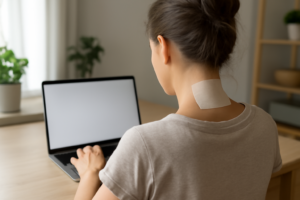

You wake up, swing your legs over the side of the bed, and the moment you try to turn your head — there it is. That sharp, grinding stiffness that makes you wonder if you slept on a concrete block instead of a pillow. Sound familiar? Neck pain has a way of sneaking up on you, and once it’s there, it can derail your entire day. Whether it’s from hunching over a laptop, stress-related tension, or simply an awkward sleeping position, finding ways to relieve neck pain quickly and effectively is something most of us desperately need. I’ve spent years working with people dealing with exactly this, and I want to share what actually makes a difference — no fluff, just honest, practical advice.
Why Neck Pain Is So Common (And So Frustrating)
The cervical spine — the seven vertebrae that make up your neck — is one of the most mobile and vulnerable parts of your body. It has to support the full weight of your head (around 10 to 12 pounds!) while allowing you to look in virtually every direction. That’s an impressive mechanical feat, but it also means the muscles, joints, and discs in your neck are constantly working and constantly at risk of strain.
Modern life doesn’t exactly make things easier. “Tech neck” — the forward head posture that comes from looking down at phones and screens — puts enormous stress on the cervical spine. Research suggests that tilting your head just 15 degrees forward can more than double the effective load on your neck muscles. Multiply that by hours of screen time every day, and it’s no wonder so many of us are walking around with chronic tension and soreness.
7 Practical Tips to Relieve Neck Pain at Home
1. Fix Your Posture (Starting Right Now)
I know, I know — you’ve heard this before. But posture correction really is the foundation of long-term neck relief. Try this: sit up tall, gently pull your chin back as if you’re making a “double chin,” and let your shoulders drop away from your ears. Hold it for ten seconds. That’s a cervical retraction, and doing it several times throughout the day may help reduce the chronic forward-head strain that builds up over hours of desk work.
2. Apply Heat or Cold Strategically
For acute pain or stiffness, many people find relief with a cold pack applied for 15–20 minutes during the first 24 to 48 hours. After that initial phase, moist heat — like a warm towel or heating pad — tends to work better for loosening tight muscles. The key is consistency: a few short sessions throughout the day usually beats one long application.
3. Stretch Gently and Often
Gentle range-of-motion exercises can make a real difference. Try slowly tilting your ear toward your shoulder and holding for 20–30 seconds on each side. Chin tucks, slow neck rotations, and shoulder rolls all help keep the cervical joints mobile and the surrounding muscles from seizing up. The emphasis here is on gentle — never force a stretch into pain.
4. Evaluate Your Sleep Setup
Your pillow may be working against you every single night. A pillow that’s too high or too flat can hold your neck in a strained position for hours. An ergonomic cervical pillow designed to support the natural curve of your neck may help significantly, especially if you wake up stiff more mornings than not.
5. Try Cervical Traction
Cervical traction is a technique used by physical therapists to gently decompress the joints and discs in the neck. It creates a gentle pulling force that may help relieve pressure on nerves, reduce muscle spasm, and increase the space between vertebrae. Home traction devices have come a long way, and many people find them a helpful part of their neck care routine between professional appointments.
6. Stay Hydrated and Move Regularly
The discs between your cervical vertebrae are largely made up of water, and they depend on good hydration to maintain their cushioning properties. Staying well hydrated and taking regular movement breaks — even just standing up and walking for a minute or two every hour — can help keep those discs healthy and reduce the stiffness that comes from prolonged static postures.
7. Manage Stress Actively
Tension and stress don’t just live in your head — they settle directly into the muscles of your neck and upper back. Many people find that deep breathing exercises, progressive muscle relaxation, or even a short daily walk noticeably reduces their neck tightness. If you notice your shoulders creeping toward your ears when you’re stressed, that’s your body telling you it’s time to pause and decompress.
Products Worth Trying: What Actually Helps
Over the years, I’ve seen certain tools genuinely move the needle for people dealing with persistent neck issues. Here are a few worth considering, depending on your situation and budget.
Cervical Traction for Nerve Compression and Persistent Stiffness
If your neck pain comes with radiating symptoms down your arm, persistent stiffness that doesn’t respond to stretching alone, or that grinding sensation that suggests disc or nerve involvement, a cervical traction device addresses the mechanism directly — gently decompressing the cervical spine rather than just masking the discomfort. This is one of the few tools I’ve found that actually targets the structural issue rather than just the symptom.
What works
- Research supports cervical traction for nerve root compression and disc-related pain — the decompression creates space that anti-inflammatory medication and manual therapy alone sometimes can’t achieve on their own.
- Most users report noticeable improvement in radiating pain and stiffness within 1–2 weeks of consistent daily use (10–15 minutes), with the benefit being cumulative rather than immediate.
- The S Cervical Neck Traction Device is one of the simpler, more intuitive designs — adjustable weight distribution, no complex assembly, and you can use it while sitting and doing other things (reading, working) rather than requiring dedicated time.
What doesn’t
- This won’t help if your neck pain is purely postural or muscular tension — if stretching, heat, and posture adjustments already work for you, traction is overkill and honestly a waste of money.
- Results take time, and if you have significant structural damage (herniated disc, advanced arthritis) you need imaging and possibly PT guidance before using traction — wrong technique or overuse can irritate instead of help.
Traction is a tool, not a fix on its own, and effectiveness depends heavily on whether compression is actually your problem. S Cervical Neck Traction Device
About This Article

Written by Michael Torres. Michael Torres has had joint problems his whole life — hypermobile as a kid, chronic sprains and a dislocating shoulder through his twenties, an osteoarthritis diagnosis in his early fifties, and a right knee replacement since. He is not a doctor or a physical therapist and has no clinical training. He writes about what has helped him and what he has watched help the people around him, and says plainly when he has not tried something himself. More about this site.
Scope and limits. Michael has no medical or clinical training — he writes about living with his own joint pain, not about treating anyone else's. Nothing here is medical advice. Talk to a doctor before starting anything new, and get seen promptly for pain that is new, severe, worsening, or comes with swelling, fever, or numbness.
Verify this against a primary source
Specifics change, and your situation may differ from the one described here. These are the authorities worth checking directly:
- NIAMS — arthritis and musculoskeletal research from the NIH
- MedlinePlus — plain-language medical reference from the NIH
- Arthritis Foundation — condition guides and treatment overviews