

Picture this: it’s a beautiful July morning, the kind that practically begs you to get outside. You lace up your sneakers, step onto the trail, and about twenty minutes in — your knees are aching, your skin feels like it’s on fire from the sun, and you’re wondering if summer is actually working against you. If that sounds familiar, you’re not alone. For anyone managing joint pain, arthritis, or inflammatory conditions, the heat and UV exposure of summer can feel like a double obstacle. The good news? With the right summer joint care tips, you really can stay active, protect your skin, and keep flares at bay — all at the same time.
Why Summer Is a Mixed Bag for Your Joints
Summer seems like the perfect season to get moving. The days are long, the weather is warm, and your motivation is high. But if you live with joint pain — whether that’s from osteoarthritis, rheumatoid arthritis, lupus, or another inflammatory condition — heat and sun exposure introduce a few real complications worth understanding.
First, heat itself can actually increase inflammation in already-sensitive joints. Many people notice that when core body temperature rises during exercise, their joints feel puffier or more tender afterward. This doesn’t mean you should stop moving — quite the opposite. It means you need a smarter strategy for managing body temperature while you exercise.
Second — and this one surprises a lot of people — certain medications commonly prescribed for autoimmune joint conditions, like methotrexate and hydroxychloroquine, can increase sun sensitivity. That means your skin may burn faster and more severely, and a bad sunburn can actually trigger inflammatory flares throughout your whole body, not just at the skin surface. Research suggests there’s a real connection between UV exposure and systemic inflammation in conditions like lupus and psoriatic arthritis. So protecting your skin isn’t just vanity — it’s genuinely part of managing your joint health.
Smart Summer Joint Care Tips for Staying Active
Here’s what I tell the friends I help when they ask how to keep moving without paying for it later. Think of it as building a summer routine that works with your body, not against it.
Time Your Workouts Wisely
Early morning or evening workouts are your best friend in summer. Before 10 a.m. and after 4 p.m., UV rays are less intense and ambient temperatures are lower. If your joints tend to be stiffest in the morning — which is common with inflammatory arthritis — a gentle warm-up walk after breakfast, once the body has had a chance to loosen up, can be a sweet spot for many people.
Prioritize Low-Impact Movement
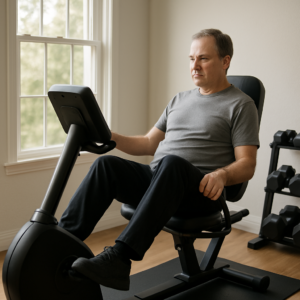
Swimming, water aerobics, cycling, and walking on flat, even terrain are all excellent low-impact options that keep your cardiovascular fitness up without hammering your joints. Research consistently suggests that regular low-impact movement may help reduce joint stiffness and improve function over time — even for people with moderate arthritis. Summer is actually a great season to get into water-based exercise if you haven’t tried it yet.
Stay Hydrated — More Than You Think You Need To
Dehydration makes everything worse for joints. Synovial fluid — the natural lubricant inside your joints — is largely water-based. When you’re sweating more than usual in summer heat, you need to actively replace those fluids. Aim for water before, during, and after activity, and don’t wait until you feel thirsty to start drinking.
Manage Your Core Temperature Actively
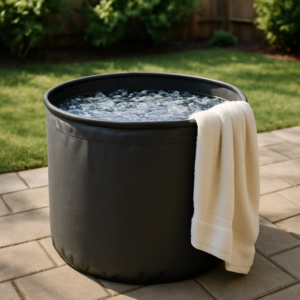
This is where cooling gear can genuinely make a difference. Many people find that keeping their neck, head, and face cool during outdoor exercise helps them stay out longer without the kind of overheating that can trigger pain and fatigue. Cold, wet towels on pulse points — the neck especially — are a surprisingly effective and underrated recovery tool.
Products Worth Trying: Cooling and Skin Recovery Tools
I want to be straightforward here: no product is going to cure joint pain or prevent a flare with certainty. But having the right tools in your bag may help you stay more comfortable during summer activity and recover better afterward. These are options I think are genuinely worth considering.
Staying Cool Without Overheating Your Joints: Why Active Cooling Matters on Summer Trails
Heat makes joint inflammation worse — it’s not just discomfort, it’s physiology. When you’re out in summer sun, your body’s inflammatory response ramps up, and swelling can linger for hours after you’re back inside. A cooling towel won’t fix underlying joint damage, but it genuinely helps manage the heat-driven inflammation spike that derails your activity window.
What works
- Evaporative cooling actually lowers skin and localized joint temperature — research shows this reduces acute inflammatory markers in the short term, which translates to less post-activity swelling.
- The hoodie design keeps you from having to hold a towel; you activate it by soaking and wringing, then wear it while you move, which means you’re not choosing between cooling and hiking.
- Most people report noticeable relief within 10–15 minutes of wearing it, and the effect lasts 30–45 minutes before you need to re-wet it — realistic timing for a mid-trail break.
What doesn’t
- This is symptom management, not treatment — it won’t prevent flares if you’re pushing too hard or staying out too long; it just buys you a more comfortable window to move.
- If you have severe sun-triggered skin reactions (photosensitivity or certain autoimmune conditions), cooling the body won’t address the underlying UV issue — you still need sunscreen, protective clothing, and realistic limits on exposure.
Cooling helps in the moment, but it’s not a workaround for pacing yourself properly — if you ignore your body’s signals because the towel feels good, you’ll still pay for it later. Grab the MISSION Cooling Hoodie Towel (Hi Vis Yellow) if you’re serious about extending your active time without overheating your joints.
About This Article

Written by Michael Torres. Michael Torres has had joint problems his whole life — hypermobile as a kid, chronic sprains and a dislocating shoulder through his twenties, an osteoarthritis diagnosis in his early fifties, and a right knee replacement since. He is not a doctor or a physical therapist and has no clinical training. He writes about what has helped him and what he has watched help the people around him, and says plainly when he has not tried something himself. More about this site.
Scope and limits. Michael has no medical or clinical training — he writes about living with his own joint pain, not about treating anyone else's. Nothing here is medical advice. Talk to a doctor before starting anything new, and get seen promptly for pain that is new, severe, worsening, or comes with swelling, fever, or numbness.
Verify this against a primary source
Specifics change, and your situation may differ from the one described here. These are the authorities worth checking directly:
- NIAMS — arthritis and musculoskeletal research from the NIH
- MedlinePlus — plain-language medical reference from the NIH
- Arthritis Foundation — condition guides and treatment overviews