

You wake up, swing your legs over the side of the bed, and the moment your feet hit the floor — there it is. That familiar stiffness. Maybe it’s your knees, your hips, or your lower back. You shuffle to the bathroom thinking it’ll loosen up, and eventually it does, but the whole experience leaves you wondering if this is just how mornings feel now. If that sounds familiar, I want you to know you’re not alone — and more importantly, you’re not powerless. Building the right daily habits for joint pain can make a genuinely meaningful difference in how you feel, move, and live each day.
Why Small Daily Habits for Joint Pain Add Up to Big Results
Here’s something I remind people all the time: joint pain rarely gets better from one dramatic intervention. It gets better — or at least more manageable — through consistent, small choices made every single day. Think of your joints like a garden. One good watering doesn’t save a drought-stressed plant, but steady, regular care absolutely can. The six habits below are practical, low-impact, and backed by solid reasoning. None of them require a gym membership or a perfect schedule. They just require a little intention.
6 Daily Habits That Can Help Protect Your Joints
1. Move Gently — But Move Often
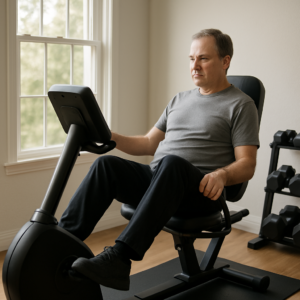
One of the most counterintuitive things about joint pain is that rest, while sometimes necessary, is rarely the long-term answer. Joints are nourished by movement. The cartilage in your knees and hips, for example, doesn’t have its own direct blood supply — it gets nutrients from the synovial fluid that circulates when you move. Research suggests that low-impact activities like walking, swimming, tai chi, and cycling may help reduce joint stiffness and improve function over time. Aim for at least 20–30 minutes of gentle movement daily, even if it’s broken into smaller chunks throughout the day.
2. Roll Out the Tension in Your Muscles
Tight muscles place extra stress on your joints. When the muscles around your knees, hips, and spine are chronically tense, they pull on the joint structures and can amplify pain. This is where foam rolling — also called self-myofascial release — comes in. Spending just 5–10 minutes rolling out your quads, hamstrings, IT band, and calves before or after activity may help reduce muscle tightness and improve circulation to the surrounding tissues.
The Foam Roller That Actually Addresses Morning Stiffness Without Aggravating Sensitive Joints
Morning stiffness doesn’t just disappear on its own — you have to actively work the synovial fluid through your joints and release the muscle tension that locks them up overnight. A quality foam roller, used consistently before that shuffle to the bathroom, can genuinely reduce how long it takes to feel mobile again.
What works
- The grid pattern on the TriggerPoint distributes pressure more evenly than smooth rollers, which means you can actually tolerate rolling tight muscles without triggering joint pain or overcompressing cartilage.
- Research supports that pre-movement soft tissue work increases proprioception and blood flow — most people notice stiffness decreasing by 5–7 minutes of rolling if they do it consistently every morning, not just when pain flares.
- The 13″ length is long enough to handle quads, calves, and IT bands without needing multiple tools, and the density is firm enough to actually release muscle knots but not so hard it punishes already-compromised joints.
What doesn’t
- This won’t fix a joint that’s structurally damaged or inflamed from osteoarthritis — it’s a supporting tool, not a treatment, and if rolling aggravates your pain, you need to address inflammation or alignment issues first.
- You have to actually use it every morning for results to stick; one week of rolling followed by three weeks off won’t carry over — the stiffness returns because the underlying muscle tension comes right back.
Consistency matters more than intensity here — rolling aggressively once won’t move the needle, but five minutes every single morning will. If you’re ready to test this approach, the TriggerPoint Grid 1.0 Foam Roller (13″) has been reliable enough that I’ve replaced it twice over five years of daily use.
About This Article

Written by Michael Torres. Michael Torres has had joint problems his whole life — hypermobile as a kid, chronic sprains and a dislocating shoulder through his twenties, an osteoarthritis diagnosis in his early fifties, and a right knee replacement since. He is not a doctor or a physical therapist and has no clinical training. He writes about what has helped him and what he has watched help the people around him, and says plainly when he has not tried something himself. More about this site.
Scope and limits. Michael has no medical or clinical training — he writes about living with his own joint pain, not about treating anyone else's. Nothing here is medical advice. Talk to a doctor before starting anything new, and get seen promptly for pain that is new, severe, worsening, or comes with swelling, fever, or numbness.
Verify this against a primary source
Specifics change, and your situation may differ from the one described here. These are the authorities worth checking directly:
- NIAMS — arthritis and musculoskeletal research from the NIH
- MedlinePlus — plain-language medical reference from the NIH
- Arthritis Foundation — condition guides and treatment overviews