
You’ve just rolled your ankle, or maybe you’re dealing with chronic instability that keeps you sidelined during workouts. You head to the pharmacy and find yourself staring at a wall of compression sleeves, rigid braces, and straps, wondering: what’s the actual difference between an ankle brace vs ankle support? And more importantly, which one will actually help your ankle?
I’ve been there—and I’ve helped hundreds of people navigate this exact question. The truth is, the terminology gets thrown around loosely, and most of us end up grabbing whatever looks medical enough without understanding what we’re really buying. The good news? Once you understand the differences between rigid, semi-rigid, and soft compression options, choosing the right one becomes straightforward.
Let me walk you through everything you need to know about ankle braces and supports, including when each one shines and whether they can help specific conditions like Achilles tendonitis.
Ankle Brace vs Ankle Support: What’s the Real Difference?
The confusion starts with terminology. Many people use “ankle brace” and “ankle support” interchangeably, but there’s a meaningful distinction.
An ankle support—usually called a sleeve or compression sleeve—is typically made of soft, stretchy fabric (neoprene or similar materials). It provides gentle compression and mild support through the fabric’s snug fit. Think of it as a hug for your ankle. Supports are best for mild swelling, general soreness, and maintaining stability during light activity. They’re comfortable enough to wear all day and work best when you need sustained gentle compression rather than heavy-duty structural support.
An ankle brace is more robust. It features rigid or semi-rigid components—usually plastic stays, metal hinges, or structured straps—designed to restrict unwanted motion at the ankle joint. Braces limit inversion and eversion (the ankle rolling movements that cause most sprains) while still allowing normal forward and backward movement. They’re the go-to for acute injuries, significant sprains, and chronic instability where your ankle repeatedly feels unstable.
Understanding Ankle Splint Types and Support Levels
When you’re shopping for ankle support, you’ll encounter different designs. Here’s what each one does:
Soft Compression Sleeves
These fabric-based supports offer the least restriction. They provide compression to reduce swelling and gentle proprioceptive feedback (your ankle’s awareness of position). They’re great for post-injury maintenance, arthritis, or general workout soreness. Most comfortable for extended wear.
Semi-Rigid Supports (Sleeves with Stays)
These combine compression fabric with plastic or gel stays on the sides. They offer moderate stability without completely restricting motion, making them ideal for people returning to activity after a mild sprain or those with mild chronic instability.
Lace-Up Ankle Braces
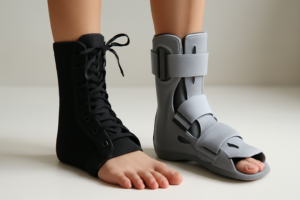
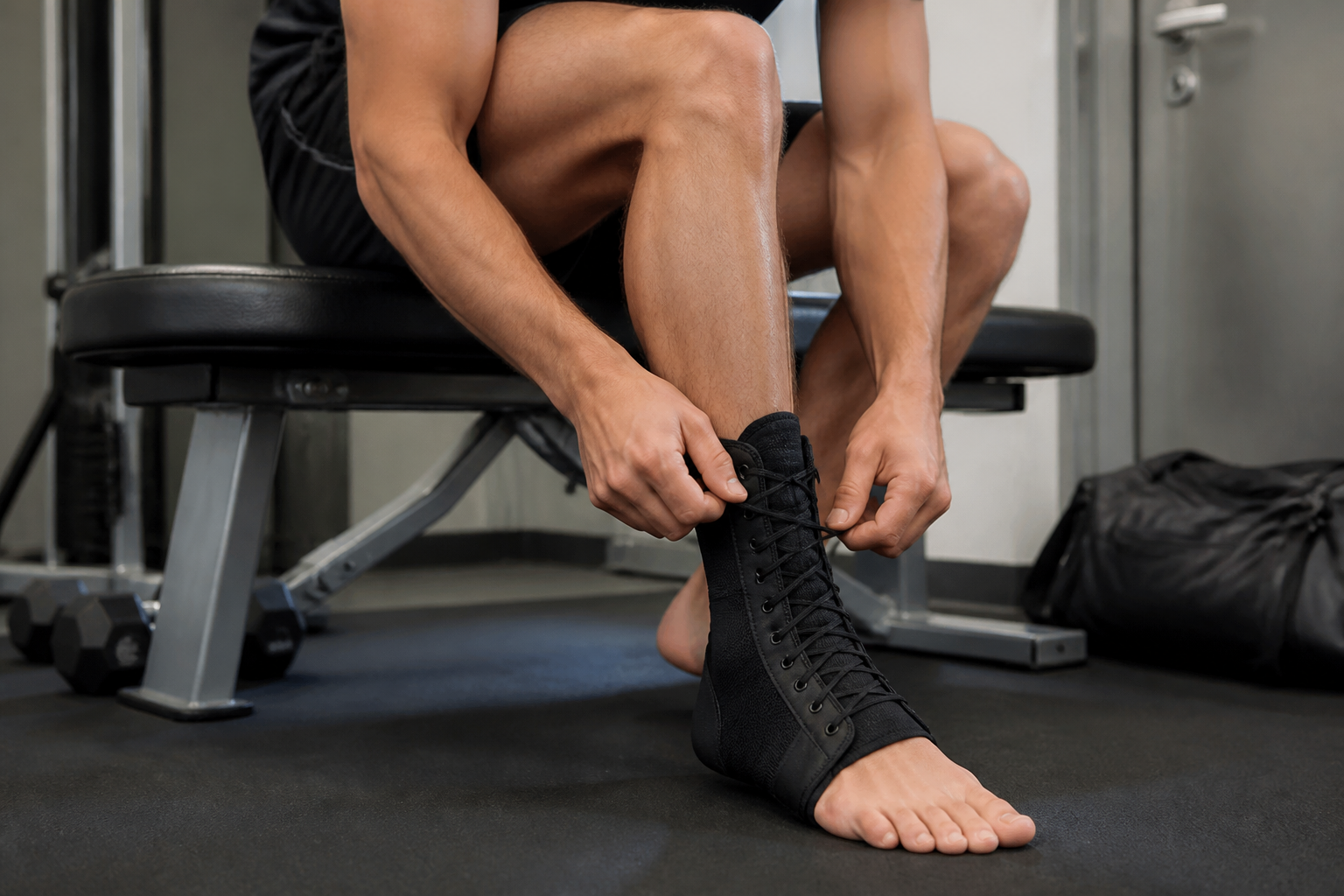
These are semi-rigid braces with fabric construction and plastic support pieces. You adjust them by tightening laces, which lets you customize the compression level. They’re durable, adjustable, and excellent for moderate to significant ankle sprains and chronic instability. This is the type many athletes and people with recurring ankle problems prefer.
Stirrup or Air Braces
These feature air chambers or rigid plastic stirrups that cradle the ankle. They provide strong support and are often used immediately after severe sprains or during active rehabilitation. They’re less flexible than lace-up braces but offer exceptional stability.
Hinged Ankle Braces
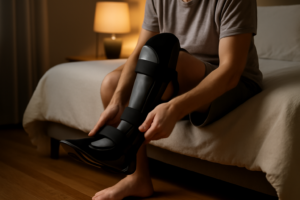
These look like mini exoskeletons with actual hinges on the sides. They’re the most restrictive and support-heavy option, typically prescribed by healthcare providers for significant injuries or people with severe chronic instability. They’re not casual wear—you’re looking at something more therapeutic.
Will an Ankle Brace or Support Help Achilles Tendonitis?
I get this question frequently, and I appreciate its specificity because the answer requires some nuance. Achilles tendonitis—inflammation of the large tendon running down the back of your heel—is technically an ankle and foot issue, but standard ankle braces aren’t specifically designed to address it.
Do ankle supports help Achilles tendonitis? Mildly, and mostly indirectly. A soft compression ankle sleeve may reduce overall ankle swelling and provide mild support that slightly offloads stress. However, research suggests that general ankle supports don’t directly target the Achilles tendon the way specialized Achilles-specific supports do.
Will ankle brace help Achilles tendonitis? Again, the honest answer is limited benefit. Standard ankle braces focus on preventing inversion and eversion injuries—not providing specific Achilles tendon support. However, some people find that the overall ankle stabilization prevents compensatory movements that aggravate the tendon.
Here’s what actually works better for Achilles tendonitis: heel lifts (which reduce tension on the tendon) and Achilles tendon support sleeves specifically designed for this purpose. These sleeves compress the tendon, improve blood flow, and often include a wraparound design or compression pad that targets the specific area. If you’re dealing with Achilles issues, seek out an Achilles-specific support rather than a general ankle brace.
Choosing Your Ankle Support Based on Your Situation
Here’s my practical guide for matching your needs to the right support:
For acute ankle sprains: Start with a semi-rigid lace-up brace or stirrup brace. You need stability while the ligaments heal—compression sleeves alone won’t cut it.
For chronic ankle instability: A lace-up ankle brace is your best friend. It provides consistent support that you can adjust as needed, and it’s durable enough for regular athletic use.
For general ankle soreness or arthritis: A compression sleeve is often sufficient. You get pain relief and mild support without the bulk of a full brace.
For Achilles tendonitis: Look specifically for an Achilles support sleeve or consider adding a heel lift to your shoe. Don’t expect general ankle supports to solve this problem.
For activity and prevention: Consider your activity level. Light walkers might use compression sleeves. Athletes returning to jumping or cutting sports should wear semi-rigid or rigid braces.
The Ankle Brace That Actually Stabilizes Without Turning Your Foot Into a Cast
If you’re dealing with chronic ankle instability or recovering from a recent sprain, you need something that provides genuine support during movement—not just compression. The Med Spec ASO is built for people who want to stay active without sacrificing stability.
What works
- The dual-strap design actually limits inversion (the motion that causes most ankle rolls) in a way compression sleeves simply can’t—research supports this mechanism, and people report noticeable confidence returning within the first week of consistent use.
- It’s adjustable and stays put during activity without cutting off circulation or feeling like a medical device that screams “I’m injured”—you can wear it under most athletic shoes without bulking.
- Unlike rigid ankle casts or air boots, this brace allows natural ankle movement in safe directions, which matters if you want to actually rehab the stabilizer muscles rather than just immobilize the joint.
What doesn’t
- This is not a substitute for physical therapy if you have true instability—a brace helps you stay active *while* rebuilding strength, but it doesn’t rebuild the strength itself.
- The straps need regular adjustment and occasional replacement (they wear out after 6-12 months of heavy use), so this isn’t a one-time buy-it-forever situation.
Don’t expect this to feel magical on day one—ankle stability is about consistent use over weeks, not instant pain relief. Med Spec ASO Ankle Stabilizer
About This Article

Written by Michael Torres. Michael Torres has had joint problems his whole life — hypermobile as a kid, chronic sprains and a dislocating shoulder through his twenties, an osteoarthritis diagnosis in his early fifties, and a right knee replacement since. He is not a doctor or a physical therapist and has no clinical training. He writes about what has helped him and what he has watched help the people around him, and says plainly when he has not tried something himself. More about this site.
Scope and limits. Michael has no medical or clinical training — he writes about living with his own joint pain, not about treating anyone else's. Nothing here is medical advice. Talk to a doctor before starting anything new, and get seen promptly for pain that is new, severe, worsening, or comes with swelling, fever, or numbness.
Verify this against a primary source
Specifics change, and your situation may differ from the one described here. These are the authorities worth checking directly:
- NIAMS — arthritis and musculoskeletal research from the NIH
- MedlinePlus — plain-language medical reference from the NIH
- Arthritis Foundation — condition guides and treatment overviews