
Your usual sleep position works fine most nights — until a flare-up hits and suddenly the side you normally sleep on is the one thing you can’t tolerate. Positioning advice for everyday hip and knee pain doesn’t always apply during an acute flare, when even small amounts of pressure or a few degrees of joint angle can be the difference between sleeping and not. Here’s what actually changes during a flare, and the temporary adjustments worth making until it settles.
Why Flare-Up Positioning Is a Different Problem Than Everyday Positioning
Your everyday sleep position accounts for typical, background-level joint sensitivity. During a genuine flare — an inflamed hip bursa, a knee that’s freshly swollen, an SI joint that’s acutely irritated — the margin for error shrinks dramatically. A position that’s merely “not ideal” on a normal night can be genuinely unbearable during a flare, which is why it’s worth having a separate, temporary game plan rather than just gritting through your usual routine.
When Lying Flat Isn’t an Option
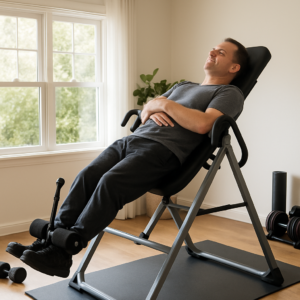
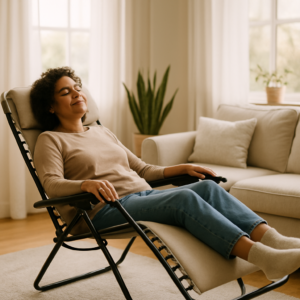
During an acute flare, full extension — lying completely flat on your back or side — can put more strain on an inflamed joint than a slightly elevated or propped position would. Sleeping in a recliner, or building an elevated setup with pillows behind your back and under your knees, is a legitimate temporary strategy during a bad flare, even though it’s not something you’d want as a permanent sleep setup. The goal during a flare is finding whatever position reduces pain enough to actually sleep, not chasing textbook-perfect alignment.
Switching Sides Temporarily
If you’re a committed side sleeper on your usual side and that happens to be your flaring hip, this is the moment to force yourself onto the other side or onto your back, even if it feels unfamiliar and uncomfortable at first. A body pillow along your front and back can help you stay in an unfamiliar position through the night rather than unconsciously rolling back onto the inflamed side once you fall asleep.
Icing Before Bed, Not Just During the Day
If your flare is inflammation-driven, icing the joint for 15-20 minutes before getting into bed can reduce the swelling and sensitivity enough to make positioning far more tolerable once you’re actually lying down. This is a step worth adding specifically during flares — it’s not necessary as a nightly habit otherwise.
More Pillows Than Usual, Placed More Precisely
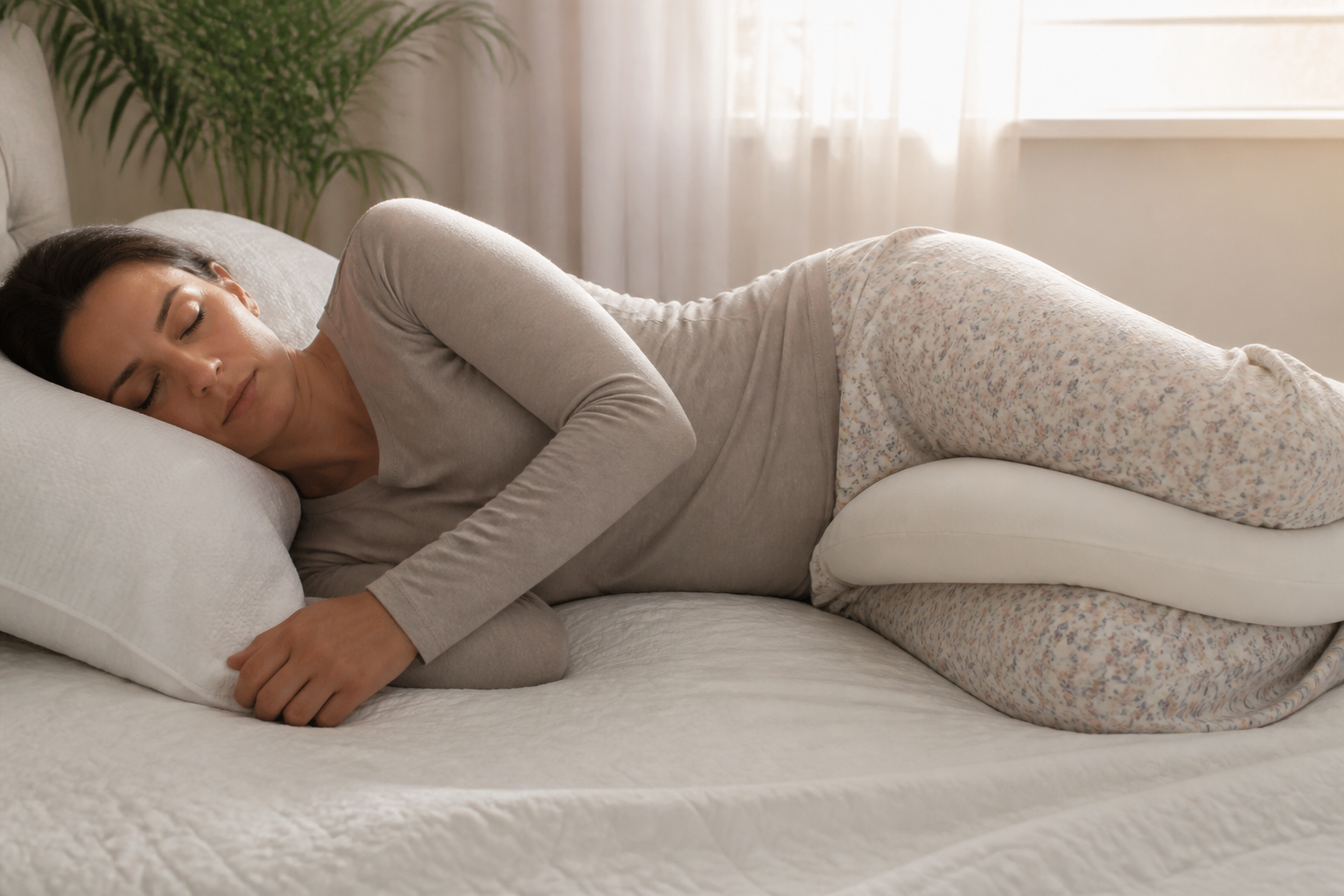
During a flare, it’s worth using more support than you normally would — a pillow between the knees plus one supporting the top arm, or a pillow under the knees plus a small one supporting the lower back if you’re on your back. The goal is eliminating any unsupported gap where the joint can settle into an aggravating angle overnight, which matters more during a flare than it does on an ordinary night.
When to Stop Adjusting and Call Your Doctor
If you’ve tried multiple positions, added support, and iced beforehand, and you’re still in significant pain that prevents sleep for more than a couple of nights, that’s a signal the flare needs medical attention rather than another positioning workaround. Severe swelling, fever, or a joint that’s hot to the touch alongside the pain warrants prompt evaluation rather than more troubleshooting on your own.
Support for the Position Change a Flare Forces On You
If a flare has pushed you into an unfamiliar sleep position, a dedicated leg pillow makes that transition more tolerable by keeping your knees and hips supported regardless of which side — familiar or not — you end up sleeping on.
What works
- Works equally well as a side or back sleeper prop, which matters specifically when a flare forces you out of your usual position and you need support that adapts.
- Dense enough to stay in place through the night rather than collapsing, so support doesn’t disappear exactly when you need it most.
What doesn’t
- A pillow won’t resolve the underlying flare — it’s a comfort measure while the inflammation settles, not a treatment for what’s causing it.
Flare-up positioning is temporary by definition — the goal is getting through the bad stretch, not finding a permanent new routine. Contour Legacy Leg & Knee Foam Support Pillow
About This Article

Written by Michael Torres. Michael Torres has had joint problems his whole life — hypermobile as a kid, chronic sprains and a dislocating shoulder through his twenties, an osteoarthritis diagnosis in his early fifties, and a right knee replacement since. He is not a doctor or a physical therapist and has no clinical training. He writes about what has helped him and what he has watched help the people around him, and says plainly when he has not tried something himself. More about this site.
Scope and limits. Michael has no medical or clinical training — he writes about living with his own joint pain, not about treating anyone else's. Nothing here is medical advice. Talk to a doctor before starting anything new, and get seen promptly for pain that is new, severe, worsening, or comes with swelling, fever, or numbness.
Verify this against a primary source
Specifics change, and your situation may differ from the one described here. These are the authorities worth checking directly:
- NIAMS — arthritis and musculoskeletal research from the NIH
- MedlinePlus — plain-language medical reference from the NIH
- Arthritis Foundation — condition guides and treatment overviews