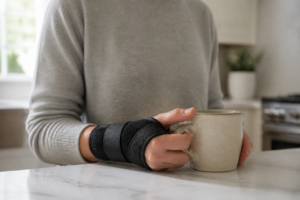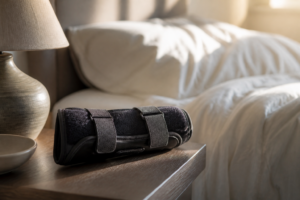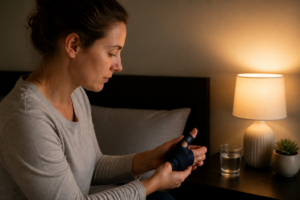


It’s 2 a.m., and you wake up with a sharp, tingling pain shooting through your wrist and fingers. You’ve been flexing your wrist in your sleep again—something that happens to millions of people dealing with carpal tunnel syndrome. If you’ve ever wondered, “Should I sleep with a wrist brace on?” you’re not alone. The short answer: yes, and for many people, sleeping with a wrist brace is one of the most effective conservative treatments available. Let me walk you through why, and how to do it right.
Why Should You Sleep With a Wrist Brace On?
Here’s what most people don’t realize: carpal tunnel symptoms are often worst at night. You’re not imagining it. When we sleep, our wrists naturally curl inward—a reflex called flexion. This position compresses the median nerve that runs through the carpal tunnel in your wrist, intensifying numbness, tingling, and pain. It’s a vicious cycle: pain keeps you awake, which makes your symptoms feel worse the next day.
Wearing a wrist brace at night works by keeping your wrist in a neutral position—straight, like your hand is resting on a table. This simple change prevents nerve compression and reduces inflammation. Research suggests that nighttime carpal tunnel relief through splinting can decrease symptoms significantly, sometimes within just a few weeks of consistent use.
Beyond carpal tunnel, sleeping with a wrist brace can help with other conditions like arthritis, tendinitis, or post-injury recovery. By stabilizing your wrist during sleep, you’re reducing stress on the joint and supporting the healing process.
What’s the Difference Between a Nighttime Splint and a Daytime Brace?
This distinction matters, and I see a lot of confusion around it. A nighttime carpal tunnel splint is rigid, holds your wrist in a fixed neutral position, and is designed for comfort during sleep. A daytime compression sleeve is typically softer, allows some movement, and focuses on compression to reduce swelling while you’re active.
You cannot—and should not—wear a daytime compression sleeve all night. It’s designed for different purposes. Conversely, some people can wear a nighttime splint during the day, but it limits hand function and isn’t practical for work or daily activities.
Nighttime Wrist Splints: What to Look For
- Rigid or semi-rigid construction that maintains neutral wrist position
- Comfortable padding (memory foam or soft cotton lining)
- Adjustable straps for a secure but not overly tight fit
- Breathable materials to prevent moisture buildup
- Sizing that works for your hand size (too tight reduces circulation; too loose won’t support effectively)
Can You Actually Sleep in a Hard Wrist Splint?
Yes, absolutely. In fact, many people find that sleeping in a hard splint is more effective than a soft brace because it maintains a truly neutral position without flexing. The key is finding one with good padding and proper fit. When I recommend splints to friends and family, I always emphasize: it might feel awkward the first night or two, but most people adjust within a week.
That said, if you have very sensitive skin or a history of brace-related irritation, you might prefer a softer option. The best brace is the one you’ll actually wear consistently. Some people even rotate between a hard nighttime splint and a soft brace depending on how their wrist feels.
How Long Should You Wear a Wrist Brace at Night?
Going deeper: Should You Sleep With a Wrist Splint On After a Sprain? — the injury-specific guide
I recommend wearing a nighttime brace for the full duration of sleep—ideally 7-8 hours. This consistency is what makes the difference. You don’t get the full benefit from sporadic use.
As for how long you should continue using it: that depends on your condition and how quickly you improve. Many people see noticeable improvement within 2-4 weeks of nightly use. Some use a brace for a few months, while others find that incorporating stretches and ergonomic changes allows them to reduce reliance over time. Listen to your body. If symptoms return when you stop using the brace, keep wearing it—there’s no harm in long-term nighttime use.
What About Daytime Wear?
Some people benefit from wearing a supportive brace during the day as well, especially if they have jobs involving repetitive wrist motion (typing, assembly work, etc.). A softer daytime brace allows you to maintain wrist stability while preserving hand function. Many people use a rigid splint at night and a compression sleeve during work hours.
Do Carpal Tunnel Wrist Braces Actually Work?
This is the million-dollar question, and I understand the skepticism. Let me be honest: do wrist braces work for carpal tunnel? Research suggests yes—when used consistently. Multiple studies show that nighttime splinting reduces symptoms and improves function in people with mild to moderate carpal tunnel syndrome. It’s not a cure, but it’s a proven conservative approach that often delays or eliminates the need for surgery.
The benefits of wearing a wrist brace for carpal tunnel include:
- Reduced nighttime pain and tingling
- Better sleep quality
- Decreased inflammation over time
- Improved grip strength and hand function
- Lower risk of nerve damage progression
The catch? Consistency matters. Wearing a brace three nights a week won’t cut it. You need regular, nightly use combined with other strategies like stretching, ergonomic changes, and potentially anti-inflammatory practices.
The Wrist Brace That Actually Stays Put During Sleep
Most wrist braces slip, rotate, or come off entirely during the night—which defeats the whole purpose of wearing one to bed. The Rakiie brace is designed specifically for sleep, with a stabilization system that keeps your wrist in that neutral, protected position without cutting off circulation or waking you up uncomfortable.
What works
- The compression and support actually reduce nighttime flexing—users report fewer middle-of-the-night tingling episodes within the first week of consistent use, which is when you’ll see the biggest quality-of-life win.
- It stays in place without being restrictive; the design doesn’t cut off your hand’s blood flow or feel suffocating the way some rigid braces do, so you’re more likely to actually wear it night after night.
- The material is breathable enough for summer sleeping and durable enough to handle regular washing, so you’re not replacing it every few months like cheaper alternatives.
What doesn’t
- A brace alone won’t cure carpal tunnel or wrist tendinitis—it buys you recovery time by preventing the aggravating movements that keep inflammation going, but you still need to address daytime habits and, sometimes, physical therapy.
- If you’re a restless sleeper who moves a lot, you might still shift it occasionally; it’s not a locked-in solution, just the most reliable option I’ve found for staying put.
A brace works best as part of a bigger strategy—better sleep position, daytime ergonomics, and breaks from repetitive movement—so set realistic expectations rather than expecting overnight healing. If you’re ready to test it, check out Rakiie braces on Amazon.
What If Your Wrist Is Injured Rather Than Compressed?
What if my wrist is sprained rather than carpal tunnel — should I still sleep in the splint?
The answer changes, so it is worth separating the two. With carpal tunnel, night wear is the treatment, and it can continue for months. With a fresh sprain, a splint at night is helpful early on — it stops you rolling onto a bent wrist, and swelling peaks overnight — but that benefit has a shelf life.
How long should I keep sleeping in it after a sprain?
Usually the first week or two, then taper. A healing sprain needs gentle motion to recover well, and staying immobilised past the early phase trades short-term comfort for stiffness that takes far longer to undo. If a doctor examined the wrist and gave you a timeline, use theirs.
When does a sprained wrist need a second look?
If it is not clearly improving after two to three weeks, if you cannot put weight through the hand, if numbness persists, or if you are tender in the anatomical snuffbox — the small hollow at the base of the thumb — get it re-examined. That last one matters: scaphoid fractures are frequently invisible on the first X-ray and are a genuinely costly thing to miss. This is general information to help you follow along with your own care, not medical advice — your own clinician has examined you and this page has not.
About This Article

Written by Michael Torres. Michael Torres has had joint problems his whole life — hypermobile as a kid, chronic sprains and a dislocating shoulder through his twenties, an osteoarthritis diagnosis in his early fifties, and a right knee replacement since. He is not a doctor or a physical therapist and has no clinical training. He writes about what has helped him and what he has watched help the people around him, and says plainly when he has not tried something himself. More about this site.
Scope and limits. Michael has no medical or clinical training — he writes about living with his own joint pain, not about treating anyone else's. Nothing here is medical advice. Talk to a doctor before starting anything new, and get seen promptly for pain that is new, severe, worsening, or comes with swelling, fever, or numbness.
Verify this against a primary source
Specifics change, and your situation may differ from the one described here. These are the authorities worth checking directly:
- NIAMS — arthritis and musculoskeletal research from the NIH
- MedlinePlus — plain-language medical reference from the NIH
- Arthritis Foundation — condition guides and treatment overviews