
You wake up after a rough night of anxious thoughts, and before you even get out of bed, your knees feel stiff, your shoulders ache, and your fingers seem harder to curl than usual. Sound familiar? If you’ve noticed that your worst joint days often follow your most stressful ones, you’re not imagining it. The connection between anxiety and joint pain is very real, and understanding it is one of the most overlooked pieces of the recovery puzzle for a lot of people I work with.
The Science Behind Anxiety and Joint Pain
When you feel anxious, your body activates its stress response — that familiar fight-or-flight mode. Your brain signals the release of cortisol and adrenaline, your muscles tighten, and your blood vessels constrict. That’s a helpful short-term survival mechanism. The problem is that for many people dealing with chronic anxiety, this response doesn’t fully switch off.
Prolonged stress hormones, especially elevated cortisol, are associated with increased systemic inflammation. And inflammation is the engine behind most joint pain. Research suggests that people who experience chronic anxiety or psychological stress may show higher levels of inflammatory markers like C-reactive protein, which is directly linked to joint discomfort and stiffness. Over time, this low-grade inflammation can make existing joint conditions worse and, in some cases, may contribute to new discomfort in joints that were previously fine.
There’s also the muscle tension factor. Anxiety causes you to guard your body — you hunch your shoulders, clench your jaw, tighten your hips. When muscles stay contracted for extended periods, they pull unevenly on joints, reduce circulation to surrounding cartilage, and create compression that leads to pain. It’s a cycle: anxiety creates tension, tension creates pain, and pain creates more anxiety.
Low-Impact Ways to Break the Cycle
Here’s the good news: many of the most effective strategies for managing anxiety are also excellent for joint health. You really can work on both at the same time. The key is choosing movement and recovery practices that are gentle enough not to stress inflamed joints while still being effective enough to actually shift your nervous system out of that heightened state.
Gentle Movement That Calms the Nervous System
Walking — even just 15 to 20 minutes at a slow, comfortable pace — is one of the most underrated tools available to you. It increases circulation to joint tissue, helps flush inflammatory byproducts from the body, and triggers the release of endorphins that naturally ease both pain and anxiety. Many people find relief with a short morning walk before the day’s stressors build up.
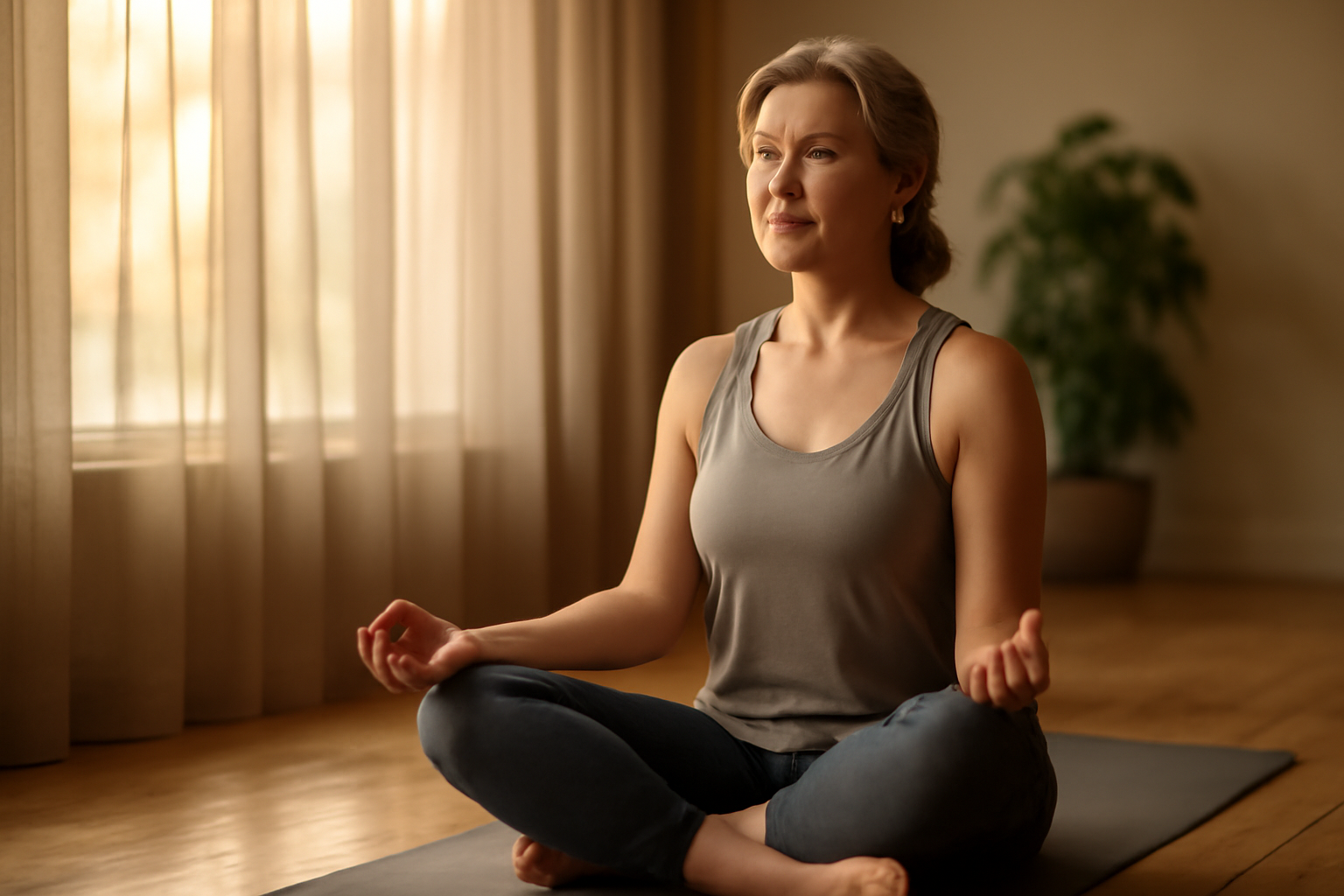
Tai chi and gentle yoga are also worth exploring. Both emphasize slow, controlled movement patterns, breath awareness, and body scanning — all of which directly counter the muscle-bracing response that anxiety drives. Research suggests that regular tai chi practice may help reduce inflammatory markers and improve joint mobility in people with conditions like osteoarthritis.
Water-based exercise is another excellent option if your joints are particularly sensitive. The buoyancy of water reduces the load on your knees, hips, and spine while still allowing you to move through a full range of motion. Many people find that even gentle pool walking a few times a week makes a noticeable difference in both mood and joint comfort.
Breathwork and Sleep as Recovery Tools
Diaphragmatic breathing — slow, deep belly breathing — activates your parasympathetic nervous system, which is essentially the off switch for your fight-or-flight response. Spending five to ten minutes doing this before bed or during a stressful moment can meaningfully reduce cortisol levels and ease the muscle tension that’s grinding on your joints. Box breathing (inhale for 4 counts, hold for 4, exhale for 4, hold for 4) is a simple protocol that many of the friends I help find effective.
Sleep is where most of your joint tissue repair actually happens. Poor sleep — which anxiety notoriously disrupts — has been linked to increased pain sensitivity and higher levels of systemic inflammation. Prioritizing sleep hygiene: consistent bedtimes, a cool dark room, and limiting screen exposure before bed, is not optional if you’re trying to address the root of the problem.
Products Worth Trying for Stress and Joint Support
I want to be clear: no supplement is going to fix everything. But when movement, sleep, and stress management practices are already in place, certain supplements may help support the process. Here are some that many people find helpful and that have reasonable evidence behind their key ingredients.
The Magnesium Form That Actually Calms Both Your Nervous System and Your Joints
Magnesium is one of the few supplements where the form matters as much as the dose—and glycinate is the one I’ve seen make the most consistent difference for people whose joint stiffness gets worse under stress. It calms the nervous system without the digestive side effects of other magnesium types, and it’s specifically the form that research suggests supports both anxiety reduction and muscle relaxation in tight, inflamed joints.
What works
- Glycinate is absorbed well and crosses the blood-brain barrier effectively, which is why people often notice calmer sleep and lower baseline anxiety within 2–3 weeks of consistent use—and that’s when joint tension starts to ease too.
- Unlike magnesium citrate or oxide, glycinate doesn’t have a laxative effect, so you can actually take an effective dose without planning your day around bathroom trips.
- The research on magnesium glycinate specifically shows benefits for both stress-related muscle tension and inflammatory markers—it’s not a coincidence that your shoulders relax when your mind does.
What doesn’t
- This isn’t an emergency fix for acute anxiety or joint flares—you’re looking at 2–4 weeks before you’ll notice real changes, and it works best as part of a broader anxiety and stress management plan, not as a replacement for addressing what’s actually causing your stress.
- If you’re on certain medications (especially bisphosphonates or antibiotics), magnesium can interfere with absorption—check with your doctor or pharmacist before starting, and space doses at least 2 hours apart from other supplements.
Magnesium isn’t magic, and it won’t undo years of unmanaged stress or replace actual anxiety treatment if you need it—but as one piece of a realistic joint recovery plan, it’s one of the few supplements I keep coming back to because the evidence and real-world feedback align. Pure Encapsulations Magnesium Glycinate
About This Article

Written by Michael Torres. Michael Torres has had joint problems his whole life — hypermobile as a kid, chronic sprains and a dislocating shoulder through his twenties, an osteoarthritis diagnosis in his early fifties, and a right knee replacement since. He is not a doctor or a physical therapist and has no clinical training. He writes about what has helped him and what he has watched help the people around him, and says plainly when he has not tried something himself. More about this site.
Scope and limits. Michael has no medical or clinical training — he writes about living with his own joint pain, not about treating anyone else's. Nothing here is medical advice. Talk to a doctor before starting anything new, and get seen promptly for pain that is new, severe, worsening, or comes with swelling, fever, or numbness.
Verify this against a primary source
Specifics change, and your situation may differ from the one described here. These are the authorities worth checking directly:
- NIAMS — arthritis and musculoskeletal research from the NIH
- MedlinePlus — plain-language medical reference from the NIH
- Arthritis Foundation — condition guides and treatment overviews