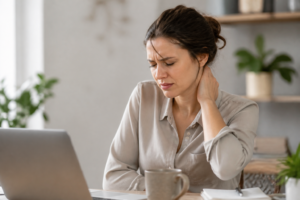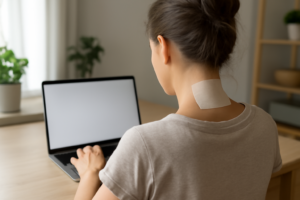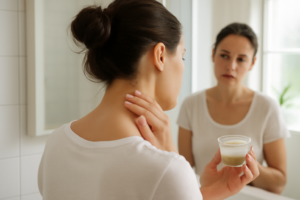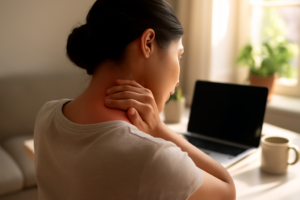
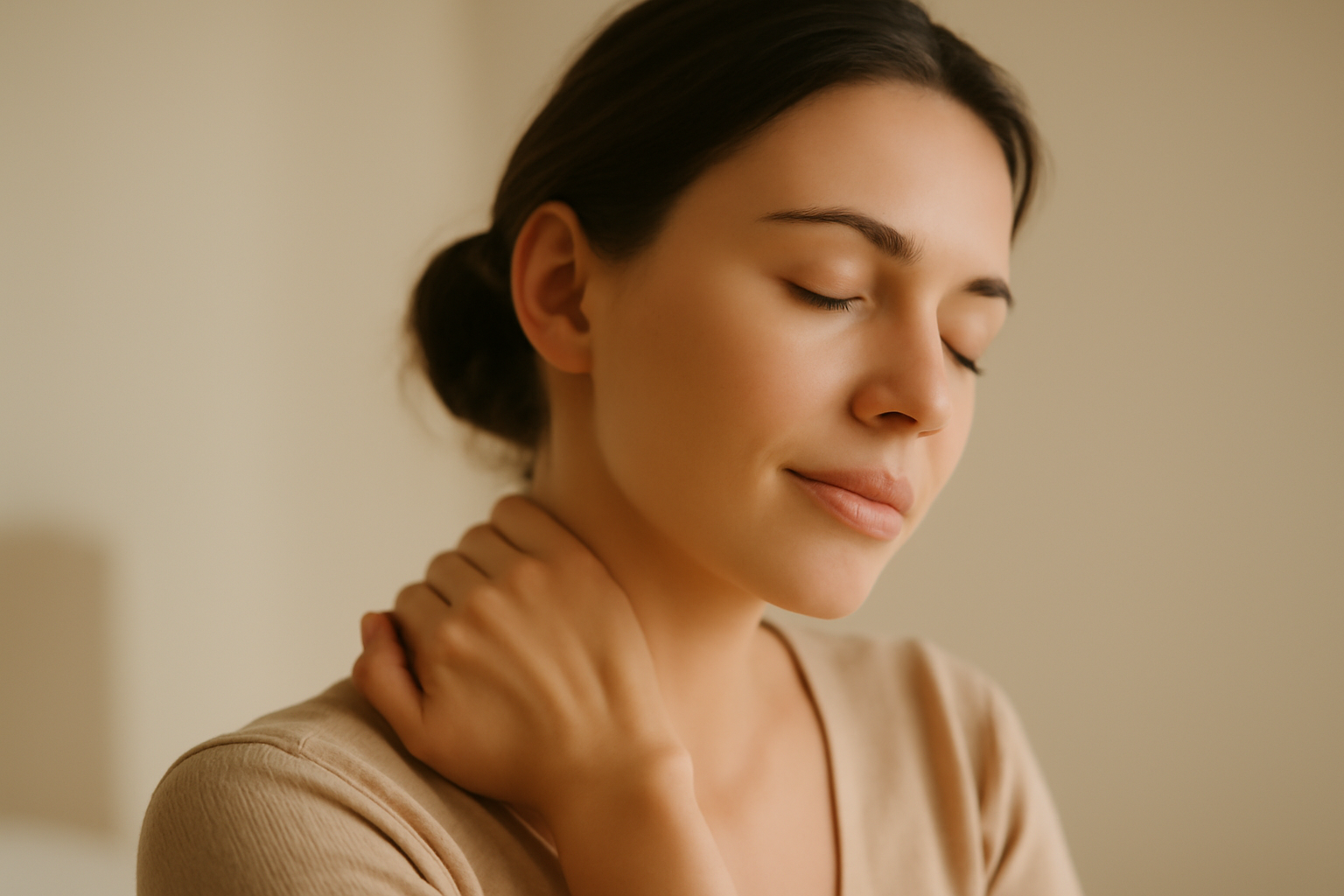

You wake up on a Tuesday morning with that familiar tightness creeping up the back of your neck. Your shoulders feel like concrete, and there’s a dull ache radiating toward the base of your skull. Sound familiar? For millions of people — especially women — this scenario repeats itself on a predictable cycle, and the culprit often isn’t a bad pillow or too much screen time. The connection between hormones and neck pain is real, well-documented, and unfortunately, still widely overlooked by both patients and providers.
Why Hormones and Neck Pain Are More Connected Than You Think
Here’s something I wish more people understood: your cervical spine doesn’t exist in isolation. It’s part of a whole-body system that is deeply influenced by your hormonal environment. Estrogen, progesterone, cortisol, and even thyroid hormones all play roles in how your muscles, tendons, ligaments, and joints behave on any given day.
Estrogen, in particular, has a significant influence on pain sensitivity. Research suggests that when estrogen levels drop — as they do during the days before menstruation, during perimenopause, or following childbirth — the body’s pain threshold lowers. Inflammation can increase, and the tissues surrounding your cervical joints may become more reactive. This is why so many women notice their neck stiffness, headaches, and upper back tension seem to flare at very specific times of the month.
Cortisol, your primary stress hormone, adds another layer. When you’re chronically stressed, cortisol levels stay elevated, which promotes systemic inflammation and causes the muscles along your cervical spine to remain in a near-constant state of guarding. Over time, that tension compresses the small facet joints in your neck, contributing to stiffness, reduced range of motion, and that deep, nagging ache that no amount of ibuprofen seems to fully touch.
The Cervical Spine Under Hormonal Stress
Your cervical spine is made up of seven vertebrae, and each one has small joints on either side called facet joints. These joints are lined with cartilage and surrounded by a fluid-filled capsule — and they are exquisitely sensitive to inflammation. When hormonal fluctuations drive up inflammatory markers in the body, these tiny joints feel it first.
Many people also experience referred pain — headaches that originate in the neck rather than the head itself. This is called cervicogenic headache, and it can be nearly impossible to distinguish from a hormonal migraine without a trained eye. Often, it’s both happening simultaneously. The hormonal shift triggers increased sensitivity, the cervical joints become irritated, and the result is a headache that wraps from the base of your skull up and over your head.
Ligament laxity is another piece of the puzzle. Relaxin and estrogen can loosen the ligaments that support your cervical joints, which sounds harmless but actually reduces spinal stability. When your neck isn’t well supported by its ligaments, the surrounding muscles have to work harder, leading to faster fatigue and more frequent pain flares.
What Actually Helps: Products Worth Trying
Managing hormonally influenced neck pain and cervicogenic headaches often requires a combination of approaches. Cold therapy, acupressure, and targeted cervical strengthening are three strategies that many people find genuinely helpful. Here are some tools that may support your comfort during flare-ups and help build long-term resilience in the cervical spine.
Supporting Cervical Spine Alignment When Hormonal Flares Hit Hardest
When hormonal shifts trigger neck and cervical joint pain, you need more than ice — you need to gently decompress and stabilize the spine during those high-pain window days. The Halo Rejuvenator is designed specifically for cervical traction and support, making it a practical option for managing acute hormone-related neck flares without waiting weeks for other interventions to kick in.
What works
- Gentle cervical traction reduces disc pressure and nerve compression — research supports this mechanism, and most users report noticeable relief within 10–15 minutes of use during acute flares.
- Unlike passive heating pads, the device actively stabilizes the cervical spine, which means it can actually interrupt the muscle-guarding cycle that hormonal flares typically trigger.
- It’s portable and works alongside your cycle tracking — you can use it preventively on the days you know pain typically peaks, rather than waiting until you’re already locked up.
What doesn’t
- This is symptom management, not a fix for the underlying hormonal driver — if your pain is severe or structural (disc herniation, significant degeneration), you’ll need imaging and professional assessment alongside any device.
- Results are immediate relief, not long-term change; you need to pair this with consistent neck mobility work, posture awareness, and addressing inflammation during your luteal phase to see lasting improvements.
Cervical traction devices work best when used consistently during predictable pain windows, not as a one-off when you’re already in crisis mode. Halo Rejuvenator Cervical Rehabilitation Device
About This Article

Written by Michael Torres. Michael Torres has had joint problems his whole life — hypermobile as a kid, chronic sprains and a dislocating shoulder through his twenties, an osteoarthritis diagnosis in his early fifties, and a right knee replacement since. He is not a doctor or a physical therapist and has no clinical training. He writes about what has helped him and what he has watched help the people around him, and says plainly when he has not tried something himself. More about this site.
Scope and limits. Michael has no medical or clinical training — he writes about living with his own joint pain, not about treating anyone else's. Nothing here is medical advice. Talk to a doctor before starting anything new, and get seen promptly for pain that is new, severe, worsening, or comes with swelling, fever, or numbness.
Verify this against a primary source
Specifics change, and your situation may differ from the one described here. These are the authorities worth checking directly:
- NIAMS — arthritis and musculoskeletal research from the NIH
- MedlinePlus — plain-language medical reference from the NIH
- Arthritis Foundation — condition guides and treatment overviews