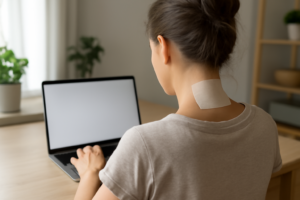


You wake up, roll over to grab your phone, and feel it — that familiar stiffness radiating up the back of your skull, tightening across your shoulders, and settling into a dull throb that just won’t quit. Sound familiar? If you’ve ever spent a morning trying to will away neck tension before your day even starts, you already know how much cervical discomfort can derail everything. Understanding your personal neck pain triggers is genuinely the first step toward getting ahead of that cycle — and that’s exactly what we’re going to dig into today.
Why Neck Pain Is So Common (And So Complicated)
Here’s something I want you to really sit with: your neck supports a head that weighs roughly 10 to 12 pounds — and every inch it tilts forward adds the equivalent of another 10 pounds of force on your cervical spine. That’s a lot of stress on a relatively small structure. The cervical spine is made up of seven vertebrae, dozens of muscles, nerves, and delicate discs — all working together in a system that’s incredibly mobile but also surprisingly vulnerable to everyday habits. So when something goes wrong, the effects can ripple in ways that seem completely unrelated, including headaches, shoulder pain, and even jaw tension.
The good news? Most neck pain isn’t the result of something serious. Research suggests the majority of cervical discomfort is mechanical in nature — meaning lifestyle habits, posture, and repetitive patterns are usually to blame. That means there’s a lot you can actually do about it.
The Most Common Neck Pain Triggers You Might Be Overlooking
1. Tech Neck and Screen Posture
If you work at a desk or spend significant time on a phone or tablet, this one’s almost certainly part of your story. “Tech neck” — the forward head posture that comes from looking down at screens — places enormous sustained strain on the muscles and joints of the cervical spine. Over hours and hours each day, those muscles fatigue, the joints compress unevenly, and inflammation builds up quietly. Many people don’t feel the consequences until they try to turn their head and find they simply can’t without pain.
2. Poor Sleep Position and Pillow Support
Sleeping on your stomach is one of the most common culprits I see. When you sleep face-down, your neck has to rotate sharply to one side for hours — and that sustained rotation compresses the joints and overstretches muscles on the other side. Even side and back sleeping can be problematic if your pillow isn’t keeping your cervical spine in neutral alignment. If you regularly wake up stiff, your sleep setup deserves a serious look.
3. Stress and Muscle Guarding
Emotional stress has a very real, very physical effect on the neck and upper trapezius muscles. When we’re anxious or overwhelmed, we tend to tighten our shoulders and hunch inward — often without even realizing we’re doing it. This chronic low-level tension can build up over days and weeks, eventually leading to muscle knots, restricted range of motion, and the kind of headaches that start at the base of the skull and creep forward.
4. Sudden Movements or Overexertion
Sometimes neck pain isn’t slow and gradual — it arrives fast. Turning your head quickly, sleeping at an odd angle during a nap, or a minor fender bender can all cause muscle strains or joint irritation that leaves you guarding your neck for days. These acute triggers are often easier to identify, but they can trigger secondary tension patterns that linger long after the original incident resolves.
5. Dehydration and Disc Health
This one surprises a lot of people: the intervertebral discs in your neck are largely made of water. Throughout the day, they naturally lose fluid and rehydrate overnight. Chronic dehydration may impair that rehydration cycle, potentially reducing disc height and shock absorption over time. It’s a small thing — but staying well-hydrated is one of the simplest habits you can build for long-term cervical health.
Products Worth Trying for Neck and Cervical Discomfort
I want to be upfront: no product is going to fix an underlying postural habit or replace good movement practice. But many people find real comfort in having the right tools to manage symptoms while they work on the root causes. Here are a few I think are genuinely worth exploring.
The Cervical Support Device That Actually Addresses Neck Mechanics (Not Just Symptoms)
If your neck pain keeps coming back no matter how many times you stretch or ice it, the problem might be postural strain or cervical misalignment — something a temporary pain reliever can’t fix. The Halo Rejuvenator targets the underlying mechanics by providing gentle traction and support to your cervical spine, which is exactly what you need when triggers keep stacking up throughout your day.
What works
- Cervical traction reduces nerve compression and discogenic pain — research supports mild, consistent traction as a legitimate mechanism for cervical relief, not just a gimmick.
- Users report noticeable reduction in morning stiffness and referred shoulder tension within 1–2 weeks of consistent 15-minute sessions, especially if your pain originates from postural strain or forward head posture.
- Unlike passive braces, this device actively decompresses the cervical joints rather than just immobilizing — that’s the difference between managing a symptom and addressing what triggered it in the first place.
What doesn’t
- This won’t solve acute whiplash, significant disc herniation, or structural damage — if your imaging shows serious pathology, you need PT or medical intervention, not a device.
- Results take consistency; most people feel the difference after 10–14 days of regular use, but if you’re looking for immediate relief between your phone scrolling sessions, this addresses the root cause, not the quick fix.
Cervical traction works best when you’re also honest about your actual triggers — if you’re using this but still hunching over your desk eight hours a day, you’re fighting half the battle. Halo Rejuvenator® Cervical Rehabilitation Device
About This Article

Written by Michael Torres. Michael Torres has had joint problems his whole life — hypermobile as a kid, chronic sprains and a dislocating shoulder through his twenties, an osteoarthritis diagnosis in his early fifties, and a right knee replacement since. He is not a doctor or a physical therapist and has no clinical training. He writes about what has helped him and what he has watched help the people around him, and says plainly when he has not tried something himself. More about this site.
Scope and limits. Michael has no medical or clinical training — he writes about living with his own joint pain, not about treating anyone else's. Nothing here is medical advice. Talk to a doctor before starting anything new, and get seen promptly for pain that is new, severe, worsening, or comes with swelling, fever, or numbness.
Verify this against a primary source
Specifics change, and your situation may differ from the one described here. These are the authorities worth checking directly:
- NIAMS — arthritis and musculoskeletal research from the NIH
- MedlinePlus — plain-language medical reference from the NIH
- Arthritis Foundation — condition guides and treatment overviews