
Once you’ve decided red light therapy is worth trying for your joints, you hit a wall of options: panels, wands, wraps, belts, and full-body mats, all claiming different wavelengths and power outputs, at prices ranging from $30 to $2,000. This guide skips the research debate and focuses on the one question that actually determines whether you’ll get any benefit: which device is right for the joint you’re trying to treat, and what specs actually matter when you’re comparing listings.
Wavelength: What the Number on the Box Actually Means
Not all “red light” devices use the same wavelength, and the difference matters more than the marketing suggests. Red light in the 630-660nm range penetrates mostly skin-deep and is what most beauty and skin-focused devices use. Near-infrared light in the 800-880nm range penetrates significantly deeper — into muscle, connective tissue, and closer to joint structures — which is why devices marketed specifically for joint pain tend to use wavelengths in that higher range. If a device doesn’t list its wavelength at all, that’s a red flag; if it only lists a wavelength in the low 600s and is marketed for “deep joint relief,” be skeptical of the claim.
Power Output (Irradiance): The Spec Most Listings Hide
Wavelength gets the attention, but power output — measured in milliwatts per square centimeter (mW/cm²) — determines how much light energy actually reaches your tissue in a given session, and it’s the spec most budget devices leave off the listing entirely. A device with the right wavelength but very low irradiance may require unreasonably long sessions to deliver a meaningful dose. As a rough guideline, look for devices in the 30-100 mW/cm² range at the recommended treatment distance; anything unlisted should make you ask the seller directly before buying.
Panel vs. Wand vs. Wrap: Matching the Device to the Joint
The right form factor depends entirely on where your joint pain is and how you want to use the device day to day:
- Panels cover the largest surface area and are the best choice for a lower back, hip, or both-knees-at-once treatment, but they’re stationary — you sit or stand in front of them for the session, which takes more dedicated time than a wearable.
- Handheld wands are the cheapest entry point and work well for small, precise areas like a single knuckle or a specific tendon, but you have to hold and reposition them yourself for the full session, which gets tedious for daily use.
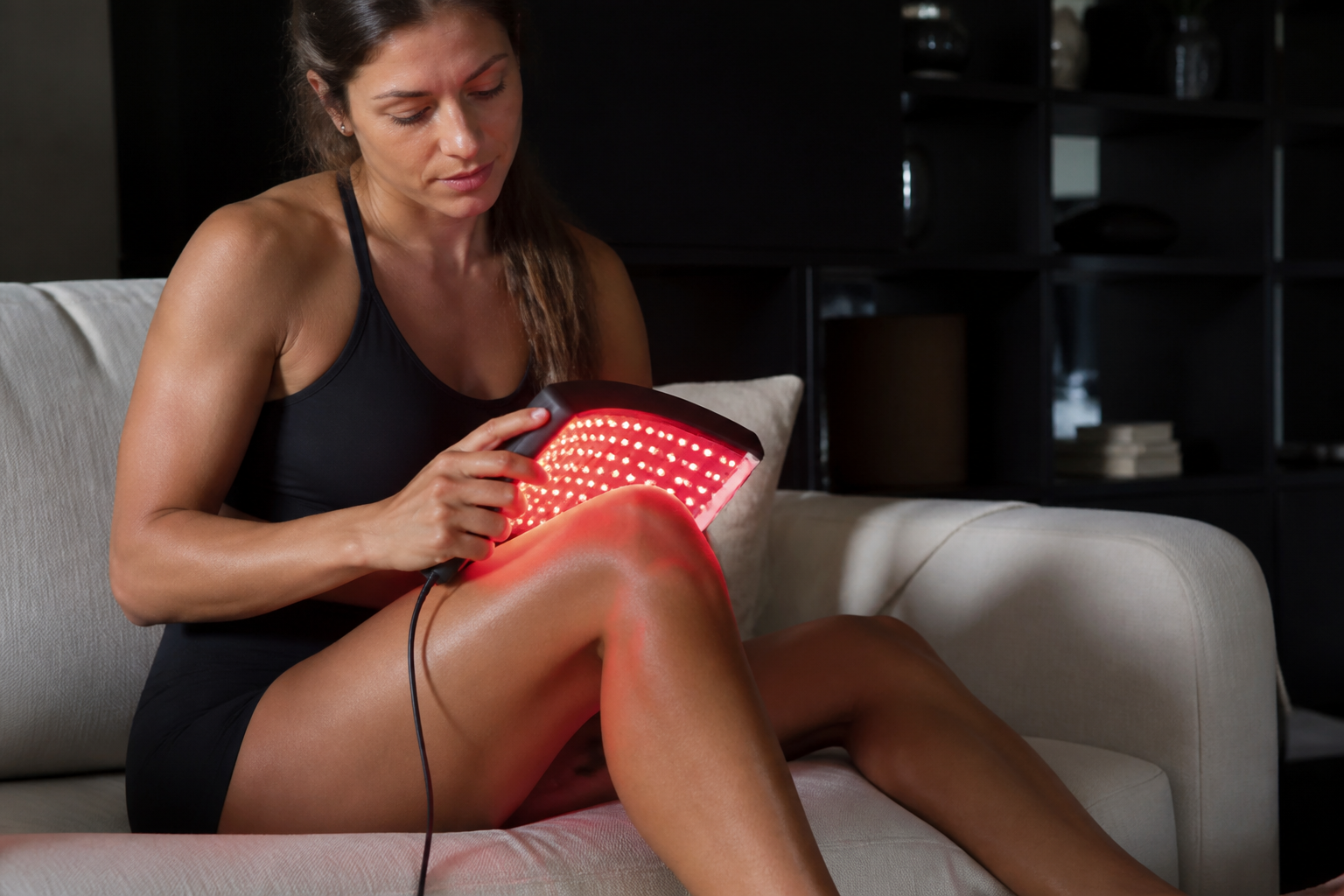
- Wearable wraps and belts hold consistent contact with a joint (knee, elbow, wrist) hands-free, which matters more than it sounds — the devices people actually stick with for the 2-3 weeks needed to notice anything tend to be the ones that don’t require standing still or holding something the whole time.
Battery vs. Plug-In: A Practical Consideration
Wearable devices split between battery-powered (cordless, portable, but need recharging) and plug-in (consistent power, but you’re tethered while treating). If you want to wear your device while doing chores or working at a desk, cordless is worth the tradeoff. If you’re treating while sitting still anyway — watching TV, reading — a plug-in model avoids battery degradation over years of daily use.
Red Flags When Shopping for a Red Light Device
- No wavelength listed, or a wavelength listed only in vague terms like “red and infrared spectrum.”
- No irradiance (mW/cm²) figure anywhere in the listing or manual.
- Claims of same-session or overnight pain elimination — photobiomodulation is a cumulative-benefit therapy, not an instant one.
- Extremely low prices for panels claiming professional-grade LED counts — LED quality and diode count both affect real-world output, and steep discounts on “premium” specs are usually a sign of cut corners.
What works
- 880nm sits in the deeper-penetrating near-infrared range rather than the skin-level red light used in beauty devices.
- Wearable, adjustable design means it stays in place during daily activity instead of requiring you to sit still holding a wand.
What doesn’t
- A wrap only treats one or two joints at a time — if you have pain in multiple large areas (both knees and your lower back), a panel may be more practical despite requiring dedicated session time.
About This Article

Written by Michael Torres. Michael Torres has had joint problems his whole life — hypermobile as a kid, chronic sprains and a dislocating shoulder through his twenties, an osteoarthritis diagnosis in his early fifties, and a right knee replacement since. He is not a doctor or a physical therapist and has no clinical training. He writes about what has helped him and what he has watched help the people around him, and says plainly when he has not tried something himself. More about this site.
Scope and limits. Michael has no medical or clinical training — he writes about living with his own joint pain, not about treating anyone else's. Nothing here is medical advice. Talk to a doctor before starting anything new, and get seen promptly for pain that is new, severe, worsening, or comes with swelling, fever, or numbness.
Verify this against a primary source
Specifics change, and your situation may differ from the one described here. These are the authorities worth checking directly:
- NIAMS — arthritis and musculoskeletal research from the NIH
- MedlinePlus — plain-language medical reference from the NIH
- Arthritis Foundation — condition guides and treatment overviews