
You catch a glimpse of yourself in a store window and barely recognize the reflection staring back — shoulders curled forward, upper back hunched, head jutting out like a turtle. If that moment of uncomfortable self-awareness sounds familiar, you’re not alone. Millions of people are quietly dealing with what’s commonly called a kyphosis rounded shoulders posture fix situation, and most don’t even realize how much it’s affecting their neck pain, upper back tension, and overall energy levels. I’ve worked with enough people struggling with this to know that the frustration is real — and so is the hope for improvement.
What Is Kyphosis — And Why Do Rounded Shoulders Make It Worse?
Kyphosis refers to an exaggerated outward curve of the thoracic spine — the middle and upper portion of your back. A small degree of curve is completely normal and healthy. But when that curve becomes excessive, it creates the classic “hunchback” appearance, compresses the chest, and pulls the shoulders forward into that rounded position so many of us recognize in ourselves.
Here’s the thing: kyphosis and rounded shoulders tend to feed each other in a vicious cycle. Tight chest muscles pull the shoulders inward. Weak upper back muscles can’t counteract that pull. Over time, the spine adapts to this position, and what started as a habit becomes a structural pattern. Spending hours at a desk, looking down at a phone, or carrying heavy bags on one shoulder all contribute to this gradual shift.
Research suggests that postural changes in the thoracic spine may be associated with increased neck and shoulder pain, reduced lung capacity, and even changes in mood and energy. That’s not a scare tactic — it’s a reason to take this seriously and do something about it.
What Actually Works: A Realistic Approach to Posture Correction
I want to be honest with you here, the way a good friend who happens to be a physical therapist would be: there’s no single product that will fix kyphosis overnight. Posture correction is a process that involves strengthening weak muscles, stretching tight ones, building body awareness, and yes — sometimes using supportive tools to help retrain your habits along the way.
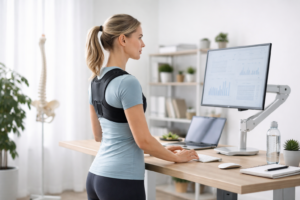
That said, the right posture support brace can be a genuinely valuable part of that process. Think of it less like a cure and more like training wheels. When worn correctly and paired with deliberate movement and stretching, a good posture corrector may help remind your nervous system what “upright” actually feels like — especially during long hours of sitting or working.
Some key habits that many people find helpful alongside any wearable support:
- Chin tucks (gently drawing the head back and down) performed throughout the day
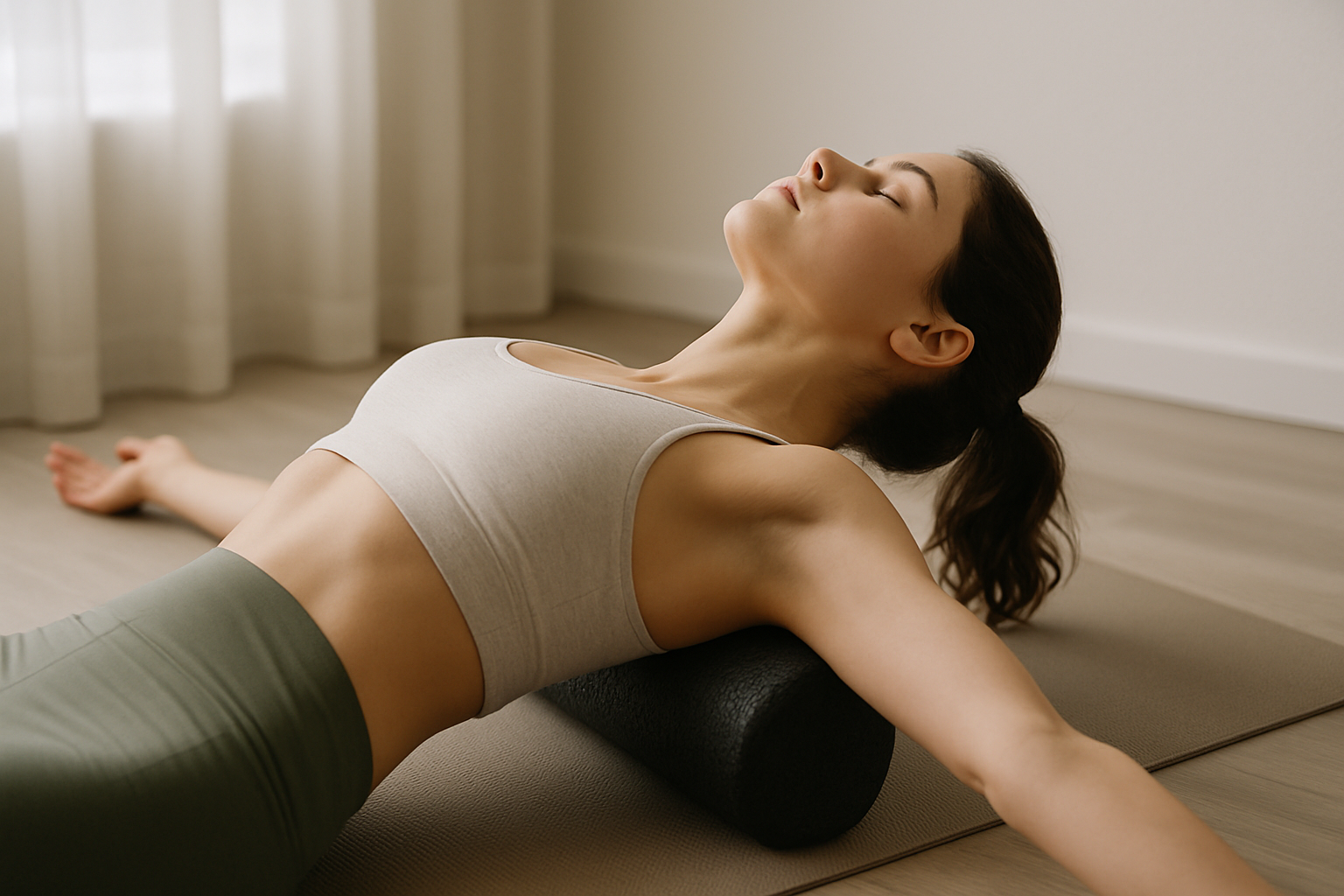
- Thoracic extension stretches over a foam roller or the back of a chair
- Strengthening exercises for the rhomboids and mid-trapezius, like face pulls and rows
- Chest and pec minor stretching in doorways
- Regular movement breaks every 30–45 minutes if you sit for long periods
The Posture Corrector That Actually Works Without Feeling Like a Straitjacket
If you’ve tried posture correctors before and ditched them after a week because they were uncomfortable or restrictive, the Fit Geno Full Back Posture Corrector is built to solve that exact problem. It addresses the root mechanics of kyphosis by gently retraining your shoulders and upper back into neutral alignment without the rigidity that makes you feel trapped.
What works
- The dual-strap design pulls shoulders back without crushing your chest, which means you can actually wear it for hours instead of abandoning it after 30 minutes—and research on postural correction shows consistency matters more than intensity.
- Users report noticeable relief from upper back and neck tension within 2–3 weeks of regular wear, likely because the corrector interrupts the constant forward-shoulder pattern that feeds into chronic tension.
- The lightweight neoprene construction is breathable enough for desk work or layering under clothing, which removes one of the biggest reasons people give up on posture supports—sweating through them or feeling self-conscious.
What doesn’t
- This won’t “fix” kyphosis on its own if you’re spending 8 hours a day hunched over a desk—a corrector is a reminder and support tool, not a replacement for strengthening your back and stretching your chest, which are the actual long-term fix.
- Some users with very sensitive skin or certain shoulder injuries report discomfort from the straps after extended wear; if you have existing shoulder or collarbone issues, check with a physical therapist before using any posture support regularly.
Posture correction is a slow process—you won’t transform your spine in two weeks, and wearing a corrector only works if you actually use it consistently. Fit Geno Full Back Posture Corrector
About This Article

Written by Michael Torres. Michael Torres has had joint problems his whole life — hypermobile as a kid, chronic sprains and a dislocating shoulder through his twenties, an osteoarthritis diagnosis in his early fifties, and a right knee replacement since. He is not a doctor or a physical therapist and has no clinical training. He writes about what has helped him and what he has watched help the people around him, and says plainly when he has not tried something himself. More about this site.
Scope and limits. Michael has no medical or clinical training — he writes about living with his own joint pain, not about treating anyone else's. Nothing here is medical advice. Talk to a doctor before starting anything new, and get seen promptly for pain that is new, severe, worsening, or comes with swelling, fever, or numbness.
Verify this against a primary source
Specifics change, and your situation may differ from the one described here. These are the authorities worth checking directly:
- NIAMS — arthritis and musculoskeletal research from the NIH
- MedlinePlus — plain-language medical reference from the NIH
- Arthritis Foundation — condition guides and treatment overviews