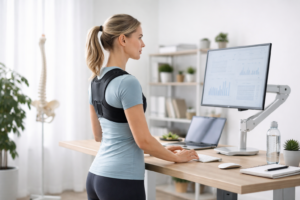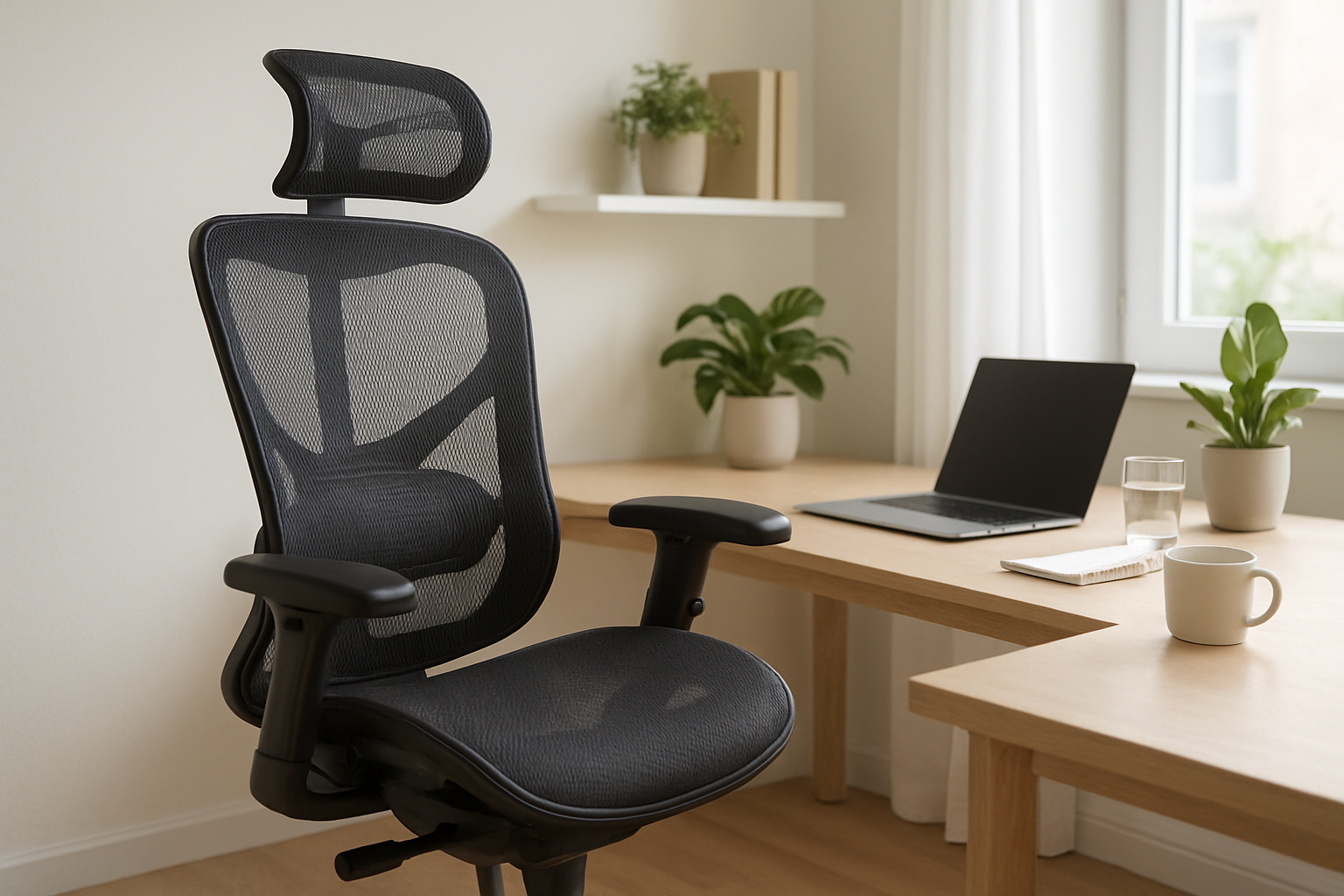

You know that feeling — it’s 3 PM, you’ve been sitting for hours, and a dull ache is quietly radiating up your lower back. Maybe your neck feels stiff, or there’s that familiar tension between your shoulder blades that no amount of stretching seems to shake. If this sounds like your typical workday, you’re not alone. Millions of people are unknowingly stressing their spinal joints every single day simply because of the chair they’re sitting in. That’s exactly why understanding ergonomic chair spinal joint health matters so much — the right setup can make a genuine difference in how your body feels by end of day.
As someone who has spent years learning about musculoskeletal health and posture, I want to talk to you honestly — not like a sales pitch, but like a friend who happens to know a lot about spines. Not every expensive chair is worth it, and not every “ergonomic” label means much. So let’s break down what actually matters when it comes to protecting your spinal joints while you sit.
Why Sitting Puts So Much Stress on Your Spinal Joints
Here’s something that surprises a lot of people: sitting actually places more pressure on your lumbar discs than standing does. Research in spinal biomechanics has long suggested that the lumbar spine bears significant compressive loads when we’re seated, especially when we’re slumped or leaning forward. Over hours and hours — and years and years — that repeated stress may contribute to disc wear, facet joint irritation, and chronic muscular tension.
The spinal column is made up of vertebrae separated by discs and connected by small joints called facet joints. These joints guide movement and share the load your spine carries. When you sit with poor alignment, those joints are loaded unevenly. Over time, many people find this contributes to stiffness, discomfort, and reduced mobility. The good news? Thoughtful ergonomic support may help redistribute that load more evenly and take some of the burden off those vulnerable structures.
Ergonomic Chair Spinal Joint Health: The Features That Actually Matter
Not all “ergonomic” features are created equal. Here are the ones I’d tell any friend to prioritize when evaluating their seating situation.
Lumbar Support That Fits Your Curve
The lumbar region — your lower back — has a natural inward curve called the lordosis. When you sit without proper support, that curve tends to flatten or reverse, which increases disc pressure and strains the surrounding muscles and joints. A good lumbar support holds that curve in place so your spine isn’t constantly fighting gravity.
The key word here is adjustable. Everyone’s spine is a little different, and a lumbar pillow that sits too high or too low won’t do its job. Look for supports with height and depth adjustability so you can dial it in to your specific curve.
Seat Depth and Hip Positioning
Your hips set the foundation for your entire spine. When you sit with your hips rolled backward (posterior pelvic tilt), everything above — your lumbar joints, thoracic spine, and neck — compensates in ways that add stress. A seat that’s too deep forces this exact posture by preventing you from sitting fully back against lumbar support. Look for chairs with adjustable seat depth, or use a seat cushion to fine-tune your positioning.
Seat Height and Knee Angle
Your feet should rest flat on the floor with your knees at roughly a 90-degree angle. If your seat is too high, you’ll perch forward. Too low, and your hips drop below your knees, again tilting the pelvis and loading the lumbar joints poorly. This one simple adjustment can make a surprisingly big difference in how your back feels after a long day.
Backrest Recline and Armrests
A slight recline — even just 100 to 110 degrees — may actually reduce lumbar disc pressure compared to sitting fully upright at 90 degrees. This is one of the more counterintuitive findings in posture research. Armrests that allow your shoulders to relax also take load off the cervical and thoracic spine. If you’re shrugging your shoulders all day to reach armrests that are too high, you’re adding unnecessary tension to your neck joints.
The Seat Cushion That Actually Addresses Both Lumbar and Tailbone Pressure
If you’re spending 8+ hours a day sitting, a generic chair cushion won’t cut it — you need something that tackles the two biggest pressure points simultaneously: lower lumbar support AND tailbone relief. This L-shaped design does both, which matters because tailbone pressure often radiates pain up the entire lower spine, making it nearly impossible to know which joint is actually the problem.
What works
- The coccyx cutout genuinely reduces referred pain patterns — people report less radiating discomfort up the lower back within the first week of consistent use, which suggests the tailbone pressure was a legitimate culprit.
- Memory foam holds its shape through an 8-hour workday without flattening, which means the lumbar lift stays consistent instead of degrading by noon like cheaper foam alternatives.
- The L-shape design solves a real problem: most people need BOTH seat support AND lumbar lift, and buying two separate products wastes money and desk space — this addresses both in one.
What doesn’t
- This cushion can’t fix poor posture or a badly designed chair — if you’re slouching or your desk height is wrong, the cushion becomes a band-aid on a broken system.
- Results aren’t immediate for everyone; some people notice relief in days, others need 2–3 weeks of consistent use before the pattern breaks, especially if disc-related pain is involved.
A cushion is a tool, not a cure — it reduces pressure, but it won’t reverse an underlying disc problem or strengthen your stabilizer muscles, which is why you still need proper ergonomics and movement breaks. If you’re ready to test this approach, the L-Shaped Ergonomic Memory Foam Seat Cushion with Coccyx Hollow is worth a 2-week trial.
About This Article

Written by Michael Torres. Michael Torres has had joint problems his whole life — hypermobile as a kid, chronic sprains and a dislocating shoulder through his twenties, an osteoarthritis diagnosis in his early fifties, and a right knee replacement since. He is not a doctor or a physical therapist and has no clinical training. He writes about what has helped him and what he has watched help the people around him, and says plainly when he has not tried something himself. More about this site.
Scope and limits. Michael has no medical or clinical training — he writes about living with his own joint pain, not about treating anyone else's. Nothing here is medical advice. Talk to a doctor before starting anything new, and get seen promptly for pain that is new, severe, worsening, or comes with swelling, fever, or numbness.
Verify this against a primary source
Specifics change, and your situation may differ from the one described here. These are the authorities worth checking directly:
- NIAMS — arthritis and musculoskeletal research from the NIH
- MedlinePlus — plain-language medical reference from the NIH
- Arthritis Foundation — condition guides and treatment overviews